Every October, I notice the same thing. Someone sneezes in the office and within a day, three people are recommending three different cures: ginger tea, onions in socks, a spoonful of something from a bottle. So let’s sort this out. Natural remedies for cold and flu are worth using, but only some of them are backed by real evidence, and a few can do harm, especially for babies. Below, I’ll walk through what the research says about honey, elderberry, zinc, saltwater gargles, and humidifiers, which popular “cures” to skip, and what to do if your baby has a fever. I’ll also be clear about when home care isn’t enough.
Related: Natural Remedies & Ayurveda on HealthMorph
Cold vs Flu vs Sore Throat: Know What You’re Treating
They overlap, but they’re not the same.
| Common cold | Flu (influenza) | Sore throat alone | |
|---|---|---|---|
| Onset | Gradual | Sudden | Varies |
| Fever | Mild or none | Common, often high | Sometimes |
| Body aches | Slight | Strong | Rare |
| Fatigue | Mild | Often severe | Mild |
| Main symptoms | Runny nose, sneezing | Cough, chills, aches | Pain when swallowing |
| Usual length | About 7 to 10 days | About 1 to 2 weeks | A few days (viral) |
Most colds and sore throats are viral, which means antibiotics won’t help them. Strep throat is the exception, and it needs a doctor’s test. We’ll come back to that.
What Actually Works: The Evidence, Honestly
None of these remedies cure a virus. Your immune system does that. What the better ones can do is make you more comfortable, and in a few cases, shorten the illness slightly.
Honey (for cough and sore throat)
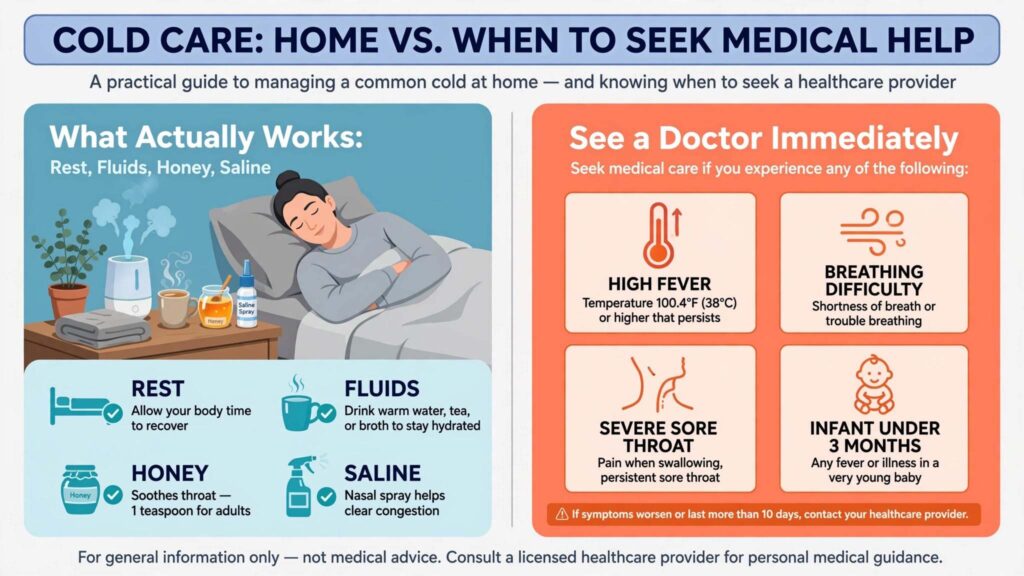
This one has the strongest support. A Cochrane review of studies on children found honey likely eases cough better than no treatment, and it did as well as or better than some over-the-counter cough medicines in several trials. A spoonful on its own or stirred into warm water or tea coats the throat and calms the urge to cough, especially at night.
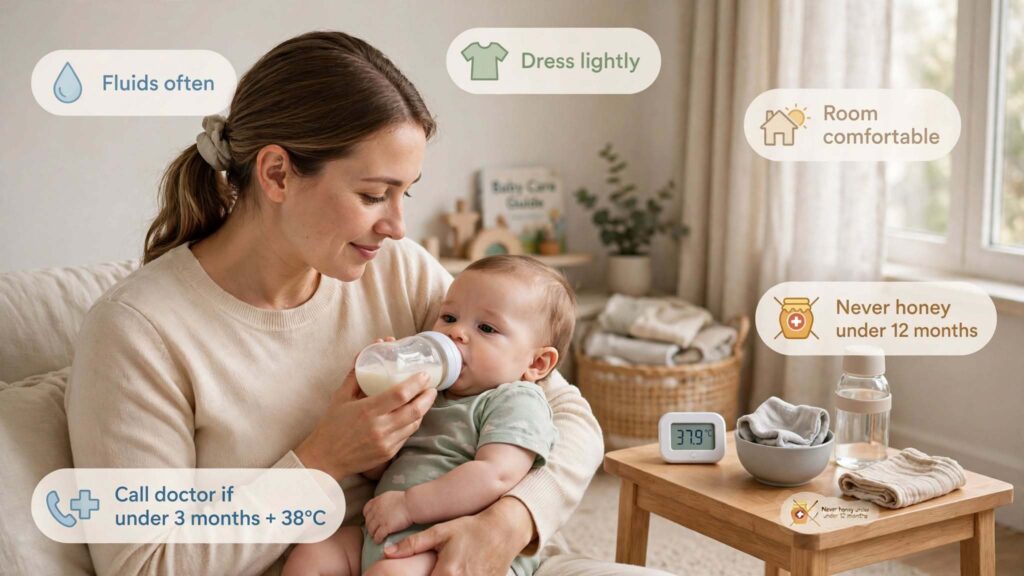
Never give honey to babies under 12 months. It can carry spores that cause infant botulism.
Saltwater gargle
It’s cheap, safe, and soothing. Stir about half a teaspoon of salt into a glass of warm water and gargle for a few seconds, a few times a day. It can loosen mucus and temporarily ease throat pain. One Japanese trial also found that regular gargling with plain water reduced upper respiratory infections. Skip it for young kids who might swallow the water.
Fluids and rest
Boring, but real. Fever, sweating, and mouth-breathing all dry you out, and thick mucus is harder to clear when you’re dehydrated. Warm water, soups, and herbal teas count. Chicken soup has some lab evidence of mild anti-inflammatory effects, but the main benefit is hydration, warmth, and getting a meal into you.
Humidifiers and steam
Moist air can make congestion and a dry cough feel better, though trials haven’t shown it shortens the illness. If you use one:
- Choose a cool-mist model
- Clean it daily and use fresh water, because dirty humidifiers can spread mold and bacteria
- Aim for roughly 30 to 50% humidity
Skip hot steam bowls, especially for children. Scalds are a real risk, and the evidence for benefit is thin.
Saline nose rinses and drops
Saltwater sprays or drops thin mucus and help you breathe. For babies, saline drops followed by gentle suction can really help with feeding. If you use a neti pot or sinus rinse, use boiled-and-cooled or distilled water, never plain tap water.
Zinc
Results are mixed. Some trials suggest zinc lozenges or syrup, if started within 24 hours of the first symptoms, may shorten a cold by a day or so. Others found little effect, and the doses and formulations vary a lot. Side effects include nausea and a bad taste. Avoid zinc nasal sprays, which have been linked to a lasting loss of smell. Talk to a doctor before giving zinc to children or taking it for more than a short stretch.
Elderberry
This is a popular one, and the evidence is modest at best. A few small studies suggest elderberry extract may shorten flu or cold symptoms slightly, but the trials were small and varied in quality. Two cautions: raw or unripe elderberries contain compounds that can make you sick, so stick to properly prepared, cooked, or commercial products, and check with a doctor before giving them to children or if you’re pregnant. It’s a “might help a bit” option, not a replacement for a flu shot.
Vitamin C
Here’s the myth to retire. Taking vitamin C once you’re already sick doesn’t do much. Regular daily intake may shorten a cold slightly, by around 8% in adults and 14% in children in pooled studies, but it won’t prevent most people from catching one. Food sources like citrus, guava, and amla are plenty.
Ginger, turmeric, and garlic
They taste good, they’re warming, and they’re fine in food and tea. The evidence that they treat a cold is limited, so treat them as comfort rather than medicine. Concentrated supplements are another matter, so check with a doctor first, particularly if you take other medicines.
Myths to Skip
- “Feed a cold, starve a fever.” Neither. Eat when you can and drink plenty.
- “Antibiotics will clear it faster.” They don’t work on viruses and can cause side effects and resistance.
- “Sweat it out under heavy blankets.” Overheating won’t help and can worsen dehydration.
- “Cold weather gives you a cold.” Viruses do. Cold weather just keeps people indoors together.
- “Megadose vitamin C.” High doses mainly cause stomach upset.
- “Onions in socks” and similar folk cures. No evidence.
- “Steam kills the virus.” It doesn’t.
How to Reduce Fever in a Baby Naturally (Read This Carefully)
This is where the stakes are highest, so I’ll be direct.
First, a fever is a sign your body is fighting an infection. It isn’t dangerous by itself. What matters is the baby’s age, how they look and act, and how long it lasts.
Call a doctor right away if:
- Your baby is under 3 months and has a temperature of 38°C (100.4°F) or higher, taken rectally. This needs urgent medical evaluation, even at night. Don’t wait and don’t treat it at home first.
- Your baby seems unusually sleepy, limp, hard to wake, or inconsolable
- They refuse feeds or have far fewer wet diapers than usual
- They’re struggling to breathe or breathing fast
- There’s a rash that doesn’t fade when pressed, a stiff neck, a bulging soft spot, or a seizure
- A fever keeps going: more than 24 hours in a baby under 2, or more than 3 days in an older child
- A fever hits 39°C (102.2°F) or higher in a baby aged 3 to 36 months
Safe comfort measures at home (for babies over 3 months who are otherwise alert and feeding):
- Offer fluids often. Breast milk or formula for babies; small, frequent sips of water or oral rehydration solution for older children, as your pediatrician advises.
- Dress them lightly. Skip heavy blankets and layers. One light layer in a comfortable room is enough.
- Keep the room comfortable, not cold, not hot.
- Let them rest. Skip the pressure to feed or play.
- Use a lukewarm washcloth on the forehead or arms if it comforts them. It’s for comfort, not for lowering the number.
- Check their temperature properly, and note the time, the reading, and how they’re acting so you can tell the doctor.
What not to do:
- Don’t use cold baths, ice, or alcohol rubs. They can cause shivering, which raises body temperature, and alcohol can be absorbed through the skin.
- Don’t give aspirin to children. It’s linked to a rare but serious condition called Reye’s syndrome.
- Don’t give honey to a baby under 12 months.
- Don’t give OTC cough and cold medicines to young children unless a doctor says so. Major pediatric groups advise against them in children under 4 because they’re not effective and carry risks.
- Don’t rely on home remedies alone if your baby seems unwell.
A word about fever medicine: it isn’t “natural,” but sometimes it’s the right thing for a miserable child. Dosing depends on weight and the exact product, and some medicines aren’t suitable for young babies, so ask your pediatrician or pharmacist, and follow the label.
Sore Throat: What Helps and When It’s Strep
For a typical viral sore throat, these help:
- Warm tea with honey (age 1 and up)
- Saltwater gargles
- Throat lozenges or hard candy (not for small children, who can choke)
- Cool drinks or ice pops, which can numb the pain
- Rest your voice, and stay hydrated
See a doctor if you have a severe sore throat without a cough or runny nose, fever, swollen tender neck glands, white patches on the tonsils, or trouble swallowing or breathing. These point to strep, which needs a throat swab and, if positive, antibiotics to prevent complications.
Flu: Natural Care Isn’t the Whole Story
Home care helps with comfort. But flu is different from a cold:
- Prescription antivirals work best when started within about 48 hours of symptoms, and doctors often recommend them for people at higher risk (older adults, pregnant women, young children, and people with chronic conditions).
- The annual flu vaccine is still the best prevention. It doesn’t stop every case, but it lowers your risk of severe illness.
- Rest more than you think you need, and stay home to avoid spreading it.
When to See a Doctor
Get medical help if you have:
- Trouble breathing, wheezing, or chest pain
- A fever above 39°C (102°F) lasting more than 3 days
- Symptoms that improve and then suddenly get worse
- Symptoms lasting more than 10 days without improvement
- Confusion, severe weakness, or persistent vomiting
- Signs of dehydration, like dark urine or dizziness
- A weak immune system, heart or lung disease, pregnancy, or age over 65
A cough that lingers for weeks after an infection may be something else, such as walking pneumonia, so don’t ignore it.
A Simple Day-by-Day Plan for a Cold
- Days 1 to 2: Rest, drink plenty, saltwater gargles, warm soups. If you’re using zinc lozenges, start now.
- Days 3 to 5: Honey for cough, saline rinse for congestion, humidifier at night.
- Days 6 to 10: Light activity as you feel able. Keep drinking and eating well.
- If anything on the doctor list above shows up, don’t wait it out.
After illness, fatigue can drag on. If you feel tired for weeks, ask your doctor about checking your iron, and see our guide on how to increase hemoglobin naturally for food-first ideas.
Frequently Asked Questions
1. Do natural remedies for cold and flu really work?
Some ease symptoms. Honey for cough has the best evidence, and fluids, rest, saline, and saltwater gargles are helpful and low-risk. None of them cure the virus, and a few popular ones, like elderberry and zinc, have mixed or modest evidence.
2. What is the best home remedy for a sore throat?
Warm fluids with honey (for ages 1 and up), saltwater gargles, rest, and plenty of liquids. If the pain is severe, one-sided, or comes with a high fever and no cough, get tested for strep.
3. How can I reduce a fever in a baby naturally?
For a baby over 3 months who’s alert and feeding, offer fluids, dress them lightly, keep the room comfortable, and let them rest. Don’t use cold baths, ice, or alcohol rubs. A baby under 3 months with a temperature of 38°C (100.4°F) or higher needs urgent medical care.
4. Can I give honey to my baby for a cough?
Not before 12 months, because of the risk of infant botulism. After age 1, honey is considered a safe and effective cough soother.
5. Is elderberry safe for kids?
Commercial, properly prepared products are generally considered low-risk for many people, but evidence for children is limited. Raw berries are unsafe. Ask your pediatrician first.
6. Does zinc shorten a cold?
Maybe, by a day or so, if taken within 24 hours of symptoms, but studies disagree. Avoid zinc nasal sprays, and don’t take high doses for long.
7. Does vitamin C prevent colds?
Not for most people. Regular use may shorten a cold slightly, but taking it after you get sick does little.
8. Do humidifiers help with colds?
They can ease congestion and dry cough, though they don’t speed recovery. Use a clean cool-mist unit and avoid hot steam for kids.
9. How long does a cold last, and when should I worry?
Most colds clear in about 7 to 10 days. See a doctor if symptoms last longer, worsen after improving, or come with trouble breathing, high fever, or chest pain.
10. Should I take antibiotics for a cold or the flu?
No. Both are viral, so antibiotics don’t work. A doctor may prescribe antibiotics for a bacterial complication like strep throat or bacterial pneumonia, or antivirals for flu in certain cases.
The Bottom Line
The best natural remedies for cold and flu are the unglamorous ones: rest, fluids, honey (for ages 1 and up), saline, saltwater gargles, and a humidifier. Elderberry, zinc, and vitamin C are optional extras with modest, mixed evidence. Know the red flags, be extra careful with babies, and get a flu shot every year. For more everyday remedies, browse our Natural Remedies & Ayurveda guides or visit HealthMorph.
Medical disclaimer: This article is for education and isn’t medical advice. See a doctor for severe or persistent symptoms, and always seek urgent care for a fever in a young infant.







Leave a Reply