
Nutrition & Diet
Nutrition and Diet: Evidence-Based Eating Advice for Real Life
Nutrition and diet is the study of what you eat and how it affects your body, from your energy and sleep to your risk of heart disease and type 2 diabetes. The core advice is less exciting than the internet makes it sound: eat mostly whole foods, plenty of vegetables, enough protein and fibre, and not too much salt, sugar or ultra-processed food. The hard part isn’t knowing that. It’s doing it on a Wednesday when you’re tired.
This section tries to make that easier. We cover the basics, compare popular diets honestly, and run viral claims through the same set of questions so you can decide what’s worth your money and attention.
Nutrition and Diet Basics: What Your Body Actually Needs
The World Health Organization’s guidance on a healthy diet gives a useful baseline that works in almost any food culture:
- Fruit and vegetables: at least 400 g a day, roughly five handfuls
- Free sugars: under 10% of daily calories, with less than 5% even better
- Salt: under 5 g a day, about one level teaspoon
- Saturated fat: under 10% of calories, and as little industrial trans fat as possible
- Protein: the standard adult minimum is 0.8 g per kg of body weight. Older adults and people who lift weights usually do better with more, often 1.0 to 1.2 g per kg or above
- Fibre: about 25 to 30 g a day, which most people miss
None of that needs a spreadsheet. Fill half your plate with vegetables, a quarter with protein and a quarter with whole grains or starchy foods, and you’ll land near most of these without counting.
Key Nutrients and Where to Find Them
| Nutrient | What it does | Good food sources | Worth knowing |
|---|---|---|---|
| Protein | Builds and repairs muscle, keeps you full | Eggs, fish, poultry, dairy, lentils, beans, tofu | Spread it across meals rather than one big dinner |
| Fibre | Feeds gut bacteria, steadies blood sugar and cholesterol | Oats, beans, vegetables, fruit, whole grains | Increase slowly and drink water to avoid bloating |
| Omega-3 fats | Supports heart and brain health | Oily fish, walnuts, flax, chia | Plant sources give a different form than fish |
| Calcium | Bones and muscle function | Dairy, fortified alternatives, ragi, leafy greens | Needs vitamin D to be absorbed well |
| Iron | Carries oxygen in blood | Meat, lentils, spinach, dried fruit | Vitamin C alongside plant iron improves absorption |
| Vitamin B12 | Nerves and blood cells | Meat, fish, eggs, dairy, fortified foods | Vegans need a supplement or fortified foods |
| Vitamin D | Bones, muscle, immunity | Sunlight, oily fish, eggs, fortified foods | Deficiency is common even in sunny countries |
For the last two, see our guide to vitamin B12 and D deficiency symptoms before you buy supplements.
Popular Diets Compared: Which Nutrition and Diet Plan Works?
The best diet is the one you can follow for years without hating your life. Evidence-wise, though, some patterns have stronger records than others.
| Eating pattern | What the evidence says | Who it may suit |
|---|---|---|
| Mediterranean | Strongest evidence for reducing heart disease and supporting long-term health | Almost anyone, adaptable to many cuisines |
| DASH | Lowers blood pressure reliably | People with high blood pressure |
| Plant-based | Linked with lower heart disease and diabetes risk when well planned | Vegetarians and vegans, with attention to B12, iron and protein |
| Low-carb | Effective for short-term weight loss and blood sugar control; long-term results similar to other diets | People with type 2 diabetes or insulin resistance, with medical supervision |
| Intermittent fasting or time-restricted eating | In many trials similar to ordinary calorie restriction | People who like fewer decisions; not for pregnancy, eating disorders or some medicines |
Our guides on intermittent fasting for weight loss and circadian fasting look at the timing question in more detail.
How to Read Nutrition and Diet Claims Online
Every month a new superfood, supplement or rule goes viral. Ask four questions before you act on one.
- Was it tested in people? Cells and mice don’t count as proof for humans.
- How big and how long? Ten people for two weeks isn’t strong evidence.
- Who paid for it? Funding doesn’t invalidate a study, but it’s context.
- Does the effect matter in real life? A tiny change in a lab number isn’t the same as a healthier life.
We’ve applied that filter to several trends: eight habits to quit for better health, CGM for non-diabetics, postbiotics, mushroom coffee and butterfly pea flower tea.
Nutrition and Diet for Specific Health Goals
Specific goals change the emphasis, not the foundations. If you have a medical condition or take medicine, check dietary changes with your doctor or a registered dietitian.
Gut and digestion
- Fibermaxxing: 30 g of fibre a day without bloating
- Probiotics for gut health: the strain-specific guide
Heart, blood sugar and liver
- How to lower cholesterol naturally
- Coriander seeds for diabetes
- Fatty liver diet: everyday Indian foods and habits
Everyday foods
- Amla: benefits, juice versus powder, and safety
- Raisins and kishmish: how much to eat
- The worst foods for breakfast
For quick meals, see healthy recipes. For herbs and traditional foods, visit natural remedies and Ayurveda.
A Simple Nutrition and Diet Template You Can Adapt
This isn’t a meal plan. It’s a pattern you can fill with whatever your kitchen and culture offer.
- Breakfast: protein plus fibre. Eggs with vegetables, oats with yoghurt and fruit, or lentil chilla.
- Lunch and dinner: half vegetables, a palm of protein, a fist of whole grains or starchy food, a thumb of healthy fat.
- Snacks: fruit, nuts, yoghurt or roasted chickpeas, if you’re hungry.
- Drinks: mostly water, tea or coffee. Keep sugary drinks occasional.
- Once a week: cook a big batch of beans or lentils and a tray of vegetables to save time.
Frequently Asked Questions About Nutrition and Diet
What is the healthiest way to eat? A pattern built around vegetables, fruit, legumes, whole grains, nuts, fish or other lean protein, and little ultra-processed food. The Mediterranean diet has the strongest evidence, and it adapts to many cuisines.
How much protein do I need each day? The adult minimum is about 0.8 g per kg of body weight. Older adults and people who strength train often benefit from more. Ask a dietitian if you have kidney disease.
Is breakfast really the most important meal? Not for everyone. What matters more is the quality of what you eat across the day. If you do eat breakfast, make it protein and fibre rich.
Are carbs bad for you? No. Refined carbohydrates and added sugar are the issue. Whole grains, beans, fruit and vegetables are carbohydrate foods, and they’re linked with better health.
Do I need supplements? Most people eating a varied diet don’t. Exceptions include vitamin B12 for vegans, vitamin D in many cases, iron or folate in pregnancy, and anyone with a diagnosed deficiency. A blood test beats guessing.
How do I lose weight without a crash diet? Eat enough protein and fibre, cut liquid calories, sleep well, move daily and aim for steady loss, roughly 0.25 to 0.5 kg a week. Crash diets tend to come back.
Start With One Change
Pick the single habit from this page that you’d actually do this week: another vegetable at dinner, a protein breakfast or fewer sugary drinks. Subscribe to the Health Morph newsletter for new guides, and see our health and wellness and fitness and exercise sections for the rest of the picture.
This page is for general education and isn’t personal medical or dietary advice. Talk to a doctor or registered dietitian if you have a health condition, are pregnant, take medicine or have a history of disordered eating.
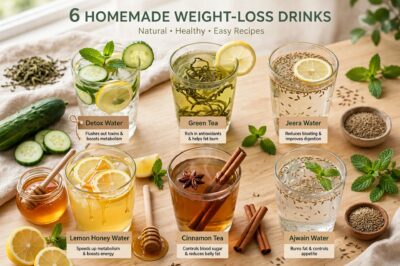
Best Weight Loss Drinks You Can Make at Home: What Works, What Doesn’t
Homemade weight loss drinks can help, just not in the way most recipes claim. No drink melts fat. What a…

Anti-Aging Morning Routine: 3 Ayurvedic Habits That Hold Up Under Research
An anti-aging morning routine built on soaked kalonji, methi and black chana, a handful of soaked nuts and dry fruit,…

Vitamin B12 and D Deficiency Symptoms: What B12, D3 and K2 Do, and What Actually Fixes a Shortfall
SEO details (delete before publishing) Title tag: Vitamin B12 and D Deficiency Symptoms: Causes and Fixes (India) Meta description: Vitamin…
Fatty Liver Diet: 7 Everyday Indian Foods and Habits That Actually Help (and What the Research Really Says)
Fatty liver has a reputation problem. Most people hear the words and picture someone who drinks every night and carries…

Raisins Benefits: What the Research Shows About Kishmish, How Much to Eat, and the 5-Raisin Myth
Raisins benefits get repeated in Indian homes as if the matter were settled: five soaked kishmish every morning, drink the…

Amla (Indian Gooseberry): Benefits, Juice vs Powder, and Safety
Walk through an Indian kitchen in winter and you’ll often find amla three ways: a jar of murabba, a packet…

Butterfly Pea Flower Tea (Aparajita Tea): What It Really Does for Blood Sugar, Skin and Weight
Aparajita climbs over gate posts and garden walls all across India, and for most of us it was just the…
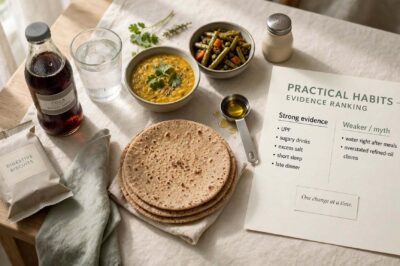
8 Habits to Quit for Better Health (And Which Ones the Research Really Backs)
The internet loves a list of habits to quit, and the eight that circulate most in India are packaged food,…

CGM for Non-Diabetics: Is Continuous Glucose Monitoring Worth It (and What the Evidence Says)
Somewhere between the first sensor and the fortieth screenshot of a post-oats glucose curve, a lot of people decide that…
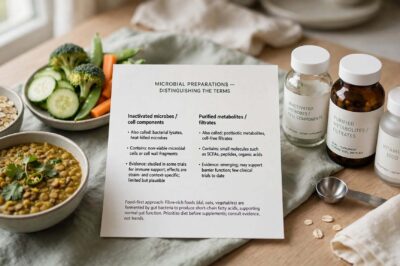
Postbiotics: What They Actually Are, What the Evidence Says, and Whether They’re Worth Buying
Not long ago, postbiotics were a word only gut researchers used. Now it’s on supplement labels, skincare jars and pet…

Follow Us
Recent Posts
- Ayurvedic Remedies for High Blood Pressure: The Complete Guide to Arjuna, Sarpagandha, Brahmi, Garlic, Tulsi, Shirodhara and Pranayama
- Best Weight Loss Drinks You Can Make at Home: What Works, What Doesn’t

- Herbal Massage Oil for Joint Pain: Ingredients, Safe Ratios and an Oral Spice Blend

- Kalonji for Weight Loss: How to Take It, the Right Dose and What the Research Shows

- Anti-Aging Morning Routine: 3 Ayurvedic Habits That Hold Up Under Research

Categories
Tags
adaptogens ashwagandha benefits Ayurveda and evidence ayurvedic remedies blood sugar brain fog CGM for non-diabetics cortisol and stress Digestive Health fatty liver GLP-1 foods gut-brain connection gut brain axis gut health Gut Microbiome holistic health hype vs evidence insulin resistance MASLD metabolic health microbiome natural sleep aids natural stress relief Ozempic alternatives polyvagal theory probiotics sleep hygiene sleep hygiene tips stress management supplement safety