
Fatty liver has a reputation problem. Most people hear the words and picture someone who drinks every night and carries a big belly. If you’re slim and teetotal, it’s easy to assume the topic has nothing to do with you.
It does. In a 2026 Lancet Regional Health study that covered more than 7,700 adults across 27 Indian cities, 38.9% had fatty liver after adjusting for age, and 6.3% of those already had significant scarring. Doctors in India now see plenty of patients with a normal BMI whose liver scan says otherwise, because what matters is where the fat sits (around the abdomen and organs) rather than what the weighing scale shows.
The good news is that early fatty liver responds well to everyday changes. This guide goes through seven of them: what each one is, what the research actually found, and how to do it in an Indian kitchen without buying anything expensive.
Quick answer: can food reverse fatty liver?
Early fatty liver can often be reversed. Food helps mainly by getting you to lose 7–10% of your body weight, and by cutting back on sugar, refined flour and reused frying oil. Garlic, coffee, fibre-rich grains and vegetables have some supporting research. None of them works as a standalone cure, and no drink clears the liver in a week.
Do you really need to be overweight or drink to get fatty liver?
No. Doctors changed the name of the condition in 2023. What used to be called NAFLD (non-alcoholic fatty liver disease) is now MASLD, short for metabolic dysfunction-associated steatotic liver disease. The new name points at the real driver, which is metabolism: insulin resistance, high triglycerides, visceral fat, diabetes or pre-diabetes.
“Lean MASLD” is the term for people with a normal BMI who still have fat in the liver. It is more common in South Asians, and in the Indian data it tracks closely with type 2 diabetes. If you have a family history of diabetes, a waist that has crept up while your weight hasn’t, or a high triglyceride number on your lipid profile, you are a candidate no matter what you weigh.
It is also usually silent. Pain is not an early sign. Most people find out by accident, on an ultrasound done for something else.
What the “stages” of fatty liver actually mean
Two different scales get mixed up, and it causes a lot of unnecessary panic.
The first is the ultrasound grade (1, 2, 3), which describes how much fat is in the liver. Grade 1 is mild, and that is the point where reversing it is most realistic.
The second is the disease stage. Fat alone is simple steatosis. When the liver cells become inflamed, it becomes MASH (the old term was NASH), and that is when liver enzymes like SGOT (AST) and SGPT (ALT) often rise. Over years, repeated inflammation leaves scar tissue (fibrosis), and advanced scarring is cirrhosis. Scarring is graded F0 to F4.
One correction to the version you’ll hear in many videos: a grade 3 ultrasound does not automatically mean cirrhosis, and reversing fat does not mean old scarring vanishes. Fat clears fastest. Mild fibrosis can improve with sustained weight loss, but cirrhosis does not go back. This is the reason to act while you’re still in the fat-and-inflammation phase.
1. Garlic (lehsun)
What the research says. The best-known trial is a 15-week, double-blind study of 98 adults with ultrasound-confirmed fatty liver. Half took 400 mg of enteric-coated garlic powder twice a day, the rest took a placebo. About 51% of the garlic group improved by at least one ultrasound grade, against roughly 16% on placebo. ALT, AST, blood sugar and LDL cholesterol also fell more in the garlic group.
The catch. It was one trial, from Iran, with fewer than 100 people, and the participants took standardised tablets rather than cloves. Nobody has shown that a clove a day does the same thing.
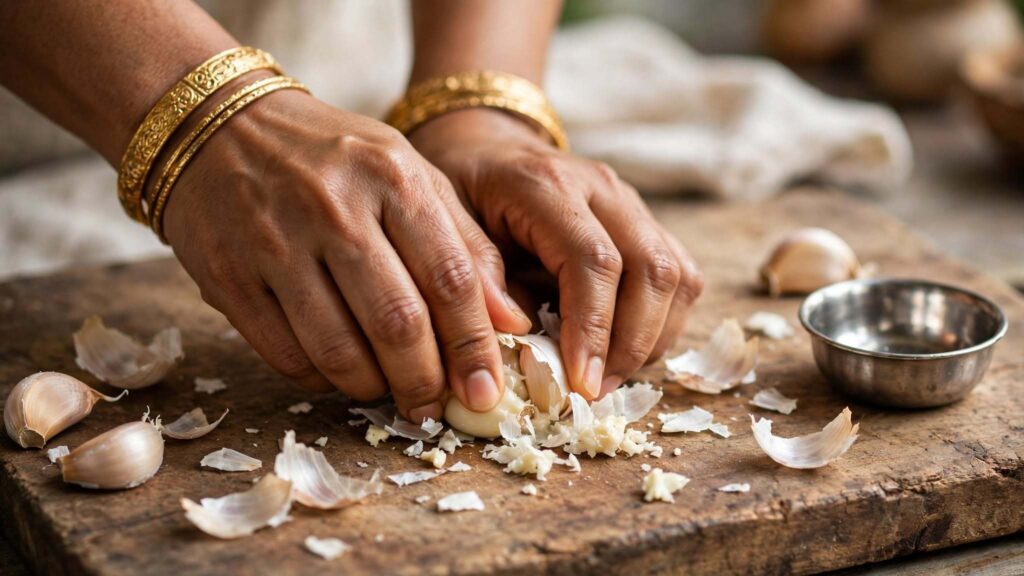
How to use it. Cooking with garlic is fine and worth continuing. If you want to eat it raw, one or two cloves is the usual amount. Chop or crush them and leave them for about ten minutes before eating, which lets the sulphur compounds develop. That step comes from food chemistry, not from the liver trial.
Be careful if you take blood thinners, have surgery coming up, or get acidity on an empty stomach. Taking it with food is easier on the stomach.
2. Fibre-rich grains and pulses: barley (jau), roasted chana, flaxseed (alsi)
What the research says. Soluble fibre slows sugar absorption, feeds gut bacteria and helps with weight control, which is the lever that matters most for the liver. Barley is rich in beta-glucan, a soluble fibre. Evidence specific to fatty liver is thinner than the evidence for fibre in general, so treat these as sensible swaps, not treatments.
How to use it. Mix barley flour into your atta, one part to three parts of wheat flour. That ratio is a kitchen habit, not a trial dose, but it changes the rotis without changing how you eat. Replace the evening biscuits with a fistful of roasted chana. Or stir a teaspoon of lightly roasted, crushed flaxseed into curd once a day.
You do not need all three. Pick the one that fits your routine and stick with it for a couple of months before adding another.
3. Curd and buttermilk (dahi and chaas)
What the research says. Honestly, this is the weakest link on the list. Studies on fermented dairy and fatty liver are mostly observational and small. The case for curd is practical: it is protein-rich, filling, and it usually displaces something worse on the plate.
How to use it. A bowl of plain, home-set curd with lunch, or a glass of chaas with roasted cumin in the afternoon. Skip the sweetened lassi and the flavoured packet yoghurts, where the sugar undoes the point.
4. Coffee, black
What the research says. This is the best-supported item here. Large observational studies link regular coffee drinking to lower odds of fibrosis and cirrhosis, and to lower liver enzymes in people at risk. Indian specialist guidance often cites two to three cups a day. Observational studies cannot prove cause, but the pattern shows up consistently.
How to use it. Plain black coffee, or with a splash of milk at most. The sugar-and-cream coffee-shop drink is a different product, and in India the biggest problem is the two or three spoons of sugar added at home.
Be careful if coffee gives you reflux, palpitations, anxiety or high blood pressure, or if you are pregnant. Don’t start drinking it for the liver alone.
5. Cruciferous vegetables: cabbage, cauliflower, radish, sarson ka saag
What the research says. These vegetables contain sulphur compounds and fibre that are being studied for liver fat. Most of the strong results so far come from animal work and population data, so “radish reverses fatty liver” goes further than the evidence. What holds up is simpler: a diet built around vegetables, with fewer refined carbohydrates, lowers liver fat over time.
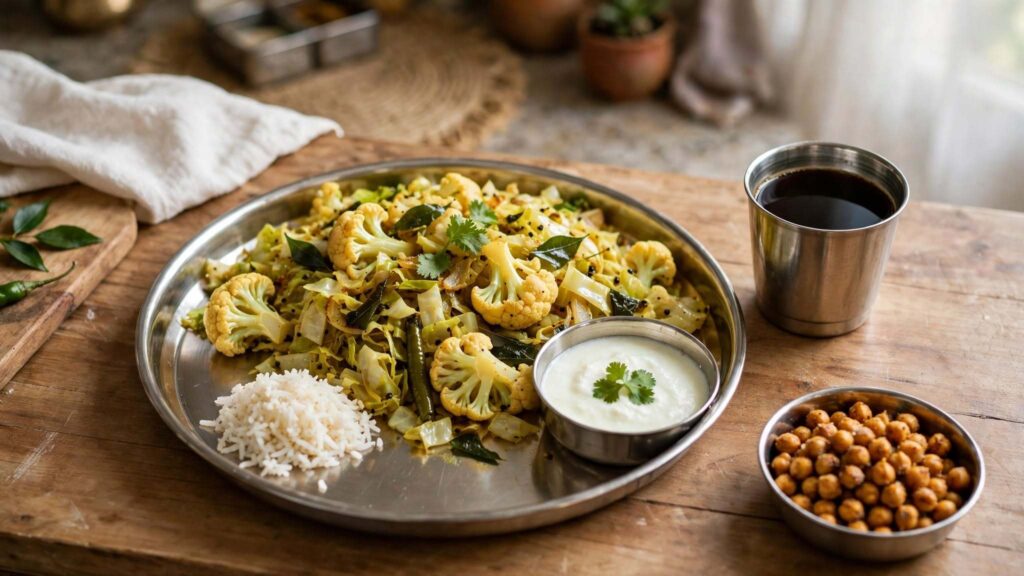
How to use it. Look at your plate. If roti or rice covers most of it and the sabzi is a small spoonful, flip those proportions. Rotate whatever is in season instead of hunting for something exotic. And go easy on the oil, because a cabbage cooked in a pool of oil is no longer helping.
6. Turmeric (haldi): a more careful take
What the research says. Curcumin, the active compound in turmeric, has been tested in small fatty-liver trials with modest effects on enzymes and liver fat. The glass of warm haldi water with black pepper at bedtime, however, has not been tested in that form. Curcumin from the spice in your sabzi is poorly absorbed in the first place, which is why trials use concentrated supplements.
That brings the safety question. Liver injury from turmeric supplements has been reported, mostly with concentrated products and some of them boosted with black pepper extract. A gastroenterologist quoted in Indian press put it plainly: cooking with turmeric is fine, but there is no solid data to recommend turmeric capsules for liver health.
What to do. Keep using haldi in your cooking. If you want a supplement, talk to your doctor first, particularly if your enzymes are already raised or you take other medicines.
7. Cooking oil: how much, and how often it’s reused
This one does more than any superfood.
Measure it. Most home cooks pour oil from the bottle by feel, and a pour that “looks like a little” is often two or three times what a recipe needs. Use a tablespoon or teaspoon for a week and see how far off your instinct is. Even olive oil adds calories that end up as body fat, so “healthy oil” is not permission to use more of it.
Stop re-frying. When oil is heated again and again, it breaks down into oxidised compounds that are linked to inflammation. The video version of this advice says trans fats build up, but the more accurate concern is a broader mix of breakdown products. FSSAI caps total polar compounds in frying oil, which is the regulator’s way of saying oil has a shelf life. At home, use it once for frying. If there is leftover, use it for a tadka or a sabzi, and don’t return it to the kadhai for the next batch of pakoras.
Where to start if seven things feels like too much
Pick two. First, swap one daily item: roasted chana for evening biscuits, plain curd with lunch, or barley in your atta. Second, measure your cooking oil with a spoon. Both slot into what you already do, which is why people actually keep doing them.
What matters more than any single food
Food choices work by moving the bigger levers.
Weight. Losing 7–10% of body weight is the most consistent finding for reducing liver fat and inflammation. For an 80 kg adult, that’s roughly 6 to 8 kg, and it works best slowly over several months. Crash diets tend to rebound.
Sugar and refined carbs. Cold drinks, packaged juices, sweets, maida and white bread feed liver fat directly. Cutting these usually gives you more than adding garlic ever will. Our guide on habits to quit for better health goes through which of these the research backs.
Movement. Around 150 minutes of brisk walking a week improves insulin sensitivity, even when the scale barely moves.
Alcohol. The “non-alcoholic” label was dropped from the name, but alcohol still adds to liver damage. If your enzymes are already raised, your doctor will probably ask you to stop completely.
Meal timing. Some people find an earlier dinner helps with weight and blood sugar. We looked at the evidence in circadian fasting and time-restricted eating.
Blood sugar awareness. Fatty liver and insulin resistance travel together. If you’re curious about glucose tracking, read whether a CGM is worth it if you’re not diabetic before spending money on one.
A word on “detox”. The liver already does the detoxifying. No juice, tea or cleanse speeds it up, which is the same reasoning we apply in our piece on what lymphatic drainage can and can’t do for detox claims. For more food-focused reading, browse our Nutrition & Diet section, including the guide on postbiotics and gut health.
How fatty liver is checked
Ask your doctor about a liver function test (SGOT, SGPT, GGT), a lipid profile, fasting sugar or HbA1c, and an abdominal ultrasound. If any of these are off, a FibroScan or a simple blood score such as FIB-4 can estimate how much scarring is present. These tests tell you whether you’re dealing with fat alone or fat with scarring, which changes how aggressive the plan needs to be.
See a doctor promptly if you notice yellowing of the eyes or skin, persistent swelling of the legs or abdomen, dark urine, or unexplained weight loss. Those are not early fatty-liver signs.
For people with advanced fatty liver (MASH with moderate to advanced scarring), India’s drug regulator has recently approved semaglutide 2.4 mg for that use, alongside diet and exercise. It is a prescription decision for a specialist, not a shortcut for mild fatty liver.
Frequently asked questions
Can a thin person have fatty liver? Yes. Lean MASLD is well documented in India. It is tied to belly and organ fat, insulin resistance and diabetes rather than to BMI.
Can grade 1 fatty liver go away completely? Often, yes. With steady weight loss, less sugar and regular activity, many people see liver fat clear on a follow-up scan within several months. Your doctor can tell you when to repeat the ultrasound.
How long does it take to reverse fatty liver? Liver enzymes may start improving within a few months of consistent changes. The garlic trial above ran 15 weeks, and weight-loss studies usually track results over 6 to 12 months.
Is coffee good for fatty liver? Unsweetened coffee is linked to lower liver enzymes and lower risk of fibrosis in observational studies, and two to three cups a day is the usual figure. It does not suit everyone, so skip it if it worsens reflux, sleep or blood pressure.
Is haldi water good for the liver? Not proven. Haldi in food is fine. Concentrated turmeric supplements have been linked to liver injury in some people, so check with a doctor before taking them.
Which oil is best for fatty liver? The amount and the reuse matter more than the brand. Measure it, vary your oils, and avoid reheating the same oil for repeated frying.
This article is for general education and isn’t a substitute for medical advice. If you have been told you have fatty liver, ask your doctor which tests and targets fit your case before starting any supplemen



Leave a Reply