
Walking pneumonia has an odd name for something that can leave you coughing for weeks. It’s a mild form of pneumonia, mild enough that many people keep going to work or school, which is exactly how it spreads. If you’ve had a cough that just won’t quit, a low fever, and a strange tiredness, you may be wondering whether it’s this. This guide explains what walking pneumonia is, how its symptoms differ from regular pneumonia, whether it’s contagious, what treatment looks like, and how to support your recovery at home without missing the signs that you need a doctor.
Related: health and wellness guides on HealthMorph
What Is Walking Pneumonia?
“Walking pneumonia” isn’t a formal medical diagnosis. It’s an informal term for a milder pneumonia that doesn’t put you in bed or the hospital. The most common cause is a bacterium called Mycoplasma pneumoniae, which is why doctors also call it atypical pneumonia or mycoplasma pneumonia. Other organisms, such as Chlamydia pneumoniae, can cause similar illness.
It tends to affect school-age children, teenagers, and young adults, though anyone can get it. It spreads more in crowded places like schools, dorms, and offices, and it often rises in waves over several years.
Walking Pneumonia vs Regular Pneumonia
| Walking pneumonia | Typical bacterial pneumonia | |
|---|---|---|
| Usual cause | Mycoplasma pneumoniae | Streptococcus pneumoniae and others |
| Onset | Gradual, over days to weeks | Often sudden |
| Fever | Low-grade or none | Often high, with chills |
| Cough | Dry, hacking, can last weeks | Often wet, with phlegm |
| How you feel | Tired but often able to function | Usually quite ill |
| Typical treatment | Certain antibiotics if needed | Antibiotics, sometimes hospital care |
The key point: “walking” refers to how mild it feels, not how harmless it is. It can still turn serious, particularly in older adults, people with lung or heart disease, and those with weak immune systems.
Walking Pneumonia Symptoms
It often starts like a cold or a lingering bronchitis. Common signs:
- A dry, persistent cough that gets worse over time and can last for weeks
- Low-grade fever (or no fever at all)
- Fatigue and low energy
- Sore throat and hoarseness
- Headache
- Chest discomfort, especially when coughing
- Mild shortness of breath with effort
- Sometimes ear pain, a rash, or stomach upset, particularly in children
The slow build is the giveaway. Many people say, “I thought it was just a stubborn cold.”
Is Walking Pneumonia Contagious?
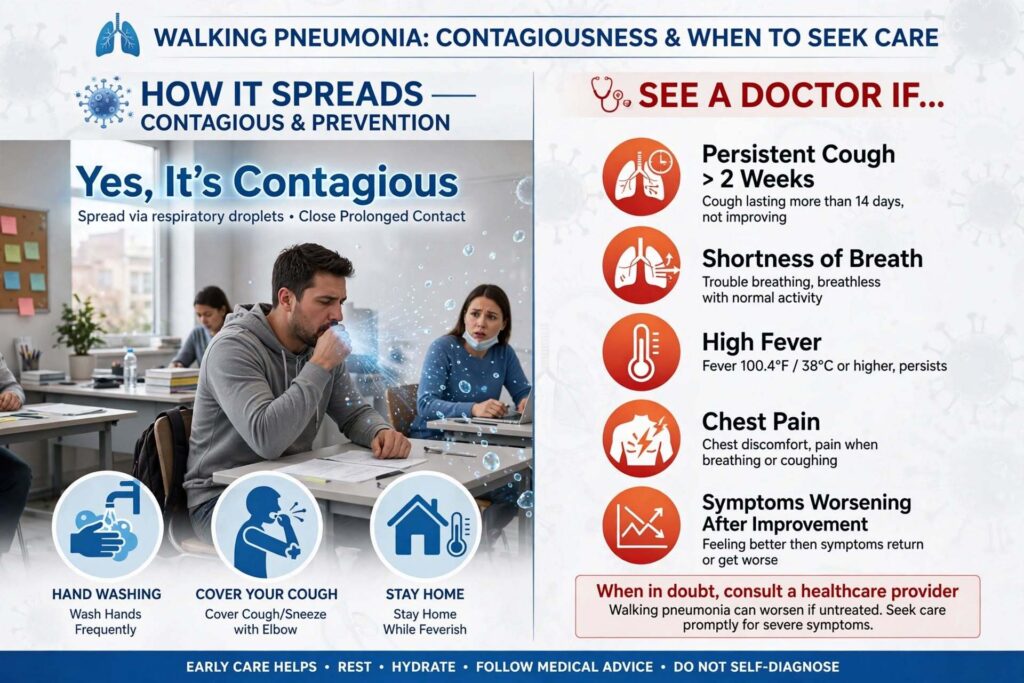
Yes. It spreads through respiratory droplets when an infected person coughs, sneezes, or talks, and you can also pick it up from surfaces and then touch your face. A few things worth knowing:
- Incubation is long, typically one to four weeks, so you may not know where you caught it.
- You can be contagious while your symptoms are mild, which is why it moves quietly through families, classrooms, and workplaces.
- How long you stay contagious isn’t precisely defined. You’re generally considered infectious while symptomatic, and a cough can linger long after, so it’s best not to assume you’re clear just because you feel mostly fine.
- Spread usually needs close, prolonged contact, like the same household, classroom, or office.
How to avoid spreading it
- Cover coughs and sneezes (use your elbow or a tissue)
- Wash hands often
- Don’t share cups, utensils, or towels
- Stay home while you have a fever, and until you’re feeling well enough to go back. A good rule is to wait until you’ve been fever-free for 24 hours without fever-reducing medicine
- Ventilate shared rooms when you can
There’s no vaccine for Mycoplasma pneumonia, so hygiene is your main protection.
How Is It Diagnosed?
A doctor will usually listen to your lungs and ask about your symptoms and how long they’ve lasted. A chest X-ray can confirm pneumonia, and tests such as PCR swabs or blood tests can sometimes identify the organism. A lot of cases are diagnosed from the picture alone: a long dry cough, a mild fever, and an X-ray with patchy changes.
Walking Pneumonia Treatment
Many mild cases improve on their own, but a doctor may prescribe an antibiotic, particularly if symptoms are more than mild, last a long time, or you’re at higher risk.
- Macrolides (such as azithromycin) are common first choices, especially for children.
- Doxycycline is an option for adults and older children.
- Penicillin-type antibiotics don’t work on Mycoplasma, because the bacteria have no cell wall. This is why a regular antibiotic you may have at home won’t help, and why you shouldn’t self-medicate.
- Resistance to macrolides has increased in some parts of the world, so if you’re not improving, your doctor may change the treatment.
Don’t take leftover antibiotics or start them without a prescription. The wrong antibiotic can delay recovery and add side effects.
Natural and Supportive Care at Home
Supportive care doesn’t replace medical treatment if you need it, but it helps you feel better and recover.
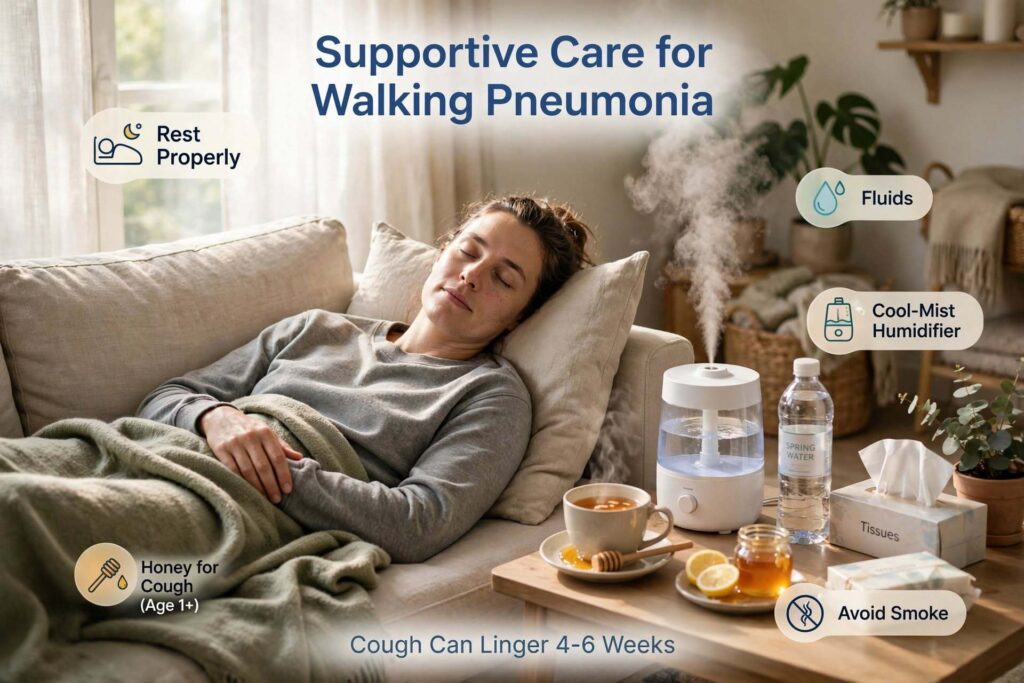
- Rest properly. Walking pneumonia tempts you to carry on. Give your body more downtime than usual, especially in the first week.
- Drink plenty of fluids. Water, warm soups, and herbal teas thin mucus and prevent dehydration.
- Soothe your cough with honey (for ages 1 and up). A spoonful on its own or in warm water or tea can calm a night cough.
- Use a cool-mist humidifier, cleaned daily, to ease dry airways.
- Manage fever and aches with the medicine your doctor or pharmacist recommends, following the label. Don’t give aspirin to children.
- Avoid smoke, including cigarettes, vaping, incense, and heavy cooking fumes, which irritate healing lungs.
- Eat well with proteins, fruits, and vegetables, and keep meals simple if your appetite is low.
- Don’t force hard exercise. Gentle walking is fine as you improve, but return to intense workouts gradually.
- Sleep with your head slightly raised if lying flat makes the cough worse.
For more food-first recovery ideas, see our guide to Natural Remedies & Ayurveda. If you feel worn out for weeks afterward, ask about checking your iron, and read how to increase hemoglobin naturally. For common cold-season comfort measures, see our guide to natural remedies for cold, flu, and sore throat.
How Long Does Walking Pneumonia Last?
Most people start to feel better within one to two weeks of beginning treatment or as the infection resolves. But recovery is rarely clean:
- The cough and fatigue can linger for several weeks, sometimes four to six weeks or more
- Energy often returns before the cough fully fades
- You may feel better, then tired again if you push too hard
If you’re not improving after a couple of weeks, or you get worse, go back to your doctor.
When to See a Doctor (or Go to the ER)
Seek medical care promptly if you have:
- A cough lasting more than a couple of weeks, especially with fever or fatigue
- Shortness of breath, rapid breathing, or wheezing
- Chest pain, especially sharp or worse with breathing
- A fever that is high or lasts more than 3 days
- Symptoms that improve and then get worse
- Confusion, severe weakness, or blue or gray lips (this is an emergency)
Take extra care and seek early advice if you are over 65, pregnant, have asthma, COPD, heart disease, diabetes, or a weak immune system, or if the patient is a young child or infant.
Frequently Asked Questions
1. What is walking pneumonia?
It’s an informal name for a mild pneumonia, most often caused by Mycoplasma pneumoniae. You can feel unwell but still manage to get about your day, hence the name.
2. Is walking pneumonia contagious?
Yes. It spreads through respiratory droplets from coughing, sneezing, or talking, usually with close, prolonged contact. You can pass it on while your symptoms are mild.
3. How long is walking pneumonia contagious?
There’s no exact window. People are generally considered contagious while they have symptoms, and the cough can last for weeks. Stay home until your fever is gone and you feel well enough, and keep up good hygiene.
4. How do you get walking pneumonia?
By inhaling droplets from an infected person, or touching a contaminated surface and then your face. It spreads more easily in crowded settings such as schools and shared homes.
5. What’s the difference between walking pneumonia and pneumonia?
Walking pneumonia is usually milder, comes on gradually, and causes a dry cough with low fever. Typical pneumonia often starts suddenly with a high fever, chills, and a wet cough, and the person is usually sicker.
6. What are the first signs of walking pneumonia?
A dry cough that slowly worsens, mild fever, fatigue, sore throat, headache, and chest discomfort. It often feels like a cold that won’t go away.
7. Do I need antibiotics for walking pneumonia?
Sometimes. Mild cases may clear on their own, but a doctor may prescribe a macrolide or doxycycline. Penicillin-type antibiotics don’t work on Mycoplasma, so see a doctor rather than self-treating.
8. How long does it take to recover?
Most people improve within one to two weeks, but the cough and tiredness can hang on for four to six weeks or longer. Take it easy and increase activity gradually.
9. Can children and teens get walking pneumonia?
Yes, school-age children and young adults are among those most often affected. Watch for a persistent cough, fever, and tiredness, and call your pediatrician if symptoms linger or breathing becomes difficult.
10. Can I go to work or school with walking pneumonia?
It’s best to stay home while you have a fever and feel unwell, and return when you’ve been fever-free for 24 hours without fever-reducing medicine and you’re well enough to cope with the day. Keep covering coughs and washing hands.
The Bottom Line
Walking pneumonia is easy to underestimate. It’s usually mild, it’s contagious, and the cough can outlast every other symptom. Rest more than you think you need, drink plenty, soothe your cough with honey (age 1 and up), and see a doctor if your symptoms last, worsen, or involve breathing trouble. Recovery is slow but steady for most people. For more practical guides, visit HealthMorph.
Medical disclaimer: This article is for education and isn’t medical advice. See a qualified doctor for a persistent cough, fever, or breathing difficulty, and seek emergency care for severe symptoms.






Leave a Reply