
Cycle syncing — the practice of aligning your workouts, diet, and daily habits with the four phases of your menstrual cycle — has exploded across TikTok and Instagram over the past few years, spawning apps, courses, meal plans, and entire coaching businesses built around the idea that timing your training to your hormones is the missing piece of women’s fitness. Here’s what almost no article covering this topic will tell you upfront: the clinical evidence for cycle syncing’s core claims is genuinely much weaker than the trend suggests, and several of the specific recommendations that get repeated everywhere — lift heavy only in your follicular phase, avoid intense cardio during your period, expect dramatically different metabolism phase to phase — have been directly tested by researchers and simply haven’t held up. That doesn’t mean your hormones do nothing, or that this entire framework is worthless. It means the honest version of cycle syncing looks different from the version being sold to you, and this guide is built to give you that honest version: what the research actually supports, what’s genuinely still uncertain, what’s been outright debunked, and a realistic, evidence-respecting way to structure your month if you still want to work with your cycle rather than against it.
What Cycle Syncing Actually Claims
Cycle syncing divides the menstrual cycle into four phases and assigns specific training, nutrition, and lifestyle recommendations to each:
| Phase | Typical Length | Popular Cycle-Syncing Advice |
|---|---|---|
| Menstrual | Days 1–5 (bleeding) | Rest, gentle movement (yoga, walking), iron-rich foods |
| Follicular | Days 1–13 (overlaps with menstrual) | High-intensity training, heavy lifting, “peak energy” |
| Ovulation | Around day 14 | Peak strength and social energy, high-intensity work |
| Luteal | Days 15–28 | Lower-intensity training, more carbohydrates, more rest |
The theory rests on the idea that fluctuating estrogen and progesterone across these phases meaningfully change your strength, energy, metabolism, and nutritional needs enough to warrant restructuring your entire month around them. It’s an appealing idea — female physiology genuinely isn’t static, and it’s a fair critique that most fitness and nutrition research historically defaulted to male physiology as the norm. But an appealing premise and a well-supported conclusion aren’t the same thing, and the gap between the two is exactly where cycle syncing content usually stops looking closely.
What the Research Actually Shows (This Section Is the Real Value Here)
This is where this guide differs from almost everything else published on cycle syncing, because most competing content either promotes the trend uncritically or debunks it entirely without offering anything useful in its place. The real picture is more nuanced than either extreme.
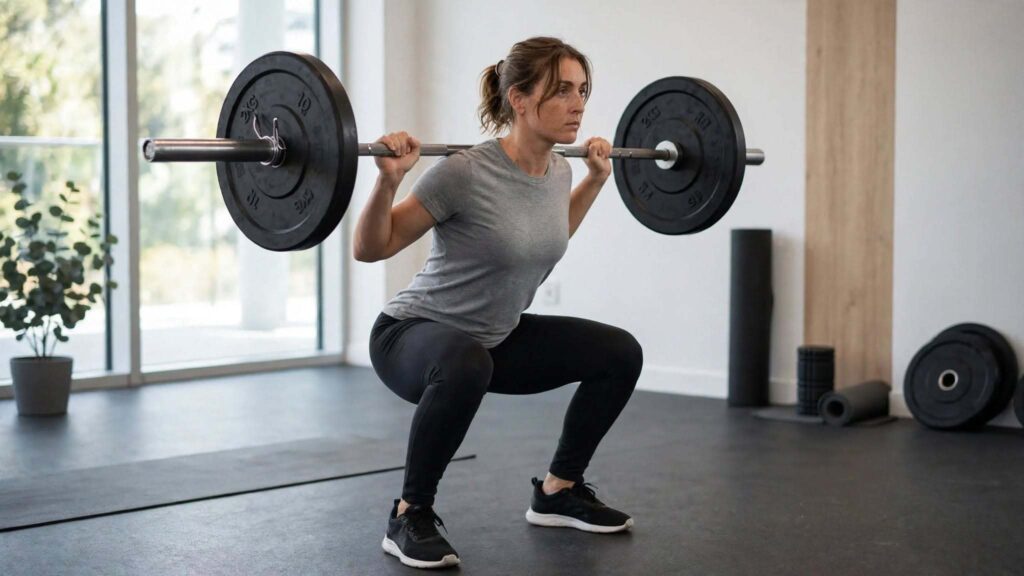
Strength Training and Muscle Adaptation: Not Supported
A 2023 umbrella review published in Frontiers in Sports and Active Living, which pooled the full body of existing meta-analyses and systematic reviews on this exact question, concluded that current evidence does not support the idea that menstrual cycle phase meaningfully influences acute strength performance or long-term adaptations to resistance training. A follow-up study published in The Journal of Physiology went further, directly testing muscle protein synthesis and whole-body muscle breakdown in response to resistance exercise across cycle phases — researchers found no significant effect of cycle phase on either outcome. Commenting on this body of work in 2026, the lead researcher noted directly that popular recommendations to lift heavy in one phase and scale back in another simply aren’t supported by current evidence and don’t align with basic training principles: adaptation comes from consistency and progressive overload applied over time, not from timing workouts to a hormonal template.
What this means practically: if you’ve been told you should only attempt personal records during your follicular phase or avoid heavy lifting during your luteal phase, that specific guidance isn’t backed by the research. If you’re building or maintaining muscle, this connects directly to broader strength-training and recovery fundamentals covered in this guide on protein powder for women, where consistent training and adequate protein intake — not cycle timing — are what the evidence actually points to as the primary drivers of results.
Metabolism and Body Composition: Also Not Supported
A separate study from the Wu Tsai Human Performance Alliance directly measured resting metabolic rate and body composition across the menstrual cycle and found that neither cycle phase nor hormonal contraceptive use significantly affected either outcome. This directly contradicts a very commonly repeated cycle-syncing claim that metabolism swings dramatically enough across the month to justify systematically eating more or less depending on phase.
Muscle Damage and Recovery Biomarkers: Inconsistent, Not Phase-Driven
A 2026 critical review examining exercise-induced muscle damage and inflammatory markers across 18 studies found that the exercise itself and the timing of sample collection were far more consistent predictors of biomarker responses than which cycle phase a person was in. In plain terms: how hard you trained and when you measured mattered more than where you were in your cycle.
Where the Evidence Is Genuinely More Mixed (Not a Flat “No”)
It’s worth being fair here rather than overcorrecting into blanket dismissal, since a few specific claims have more nuanced support:
- Certain exercise types may genuinely help relieve period pain — this is one of the claims current research treats more favorably, and it lines up with broader evidence that movement supports pain modulation generally.
- Appetite does appear to increase during the luteal phase for many women, which is a real, physiologically plausible pattern (progesterone has known effects on appetite regulation) — though this doesn’t necessarily translate into the specific macronutrient-timing advice cycle-syncing content often builds around it.
- Individual symptom experience varies enormously. Averaged research findings across a study population don’t rule out that some individuals genuinely feel and perform differently across their own cycle — the research gap is in generalizable, prescriptive advice that applies the same way to everyone, not necessarily in individual variation itself.
Why the Research Keeps Landing on “Inconclusive”
A 2025 academic review examining how cycle syncing spreads on TikTok pointed to a real methodological problem underlying this entire topic: much of the existing research on nutrition and the menstrual cycle has been criticized for limited generalizability, since many studies don’t adequately account for athletic status, exercise habits, or individual diet patterns in their samples. Studies also struggle to consistently define and verify exactly when each phase begins and ends, which makes comparing results across different research genuinely difficult. This is a large part of why the science reads as “inconclusive” rather than a clean yes or no — the underlying research base itself has real limitations, not just the popular interpretation of it.
Why This Nuance Actually Matters for You
Here’s the practical concern raised by researchers studying this trend directly: strict adherence to popular cycle-syncing principles — for example, avoiding cardio and only doing light movement during your entire menstrual phase — could actively work against female athletes, regular exercisers, or anyone training toward a specific goal, since it can mean stepping back from training during a meaningful portion of every single month without strong evidence that doing so improves outcomes. If you’re using cycle syncing as a rigid rulebook rather than a flexible, symptom-responsive framework, it’s worth reconsidering that approach specifically.
What a Genuinely Evidence-Respecting Approach Looks Like
Given all of the above, here’s how to actually use cycle-awareness productively — informed by symptoms and how you actually feel, rather than a hormonal template applied uniformly regardless of your individual experience.
During Menstruation (Days 1–5)
- Train based on how you actually feel, not a blanket rule. If cramping or fatigue genuinely make high-intensity work uncomfortable, scaling back is reasonable and evidence-supported for symptom relief specifically — but there’s no research basis for assuming you must reduce intensity if you feel fine.
- Iron matters here for a real, well-established reason. Menstrual blood loss is a genuine and often underestimated source of iron depletion, and this has nothing to do with the more speculative cycle-syncing claims — it’s basic, well-documented physiology. If fatigue during and after your period feels disproportionate, this guide on how to increase hemoglobin naturally with summer and winter remedies is directly relevant and grounded in solid evidence, unlike some of the more speculative phase-based nutrition advice elsewhere in this trend.
- Movement for pain relief is reasonably supported, so gentle activity like walking or yoga is a fine choice if that’s what feels good — just not because “the science says you must rest,” but because it may genuinely help with cramping specifically.
Follicular Phase (Days 1–13, Overlapping With Menstruation)
- There’s no strong evidence you need to “save” your hardest training for this window. Train at whatever intensity fits your program and how you feel; the umbrella review findings above apply directly here.
- Energy levels reported as higher in this phase by some individuals are plausible and worth listening to personally, but shouldn’t be treated as a universal rule that applies identically to everyone.
Ovulation (Around Day 14)
- Similarly, there’s no solid evidence that this is a uniquely “peak” performance window that should be specifically targeted for personal records, despite this being one of the most commonly repeated cycle-syncing claims.
- If you notice you genuinely feel strongest here, that’s useful personal data — just hold it loosely rather than building your entire training calendar around it.
Luteal Phase (Days 15–28)
- Increased appetite here has real physiological plausibility, largely tied to progesterone’s known effects. Rather than fighting this or over-restricting, planning slightly more substantial, protein- and fiber-forward meals during this window is a reasonable, low-risk accommodation.
- PMS-related mood and sleep symptoms are real for many women, even if the broader cycle-syncing framework overstates the performance claims. Magnesium and adequate sleep support are genuinely useful here — this practical guide on using nutmeg for sleep naturally is a reasonable, evidence-grounded starting point if sleep disruption tends to cluster in this window for you.
- There’s no strong evidence you need to reduce training intensity here either, despite this being one of the most repeated cycle-syncing rules. If you feel capable of your normal training load, the research doesn’t suggest you’re working against your biology by maintaining it.
Nutrition: What’s Genuinely Useful vs. Overstated
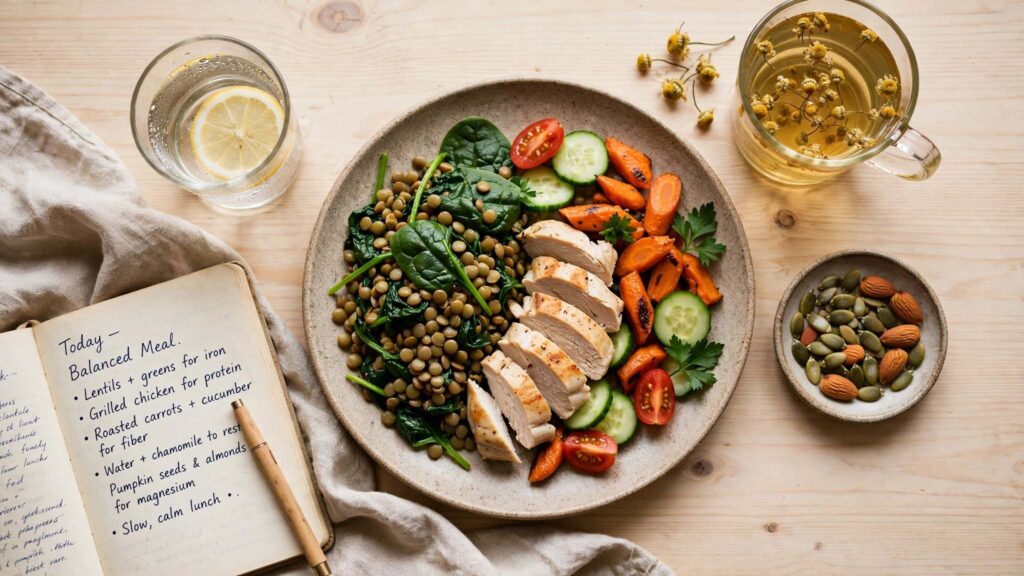
Cycle-syncing nutrition content often recommends specific food categories by phase — iron and vitamin C-rich foods during menstruation, more carbohydrates in the luteal phase, and so on. Some of this rests on reasonable physiological logic even where the broader research base is thin:
- Iron and vitamin C during and after menstruation is genuinely sound, well-established advice, independent of cycle-syncing as a broader framework — vitamin C improves non-heme iron absorption, which is directly useful given real menstrual blood loss.
- Omega-3 fatty acids are recommended in various cycle-syncing content, and while the specific phase-timing claims aren’t strongly evidenced, omega-3s are broadly beneficial for inflammation and hormonal health regardless of what day of your cycle you’re on — this guide on omega-3 benefits, EPA, and DHA covers the actual dosing evidence.
- Stable blood sugar throughout your entire cycle, not just specific phases, is one of the more consistently useful pieces of general nutrition advice, and it’s worth applying every day rather than treating it as a luteal-phase-specific strategy — this breakdown of the worst foods for breakfast you should avoid is relevant regardless of cycle phase.
- Fermented foods and gut-supportive nutrition appear in some cycle-syncing menstrual-phase recommendations; while the specific phase-timing claim isn’t well evidenced, gut health genuinely does influence hormone metabolism and overall wellbeing throughout the entire cycle, not just one week of it — this guide on the gut-brain axis and the link between gut health and mental health explains the broader connection, and this strain-specific guide to probiotics for gut health covers which specific strains actually have research behind them, since (as with cycle syncing itself) specificity matters more than a general category claim.
Cycle Syncing and Hormonal Contraceptives: An Important Caveat
If you use hormonal birth control, this entire framework applies differently, and it’s a detail most cycle-syncing content skips entirely. Hormonal contraceptives suppress the natural hormonal fluctuations that cycle syncing is built around, meaning the phase-based rationale largely doesn’t apply in the same way. Research on training outcomes specifically in hormonal contraceptive users remains limited, but what exists doesn’t suggest performance or body composition is meaningfully impaired compared to non-users. If you have specific concerns about how your particular contraceptive method might affect your training or energy levels, that’s a conversation worth having directly with your prescribing clinician rather than trying to reverse-engineer it from cycle-syncing content designed around a naturally fluctuating cycle.
The Social and Cultural Side of This Trend (Worth Knowing)
A 2025 academic study using focus groups to examine young women’s attitudes toward cycle syncing found that while participants generally expressed support for the practice among women, they also noted men would likely not support the behavior — highlighting a broader social dimension to this trend beyond pure physiology. Researchers examining cycle-syncing content on TikTok have also raised a legitimate concern worth sitting with: because the underlying science is genuinely inconclusive, it creates space for content creators to present partial, cherry-picked research in ways that can inadvertently reinforce gender stereotypes about women’s capability and reliability being tied to their hormonal state. This is worth knowing not to dismiss cycle awareness altogether, but to stay critical of any framework — including this one — that claims more certainty than the underlying science actually supports.
A Realistic, Evidence-Respecting Monthly Framework
Rather than a rigid phase-by-phase rulebook, here’s a framework built around what’s actually supported: consistency as your default, with room for genuine, symptom-driven flexibility.
| Situation | Evidence-Based Approach |
|---|---|
| Planning your training program | Base it on progressive overload and consistency, not cycle phase — the strength and adaptation research doesn’t support phase-based programming |
| Period pain or discomfort | Scale intensity down if it genuinely helps you feel better; gentle movement has reasonable support for symptom relief specifically |
| Increased appetite in luteal phase | Honor it with satisfying, protein- and fiber-rich meals rather than restricting against it |
| Fatigue during/after menstruation | Check iron intake and consider bloodwork if fatigue feels disproportionate — this has strong evidence behind it, independent of cycle syncing broadly |
| PMS mood or sleep symptoms | Prioritize magnesium-rich foods, consistent sleep habits, and stress management tools proven to help mood generally |
| On hormonal contraceptives | Recognize the phase-based rationale largely doesn’t apply to you in the same way; train and eat based on how you actually feel |
| Any specific “phase rule” you read online | Treat it as a hypothesis to test against your own experience, not an instruction to follow blindly |
Frequently Asked Questions
1. Does cycle syncing actually work, or is it just a trend? The clinical evidence for cycle syncing’s core claims — particularly around strength training performance and metabolism — is currently weak to non-existent, with multiple systematic reviews and direct studies finding no meaningful effect of cycle phase on strength adaptation, muscle protein synthesis, or resting metabolic rate. Some individual claims, like exercise helping with period pain, have more reasonable support, so the honest answer is that it’s a mixed picture rather than a clear yes or no.
2. Should I avoid lifting heavy weights during certain phases of my cycle? Current research does not support this idea. A 2023 umbrella review and a follow-up study directly measuring muscle protein synthesis both found no significant effect of menstrual cycle phase on strength performance or training adaptations, meaning there’s no strong evidence-based reason to avoid heavy lifting during any particular phase if you feel capable of it.
3. Does metabolism really change throughout the menstrual cycle? Research directly measuring resting metabolic rate and body composition across cycle phases found no significant effect of either cycle phase or hormonal contraceptive use, which contradicts a commonly repeated cycle-syncing claim that metabolism shifts dramatically enough to require systematically eating more or less by phase.
4. Is there any part of cycle syncing that’s actually backed by science? Yes — certain exercise types have reasonable support for helping relieve period pain specifically, and increased appetite during the luteal phase has real physiological plausibility tied to progesterone. Iron needs during and after menstruation are also well-established, independent of the broader cycle-syncing framework.
5. Does cycle syncing apply if I’m on hormonal birth control? Not in the same way. Hormonal contraceptives suppress the natural hormonal fluctuations that cycle syncing is built around, so the phase-based rationale largely doesn’t apply, and current limited research doesn’t suggest training outcomes are meaningfully different for hormonal contraceptive users compared to non-users.
6. Why does cycle syncing feel so popular if the evidence is weak? It combines a reasonable underlying premise — that female physiology isn’t static and deserves specific research attention — with social media’s tendency to present partial or inconclusive research as settled fact. Researchers studying this trend have specifically noted that the genuine scientific uncertainty creates space for oversimplified, appealing narratives that don’t always reflect what the data actually shows.
7. Can cycle syncing help with PMS symptoms? Cycle syncing as a full framework isn’t specifically validated for PMS, but several of its individual components — like prioritizing magnesium, consistent sleep, and gentle movement during symptomatic periods — are genuinely useful strategies for PMS-related mood and sleep symptoms, supported by broader research outside the cycle-syncing framework itself.
8. Should I eat more carbohydrates during my luteal phase? Increased appetite during the luteal phase is a real, physiologically plausible pattern for many women, and responding to it with satisfying, balanced meals rather than restriction is reasonable. However, the specific macronutrient-timing claims some cycle-syncing content makes go beyond what current research on nutrient intake across cycle phases actually supports.
9. Is it bad to follow cycle syncing if it makes me feel more in tune with my body? Not necessarily. Using your cycle as a general awareness tool and adjusting based on how you genuinely feel is reasonable, as long as it’s treated as personal, symptom-based flexibility rather than a rigid rule system presented as scientifically proven, since the strict prescriptive version isn’t well supported by current evidence.
10. What does the research say about training intensity and injury risk across cycle phases? Current evidence does not support claims that cycle syncing improves performance or reduces injury risk. A critical review of exercise-induced muscle damage and recovery biomarkers across cycle phases found that exercise type and sampling timing were more consistent predictors of outcomes than which cycle phase a person was training in.
11. Why do some studies on cycle syncing reach different conclusions than others? Much of the existing research on nutrition and the menstrual cycle has real limitations, including inconsistent methods for verifying exactly when each phase begins, and samples that don’t always account for participants’ athletic status or exercise habits. This methodological inconsistency is a major reason the overall research base is described as inconclusive rather than clearly supportive or dismissive.
Final Thoughts
Cycle syncing sits in an unusual place: a genuinely important premise — that women’s physiology deserves specific research attention rather than being assumed identical to men’s — wrapped around specific claims that, when actually tested, mostly haven’t held up. The strength training, metabolism, and performance-timing rules that dominate cycle-syncing content simply aren’t supported by the current evidence, while a smaller set of claims around period pain relief, luteal-phase appetite, and iron needs during menstruation have real, separate scientific grounding. The most useful approach isn’t rigidly following a phase-by-phase template or dismissing cycle-awareness altogether — it’s staying consistent with training and nutrition fundamentals as your default, treating specific “phase rules” as hypotheses to test against your own actual experience, and leaning on the pieces of this framework that have genuine evidence behind them rather than the ones that just sound convincing on social media.
This article is for informational purposes only and is not a substitute for professional medical advice. Consult your healthcare provider about how your menstrual cycle or hormonal contraceptive may specifically affect your training, nutrition, or overall health.






Leave a Reply