
Tai chi walking went from a niche practice mostly associated with retirees in the park to one of the fastest-growing fitness searches on the internet in under a year, and for once, a viral wellness trend is standing on genuinely solid clinical ground rather than just good marketing. This isn’t a new invention dreamed up for social media — it’s the foundational movement of tai chi itself, a centuries-old practice, repackaged for a generation that’s grown tired of high-intensity everything and is discovering that slow, deliberate movement can outperform much harder workouts on specific, measurable health outcomes. A 2024 randomized trial published in JAMA Network Open found that tai chi reduced systolic blood pressure more effectively than aerobic exercise over 12 months, and a 2023 meta-analysis found it cuts fall risk in older adults by roughly 24%. This guide covers exactly what tai chi walking is, the real technique behind the viral videos, the clinical research in full detail (not just the headline numbers), how it stacks up against rucking and silent walking, and a genuine beginner’s guide to get you moving correctly from day one.
What Tai Chi Walking Actually Is
Tai chi walking is the foundational movement pattern of tai chi itself — the building block that everything else in the practice is built from. As one tai chi instructor put it directly: tai chi walking is a slow, mindful way of moving that coordinates posture, breath, balance, and intention, and unlike ordinary walking, every step is deliberate — how the foot lands, how weight transfers, how the spine stays upright and relaxed, and how the whole body moves as one connected unit rather than separate parts.
There’s an old tai chi saying that captures why this specific movement matters so much within the broader practice: master the tai chi step, and you’ve already learned half of the tai chi forms. Traditional tai chi programs — including the widely used “Tai Chi for Beginners” curriculum built around Six Easy Steps — teach tai chi walking early and extensively, specifically because mastering it makes learning every subsequent movement significantly easier.
The Actual Technique (Not the Vague TikTok Version)
Most viral clips show the aesthetic of tai chi walking without explaining the mechanics clearly enough to actually practice it. Here’s the real technique, according to tai chi instructors:
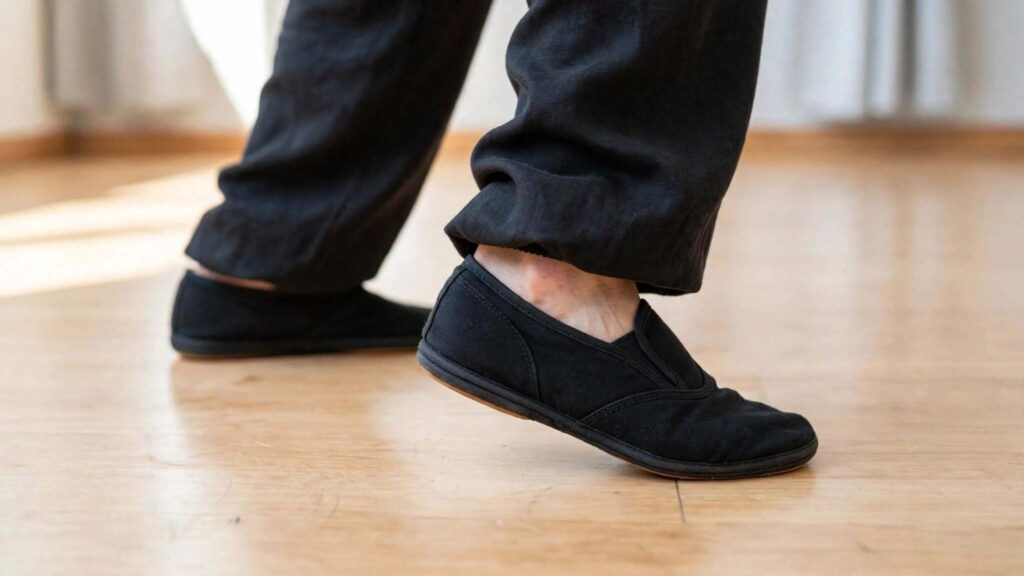
- Roll each foot slowly from heel to toe, with the big toe being the very last part of the foot to make contact with the ground — this deliberate, sequential foot placement is the core mechanical signature of tai chi walking.
- Keep your spine long and upright rather than hunching or looking down at your feet.
- Relax your shoulders — tension anywhere in the upper body works against the fluid, connected movement tai chi walking is built around.
- Move at a genuinely slow pace. This isn’t a brisk-walking variant; the slowness is the mechanism, not an incidental style choice.
- Let each step transfer weight fully and deliberately before beginning the next one, rather than the continuous rolling momentum of normal walking.
- You can move in multiple directions — forward, backward, or sideways — and experienced practitioners sometimes add variations like driving the knee up higher or extending a slow leg lift with pointed toes, though beginners should start with the basic forward pattern before adding complexity.
The instruction most beginners get wrong: this isn’t about covering distance or hitting a step count. One health journalist who tried it after previously mastering the “Japanese walking” interval trend described being genuinely surprised by how different tai chi walking felt — noting it isn’t about getting your steps in at all, which runs directly against the instinct most people bring to any walking-based exercise trend.
Why Slow, Deliberate Movement Produces Real Physiological Effects
This is the part most competing articles skip, and it’s the actual mechanism behind results that otherwise sound implausible for something this gentle. Tai chi combines physical movement with focused attention and controlled breathing, and researchers studying its cardiovascular benefits have pointed specifically to its effect on the parasympathetic nervous system — the branch of your nervous system responsible for calming the body after stress, sometimes called “rest and digest,” as opposed to the “fight or flight” sympathetic response. Being fully present in slow, deliberate movement, focusing attention on each step, and controlling breath throughout appears to activate this calming response more effectively than the sympathetic-nervous-system activation you get from higher-intensity aerobic exercise — and that distinction turns out to matter enormously for at least one major health outcome, covered next.
The JAMA Network Open Blood Pressure Trial: The Full Picture
This is the study driving much of tai chi walking’s current search explosion, and it deserves a complete breakdown rather than just the headline number, because the details make the finding far more credible.
Researchers in China recruited 342 adults, average age 49, with prehypertension (systolic blood pressure of 120–139 mmHg and/or diastolic of 80–89 mmHg) at two hospitals in Beijing. Participants were randomly assigned to one of two groups:
- Tai chi group: Yang-style tai chi, consisting of 24 movements
- Aerobic exercise group: jogging, brisk walking, cycling, or stair climbing
Both groups trained identically in structure: four 60-minute supervised sessions per week for 12 months, each including a 10-minute warmup and cooldown around 40 minutes of the actual activity. This matched-intensity, matched-frequency design is exactly what makes the results meaningful — this isn’t comparing a hard workout to an easy one, it’s comparing two different modalities held to the same time commitment.
The Results
At 12 months, systolic blood pressure dropped by 7.01 mmHg in the tai chi group versus 4.61 mmHg in the aerobic exercise group — a statistically significant difference favoring tai chi (p=0.02). This pattern held at the 6-month mark too, and extended to 24-hour ambulatory blood pressure monitoring, where tai chi produced significantly better results, including notably better night-time blood pressure reduction (a 4.08 mmHg improvement for tai chi vs. essentially no improvement, and even a slight increase, in the aerobic group).
Perhaps the most clinically meaningful number: nearly 22% of participants in the tai chi group saw their blood pressure return to a normal range, compared with roughly 16% in the aerobic exercise group. Participants in the tai chi group also had a notably lower risk of progressing to full hypertension over the study period (12% vs. 17.7%).
Importantly, this wasn’t explained by other factors — the researchers found no significant differences between groups in caloric intake, overall physical activity levels, BMI, or cardiovascular risk scores, meaning the blood pressure difference is genuinely attributable to the type of exercise itself, not some other confound like diet or incidental activity.
Researchers studying tai chi’s cardiovascular effects specifically attribute this advantage to the practice’s stronger activation of the parasympathetic nervous system compared to more vigorous exercise — being fully present, relaxed, and aware during slow movement appears to calm the body’s stress response in a way that pays off specifically for blood pressure regulation, even though aerobic exercise still delivers real, substantial cardiovascular benefits of its own.
The Fall-Risk Research: Also Genuinely Strong
Beyond blood pressure, fall prevention is where tai chi has arguably the longest and deepest evidence base of any single intervention studied for this outcome. A 2023 systematic review and meta-analysis in Frontiers in Public Health, pooling 24 randomized controlled trials, found that tai chi reduces fall risk in older adults with a relative risk of 0.76 — meaning roughly a 24% reduction in fall risk — and also significantly decreased the actual number of falls experienced. The same analysis found meaningful improvements across multiple balance measures: the timed up-and-go test, the functional reach test, single-leg balance, the Berg balance scale, and general gait speed.
Two details from this research are worth knowing specifically:
- Effectiveness increased with duration and frequency of practice — this isn’t a “do it once and you’re covered” intervention; consistency compounds the benefit.
- It worked for both healthy older adults and those already at high fall risk, meaning tai chi walking is genuinely useful as both a preventive practice and a targeted intervention for people who’ve already had falls or been flagged as high-risk.
A more recent 2026 meta-analysis of 21 additional RCTs reached the same conclusion independently, reinforcing that this isn’t a single-study fluke but a consistently replicated finding across a substantial, ongoing body of research.
If balance and stability are a specific concern for you — whether due to age, a previous fall, or a sedentary lifestyle — this is one of the better-evidenced reasons to start tai chi walking specifically, rather than a generic “exercise is good for you” recommendation.
Additional Documented Benefits
Beyond blood pressure and fall prevention, researchers studying tai chi broadly have documented benefits including reduced depression and anxiety symptoms, lower perceived stress, and improved social support among regular practitioners — the latter likely tied to tai chi’s common practice in group settings. If chronic anxiety or stress is part of what’s drawing you to a calming, low-intensity practice like this, it’s worth reading this companion guide on ashwagandha for anxiety and stress, which covers one of the better-evidenced natural supplements for the same nervous-system-calming goal tai chi walking pursues through movement.
How Tai Chi Walking Compares to Other Walking Trends
This is where most competing content stays vague, so here’s a direct, honest comparison.
| Trend | What It Is | Primary Evidence-Backed Benefit | Intensity | Best For |
|---|---|---|---|---|
| Tai chi walking | Slow, deliberate heel-to-toe steps with breath and posture focus | Blood pressure reduction, fall/balance prevention, stress reduction | Very low | Blood pressure management, older adults, stress reduction, joint-friendly movement |
| Rucking | Walking with a weighted backpack | Increased calorie burn, bone density, functional strength | Moderate-high | Building strength and cardio capacity simultaneously, bone health |
| Japanese/interval walking | Alternating 3 minutes brisk walking with 3 minutes slow walking | Improved cardiovascular fitness and VO2 max versus steady-state walking | Moderate | Efficient cardiovascular conditioning in less time |
| Silent walking | Walking without music, podcasts, or phone distraction | Mental clarity, reduced overstimulation, mindfulness | Variable (depends on pace) | Mental reset, reducing sensory overload, general mindfulness |
| Ordinary brisk walking | Standard walking at a purposeful pace | General cardiovascular health, calorie expenditure | Low-moderate | Baseline cardiovascular health, accessibility |
The honest takeaway: these aren’t really competing for the same goal, despite being lumped together as “walking trends.” Rucking and Japanese interval walking are aimed at cardiovascular conditioning and strength, and tai chi walking simply isn’t designed to compete on those metrics — it wasn’t tested against them and likely wouldn’t outperform them for calorie burn or VO2 max. What tai chi walking uniquely offers, backed by the specific research above, is a combined blood-pressure and balance benefit through a nervous-system pathway that higher-intensity trends don’t specifically target. If cardiovascular conditioning is your primary goal, pairing tai chi walking with a more vigorous practice — rather than choosing one exclusively — makes the most sense given what each is actually shown to do. For sustainable cardiovascular training to pair alongside a slow-movement practice like this, this guide on Zone 2 cardio and why it’s become so popular covers a complementary, moderate-intensity approach that fits well alongside tai chi walking rather than against it.
A Genuine Beginner’s Guide to Tai Chi Walking
This is the practical section most trend pieces skip in favor of just describing the aesthetic. Here’s how to actually start.
Step 1: Find Your Stance
Stand with feet hip-width apart, knees very slightly bent (never locked), spine long, and shoulders relaxed down away from your ears. Take a moment to simply breathe here before moving at all.
Step 2: Shift Your Weight Fully
Before stepping, shift your body weight entirely onto one leg. This full weight transfer — rather than the roughly 50/50 split of normal walking — is one of the core mechanical differences that makes tai chi walking a genuine balance and stability exercise rather than just slow walking.
Step 3: Step With Heel-to-Toe Precision
Lift the unweighted leg and place the heel down first, then slowly roll through the foot until the toes — the big toe last — make full contact with the ground. Only then begin transferring weight onto that foot.
Step 4: Move at Roughly Half Your Normal Walking Speed (Or Slower)
There’s no strict pace requirement, but if you can maintain your normal walking rhythm, you’re moving too fast for this practice to work the way it’s designed to. Err dramatically slower than feels natural at first.
Step 5: Keep Your Whole Body Connected
Avoid moving your legs independently of your upper body. The goal is for your torso, arms, and legs to feel like they’re moving as one coordinated unit, with your core gently engaged throughout.
Step 6: Start With 5–10 Minutes
Begin with short sessions — 5 to 10 minutes is plenty for a genuine first attempt, since the concentration required is more taxing than the physical demand. Many practitioners find this surprisingly difficult to sustain attention through at first, precisely because it asks for a kind of focused presence that ordinary walking doesn’t.
Step 7: Progress Gradually
As the basic pattern becomes comfortable, you can extend session length, add backward walking (which prepares you for more advanced tai chi movements like “Repulse Monkey”), or experiment with driving the knee higher or adding a controlled leg extension — but master the basic forward pattern first.
Where to Learn It
While this guide gives you the fundamentals, tai chi walking is genuinely easier to learn correctly with visual guidance, since the weight-transfer timing is difficult to fully absorb from text alone. Structured beginner programs (many built around a “Six Easy Steps” framework) are widely available online and typically use tai chi walking as one of the very first lessons taught.
Who Should Try Tai Chi Walking
Given the specific evidence base covered in this guide, certain groups stand to benefit particularly clearly:
- Anyone with prehypertension or borderline high blood pressure, based directly on the JAMA trial findings
- Older adults, or anyone concerned about fall risk or balance, given the substantial and consistently replicated fall-prevention research
- People recovering from injury or dealing with joint pain who need genuinely low-impact movement that still provides real physiological benefit
- Anyone managing chronic stress or anxiety, given tai chi’s documented parasympathetic and mood-related effects
- People who find high-intensity exercise unsustainable and need a consistent, joint-friendly practice they’ll actually stick with long-term
Who Should Pair It With Something Else
Tai chi walking is not a comprehensive fitness solution on its own, and it’s worth being honest about that rather than overselling a genuinely good practice into something it isn’t. It has essentially no evidence for building meaningful muscle mass, improving VO2 max the way interval training does, or supporting significant weight loss on its own. If those are your primary goals, tai chi walking works best as a complement — for stress reduction, blood pressure support, and balance — layered alongside strength training and more vigorous cardiovascular work rather than replacing them. This guide on protein powder for women covers the nutritional side of building and maintaining muscle, which tai chi walking alone won’t provide.
Frequently Asked Questions
1. What exactly is tai chi walking, and how is it different from regular walking? Tai chi walking is the foundational movement of tai chi practice, involving slow, deliberate steps where weight is fully transferred onto one leg before the next step begins, with each foot rolling heel-to-toe in a controlled sequence. Unlike ordinary walking, it coordinates posture, breath, and full-body movement together at a dramatically slower pace, making it closer to moving meditation than exercise focused on covering distance.
2. Does tai chi walking really lower blood pressure better than regular exercise? Yes, according to a 2024 randomized clinical trial published in JAMA Network Open involving 342 adults with prehypertension. After 12 months of matched-intensity training, the tai chi group saw systolic blood pressure drop by 7.01 mmHg compared to 4.61 mmHg in the aerobic exercise group, with nearly 22% of the tai chi group returning to normal blood pressure versus about 16% in the aerobic group.
3. How much does tai chi reduce fall risk in older adults? A 2023 meta-analysis of 24 randomized controlled trials found tai chi reduces fall risk in older adults by approximately 24% (relative risk of 0.76) and significantly decreases the actual number of falls experienced, alongside measurable improvements in balance tests like the timed up-and-go and functional reach tests.
4. How long should a beginner practice tai chi walking each day? Starting with 5 to 10 minutes is genuinely sufficient for beginners, since the mental focus and concentration required often prove more demanding than the physical movement itself at first. Sessions can be gradually extended as the basic weight-transfer pattern becomes more comfortable and automatic.
5. Is tai chi walking a good workout for weight loss? Not on its own. Tai chi walking’s strongest evidence is for blood pressure reduction, balance, fall prevention, and stress management rather than significant calorie burn or weight loss, so it works best as a complement to strength training or more vigorous cardiovascular exercise if weight loss is a primary goal.
6. How is tai chi walking different from rucking or silent walking? Rucking involves walking with added weight specifically to build strength and increase calorie burn, and silent walking simply means walking without audio distraction for mental clarity — both are typically done at a normal or brisk pace. Tai chi walking is distinct in being deliberately slow, with precise heel-to-toe foot placement and full weight transfer, and its evidence base centers specifically on blood pressure and balance rather than cardiovascular conditioning or calorie expenditure.
7. Can tai chi walking help with anxiety and stress? Yes, research on tai chi broadly has documented reduced depression and anxiety symptoms and lower perceived stress among regular practitioners, likely tied to its emphasis on focused breathing and its stronger activation of the parasympathetic nervous system compared to more vigorous exercise.
8. Is tai chi walking safe for people with joint pain or injuries? Generally yes, since it’s a very low-impact practice with slow, controlled movements and no jumping or high-impact steps, making it a reasonable option for people managing joint pain or recovering from certain injuries. As with any new movement practice, checking with a doctor or physical therapist first is reasonable if you have a specific injury or condition.
9. Do I need special equipment or a class to start tai chi walking? No special equipment is needed — comfortable clothing and flat, stable footwear (or bare feet indoors) are sufficient. While the basics can be learned from written instructions and videos, many beginners find in-person or guided video instruction helpful for correctly timing the weight transfer, which is the most technically important part of the movement.
10. Why has tai chi walking suddenly become so popular? The trend has spread rapidly on platforms like TikTok, likely driven by a combination of the 2024 JAMA blood pressure study receiving significant mainstream media coverage, growing interest in low-impact “slow fitness” alternatives to high-intensity training, and its natural fit alongside other viral walking trends like rucking and Japanese interval walking that have primed audiences to experiment with walking-based fitness variations.
11. Can tai chi walking replace my regular cardio workout? Not for cardiovascular conditioning specifically — tai chi walking wasn’t designed or tested to improve VO2 max or cardiovascular fitness the way interval training or steady-state cardio does. It’s better understood as a complementary practice offering distinct, well-documented benefits (blood pressure, balance, stress) alongside — not instead of — a more vigorous cardio routine if fitness conditioning is a goal.
Final Thoughts
Tai chi walking earns its viral moment in a way a lot of trending fitness content doesn’t — a 12-month randomized trial showing it beats matched-intensity aerobic exercise for blood pressure, and a substantial, repeatedly confirmed body of research showing a roughly 24% fall-risk reduction in older adults, is about as solid a foundation as slow-fitness trends get. The technique itself is simple to describe but genuinely challenging to execute well: full weight transfer, heel-to-toe precision, a whole-body connected movement, and a pace slower than feels natural at first. Start with 5 to 10 minutes, focus on the mechanics over the aesthetic, and treat it as a genuine complement to — not a replacement for — strength training and more vigorous cardio if those are also part of your goals. For blood pressure, balance, and stress specifically, though, the evidence here is about as strong as slow, gentle exercise gets.
This article is for informational purposes only and is not a substitute for professional medical advice. Consult your healthcare provider before starting a new exercise practice, particularly if you have diagnosed hypertension, a balance disorder, or a recent injury.





Leave a Reply