
Most of us think about sleep as something that happens at night. Your body doesn’t. It starts setting up for tonight’s sleep the moment sunlight hits your eyes in the morning, and it can be thrown off by a lamp you switch on at 11 p.m. That’s the idea behind light hygiene: treating light the way we treat food or exercise, as something you can dose well or badly. Circadian health has become one of the bigger sleep conversations of 2026, partly because researchers now call light exposure a modifiable determinant of health. I’ll be upfront about how far that claim goes, because it’s easy to oversell. Below is how your body clock reads light, what melanopsin has to do with it, what blue light really does, and a day-long routine that doesn’t require buying anything.
Related: HealthMorph wellness guides
Your body runs on a clock, and light sets it
Deep in the brain, a small cluster of cells called the suprachiasmatic nucleus acts as a master clock. It runs a little longer than 24 hours on its own, so it needs a daily nudge to stay in sync with the real world. The strongest nudge is light.
That clock then coordinates a surprising amount: when melatonin rises, when body temperature dips, when you feel alert, even when your gut and liver expect food. Mess with the timing and you can end up with the familiar mix of poor sleep, grogginess, low mood, and sugar cravings.
Melanopsin: the light sensor most people have never heard of
Here’s the part that surprised scientists when it was found. Your eyes don’t only have rods and cones for seeing. A small set of retinal cells, called intrinsically photosensitive retinal ganglion cells, contain a pigment called melanopsin. They aren’t about vision. They report brightness to the brain’s clock.
Melanopsin is most sensitive to short-wavelength light, the blue-cyan end of the spectrum. That’s why morning sky is such a powerful signal, and why bright, cool-white light at night is such a confusing one. The cells also respond slowly and keep signaling for a while after light changes, which is part of why a few minutes of bright light late in the evening can linger in your biology.
Because these cells respond differently from the way we normally measure brightness, researchers developed a unit called melanopic EDI, which describes how strongly a light stimulates them. You don’t need a meter to use this. You just need the principle: what your eyes receive, and when, matters more than how bright a room looks to you.
What the experts actually say (and don’t)
In 2022, a group of circadian scientists published recommendations for indoor lighting. In plain terms, they suggested that daytime light should be at least 250 melanopic EDI lux, while evening and night light should stay at or below about 10. More precisely, the daytime figure applies across waking hours, the 10 lux limit starts about three hours before bed, and at night the target is around 1 lux or as dark as practical. innerscene
A follow-up study that tracked light exposure in everyday life found the problem was widespread: people commonly failed to meet the recommended light targets, especially in the evening and at night. A 2026 multi-country wearable study reached a similar conclusion for daytime: average daytime exposure fell below recommended melanopic levels. In other words, a lot of us live in dim days and bright nights, which is backward. nihbiorxiv
Now the 2026 consensus paper you may have seen mentioned. Published in BMC Medicine, it brought together 13 experts to identify key research gaps and priorities on light and health. It describes light as a modifiable factor with wide implications for circadian biology, sleep, mood, vision, productivity, and long-term health. But read the fine print: it also notes the work is based on expert consensus rather than direct empirical validation, and that the field lacks standardized tools to measure personal light exposure in the real world. It’s a roadmap for research, not a prescription. I think that’s worth saying out loud, because a lot of wellness content treats it as the final word. BAuA – Articles – Ocular light and optical radiation exposure as a modifiable environmental determinant of health: expert consensus on research gaps and priorities – Federal Institute for Occupational Safety and Health +2
Morning light: the cheapest sleep aid there is
Getting bright light early in the day does two jobs. It anchors your clock so melatonin rises at a sensible time that evening, and it boosts alertness and mood right away.
Outdoor light is far brighter than anything indoors. A typical home or office sits in the low hundreds of lux, while even an overcast morning outside can be in the thousands, and a clear day far more. That gap is the whole reason a short walk beats a bright desk lamp.
A practical target for most people: 10 to 30 minutes outdoors within the first hour or two of waking, longer on cloudy days. You don’t have to stare at the sun (please don’t). Just be outside, ideally with your eyes uncovered by sunglasses for part of the time. A window helps a bit, but glass filters a good deal of the useful light, so it’s a weaker substitute.
If your mornings are rushed, tack it on to something you already do: tea on the balcony, a walk to the bus stop, the school drop-off. That’s the whole logic of low-friction prevention: the habit survives because it rides on another one.
Daytime light matters too, not just the morning dose
A well-lit day makes evenings darker in a biological sense. Spend your day in a dim room and your clock has a muddy signal to work with. If you work indoors, move your desk near a window, take calls outside, and eat lunch in daylight when you can. Brighter days are also linked in observational research with better mood. An article from 2026 on light and mental health argues that light exposure should be seen as a modifiable part of the mental health exposome, though it also points out that cause and effect run both ways: low mood can make people go outside less. nih
Blue light and screens: what’s real, what’s hype
Blue light does suppress melatonin, and bright screens at night can delay sleep. That part is real. The hype comes in on the details.
Whether your phone specifically wrecks your sleep depends on how bright it is, how close it is, how long you use it, and, honestly, what you’re doing on it. Doomscrolling keeps your brain switched on regardless of the color of the light. A dim phone held at arm’s length is a much smaller problem than a bright overhead light plus a laptop. What tends to matter most is the total light your eyes receive in the last few hours, not one device.
Do blue-light-blocking glasses work?
Mostly, the evidence says not much. A Cochrane review of randomized trials concluded that it’s unknown whether blue-light filtering lenses beat ordinary lenses for sleep quality, with very low-certainty evidence. Coverage of the review also noted that these lenses typically filter out only about 10 to 25% of blue light. Dedicated amber or orange lenses block much more, and that’s where most of the sleep research sits, but those are a different product from the clear “computer glasses” sold in shops. cochranelibrarysleepreviewmag
My view: if you like your glasses and they make evenings feel calmer, wear them. Just don’t count on them to undo bright lights and a 1 a.m. scroll. Dimming and distance do more than a coating.
Evening dimming: the underrated habit
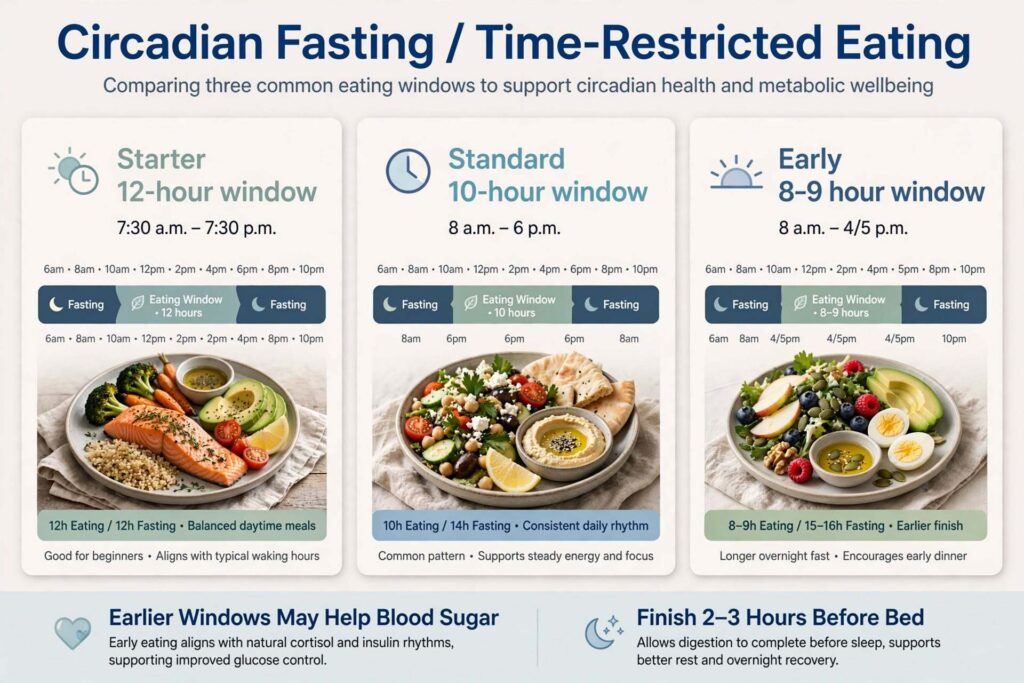
The easiest evening upgrade is to make your home darker and warmer after sunset.
- Switch off overhead lights and use lamps at low level.
- Choose warm-white bulbs (around 2,700 K or lower) for living rooms and bedrooms.
- Turn screens to night mode, lower the brightness, and keep them further from your face.
- Use a dim, amber night light for bathroom trips instead of the main light, ideally low on the wall.
- Start about two to three hours before bed, which matches what the lighting recommendations suggest.
Nothing about this needs to be perfect. A house that gets noticeably dimmer as the evening goes on is a big shift for most people.
Sleep in actual darkness
Light during sleep can matter even when your eyelids are closed. Small controlled studies have found that sleeping with moderate room light can shift measures like heart rate and blood sugar regulation the next day, though those studies are small and short. Blackout curtains, an eye mask, covering standby LEDs, and keeping phones face-down or away from the bed are cheap fixes. Street light is a common culprit, especially in cities.
Bright light therapy: useful, but not a magic box
Light boxes (often around 10,000 lux) are used for seasonal low mood and certain sleep timing problems. For older adults, the picture is mixed. A systematic review of light therapy for people in long-term care noted that its efficacy remains controversial and may depend on duration, timing, intensity of light, and equipment, and called for larger, higher-quality trials. So while there are encouraging results for some older adults with weak daytime light exposure, the exact protocol matters, and evening bright light can backfire. griffith
If you want to try a light box, talk to a doctor first if you have bipolar disorder (light can trigger mania), eye disease such as macular degeneration or retinopathy, or you take medications that increase light sensitivity. Timing is usually morning, and the instructions on a quality device should be followed closely.
Shift workers and night owls
If you work nights or rotate shifts, there’s no perfect answer, because you’re asking your clock to do something it doesn’t naturally do. Some strategies help: bright light during the first half of your shift, dim or amber light on the commute home (sunglasses help), a very dark sleep room, and a consistent sleep schedule even on days off. Our piece on circadian fasting and meal timing covers the eating side of this.
Night owls can shift gradually. Moving wake time earlier by 15 minutes at a time, adding morning light, and dimming evenings usually works better than a drastic change.
A simple day of good light hygiene
| Time | What to do | Why |
|---|---|---|
| Within 1-2 hours of waking | 10 to 30 minutes outdoors | Anchors the clock, lifts alertness |
| Daytime | Work near windows, take breaks outside | Keeps the signal strong |
| Afternoon | Another short outdoor break | Helps energy and mood |
| 2 to 3 hours before bed | Dim lights, warm bulbs, screens down | Lets melatonin rise |
| Bedtime | Dark room, no standby glare | Protects sleep itself |
| Night wake-ups | Amber night light only | Avoids a clock reset |
When light isn’t the problem
If you’ve fixed your light and still can’t sleep, or you snore loudly, stop breathing at night, have persistent low mood, or feel exhausted all day regardless, see a doctor. Insomnia, sleep apnea, thyroid problems, anemia, and depression all masquerade as “a messed-up body clock.” If tiredness is a pattern, our guide on how to increase hemoglobin naturally covers a common and easily missed cause.
Frequently Asked Questions
1. What is light hygiene?
It means managing your light exposure across the day: bright light, especially natural daylight, in the morning and daytime, and dim, warm light in the evening and dark at night, to support your body clock and sleep.
2. How much morning sunlight do I need?
Around 10 to 30 minutes outdoors within the first hour or two of waking works for most people, longer if it’s cloudy. There’s no precise universal dose, and regularity matters more than minutes.
3. Does blue light from screens really disrupt sleep?
Bright, short-wavelength light in the evening can suppress melatonin and delay sleep. How much your own screen matters depends on brightness, distance, duration, and what you’re doing on it.
4. Do blue-light glasses help you sleep?
The evidence is weak. A Cochrane review found very low-certainty evidence on sleep. If you try them, treat them as a small extra, not a fix.
5. What is melanopsin?
It’s a light-sensitive pigment in special retinal cells that tell your brain clock how bright the environment is. It responds most strongly to blue-cyan light and is separate from the cells used for vision.
6. How dark should my bedroom be?
As dark as practical. Experts suggest around 1 lux or less for sleep. Blackout curtains, an eye mask, and covering electronics’ LEDs get most people there.
7. Is it okay to use my phone before bed?
Occasionally, yes, but dim it, use night mode, keep it farther away, and avoid stimulating content. Stopping an hour before bed is a good habit if you can manage it.
8. Can light exposure affect mood and metabolism?
Research links daytime light with better mood and links night light with worse sleep and metabolic markers, but much of this is observational, and some relationships run both ways.
9. Is a light therapy box worth it?
It can help with seasonal low mood and some sleep timing problems, mainly when used in the morning. Check with a doctor if you have bipolar disorder, eye disease, or take photosensitizing medicines.
10. How do shift workers manage light exposure?
Get bright light early in your shift, wear sunglasses on the way home, sleep in a very dark room, keep sleep times as consistent as you can, and avoid bright light when you want to be sleepy.
What I’d actually do
Get outside in the morning. Let your evenings get dim. Sleep in a dark room. That’s about 80% of light hygiene, and none of it costs more than a curtain. The research is still catching up, as the 2026 consensus itself admits, but these habits are cheap, low-risk, and sensible whether or not every study lands. For more everyday habits, explore HealthMorph.
Medical disclaimer: This article is for education and isn’t medical advice. See a doctor for persistent sleep problems, mood changes, or before using bright light therapy if you have an eye or mood condition.





Leave a Reply