
If you’ve been taking ashwagandha for stress and wondering what else is out there, you’re not alone. Shatavari benefits get a lot of attention now, especially for women’s health, and the wider world of adaptogens beyond ashwagandha, from tulsi to rhodiola to brahmi, keeps growing. The honest truth is that these herbs sit somewhere between centuries of traditional use and thin modern research. Some have decent human trials. Others rest mostly on tradition and animal studies. A few carry real risks. This guide covers what shatavari actually is, how it compares with other adaptogens, what the science supports, who should be careful, and how to choose a product without wasting money.
Related: Natural Remedies & Ayurveda on HealthMorph
What Are Adaptogens, Really?
The term was coined by a Soviet scientist, Nikolai Lazarev, in 1947. An adaptogen, in the classic definition, is a substance that helps the body resist different kinds of stress, is relatively safe at normal doses, and doesn’t disturb normal body function.
Here’s the part marketers skip: “adaptogen” is not a regulatory category in most countries. It’s a concept. The idea is that these herbs may nudge the body’s stress response systems, especially the hypothalamic-pituitary-adrenal (HPA) axis that controls cortisol. That’s a plausible hypothesis, but much of the evidence is from animal and lab work, and human trials tend to be small, short, and sometimes funded by the companies selling the product.
So treat adaptogens as possible helpers, not proven fixes. They sit at the edge of your routine, not the middle of it. If sleep, food, and movement are shaky, no herb will cover that gap. Our piece on low-friction prevention is a good place to start with the basics.
What Is Shatavari?
Shatavari (Asparagus racemosus) is a climbing plant native to India and parts of Asia and Africa. The roots are used in Ayurveda, where it’s classed as a rasayana, a rejuvenating tonic, particularly associated with women’s reproductive health. The name is often translated as “she who has a hundred husbands,” a nod to its traditional use for fertility and vitality.
Its active compounds include steroidal saponins (often called shatavarins), along with flavonoids and other plant chemicals. Most research on how it works comes from lab and animal studies.
Shatavari Benefits: What’s Supported and What Isn’t
Lactation (breast milk supply)
This is shatavari’s best-known traditional use. It’s also where I see claims run furthest ahead of the evidence. A few small studies suggest it may raise prolactin or milk output, but they’re limited in size and quality, and broader reviews of herbal galactagogues describe the evidence as weak and inconsistent. If milk supply is a worry, a lactation consultant can address causes like latch, feeding frequency, and medical issues, which matter far more than any herb.
Menopause symptoms
Shatavari is sometimes used for hot flashes and vaginal dryness. There are a handful of small, short human trials, many from India and often combining shatavari with other herbs, so it’s hard to tell what is doing the work. It’s a “maybe” rather than a “yes.”
Hormonal balance and fertility
This is the most overstated claim. Some lab research suggests shatavari saponins may have mild estrogen-like activity, but there are no strong human trials showing it improves fertility or balances hormones. If you’re trying to conceive or have PCOS, thyroid issues, or irregular cycles, see a doctor first. A supplement isn’t a substitute for finding the cause.
Digestion and gut comfort
Traditionally used for acidity and ulcers, with some animal data. Human evidence is thin.
Stress and general vitality
As a rasayana, it’s used as a general tonic. There’s little human research specific to stress, so it’s less established as an “adaptogen” than some of the herbs below.
Bottom line: shatavari is a respected traditional herb with plausible biology, but the human evidence is modest. Reasonable to try with realistic expectations, not a proven treatment.
Shatavari Side Effects and Who Should Be Careful
For most healthy adults, shatavari appears well tolerated at typical doses, though long-term safety data are limited. Possible issues:
- Allergic reactions, especially if you’re allergic to asparagus or related plants (rash, itching, breathing difficulty)
- Digestive upset, like gas, bloating, or loose stools
- Mild diuretic effect, which may matter if you take diuretics or lithium, so talk to your doctor
- Blood sugar effects, which may matter if you use diabetes medicines
Talk to a doctor before using it if you:
- Are pregnant or trying to conceive (safety data are insufficient)
- Have a hormone-sensitive condition such as certain breast, ovarian, or uterine cancers, endometriosis, or fibroids, since its possible estrogen-like effects aren’t fully understood
- Are on prescription medicines
- Have kidney or heart conditions
Adaptogens Beyond Ashwagandha: How They Compare
Ashwagandha has the most buzz, but it isn’t right for everyone. Rare cases of liver injury have been reported, and some countries have restricted it. It’s also usually advised against in pregnancy and with certain thyroid conditions. So many people look for alternatives. Here’s an honest comparison.
| Herb | Traditional use | Evidence level (human) | Main cautions |
|---|---|---|---|
| Tulsi (holy basil) | Stress, immunity, respiratory | Small trials, low-to-moderate quality | May lower blood sugar; may affect fertility in animal studies; check if on blood thinners |
| Rhodiola | Fatigue, mental performance | Some modest trials on stress-related fatigue | Can cause jitteriness or poor sleep; caution with bipolar disorder |
| Brahmi (Bacopa) | Memory, focus | Trials suggest memory benefits after ~8 to 12 weeks | Stomach upset, nausea; slow to work |
| Panax ginseng | Energy, recovery | Mixed; some benefit for fatigue | Insomnia; may interact with blood thinners and diabetes medicines |
| Eleuthero (Siberian ginseng) | Endurance, stress | Mixed, modest | Mostly mild; check with a doctor on medication |
| Shatavari | Women’s health, lactation, tonic | Small trials, mostly low quality | Pregnancy, hormone-sensitive conditions, allergies |
| Amla | Rasayana, immunity | Some data on antioxidants and cholesterol | Generally safe as food; may affect blood sugar |
| Guduchi (giloy) | Immunity, fever | Limited | Case reports of liver injury; avoid with autoimmune conditions or liver disease |
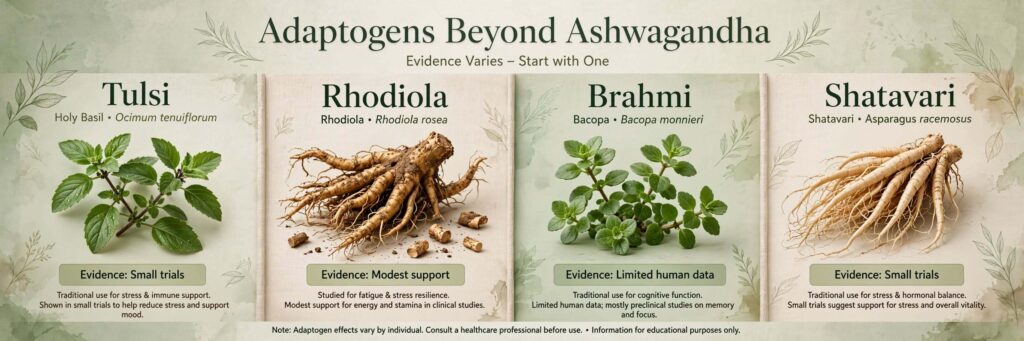
A few notes from this list:
Tulsi is the gentlest place to start for many people, and a cup of tulsi tea is about as low-risk as it gets. A review of human studies found promising results for stress and anxiety, but the studies were small and of mixed quality.
Rhodiola has some of the better evidence for stress-related fatigue, but it can be stimulating, so take it earlier in the day if you try it.
Brahmi is slow. Most studies show effects only after two to three months of regular use, so don’t judge it in a week.
Giloy deserves a specific warning. It became very popular in India during the pandemic, but doctors reported cases of liver injury linked to it. If you have liver disease, an autoimmune condition, or are about to have surgery, talk to a doctor first. See also our guide on liver health beyond detox.
Are Adaptogens Safe? Things the Wellness World Doesn’t Always Mention
“Natural” doesn’t mean harmless. Herbal supplements are a recognized cause of drug-induced liver injury, and some other risks are worth knowing:
- Quality varies widely. Studies have found herbal products that contain less (or more) than the label says, or are contaminated.
- Heavy metals have been found in some traditional Ayurvedic preparations, so reputable sourcing matters.
- Drug interactions are real. Adaptogens can interact with blood thinners, diabetes medicines, thyroid drugs, immunosuppressants, antidepressants, and blood pressure medicines.
- Stacking multiplies risk. Taking five herbs at once makes it impossible to know what’s helping or causing problems.
- Pregnancy and breastfeeding need extra caution, since most adaptogens haven’t been studied there.
- Before surgery, many doctors advise stopping herbal supplements two weeks ahead.
How to Choose a Product Without Getting Burned
- Look for third-party testing. In many countries, seals like USP or NSF help. In India, look for a valid AYUSH or FSSAI license and a manufacturer that follows GMP.
- Check the extract. Labels should say which part of the plant (root, leaf) and, ideally, whether it’s standardized.
- Avoid “proprietary blends” that hide how much of each herb is inside.
- Be wary of big claims, like “cures anxiety” or “balances all hormones.”
- Start with one herb at a time, not a stack.
- Follow the label or your practitioner’s guidance on how much to take, since amounts vary a lot by extract.
- Try it for a fixed window, say four to eight weeks, and track sleep, mood, and energy. If you notice no benefit, stop.
- Stop and call a doctor if you notice yellow skin or eyes, dark urine, unusual fatigue, severe itching, palpitations, or an allergic reaction.

What to Try Before (or Alongside) Any Adaptogen
Honestly, the strongest “adaptogens” are boring:
- Consistent sleep. Same wake time, daylight in the morning.
- Regular movement, even a daily walk.
- Real meals with protein, fiber, and enough calories.
- Time outdoors, social connection, and breaks.
- Check for medical causes. Persistent tiredness can come from low iron, thyroid problems, low vitamin D or B12, or poor sleep. See our guide to how to increase hemoglobin naturally before assuming it’s “just stress.”
If anxiety or low mood is affecting your daily life, please see a doctor or mental health professional. An herb is not a replacement for care.
Frequently Asked Questions
1. What is shatavari good for?
Traditionally, it’s used for women’s reproductive health, lactation, menopause symptoms, and as a general tonic. Human evidence is limited, and many claims rest on tradition and small trials.
2. Does shatavari increase breast milk?
It’s widely used for this, and a few small studies suggest a possible effect, but the evidence is weak. If you’re struggling with supply, speak to a lactation consultant or doctor.
3. Is shatavari safe to take every day?
For most healthy adults it’s generally well tolerated at typical doses, but long-term safety data are limited. Talk to your doctor if you take medicines or have a medical condition.
4. Who should avoid shatavari?
Anyone who is pregnant, has a hormone-sensitive condition, has an asparagus allergy, or takes medicines such as diuretics, lithium, or diabetes drugs without medical advice.
5. What are the best adaptogens besides ashwagandha?
Tulsi, rhodiola, brahmi, and eleuthero are common options. Which suits you depends on your goal, health history, and medicines. No adaptogen is best for everyone.
6. Is tulsi an adaptogen?
Yes, in Ayurveda and modern use it’s considered one. Small human studies suggest benefits for stress and mood, though more high-quality trials are needed.
7. Can adaptogens lower cortisol?
Some studies suggest ashwagandha and rhodiola may reduce stress-related markers, including cortisol, but results vary. Don’t assume any herb will “fix” cortisol.
8. Can I take shatavari and ashwagandha together?
Many Ayurvedic formulas combine them, but combining herbs raises the chance of side effects and interactions. Start with one, and speak with a qualified practitioner or doctor about combining.
9. Do adaptogens have side effects?
Yes. Possible effects include digestive upset, headaches, insomnia or drowsiness, allergic reactions, and, rarely, liver injury. Interactions with medicines are possible, too.
10. How long do adaptogens take to work?
It varies. Some people notice changes in two to four weeks, while herbs like brahmi often need eight to twelve weeks. If you notice nothing after a fair trial, they may not be right for you.
The Bottom Line
Shatavari benefits are real in tradition and plausible in biology, but the human evidence is still modest. The same goes for most adaptogens beyond ashwagandha: some, like rhodiola and tulsi, have reasonable early support, while others rely heavily on tradition. Use them as a small add-on to good sleep, food, and movement, pick quality products, go one herb at a time, and check with your doctor if you’re pregnant, on medication, or managing a health condition. For more practical guides, explore HealthMorph.
Medical disclaimer: This article is for education and isn’t medical advice. Consult a qualified doctor or Ayurvedic practitioner before starting any herbal supplement, especially if you are pregnant, breastfeeding, have a medical condition, or take prescription medicines.






Leave a Reply