
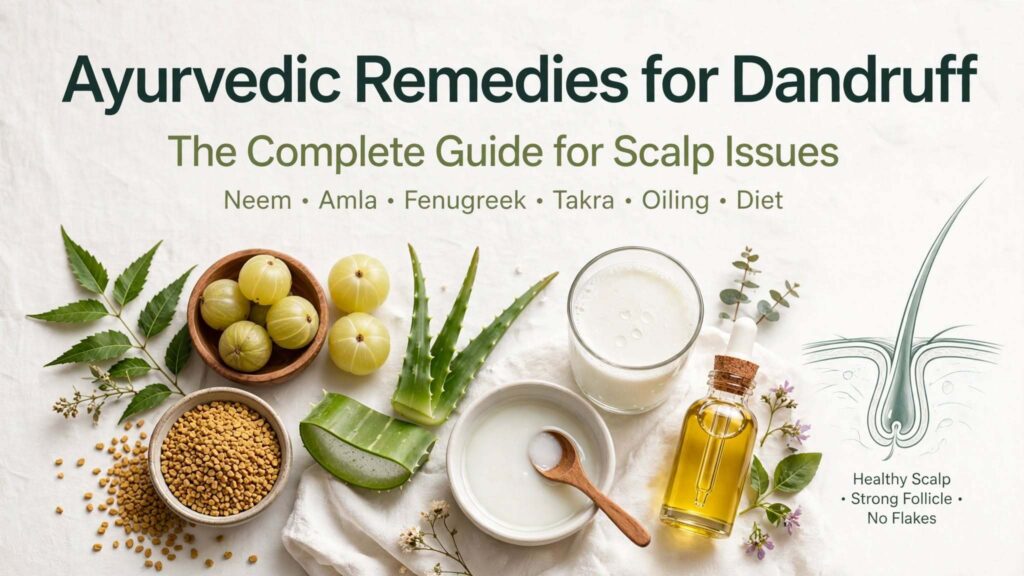
If you have ever caught flakes on your shoulders right before a meeting, you already know why Ayurvedic remedies for dandruff are among the most searched natural treatments in India. Ayurveda calls dandruff Darunaka and sees it as a Kapha-Vata imbalance that shows up on the scalp, so the plan combines neem, amla, fenugreek, takra (buttermilk), scalp oiling, diet and stress care. Some of it is backed by trials. Some of it is tradition without much data. This guide keeps the two apart, so your natural dandruff treatment doesn’t burn three months on guesswork.
Quick answer: do Ayurvedic remedies for dandruff work?
For mild to moderate flaky scalp and scalp itching, yes, they often help, mostly by calming irritation, keeping oil balanced and keeping the scalp clean. Ayurvedic remedies for dandruff are weakest when the real problem is seborrheic dermatitis, scalp psoriasis or a fungal infection, because those need a proper diagnosis. Expect 4 to 6 weeks of steady use before judging any remedy, since scalp skin renews on roughly a monthly cycle. Pair a herbal routine with the habits in our Natural Remedies & Ayurveda section and you cover both the surface and the root.
What dandruff actually is (and what Ayurveda calls it)
On a healthy scalp, dead skin cells shed quietly over about a month. In dandruff, that turnover speeds up and flaking happens every 2 to 7 days, which is why you see it. Modern dermatology links this to a yeast called Malassezia that lives on almost every scalp, feeds on scalp oils and triggers irritation in people who are sensitive to it.
Ayurveda reaches a similar picture from a different angle. Darunaka is listed under Kshudra Roga (minor diseases) by Sushruta and under Kapalagata Roga (scalp disorders) by Vagbhata. Classical texts describe its signs as:
- Kandu: itching
- Rukshata: dryness
- Twak sphutana: scaling and cracking of scalp skin
- Kesha chyuti: hair fall
Most clinical papers call it Kapha-Vata predominant. Others add Pitta when there is redness, burning or stress. That matters, because the right Ayurvedic remedies for dandruff depend on which dosha is driving yours.
Dandruff, dry scalp or something else? Check before you treat
This is the gap most guides skip, and it decides whether home remedies will work.
| What you see | Likely cause | What to do |
|---|---|---|
| Small white, dry flakes, tight scalp, worse in winter | Dry scalp (Vata) | Gentle oiling, less hot water, mild wash |
| Larger yellowish, greasy flakes, oily hair | Dandruff / mild seborrheic dermatitis (Kapha) | Neem, fenugreek, regular washing |
| Red, inflamed patches with burning, flakes near hairline or ears | Seborrheic dermatitis (Pitta) | Cooling herbs, but see a doctor if it persists |
| Thick silvery plaques with sharp edges | Scalp psoriasis | Dermatologist first |
| Round bald patches with scaling | Possible ringworm (tinea capitis) | Doctor, urgently, especially in children |
If your scalp is raw, bleeding or oozing, skip the kitchen remedies and get examined. Our general disclaimer applies here too: this is education, not a diagnosis.
Find your type: dosha-wise Ayurvedic remedies for dandruff
| Type | Signs | Best-fit approach |
|---|---|---|
| Vata dandruff | Dry, fine flakes, rough hair, itching in cold weather | Warm sesame or coconut oil, aloe gel, mild herbal wash |
| Pitta dandruff | Red, sensitive scalp, burning, stress or heat triggers | Cooling rinses (neem, coriander), less spicy food, calming habits |
| Kapha dandruff | Oily, sticky flakes, heavy scalp | Fenugreek, reetha-shikakai wash, takra, lighter oiling |
Most people are a mix, usually Kapha-Vata. If you can’t tell, start with the neutral routine in the 4-week plan below.
7 Ayurvedic remedies for dandruff you can start at home
1. Neem leaf rinse
Neem (Azadirachta indica) is the most-cited herb in Ayurvedic remedies for dandruff, valued for its antimicrobial and soothing action on itchy scalp. One university Ayurveda college suggests a cooled neem-water rinse to settle itching and redness.
How to make it: simmer a loosely packed handful (about 20 to 25 fresh leaves) in 1 litre of water for 10 minutes. Cool, strain, and pour over the scalp after shampooing. Leave 5 to 10 minutes, rinse lightly. Use twice a week. Keep it out of your eyes and make a fresh batch each time.
2. Fenugreek (methi) scalp pack
Methi is a classic cooling, mucilage-rich seed used for oily, flaky scalps.
How to use it: soak 2 tablespoons of seeds overnight, grind to a paste and mix with 2 to 3 tablespoons of fresh curd. Apply to the scalp for 20 to 30 minutes and wash off. Once or twice a week is plenty. Evidence is mostly traditional, so treat it as a soothing wash, not a drug.
3. Amla, reetha and shikakai wash
This trio is the traditional herbal shampoo. Amla (Indian gooseberry) is rich in vitamin C and used as a Pitta-pacifying rasayana. Reetha and shikakai cleanse without stripping oils as harshly as many sulphate shampoos. One Ayurvedic reference notes reetha is thought to balance all three doshas, though it advises caution in pregnancy because of its hot potency.
How to use it: soak 1 tablespoon each of amla, reetha and shikakai powder in warm water for a few hours, mash, strain, and use as a wash. Avoid contact with eyes, as reetha stings.
4. Takra (buttermilk) and haritaki paste
The classical text Chikitsa Manjari describes haritaki (Terminalia chebula) mixed with takra as a scalp application for Darunaka. A small 30-patient clinical study of this method reported symptom relief. Buttermilk is considered Kapha-Vata balancing in Ayurvedic texts, and its mild acidity helps lift greasy scale.
How to use it: mix half a teaspoon of haritaki powder into 3 tablespoons of lightly soured buttermilk, apply to the scalp for 15 to 20 minutes, then rinse. For more on takra and other cooling drinks, see our guide to homemade drinks that work and don’t.
5. Fresh aloe vera gel
Aloe is soothing and light, which suits dry, irritated or Pitta-type scalps. Massage 2 to 3 tablespoons of fresh gel into the scalp, leave 20 minutes, rinse. Patch-test first on your inner forearm.
6. Bhringraj and sesame or coconut oil massage
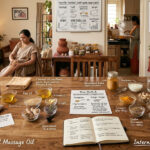
Shiroabhyanga (scalp oil massage) is the backbone of Ayurvedic hair care. Warm 2 tablespoons of sesame, coconut or bhringraj-infused oil, then massage with fingertips for 5 to 10 minutes. This suits Vata dryness best. See the oiling debate below before you leave oil on for hours. If you want to understand how herbal oils are balanced and what safe ratios look like, our herbal massage oil guide walks through the basics.
7. Tea tree oil: the modern add-on with the best trial data
Tea tree oil isn’t classical Ayurveda, but it has the strongest human trial among natural dandruff options. In a randomised study of 126 people, 5% tea tree oil shampoo used daily for four weeks improved dandruff scores by 41%, versus 11% for placebo, with no adverse effects. The catch: the trial was single-blinded, and complete clearance was rare, so it controls dandruff rather than curing it.
How to use it: add 5 ml of tea tree oil to 100 ml of mild shampoo. Never apply it undiluted. Stop if you get redness or burning.
The oiling debate: should you leave oil on your scalp?
Here’s the honest tension. Ayurveda recommends oiling for Vata dryness, and many people feel relief from it. But Malassezia feeds on scalp lipids, and some dermatologists advise people with oily, flaky or seborrheic scalps to avoid heavy overnight oiling. A practical middle path:
- Dry, tight scalp: oil 1 to 2 times a week, wash after 1 to 2 hours.
- Oily, greasy scalp: oil lightly, 30 minutes before washing, or skip oiling for two weeks and see what changes.
- Never leave oil in overnight if flakes get worse the next morning.
Your scalp’s response beats any rule.
What Ayurvedic clinical studies say about Darunaka
Research exists, but it is small. Here is where it stands:
- A small open study of Shiravyadha followed by Chitrakadya taila massage reported about 66% overall symptom relief and a 67% non-recurrence rate. Small and uncontrolled, so promising rather than proven.
- A study at three CCRAS institutes of 150 participants found that the Ayurvedic lotion Ayush AGT lowered mean dandruff scores from 15.70 to 5.41 after 30 days. It had no control group.
- Small trials of Gunja taila and Nimba twak churna also reported benefit. Note that gunja (Abrus precatorius) seeds are toxic, so oils made with them should only come from a qualified practitioner, never a DIY recipe.
Takeaway: these papers support Ayurvedic scalp care as a reasonable option, but none compares directly with proven antifungal shampoos in large blinded trials.
Treat it from the inside: diet, digestion and stress
Ayurveda ties scalp health to digestion (Agni) and the build-up of ama (toxins). Modern medicine doesn’t use that language, but the practical advice overlaps with what dermatologists see: poor sleep, high stress and nutritional gaps tend to make flaking worse.
- Digestion: irregular meals, constipation and acidity often travel with oily, itchy scalps. Our home remedies for digestion guide covers kitchen fixes that match each symptom.
- Diet: favour fresh, home-cooked meals, leafy greens, seeds and fruit. Go easy on deep-fried food, sweets and heavy dairy if your scalp runs oily. The evidence here is thin, so treat it as sensible hygiene, not a cure.
- Nutrients: low zinc, B vitamins and vitamin D are linked to seborrheic dermatitis. Persistent flaking with fatigue is worth a blood test; our B12 and D deficiency guide explains what to look for.
- Stress: stress lowers immunity and can flare Pitta-type dandruff. Slow breathing and Shirodhara-style relaxation help; see how in our guide on Ayurvedic remedies for high blood pressure, where pranayama is covered in detail. For ongoing anxiety, browse our mental health hub.
- Sleep and routine: a steady morning routine supports skin renewal. Try the habits in our anti-aging morning routine.
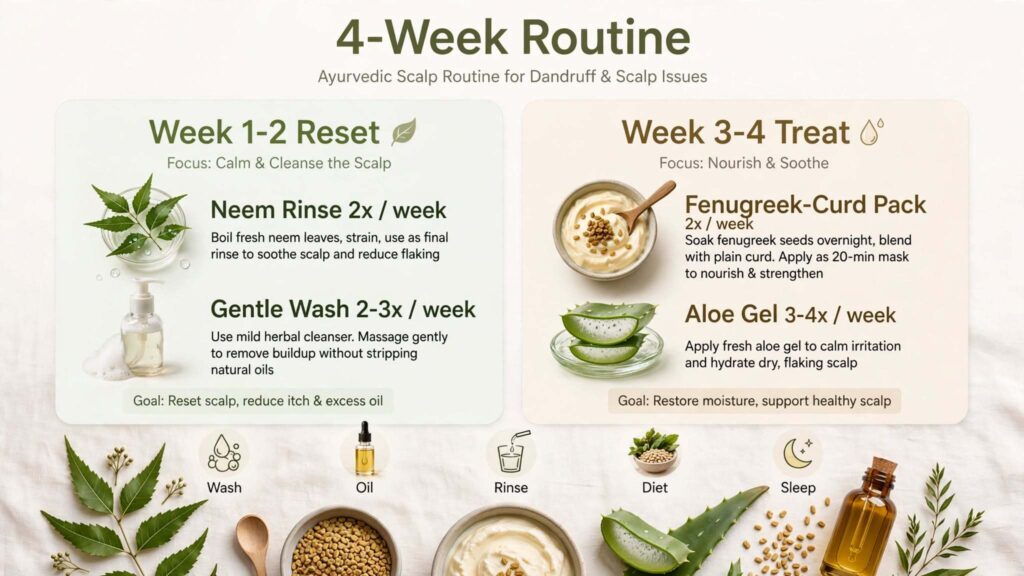
A simple 4-week routine
Week 1-2 (reset):
- Wash with a mild shampoo or the amla-reetha-shikakai wash 2 to 3 times a week.
- Neem rinse twice a week.
- No hot water on the scalp; lukewarm only.
Week 3-4 (treat):
- Add a fenugreek-curd pack once a week (Kapha) or aloe gel (Vata/Pitta).
- Light oil massage once a week if your scalp feels dry.
- Continue the rinse. Clean your comb weekly; a clean neem-wood comb is a traditional extra.
Track flakes, itching and hair fall in a notebook. If there’s no change by week 6, switch plans or see a doctor.
Common mistakes that keep dandruff coming back
- Using lemon juice or vinegar neat. Acidic and irritating; it can burn a sensitive scalp.
- Washing too rarely. Scale and oil build up; many people with dandruff do better washing 2 to 3 times a week.
- Piling on remedies. Three new products at once makes it impossible to know what’s helping or irritating.
- Scratching with nails. It breaks the skin and invites infection.
- Quitting at week two. Scalp renewal takes about a month.
- Ignoring hair fall. Severe dandruff can go with shedding, so don’t brush it off. Our guide to leg weakness and nutrition after 45 shows how nutrition gaps show up across the body.
Safety and when to see a doctor
Natural does not mean risk-free. Ayurvedic remedies for dandruff can still cause allergic reactions, so patch-test every new herb or oil on the inner forearm for 24 hours. Be careful with:
- Pregnancy and breastfeeding: avoid reetha and strong herbs unless your practitioner approves.
- Children: skip essential oils; use only mild washes, and see a paediatrician for scaly patches.
- Oral herbs and medicines: if you take regular medication, check interactions. Our kidney stones guide shows why herb safety needs a doctor in the loop.
See a doctor if flaking persists after 6 weeks, the scalp is red, painful or oozing, you have round bald patches, or you lose hair noticeably. Standard treatments like ketoconazole 2%, zinc pyrithione or selenium sulfide shampoos are well-proven, and combining them with Ayurvedic scalp care is reasonable under medical advice.
Frequently asked questions
1. What is the best Ayurvedic remedy for dandruff?
There’s no single best one. For oily dandruff, a neem rinse and fenugreek-curd pack work well; for dry dandruff, aloe gel and light sesame or coconut oil suit better. The most reliable Ayurvedic remedies for dandruff are those matched to your scalp type and used consistently for 4 to 6 weeks.
2. Can Ayurveda cure dandruff permanently?
Dandruff is a recurring condition, so “permanent cure” is an overpromise. Ayurvedic care aims to lower recurrence by fixing scalp hygiene, digestion, stress and diet. Even modern dermatology treats dandruff as something to control, not erase for good.
3. How long do Ayurvedic remedies for dandruff take to work?
Itching usually eases within 2 weeks. Visible flaking takes 4 to 6 weeks, because scalp skin renews roughly every month.
4. Is neem good for dandruff and itchy scalp?
Neem is traditionally used to calm itching and redness, and several Ayurvedic studies include neem bark powder. Human trial data on neem alone is limited, so use it as a gentle rinse alongside a clean routine.
5. Does coconut oil cause or cure dandruff?
It depends on your scalp. Coconut oil can relieve dryness-related flaking but may worsen oily, seborrheic dandruff because yeast feeds on scalp oils. If flakes increase after oiling, cut back.
6. How often should I wash my hair if I have dandruff?
Two to three times a week is a good starting point for most people; daily for very oily scalps. Wash with lukewarm water and massage the scalp, not the lengths.
7. Can dandruff cause hair fall?
Dandruff itself doesn’t destroy follicles, but constant scratching and inflammation can weaken hair and increase shedding. Treat the scalp early and see a doctor if you notice thinning.
8. Are Ayurvedic remedies for dandruff safe for children and pregnant women?
Use extra caution. Plain aloe or a mild wash is usually fine, but avoid essential oils in children and check herbs like reetha with your doctor during pregnancy.
9. Does diet really affect dandruff?
Indirectly. Nutrient gaps (zinc, B vitamins, vitamin D), stress and poor sleep are linked to flare-ups. Food isn’t a standalone cure, but a balanced diet supports scalp skin.
10. Can I use Ayurvedic remedies along with an anti-dandruff shampoo?
Yes, for most people. Use the medicated shampoo as directed and add gentle options like a neem rinse or aloe gel between washes. If your scalp stays inflamed, ask a dermatologist or qualified Ayurvedic doctor to combine them safely.
Final thoughts
The best Ayurvedic remedies for dandruff are the unglamorous ones: a clean scalp, a few well-chosen herbs, sensible oiling, better sleep, calmer stress and patience. Pick one routine, run it for six weeks, and note what changes. If your scalp isn’t responding, that’s information, not failure, and it’s time to bring in a doctor. For more evidence-based wellness guides, explore HealthMorph or read about us.
References
- Satchell AC et al. Treatment of dandruff with 5% tea tree oil shampoo. J Am Acad Dermatol, 2002: PubMed
- Slawson D. Tea tree oil shampoo in the treatment of dandruff. Am Fam Physician, 2003: AAFP
- Effect of Haritaki with Takra in dandruff. JAIMS, 2018: Amrita
- Clinical evaluation of Ayush AGT lotion in mild to moderate dandruff. Indian J Tradit Knowl, 2025: IJTK
- Gunja taila shiroabhyanga and Nimba twak churna in Darunaka. IJAPR, 2016: CORE
- Darunaka cardinal symptoms, JAIMS: DOI
This article is for education and is not medical advice. Consult a qualified doctor before starting any new treatment.




Leave a Reply