
Quick answer:Home remedies for digestion work best when they match the actual problem. Gas, acidity, constipation, loose motions, IBS and piles each need a different fix, and this guide sorts out which kitchen remedy fits which problem, what the research really shows, and when a doctor visit can’t wait.
What “digestive fire” actually means
The Ashtanga Hridayam has a line, “rogaḥ sarve’pi mandāgnau”: nearly every disease starts with weak agni, the digestive fire. Ayurveda treats agni as your whole capacity to digest, from saliva and bile to enzymes and the movement of the gut. In modern terms you could call it motility, enzymes and the gut microbiome working together. Both traditions agree on one point: food that doesn’t move along properly turns into discomfort.
One popular claim deserves pushback. You will often hear that undigested food “rots”, releases toxins, and those toxins show up as pimples and hair fall. There is no solid evidence for that chain of events. Acne is mostly about hormones, oil glands and genetics. Gut-skin research is real and ongoing, and poor sleep and stress hurt both, but fix your gut because gut comfort matters, not because it promises glowing skin.
1. Ginger, lemon and rock salt before meals (upgraded)
This trio appears in classical texts like the Bhavaprakasha Nighantu and still sits in plenty of kitchens. We suggest adding two more things.
How to make it: Slice a one-inch piece of ginger thin, squeeze in one lemon, add half a teaspoon of rock salt, a quarter teaspoon of roasted cumin powder and two or three crushed black peppercorns. Keep it in a glass jar in the fridge for 7 to 10 days. Chew two or three slices 10 to 15 minutes before a meal.
Why it works: Gingerols and shogaols in ginger speed up gastric emptying in some small studies, though those studies are small. Lemon’s sourness gets saliva and digestive juices going. Piperine in black pepper and cumin give mild extra support against that heavy, bloated feeling.
Keep in mind: Rock salt is still sodium, so people with high blood pressure should go easy. Raw ginger can aggravate heartburn in some people, so start with one slice. If you take blood thinners such as warfarin, ask your doctor before eating large amounts daily.
2. Constipation: find the cause, then pick the remedy
Common causes are low fiber, too little water, too little movement, ignoring the urge, stress, thyroid problems, and iron or calcium tablets. Hard, dry stool needs both bulk and moisture.
Ghee in warm water, first thing in the morning. Start with one teaspoon in a glass of warm water and go up to two if it suits you. Panchakarma begins with ghee for this lubricating reason. To be straight with you: there are no large clinical trials of ghee for constipation, so this rests on traditional use. If you have high cholesterol, gallstones, or a tendency to loose stools, check with your doctor first.
Soaked figs, raisins or prunes. Prunes have better evidence than most home foods. In one small trial, about 50 grams a day (5 to 6 prunes) matched or beat psyllium for constipation. Soak 3 to 4 figs or a handful of raisins overnight and eat them in the morning.
Psyllium husk (isabgol), but with water. One teaspoon at night in a full glass of water. Too little water makes it worse. Keep a two-hour gap from other medicines.
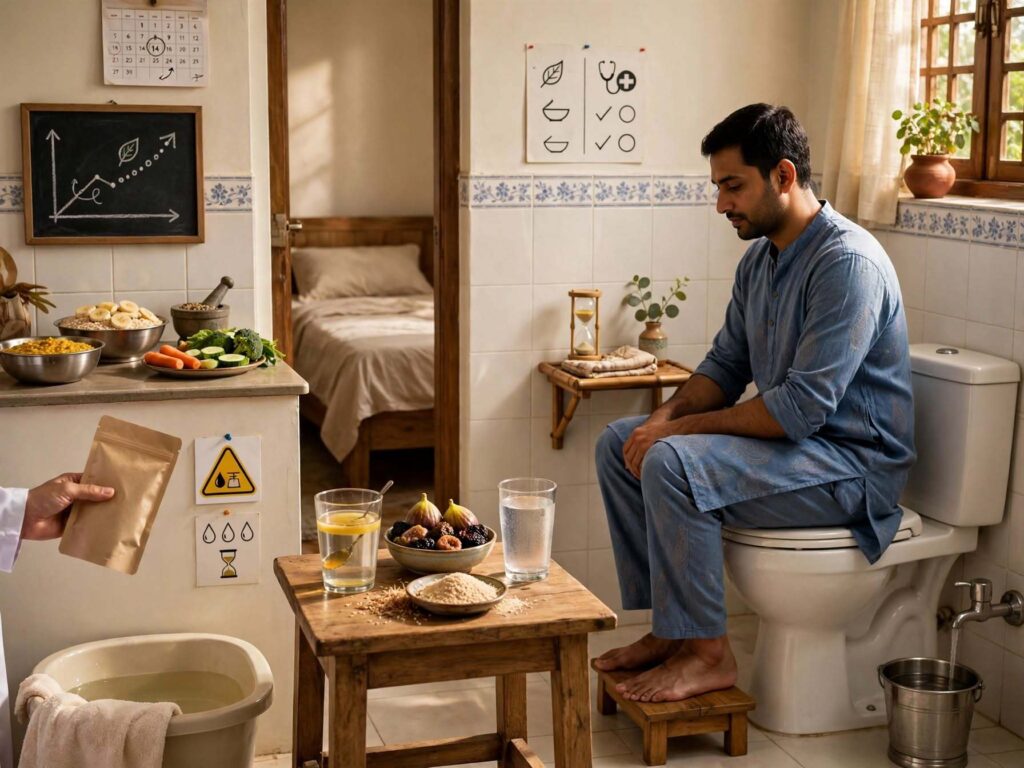
Toilet posture. Put a 7 to 9 inch stool under your feet so your knees sit above your hips. It straightens the anorectal angle, and many people strain less. After breakfast, sit for 5 to 10 minutes without your phone, because the gut is most active after eating.
Fiber target: Aim for 25 to 30 grams a day, but build up slowly, because a sudden jump brings gas and cramps.
3. Acidity and heartburn
Timing matters more here than any powder. Finish dinner at least three hours before bed. Raise the head end of the bed by 6 to 8 inches (extra pillows don’t do the same job), sleep on your left side, and cut back on fried food, chocolate and late-night tea or coffee.
A detail people often miss: Mint can relax the valve between the stomach and food pipe, so peppermint tea may worsen reflux.
Quick relief: A lemon wedge with black salt and a pinch of baking soda. Baking soda really is an antacid, which is why it works fast. But it contains sodium, so people with high blood pressure, heart or kidney problems should skip it, and it’s for the occasional episode only. If you need it more than twice a week, it’s time for a check-up.
Daily tea (CCF): Half a teaspoon each of cumin, whole coriander seeds and fennel in a glass of water, boiled for 5 to 7 minutes. Sip it lukewarm half an hour after meals. This combination hasn’t been tested in big trials, but it’s safe and traditionally used to cool excess pitta. You can also dry roast and powder the three and store them.
Also worth adding: Ripe banana, oats and cucumber tend to be gentle on the stomach.
4. Gas, bloating and stomach ache: add asafoetida to carom seeds
Chewing a teaspoon of carom seeds (ajwain) and following it with warm water is an old stomach-ache remedy and generally safe for adults. Ajwain contains thymol, which stimulates saliva and digestive juices. The claims that it cures period pain, fatty liver, pimples or high cholesterol, however, don’t have solid human trials behind them. Treat it as a digestive aid, not a cure-all.
Home digestive powder (upgraded): Mix 2 tablespoons roasted ajwain, 1 tablespoon roasted cumin, 1 tablespoon fennel, 1 teaspoon dry ginger powder, half a teaspoon black salt and a pinch of asafoetida. Grind and store. Take half a teaspoon with warm water after meals.
Everyday gas often has nothing to do with the kitchen: eating fast, drinking through straws, fizzy drinks, chewing gum, and for some people cabbage, kidney beans or milk (lactose). A 10-minute gentle walk after meals helped gas clearance in one small study. It costs nothing, so try it.
About children: Give carom seeds in a very small amount mixed into food, and never to a child under two without asking a pediatrician. For intestinal worms, the real treatment is the deworming medicine your doctor prescribes. Ajwain can’t replace it, especially if the child looks pale or weak.
5. Loose motions: water first, remedy second
You’ll hear that diarrhea is the body cleaning house and shouldn’t be stopped. Half of that is true: in infections, the body is flushing out germs. But the real danger isn’t the diarrhea, it’s dehydration, and in children and the elderly that’s what turns serious.
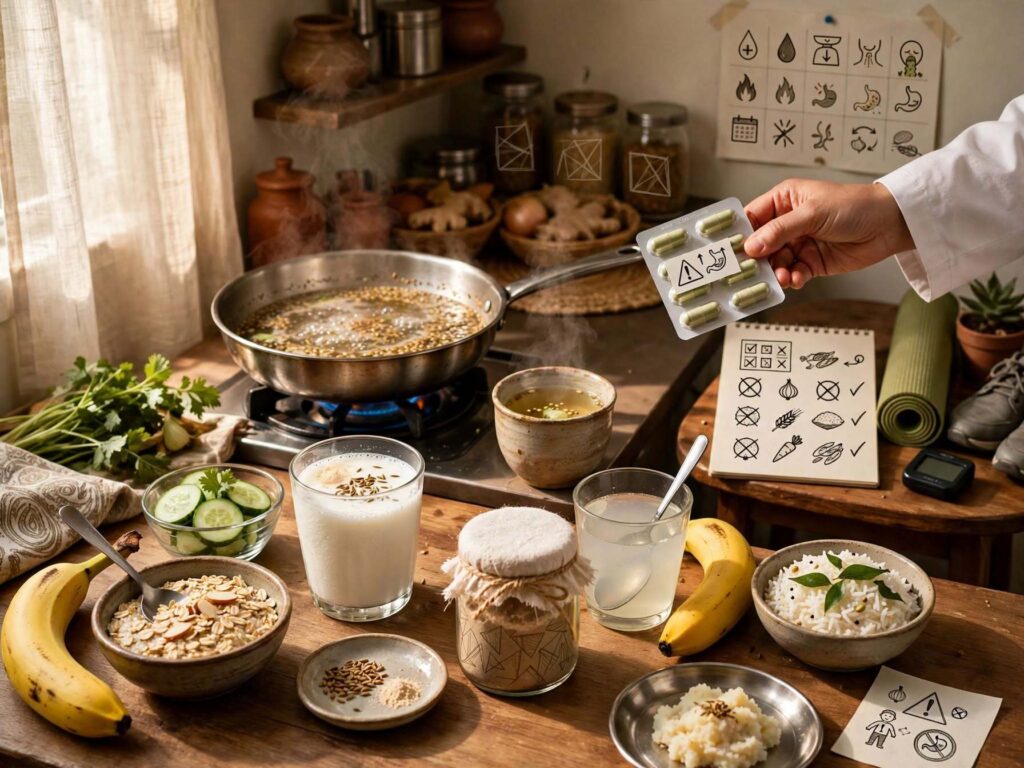
So step one is ORS. Dissolve a WHO-standard ORS packet in clean boiled and cooled water and sip steadily. Coconut water is fine as an extra, but it doesn’t contain enough sodium to replace ORS. Eat banana, curd rice or khichdi. One teaspoon of psyllium in 100 grams of fresh curd can firm up stool, because psyllium absorbs water. Doctors also give zinc to children.
Do not take anti-diarrheal medicine (loperamide) if there is fever or blood in the stool.
6. IBS: a gut problem with roots in the brain
A rush to the toilet right after eating, no sense of relief afterward, and a mix of diarrhea and constipation is the classic IBS pattern. Stress and the gut-brain connection play a big part. But IBS shouldn’t be self-diagnosed, since celiac disease, thyroid problems and inflammatory bowel disease can look similar. Get tested once.
What can help in the kitchen: Fresh buttermilk with roasted cumin and asafoetida, slightly unripe banana (very ripe ones cause gas in some people), and washed moong khichdi. For many people onion, garlic, apples, milk and kidney beans are triggers. In several trials, a low-FODMAP diet helped more than half of the patients, but it should be done under a dietitian for a few weeks, followed by reintroducing foods one at a time.
Peppermint oil: Enteric-coated peppermint oil capsules have several meta-analyses behind them, and the American College of Gastroenterology gives a conditional recommendation for IBS. People with reflux should avoid it. Peppermint tea and capsules are not the same thing.
Bael: Bael powder or murabba is traditionally used for the gut, but human trials are limited. Murabba contains sugar.
Bilvasava: It’s made through self-fermentation, so it contains a small amount of alcohol. Avoid it in pregnancy, liver disease and in children unless a doctor says otherwise, and buy only from a licensed brand.
Beyond food, gut-directed hypnotherapy, CBT and a daily 30-minute walk have worked in IBS trials. Without managing stress, IBS rarely settles completely.
7. Ulcerative colitis: a home remedy is not the treatment
The claim that curd with psyllium was as effective as standard medicine for ulcerative colitis is only partly right. The actual study dates to 1999 (American Journal of Gastroenterology) and included 105 patients whose UC was already in remission. Psyllium seeds (10 g twice a day) were compared with mesalamine. After 12 months, the relapse rate was 40% with psyllium, 35% with mesalamine and 30% with both together. The authors concluded psyllium “might be as effective”, and the study was small and open-label. It did not involve curd, and it was not a trial of treating an active flare.
So if you have blood or mucus in the stool, or repeated urgent trips to the toilet, see a gastroenterologist and don’t stop prescribed medicine on your own. Fiber like psyllium can be added during remission, with your doctor’s approval. “Alkaline food” is not a recognized medical category either.
8. Piles: what the research says about fiber
A Cochrane review (7 trials, 378 patients) found that fiber cut the risk of persisting symptoms by 53% and the risk of bleeding by about 50%. Pain, itching and prolapse showed no clear effect. So fiber and water are the first step, not a magic pill.
Practical points: 3 to 4 soaked figs, daily fiber, enough water, no more than 5 minutes on the toilet, no phone in the bathroom, and a warm sitz bath for pain and swelling (10 to 15 minutes, 2 to 3 times a day). Stand up and walk every hour.
Why we left out coconut husk ash: There’s no solid evidence it works, and nobody knows what is in ash burnt at home. Rectal bleeding needs an examination first, because colorectal cancer can look like piles at the start, especially after age 45 or with weight loss.
Extra ingredients worth adding
| Ingredient | How to use | Helps with | Caution |
|---|---|---|---|
| Fenugreek seeds (methi dana) | 1 tsp soaked overnight, chew in the morning | Mild constipation, fullness | Can cause gas; avoid in pregnancy; may lower blood sugar |
| Asafoetida (hing) | A pinch in dal or buttermilk | Gas, bloating | Large amounts not advised in pregnancy |
| Dry ginger (sonth) | Half tsp in warm water or in the digestive powder | Heaviness, sluggish digestion | Same cautions as fresh ginger |
| Fennel and cardamom | Chew a few after meals | Mild gas, mouth freshness | Very safe in food amounts |
| Prunes, figs, raisins | 5 to 6 prunes or 3 to 4 soaked figs daily | Constipation, piles prevention | Sugar content; limit in diabetes |
| Buttermilk (roasted cumin, hing) | 1 glass after lunch | IBS, gas, gut bacteria | Skip very sour, old buttermilk if you have acidity |
| Mint | Tea or fresh leaves in raita | Cramps, gas | Can worsen reflux |
| Psyllium husk | 1 tsp with a full glass of water | Constipation, loose stool, piles | Needs plenty of water; separate from medicines |
Daily habits that quietly do most of the work
Eat at roughly fixed times and chew until the bite is soft. Use the colour of your urine (pale yellow) as your water guide. Walk for 10 minutes after meals. Sleep seven hours, since poor sleep makes IBS and reflux worse. Ten minutes of slow breathing (anulom vilom) before dinner calms the gut-brain axis. Vajrasana for 5 to 10 minutes after meals is traditional and harmless, though research on it is thin.
When to see a doctor
- Blood in stool, or black, tarry stool
- Unexplained weight loss
- Trouble or pain while swallowing, or repeated vomiting
- Heartburn most days for more than two weeks, or new symptoms after age 50
- Diarrhea lasting more than two days (sooner for babies, older adults and pregnant women), or with high fever, dizziness or very little urine
- Severe or worsening stomach pain, or a new change in bowel habits that doesn’t settle
Frequently asked questions
What is the fastest way to clear the stomach naturally? Warm water with a little ghee in the morning, soaked figs or prunes, and a few minutes of sitting after breakfast. Psyllium with a full glass of water works for many people the same day or the next.
What should I eat to improve digestion? Fiber-rich food (fruit, vegetables, oats, dal), buttermilk, ginger, cumin, fennel and ajwain in cooking, plus regular meal times. Cut down ultra-processed food and late heavy dinners.
Is it safe to drink ghee in warm water every day? For most healthy adults, a teaspoon or two is fine. People with high cholesterol, gallstones, pancreatitis or loose stools should ask their doctor first.
What’s the difference between gas and acidity? Gas builds in the intestines from swallowed air and fermentation, and shows up as bloating and burping. Acidity is stomach acid moving upward and shows up as burning in the chest or throat.
Can I take psyllium husk every day? Many people do, with enough water and at a different time from medicines. Start with half a teaspoon to avoid gas.
Can IBS be cured? It’s a long-term condition that can usually be controlled with diet changes, stress management and sometimes medicine, rather than cured outright.
Is ajwain safe for kids’ stomach aches? Only in a tiny amount mixed in food, and not under two years without a pediatrician’s advice. Persistent pain, weakness or suspected worms need a doctor.
Sources
- Fernández-Bañares F, et al. Randomized clinical trial of Plantago ovata seeds (dietary fiber) as compared with mesalamine in maintaining remission in ulcerative colitis. Am J Gastroenterol. 1999;94(2):427-433. https://pubmed.ncbi.nlm.nih.gov/10022641/
- Alonso-Coello P, et al. Laxatives for the treatment of hemorrhoids. Cochrane Database Syst Rev. 2005;(4):CD004649. https://pubmed.ncbi.nlm.nih.gov/16235372/
- American Family Physician summary of the Cochrane hemorrhoid review. https://www.aafp.org/afp/2006/0801/p413.html
- Lacy BE, et al. ACG Clinical Guideline: Management of Irritable Bowel Syndrome. Am J Gastroenterol (peppermint oil, conditional recommendation).
- Alammar N, et al. The impact of peppermint oil on irritable bowel syndrome: a meta-analysis. BMC Complement Altern Med. 2019.
- Ashtanga Hridayam, Nidana Sthana (agni and disease).
This article is for general information and does not replace medical advice. If you take regular medicines, are pregnant, or have a long-term condition, check with your doctor before starting any remedy.




Leave a Reply