
Search “prostate health natural support” and you’ll land on page after page recommending the same handful of supplements — nearly all citing “clinical research” without saying which studies, or what those studies actually found. The prostate supplement market is genuinely enormous, and much of the marketing around it outruns the science considerably. Here’s an honest, source-by-source look at what’s actually been tested, what held up, and what didn’t.
BPH vs. Prostate Cancer: Two Different Conversations
Before getting into specific remedies, it’s worth being clear about what “prostate health” actually covers, since it gets used loosely online. Benign prostatic hyperplasia (BPH) is a non-cancerous enlargement of the prostate common after age 50, causing urinary symptoms — weak stream, urgency, frequent nighttime bathroom trips. Prostate cancer is a distinct, more serious condition requiring its own diagnostic pathway and treatment. Most of the “natural prostate support” marketing online focuses on BPH symptom relief, and it’s important not to let supplement-focused content substitute for actual cancer screening or diagnosis, which are entirely different processes.
Saw Palmetto: The Most Popular Option, Honestly Reviewed
Saw palmetto is by far the most marketed “natural” prostate remedy, so it deserves the most scrutiny — and the actual evidence is considerably weaker than the marketing suggests.
The proposed mechanism is plausible: saw palmetto is thought to inhibit 5-alpha reductase, the same enzyme targeted by prescription BPH medications like finasteride, potentially slowing the DHT-driven prostate growth behind BPH symptoms.
But here’s what happens when this gets tested rigorously. A 2023 Cochrane review — the gold standard for evidence synthesis — pooled 27 randomized, placebo-controlled trials involving 4,656 men and found that saw palmetto taken alone provided little to no benefit for BPH symptoms compared to placebo. The National Center for Complementary and Integrative Health has reached the same conclusion, describing saw palmetto as “probably not helpful” for BPH-related urinary symptoms. Notably, in some of these trials, roughly 40% of men taking a placebo pill also reported symptom improvement — a reminder of how strong the placebo effect can be with subjective urinary symptoms.
To be fair, not every study agrees — some smaller, older European trials have reported modest benefit, and saw palmetto does appear to be safe for most men, with no evidence of toxicity even at several times the standard dose. But if you’re deciding whether to spend money on it, the honest summary is: it’s low-risk, but the highest-quality evidence available doesn’t support it working reliably for most men at standard doses.
Lycopene: Promising but Not Proven
Lycopene — the antioxidant that gives tomatoes their red color — has a genuinely more interesting evidence picture, though still short of proof.
Large observational studies have found associations between higher dietary lycopene intake and lower prostate cancer risk, with one well-cited cohort study finding men with the highest lycopene intake were about half as likely to develop lethal prostate cancer compared to those with the lowest intake. A meta-analysis of observational data found each additional milligram of daily dietary lycopene was associated with roughly a 3% reduction in prostate cancer risk.
The important caveat: this is observational, correlational data, not proof that lycopene supplementation directly prevents prostate cancer. When researchers specifically tested lycopene supplementation’s effect on PSA levels in randomized controlled trials, a systematic review and meta-analysis found lycopene supplementation had no significant effect on PSA levels — a more modest finding than the dietary observational studies suggest. A broader evidence review examining numerous supplements’ effects on PSA in men with prostate cancer or elevated risk, including lycopene, selenium, curcumin, and others, concluded that evidence supporting most of these dietary interventions remains inadequate to recommend their routine use.
The practical takeaway: eating tomatoes and other lycopene-rich foods (especially cooked, since cooking increases lycopene bioavailability) as part of an overall healthy diet is a reasonable, low-risk choice with some supportive observational evidence — but treating a lycopene supplement as a proven prostate cancer prevention strategy oversells what the randomized trial evidence actually shows.
What Actually Has Solid Evidence Behind It
Away from individual supplements, a few broader lifestyle factors have more consistent evidence behind them:
Regular physical activity. Guidelines recommend roughly 150 minutes of moderate exercise per week, and research links this to improved circulation, reduced inflammation, and better outcomes for men managing prostate health concerns, including those already diagnosed with prostate cancer.
Healthy weight management. Higher body mass index has been associated with worse prostate cancer outcomes in research specifically studying men undergoing treatment, making weight management a meaningfully evidence-supported piece of overall prostate health, distinct from any single supplement’s effect.
A generally plant-forward diet. Increased fruit and vegetable intake and reduced dairy consumption have shown associations with better outcomes in observational research on prostate cancer specifically, though — as with lycopene — this is a different evidence tier than a randomized controlled trial proving direct cause and effect.
Other Supplements Worth Knowing About
Beyond saw palmetto and lycopene, a long list of other compounds — selenium, curcumin, coenzyme Q10, green tea catechins, pomegranate extract, beta-sitosterol — have all been studied in randomized trials for prostate health, individually or in combination formulas. The honest summary from evidence reviews examining this full landscape: despite the number of trials conducted, the evidence supporting most of these interventions remains inadequate to strongly recommend their routine use for prostate health outcomes.
This doesn’t necessarily mean none of them do anything — it means the current research hasn’t established reliable, reproducible benefit for most of them, which is a meaningfully different, more honest statement than the confident claims common in supplement marketing.
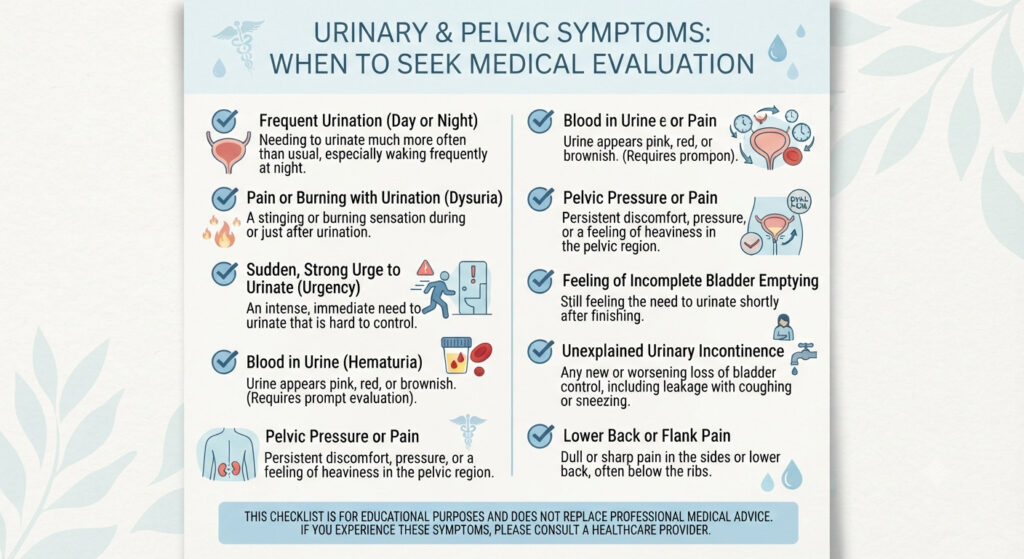
When to See a Doctor
This is the section that matters most. See a doctor for a proper evaluation if you experience:
- Increasing urinary frequency, urgency, or a weakening stream
- Difficulty starting or stopping urination
- Blood in urine or semen
- Pain during urination or ejaculation
- Any new pelvic or lower back pain
These symptoms can stem from BPH, but they can also signal prostatitis or, less commonly, prostate cancer — conditions that require proper diagnosis, not supplement guesswork. Current guidelines generally suggest men in their early 50s through late 60s discuss PSA screening with a doctor as a shared decision, with earlier discussion recommended for higher-risk groups, including Black men and those with a first-degree relative diagnosed with prostate cancer.
Frequently Asked Questions About Prostate Health Natural Support
Does saw palmetto actually work for an enlarged prostate? The highest-quality evidence available — a 2023 Cochrane review of 27 randomized trials involving 4,656 men — found saw palmetto provides little to no benefit for BPH symptoms compared to placebo. It’s considered safe, but current rigorous evidence doesn’t support it working reliably for most men.
Is lycopene good for prostate health? Observational studies link higher dietary lycopene intake to lower prostate cancer risk, but randomized controlled trials testing lycopene supplementation directly haven’t shown a significant effect on PSA levels. Eating lycopene-rich foods as part of a balanced diet is reasonable and low-risk, but it isn’t a proven standalone prevention strategy.
What actually helps prevent prostate problems? Regular exercise (around 150 minutes per week), maintaining a healthy weight, and a generally plant-forward diet have more consistent supporting evidence than any single supplement, alongside appropriate PSA screening based on your age and risk factors.
Should I take a prostate supplement instead of seeing a doctor? No. Supplements shouldn’t substitute for proper evaluation of urinary symptoms, since these can stem from conditions — including prostate cancer — that require real diagnosis and treatment, not self-managed supplementation.
A Note From Health Morph
This article is for informational purposes only and isn’t a substitute for personalized medical advice. If you’re experiencing urinary symptoms or have concerns about prostate health, please see a doctor for proper evaluation rather than relying on supplements alone.
For more evidence-based health guides, explore our Men’s Health section for related reading on hormonal health and wellness.







Leave a Reply