
If there’s one habit that genuinely deserves more credit than it gets, it’s walking after meals for blood sugar control — and the honest, slightly uncomfortable truth is that most people do the exact opposite of what actually helps. You sit down to eat, finish, and then sit right back down, or worse, lie down in front of the TV. That’s the single most common pattern working against blood sugar control, and it’s not a minor detail — it’s the difference between letting your post-meal glucose spike unfold unchecked and actively pulling that sugar out of your bloodstream while it’s still rising. This guide walks through exactly what the clinical trials show, the specific timing and duration that actually produces results, and three supporting habits that meaningfully compound the effect.
What Actually Happens to Your Blood Sugar in the First 60 Minutes After Eating
When you eat carbohydrates — rice, roti, bread, any starch — your digestive system breaks them down into glucose, which enters your bloodstream and pushes your blood sugar upward. This rise typically peaks somewhere between 30 and 60 minutes after you start eating, a window doctors call the postprandial glucose spike. In a healthy person, the pancreas releases insulin, which signals your cells to absorb that glucose, clearing it from the blood. In someone with insulin resistance or reduced insulin production — the underlying pattern in type 2 diabetes — this system doesn’t work efficiently. Either not enough insulin is released, or the cells stop responding to it properly, so glucose lingers in the bloodstream far longer than it should, and repeated spikes like this contribute to nerve, eye, kidney, and cardiovascular damage over time.
Why Walking Works Even When Insulin Doesn’t
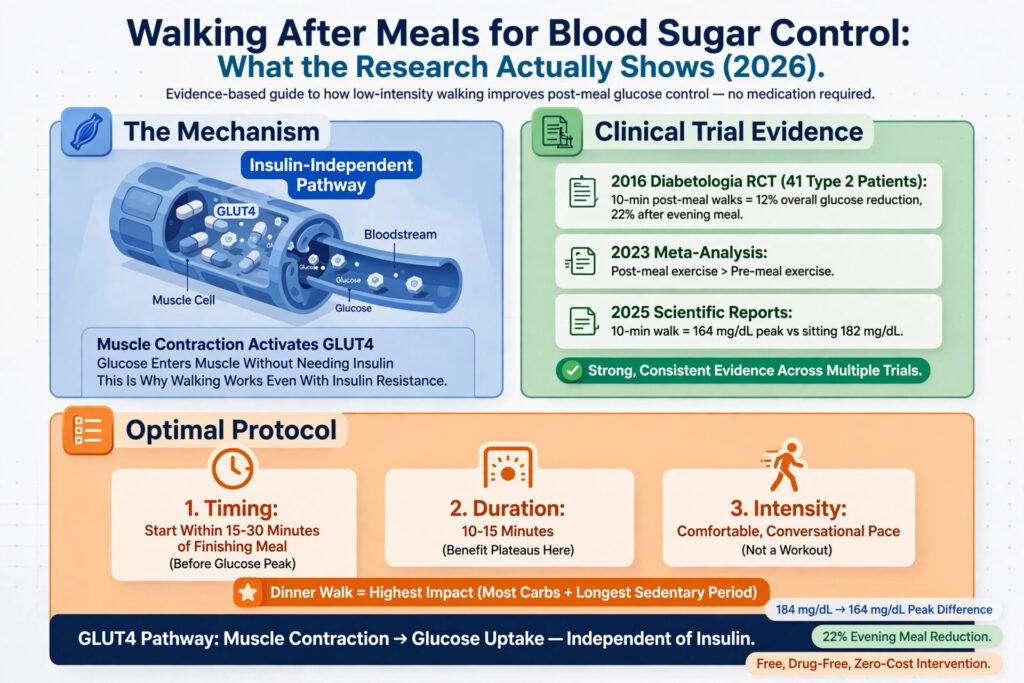
Here’s the part of the biology that makes this genuinely exciting rather than just another piece of generic advice: working muscle can pull glucose out of your blood without needing insulin to do it. When your leg muscles contract during walking, they activate glucose transporters (called GLUT4) that shuttle sugar directly into the muscle cells for fuel — a pathway that operates largely independent of the insulin signaling that’s impaired in diabetes and insulin resistance. This means walking can lower blood sugar even in someone whose insulin system isn’t working well, which is precisely why the timing and consistency of this habit matters so much more than most people realize.
What the Clinical Trials Actually Found
This isn’t a single small study — the evidence here has been building steadily since the early 2010s, and it’s genuinely more robust than most home-health advice you’ll come across.
A 2016 randomized crossover trial published in Diabetologia, involving 41 adults with type 2 diabetes, compared two structured recommendations: walking 30 minutes once daily versus walking 10 minutes after each main meal. Both technically met standard physical activity guidelines, but the post-meal walking group showed significantly lower postprandial glucose (measured as incremental area under the curve) — a 12% overall reduction, and a striking 22% reduction specifically after the evening meal, the meal that typically carries the most carbohydrate and the most sedentary time afterward.
A separate study in older adults at risk for impaired glucose tolerance, published in Diabetes Care, compared three 15-minute walks after each meal against one continuous 45-minute walk. Despite the exact same total walking time, the split post-meal walks significantly improved 24-hour glycemic control, while the single longer session did not perform as well — direct evidence that when you walk matters as much as how much.
A 2023 systematic review and meta-analysis in Sports Medicine, pooling eight randomized controlled trials, found that exercise performed after a meal produced a significantly greater reduction in postprandial glucose than exercise performed before eating, and the timing between the meal and the activity had a measurable moderating effect on the result — walking sooner after the meal consistently outperformed walking later. A more recent 2025 study published in Scientific Reports found that a 10-minute walk started immediately after glucose intake produced a significantly lower glucose peak (164 mg/dL) compared to sitting (182 mg/dL) — a real, statistically significant difference from a genuinely short intervention.
The insulin comparison worth knowing about, with an honest caveat: a small crossover study in type 2 diabetes patients already on basal insulin compared six weeks of daily post-meal walking against one additional prandial (mealtime) insulin injection. The walking group’s HbA1c improvement wasn’t statistically different from the insulin group’s — a genuinely remarkable finding for a free, drug-free intervention, though it’s worth being upfront that this was a small trial (14 completers), so it demonstrates walking can be comparably effective in this specific context rather than proving it universally replaces insulin therapy. Nobody should adjust or stop insulin based on this study alone — that’s a conversation for your doctor, not a home habit.
The Exact Timing, Duration, and Intensity That Actually Works
Based on the pooled trial evidence, here’s what “doing this correctly” actually looks like:
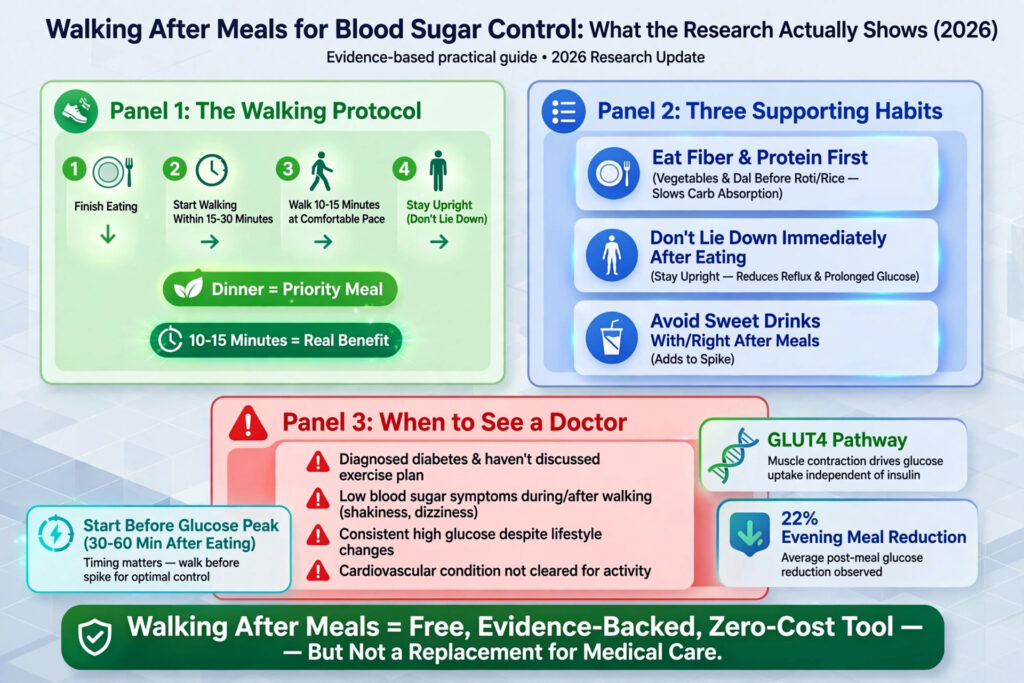
Timing: Start walking within 15 to 30 minutes of finishing your meal. Since blood sugar typically peaks 30 to 60 minutes after eating, you want to be active before that peak occurs, not after — research directly comparing activity at 15 versus 45 minutes post-meal found earlier activity produced a more favorable glucose response. Waiting an hour or more meaningfully reduces the benefit, since by then the spike has already largely happened.
Duration: A minimum of 10 minutes is where the research consistently shows a real effect; 15 minutes performs at least as well and sometimes better. Multiple trials point toward the benefit plateauing somewhere around 15 to 20 minutes for glucose control specifically — walking longer isn’t harmful and offers other cardiovascular benefits, but you’re not leaving significant additional glucose-lowering benefit on the table by stopping at 15 minutes if that’s what’s realistic for your day.
Intensity: This is genuinely not meant to be brisk exercise or a workout. A comfortable, conversational walking pace — the kind you’d use strolling around your home or neighborhood — is what the supporting studies actually used. You don’t need to raise your heart rate significantly for the muscle-glucose-uptake mechanism to activate.
Which meal matters most: If you can only manage this consistently after one meal, make it dinner. The evening meal typically carries the highest carbohydrate load of the day for most people, and it’s followed by the longest stretch of sedentary time — straight to the couch, then to bed — which is exactly the combination that produces the largest, most prolonged glucose spike. The Diabetologia trial’s strongest effect (22% reduction) was specifically after the evening meal.
Three Habits That Compound the Effect
1. Change your eating order. Eating fiber and protein before carbohydrates — vegetables and dal before rice or roti, rather than mixed together or roti first — slows carbohydrate absorption and blunts the resulting glucose spike. This is a well-established finding in nutrition research and pairs naturally with walking rather than competing with it. If you’re unsure how much protein you should actually be prioritizing at each meal, our protein intake guide breaks down the specific numbers by body weight and goal.
2. Don’t lie down immediately after eating. Lying down right after a meal — especially the common pattern of eating dinner and heading straight to bed — keeps blood sugar elevated longer and increases acid reflux risk. Walk first, sit upright for a while afterward, and only then move toward bed. This sequencing also matters for sleep quality itself, which is worth reading about in our guide to how to fall asleep faster, since going to bed with an active glucose spike and a full stomach works against good sleep on two separate fronts.
3. Avoid sweet drinks with or right after meals. Sugary soda, packaged juice, or heavily sweetened tea adds directly to a spike that’s already happening. Plain water or unsweetened tea, and waiting at least an hour before any sweetened beverage, avoids compounding the problem you’re actively trying to walk off.
How This Fits Into the Bigger Picture
Post-meal walking is a genuinely powerful, zero-cost tool, but it’s worth being clear-eyed about what it is and isn’t. Blood sugar spikes have multiple contributing causes — insulin resistance, dietary pattern, stress, genetics, and sleep all play a role, and what works best for your specific situation is worth understanding rather than assuming one habit fixes everything. Chronic stress in particular is an underappreciated piece of this picture, since elevated cortisol directly affects blood sugar regulation — our fact-check on cortisol and what actually affects it is worth reading if stress feels like a meaningful part of your pattern. Thyroid function matters here too, since an underactive thyroid can slow metabolism in ways that compound blood sugar issues — something we cover in our guide to natural support for hypothyroidism. And if weight management is part of your goal alongside blood sugar control, the same post-meal walking habit pairs naturally with the food-based strategies in our guide to foods that support metabolism and belly fat reduction.
When to See a Doctor
Post-meal walking is a genuinely low-risk, broadly beneficial habit for most people, but it doesn’t replace medical management of diagnosed diabetes. See a doctor if:
- You have diagnosed diabetes and haven’t discussed an exercise plan with your care team
- You experience symptoms of low blood sugar (shakiness, dizziness, confusion) during or after walking, particularly if you’re on insulin or other glucose-lowering medication
- Your fasting or post-meal glucose readings remain consistently high despite lifestyle changes
- You have any cardiovascular condition that hasn’t been cleared for regular physical activity
Frequently Asked Questions
How soon after eating should I start walking to control blood sugar? Within 15 to 30 minutes of finishing your meal. Since blood sugar peaks 30 to 60 minutes after eating, walking before that peak occurs is significantly more effective than walking an hour or more later.
How long should I walk after a meal for the best blood sugar benefit? 10 to 15 minutes is where the strongest research support sits, with most trials showing the glucose-control benefit plateauing around this range. Walking longer offers other health benefits but isn’t shown to meaningfully add to the glucose-specific effect.
Does walking after meals really work as well as medication for blood sugar? For general postprandial glucose control, yes, walking has real, trial-backed benefit — including one small study showing effects comparable to an additional insulin injection in people already on basal insulin. This isn’t a reason to adjust prescribed diabetes medication without your doctor’s guidance, but it is strong evidence the habit is worth taking seriously as a genuine treatment tool.
Is a slow walk enough, or do I need to walk briskly? A comfortable, normal walking pace is what the supporting research actually used — this isn’t meant to be a workout. The muscle-glucose-uptake mechanism activates with light to moderate activity, not high intensity.
Which meal is most important to walk after — breakfast, lunch, or dinner? Dinner, if you can only manage one. It typically carries the highest carbohydrate content and precedes the longest sedentary period (through the evening and into sleep), which is exactly the combination research shows produces the largest, most prolonged glucose spike.
What happens if I walk after meals but still lie down soon after? You’ll get a real benefit from the walk, but lying down shortly afterward can still allow blood sugar to remain elevated longer than if you stayed upright and active a bit longer, and it separately increases acid reflux risk. Walk, then sit upright for a period, then rest.
Can walking after meals help even if I don’t have diabetes? Yes. The trials showing benefit include both people with type 2 diabetes and those without, and postprandial glucose spikes are relevant to cardiovascular risk even in people without a diabetes diagnosis, making this a reasonable habit for general metabolic health, not just diabetes management.
Is standing after a meal better than sitting, if I can’t walk? Standing does produce some measurable benefit compared to sitting, according to research comparing the two, but walking is significantly more effective. Standing is a reasonable fallback when walking genuinely isn’t possible, not an equal substitute.
The Bottom Line
Walking after meals for blood sugar control is one of the most evidence-backed, zero-cost habits in metabolic health, and the mechanism behind it — muscle pulling glucose from the blood without needing insulin — explains why it works even for people whose insulin system isn’t functioning well. The details matter: start within 15 to 30 minutes of finishing your meal, walk for at least 10 to 15 minutes at a comfortable pace, and prioritize this after dinner specifically if you can’t manage it every meal. Pair it with eating fiber and protein before carbs, staying upright rather than lying down right after eating, and skipping sweet drinks with meals, and you’ve got a genuinely well-supported, low-effort strategy — not a replacement for medical care if you have diagnosed diabetes, but a real, trial-backed tool worth using consistently either way.
This article is for informational purposes only and is not a substitute for personalized medical advice. If you have diabetes or another condition affecting blood sugar, consult your doctor before making changes to your exercise or medication routine.







Leave a Reply