If you’re on thyroid medication and still dealing with fatigue, stubborn weight, and low energy despite taking your dose every day, a natural remedy for hypothyroidism built around two specific minerals — selenium and zinc — addresses a piece of thyroid biology that levothyroxine alone genuinely doesn’t fix on its own. This isn’t a claim that your medication is wrong or that you should stop taking it — it’s the opposite, and it’s the same “support the mechanism, don’t fight the medication” approach we took researching natural GLP-1 alternatives. The real, endocrinology-backed explanation is that levothyroxine raises your T4 (the inactive form of thyroid hormone), but your body still has to convert that T4 into T3, the active form your cells actually use, and that conversion step depends on mineral cofactors that a standard thyroid prescription doesn’t supply. This guide explains the actual biochemistry, walks through a simple sesame-and-flaxseed remedy with real research behind its two active minerals, and — critically — covers a medication-timing mistake that could be quietly undermining your treatment regardless of what remedy you do or don’t add.
Why Your Thyroid Medication Alone Might Not Be Enough
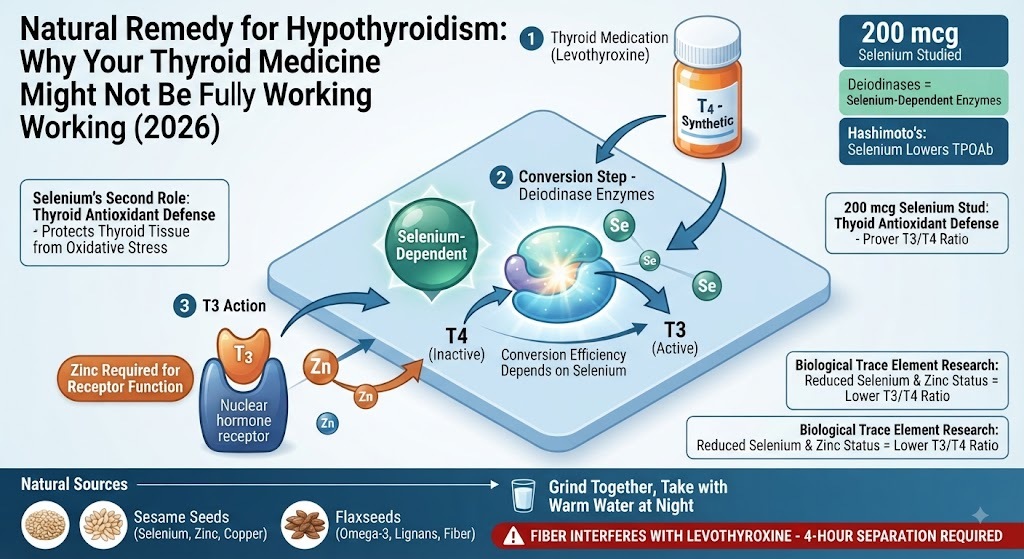
Your thyroid produces two main hormones: T4 (thyroxine) and T3 (triiodothyronine). T4 is the inactive, storage form, while T3 is the biologically active hormone that actually regulates your metabolism, energy production, and how your cells use calories. Prescription levothyroxine — the standard treatment for an underactive thyroid — supplies synthetic T4, on the assumption that your body will convert enough of it into T3 on its own.
That conversion happens through enzymes called deiodinases, and here’s the part most patients are never told: these enzymes are selenium-dependent. According to a 2026 review in the Future Journal of Pharmaceutical Sciences, selenium deficiency impairs this enzymatic conversion process, potentially reducing intracellular T3 availability and keeping TSH elevated even when circulating T4 levels look normal on a lab report. Zinc plays a supporting role too — it’s structurally required by the nuclear thyroid hormone receptors that T3 has to bind to in order to actually do its job inside your cells. A landmark study published in Biological Trace Element Research specifically found that reduced selenium and zinc status was associated with a lower T3-to-T4 ratio, a pattern seen commonly in older adults with reduced thyroid conversion efficiency.
In plain terms: your medication can successfully raise your T4 number on paper, while your actual felt symptoms — fatigue, weight that won’t move, brain fog — persist, because the conversion step downstream of the medication is where the real bottleneck sits. This is precisely the kind of hidden, unaddressed mechanism we’ve seen elsewhere too — it’s a similar pattern to the mineral-dependent pathways we cover in our guide to how much protein you actually need, where a single number on a label doesn’t tell the whole story of what your body actually does with it.
The Research Behind Selenium and Thyroid Function
Selenium’s role here isn’t a fringe theory — it’s established biochemistry with real clinical trial support, though the picture is more nuanced than “just take a selenium pill.”
Multiple studies confirm selenium-dependent deiodinase enzymes are directly responsible for converting T4 into T3. Research published in a retrospective analysis of patients with confirmed selenium deficiency found significantly elevated FT4-to-FT3 ratios compared to controls — and when selenium was supplemented in a subset of these patients, TSH and FT4 decreased significantly while FT3 increased, essentially correcting the imbalance. A separate systematic review and meta-analysis of randomized controlled trials in Hashimoto’s thyroiditis patients found selenium supplementation, typically at 200 micrograms daily, effectively and safely lowered TSH and thyroid peroxidase antibody (TPOAb) levels, with this antibody-lowering effect occurring independently of whether patients were also on thyroid hormone replacement therapy.
Selenium also plays a second, related role worth knowing: it’s a component of the thyroid gland’s own antioxidant defense system, helping protect thyroid tissue from oxidative stress generated during normal hormone production — a mechanism that connects to the same oxidative-stress pathways we discuss in our vitamin E capsule benefits and risks guide, where antioxidant status shows up as a recurring theme across very different areas of the body.
The honest caveat: not every study agrees on the magnitude of benefit, and selenium’s effect on quality-of-life symptoms specifically remains genuinely debated in the research, even where TSH and antibody improvements are more consistently observed. This is a real, biologically grounded mechanism — not a guaranteed fix for every symptom you’re experiencing.
Zinc’s Supporting Role
Zinc’s contribution is less dramatic than selenium’s in the research literature, but it’s a real, mechanistically distinct piece of the picture rather than a redundant addition. Nuclear thyroid hormone receptors — the proteins T3 has to bind to inside your cells to actually exert its effects — structurally require zinc ions to fold and function correctly. Without adequate zinc, even properly converted T3 can’t bind and signal as effectively, which is part of why a mineral-support approach targets both selenium and zinc together rather than selenium alone — the same “multiple cofactors, not one magic nutrient” logic behind the turmeric-ginger anti-inflammatory combination we’ve covered elsewhere on the site.
The Remedy: Sesame and Flaxseed
This remedy pairs two accessible kitchen ingredients, each targeting a different piece of the mineral-and-inflammation picture behind sluggish thyroid conversion.
Sesame seeds (black or white, either works) are a genuine dietary source of selenium, zinc, and copper — the copper working alongside zinc to further support the conversion pathway. This is a straightforward nutritional contribution rather than a dramatic pharmacological effect, but consistent, food-level mineral intake is exactly the kind of unglamorous foundation that real thyroid support research points toward, the same diet-first philosophy behind our natural remedy for high uric acid.
Flaxseed contributes three separate things worth understanding individually: omega-3 fatty acids, which have anti-inflammatory properties relevant to thyroid tissue health; lignans, plant compounds with antioxidant activity that may help protect thyroid cells from oxidative damage; and fiber, which supports the constipation and bloating that commonly accompanies an underactive thyroid — a connection worth reading alongside our guide to natural relief for gas, acidity, and bloating, since sluggish digestion is a genuinely common, underdiscussed hypothyroid symptom.
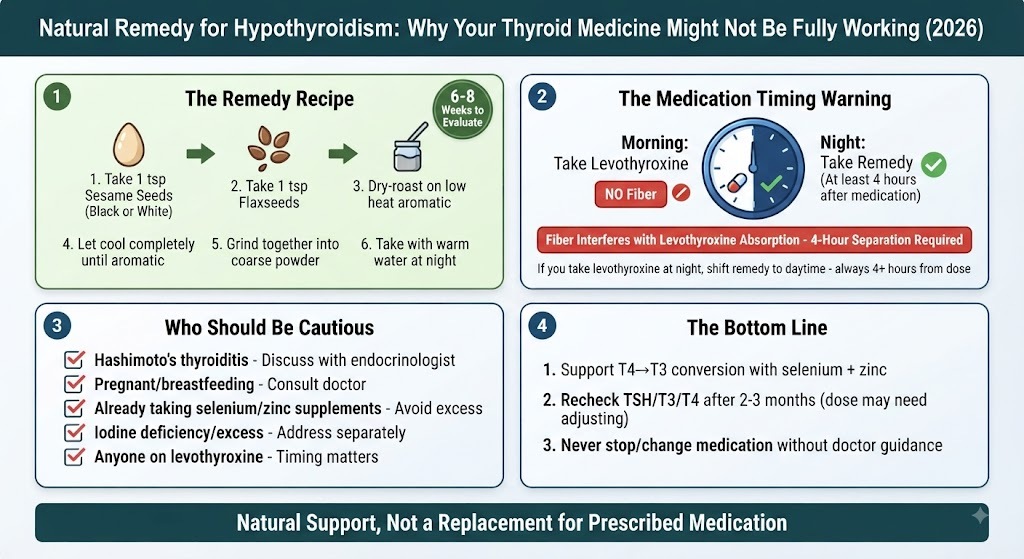
How to make it: Take one teaspoon each of flaxseed and sesame seeds. Dry-roast them separately on low heat until you catch a light aroma, then let them cool completely. Grind them together into a coarse powder using a spice or coffee grinder. Take this powder with warm water at night, before bed — timing that matters for a specific reason covered in the next section, not just tradition.
Realistic timeline: This is a nutritional support strategy, not a fast-acting intervention. Give it six to eight weeks of consistent daily use before evaluating whether it’s making a felt difference, and always retest your TSH and thyroid panel through your doctor rather than judging progress by symptoms alone.
The Critical Warning Most Content Skips: Medication Timing
This is, without exaggeration, the single most important section of this entire guide, and it’s worth reading even if you skip everything else.
If you take levothyroxine or a similar synthetic thyroid medication, fiber is specifically documented to interfere with its absorption. According to guidance summarized by the Graves’ Disease and Thyroid Foundation and reflected in official prescribing information for major levothyroxine brands, dietary fiber, soy products, calcium, and iron can all reduce how much of your medication actually gets absorbed — and current clinical guidance recommends waiting at least four hours between your levothyroxine dose and any of these. One clinical resource specifically notes that even a light snack containing fiber can meaningfully interfere with consistent absorption.
This is exactly why taking a fiber-containing remedy like this one immediately after your morning thyroid dose would be counterproductive — it could reduce the very medication this remedy is meant to help support. Taking it at night, well separated from a standard morning dose, is the right call for most people. But here’s the nuance most sources miss entirely: some patients, particularly those with busy mornings, are specifically advised by their doctor to take levothyroxine at bedtime instead of first thing in the morning. If that describes you, taking this remedy at the same bedtime as your medication would create exactly the interference problem you’re trying to avoid — you’d need to shift the remedy to earlier in the day, at least four hours away from your dose, regardless of what general advice says about “taking it at night.” Always confirm your own dosing schedule with your prescribing doctor before adding any fiber-containing remedy, and don’t assume a generic timing recommendation applies to your specific regimen.
This Is Support, Not a Replacement — And Your Dose May Need Adjusting
This remedy is not a substitute for prescribed thyroid medication, and stopping levothyroxine in favor of a dietary approach is not something this article supports or recommends. What selenium and zinc support can genuinely do is improve how efficiently your existing medication converts into the active hormone your body needs — which creates a real, practical consequence worth planning for: if your conversion improves, your effective thyroid hormone levels may rise, meaning your current dose could become too high over time.
This is exactly why regular monitoring matters here more than with most supplements. Recheck your TSH and thyroid panel with your doctor two to three months after starting this remedy consistently, and be prepared for the possibility that your levothyroxine dose may need to be reduced, not just left unchanged — a genuinely different mindset than “add a supplement and continue exactly as before,” and one that reflects real, responsible thyroid management rather than a set-and-forget approach. This same “recheck rather than assume” principle is exactly why we recommend retesting after starting ashwagandha too, since hormone-adjacent supplements of any kind deserve follow-up monitoring, not a one-time decision.
Who Should Be Cautious
- Anyone with Hashimoto’s thyroiditis or other autoimmune thyroid conditions should discuss selenium supplementation specifically with their endocrinologist, since dosing and monitoring considerations differ from straightforward hypothyroidism
- Pregnant or breastfeeding individuals should check with their doctor before adding concentrated mineral remedies, given how thyroid hormone needs shift during pregnancy — a period covered from a related hormonal angle in our perimenopause symptoms guide
- Anyone already taking a separate selenium or zinc supplement should account for the combined intake to avoid exceeding safe upper limits, since excess selenium intake carries its own documented risks
- Anyone with a diagnosed iodine deficiency or excess should be especially careful, since iodine status interacts with thyroid hormone synthesis in ways that go beyond what selenium and zinc alone address, and this remedy doesn’t correct an iodine problem if one exists
- Anyone on levothyroxine, full stop — the medication-timing guidance above isn’t optional context, it’s the difference between this remedy helping your treatment and quietly working against it, the same real-stakes caution we emphasized around drug interactions in our libido supplements guide
Frequently Asked Questions
Can selenium and zinc actually cure hypothyroidism? No. Hypothyroidism is a structural or autoimmune condition requiring ongoing medical management, and selenium and zinc don’t reverse it. What they can genuinely support is the T4-to-T3 conversion step that determines how effectively your existing medication translates into felt symptom relief.
Why do I still feel tired and can’t lose weight even though my thyroid levels look normal on my blood test? A normal T4 or TSH reading doesn’t guarantee adequate T3 conversion. If your deiodinase enzymes lack sufficient selenium, T4 can rise appropriately on medication while T3 — the form your cells actually use — remains insufficient, which is a well-documented, biologically real pattern rather than “it’s all in your head.” Persistent fatigue like this is worth reading about alongside our broader piece on what actually lowers cortisol, since chronic stress can compound and mimic several of the same symptoms.
How long before this remedy shows results? Most sources recommend six to eight weeks of consistent daily use before evaluating effect, and results should be confirmed with an actual thyroid panel retest through your doctor, not judged by symptoms alone.
Can I take this remedy at the same time as my thyroid medication? No — this is the most important caution in this entire guide. Fiber can interfere with levothyroxine absorption, and current guidance recommends a minimum four-hour separation between your medication and any fiber-containing food or remedy.
What if I take my thyroid medication at night instead of in the morning? Then this remedy shouldn’t also be taken at night — you’d need to shift it to a different time of day, at least four hours from your actual medication dose, since the general “take it at bedtime” advice assumes a standard morning medication schedule. If sleep timing and routine are already something you’re working on, our guide to how to fall asleep faster is worth reading alongside this to keep your evening routine coherent.
Will this remedy mean I need less thyroid medication over time? Possibly, and this is worth planning for rather than being surprised by. If mineral support improves your T4-to-T3 conversion, your effective hormone levels can rise, which sometimes means your prescribed dose needs to be reduced under medical supervision — recheck your levels two to three months in rather than assuming your dose stays fixed indefinitely.
Is it safe to take selenium supplements long-term instead of getting selenium from food? Food-based selenium sources like sesame seeds carry minimal risk of excess. Concentrated selenium supplements, by contrast, have a narrower safety margin, and excessive selenium intake is associated with its own set of health problems, which is part of why a food-based approach is generally the safer starting point over an isolated high-dose supplement.
Does flaxseed interfere with thyroid medication the same way fiber does? Yes — flaxseed’s fiber content is specifically why timing matters here. It should be treated the same as any other fiber source relative to your levothyroxine dose, with the same four-hour separation guidance applied.
Can this remedy help with hypothyroidism-related weight gain? Indirectly, if poor T4-to-T3 conversion is genuinely part of what’s slowing your metabolism — better conversion can support the metabolic rate improvements your medication is meant to provide. It’s not a standalone weight-loss remedy, and pairing it with adequate protein intake, covered in our protein guide, matters more for weight management than the remedy alone — similar to the food-first approach we take in our piece on foods that support metabolism and belly fat reduction.
Should I get my selenium and zinc levels tested before starting this remedy? It’s a reasonable step if you want to confirm an actual deficiency rather than supplementing blind, though food-level intake from sesame and flaxseed carries low risk even without testing first — this is a different risk calculation than starting a concentrated supplement without knowing your baseline status.
Does stress make hypothyroidism symptoms worse? Chronic stress and elevated cortisol can compound fatigue and metabolic symptoms that overlap significantly with hypothyroidism, which is worth ruling out separately rather than assuming every symptom traces back to your thyroid alone — our guide to somatic therapy and nervous system regulation covers evidence-backed ways to actually address that stress load.
The Bottom Line
A natural remedy for hypothyroidism built around sesame and flaxseed isn’t a substitute for your prescribed medication — it’s a genuinely evidence-grounded way to support the mineral-dependent conversion step (T4 to active T3) that levothyroxine alone doesn’t address, much like the mineral and cofactor dependencies we’ve traced through other conditions on this site, from gut health to sleep. Selenium’s role in this conversion, and in protecting thyroid tissue from oxidative stress, has real clinical trial support, and zinc plays a smaller but mechanistically distinct supporting role. The single most important thing to take from this entire guide, though, isn’t the remedy itself — it’s the medication-timing warning: fiber genuinely interferes with levothyroxine absorption, and taking this remedy at the wrong time relative to your dose could undermine the very treatment you’re trying to support. Space it correctly, stay consistent for six to eight weeks, and get your thyroid panel rechecked rather than guessing — your dose may need adjusting as conversion improves, and that’s a good problem to have, managed properly with your doctor.
This article is for informational purposes only and is not a substitute for personalized medical advice. Never stop, reduce, or adjust thyroid medication without direct guidance from your prescribing doctor. Consult an endocrinologist before starting selenium or zinc supplementation, particularly if you have Hashimoto’s thyroiditis, are pregnant, or take other medications or supplements that may interact.







Leave a Reply