
Perimenopause symptoms and how to manage them is one of the most searched women’s health questions of the decade, and for good reason — this transition can start up to a decade before menopause itself, often while women are still being told their symptoms are “just stress” or “too young for menopause.” Perimenopause typically begins in your mid-to-late 30s or 40s, can last anywhere from a few months to over ten years, and brings a cluster of symptoms — irregular periods, sleep disruption, mood swings, brain fog, and unexplained weight changes — that are frequently dismissed or misdiagnosed. This guide breaks down exactly what’s happening hormonally, the full range of perimenopause symptoms, and the management strategies that actually have evidence behind them.
What Is Perimenopause, Exactly?
Perimenopause is the transitional phase leading up to menopause, when your ovaries gradually produce less estrogen and progesterone. Unlike menopause — a single point in time marked by 12 consecutive months without a period — perimenopause is a stretch of years defined by hormonal fluctuation, not decline in a straight line. Estrogen levels during this phase don’t drop smoothly; they swing unpredictably, sometimes spiking higher than premenopausal levels before crashing, which is exactly why symptoms can feel so erratic and hard to pin down.
Most women enter perimenopause in their 40s, though it’s increasingly common to see symptoms begin in the mid-to-late 30s. The average length is about four years, but it’s entirely normal for it to last anywhere from a few months to over a decade.
Perimenopause Symptoms and How to Manage Them: The Full List
Understanding perimenopause symptoms and how to manage them starts with recognizing just how wide-ranging they are — this isn’t just about hot flashes. Here’s the full picture, organized by category.
Physical Symptoms
- Irregular periods — shorter or longer cycles, heavier or lighter flow, or skipped periods altogether; often the first noticeable sign
- Hot flashes and night sweats — sudden waves of heat, often accompanied by flushing and sweating
- Sleep disruption — trouble falling or staying asleep, independent of night sweats
- Joint aches and muscle stiffness — frequently misattributed to aging or overtraining
- Headaches or migraines — new onset or worsening of existing patterns, often tied to estrogen fluctuation
- Vaginal dryness and changes in libido
- Weight changes, particularly increased abdominal fat, even without changes in diet or activity
- Hair thinning and skin changes — reduced elasticity, increased dryness
Cognitive and Emotional Symptoms
- Brain fog — difficulty concentrating, word-finding trouble, forgetfulness
- Mood swings, anxiety, or new-onset irritability
- Increased risk of depressive symptoms, particularly in those with a prior history of mood disorders or severe PMS
- Reduced stress tolerance — situations that used to feel manageable suddenly feel overwhelming
Because so many of these symptoms overlap with thyroid issues, stress, and normal aging, perimenopause is frequently missed in clinical settings — studies suggest many women see multiple providers before receiving an accurate explanation for what they’re experiencing.
Why Perimenopause Symptoms Are So Often Misdiagnosed
Part of the challenge is that there’s no single blood test that definitively confirms perimenopause — hormone levels fluctuate too much day to day to be reliable on their own. Diagnosis is typically based on age, symptom pattern, and menstrual cycle changes rather than a lab number. This is one of the reasons perimenopause symptoms and how to manage them remains such a heavily searched topic: women are often left to piece together the explanation themselves before a provider connects the dots.
Symptoms like fatigue, mood changes, and brain fog are also commonly attributed to unrelated causes first — low iron, thyroid dysfunction, or general stress — which can delay an accurate diagnosis by months or years. If you’re tracking unexplained fatigue alongside cycle changes, it’s worth ruling out other common culprits too, including whether you’re simply under-fueling — our guide on how much protein you actually need covers how low protein intake alone can mimic several of these same symptoms.
Evidence-Based Ways to Manage Perimenopause Symptoms
There’s no single fix for perimenopause, but a combination of lifestyle strategies and, when appropriate, medical treatment can meaningfully reduce symptom severity.
1. Strength Training and Protein Intake
Estrogen decline accelerates muscle and bone loss during perimenopause, making this one of the most important windows for building strength, not just maintaining it. Resistance training two to three times a week, paired with adequate protein intake, helps counteract both the muscle loss and the metabolic slowdown many women experience during this transition. If you’re unsure what “adequate” looks like for your body weight and activity level, our breakdown of how much protein you actually need walks through the exact numbers by goal and age.
2. Sleep Hygiene and Temperature Regulation
Since night sweats and independent sleep disruption often occur together, layering your bedding, keeping your bedroom cool, and avoiding alcohol close to bedtime can meaningfully reduce nighttime waking. A consistent sleep and wake time also helps stabilize the circadian rhythm disruption that hormonal fluctuation can cause.
3. Blood Sugar Stability
Estrogen influences insulin sensitivity, and many women notice increased blood sugar swings — and the cravings, energy crashes, and mood dips that come with them — during perimenopause. Reducing added sugar and prioritizing fiber and protein at each meal can blunt these swings. If you’ve never done a structured reset, our 7-day sugar detox guide is a practical starting point.
4. Gut Health and Hormone Metabolism
Estrogen is partly metabolized and recirculated through the gut via a collection of bacteria sometimes called the “estrobolome.” An imbalanced gut microbiome can affect how efficiently your body clears and regulates estrogen, which may compound hormonal symptoms. Supporting gut health with adequate fiber and diverse plant foods is a reasonable, low-risk strategy — see our full guide to gut health signs, causes, and what helps for specifics.
5. Menopausal Hormone Therapy (MHT)
For moderate to severe symptoms — particularly hot flashes, night sweats, and vaginal dryness — hormone therapy remains the most effective evidence-based treatment. Current guidelines from major medical societies support MHT as safe and appropriate for most healthy women within 10 years of menopause onset or under age 60, though the decision should always be individualized with a doctor based on personal and family health history.
6. Non-Hormonal Medical Options
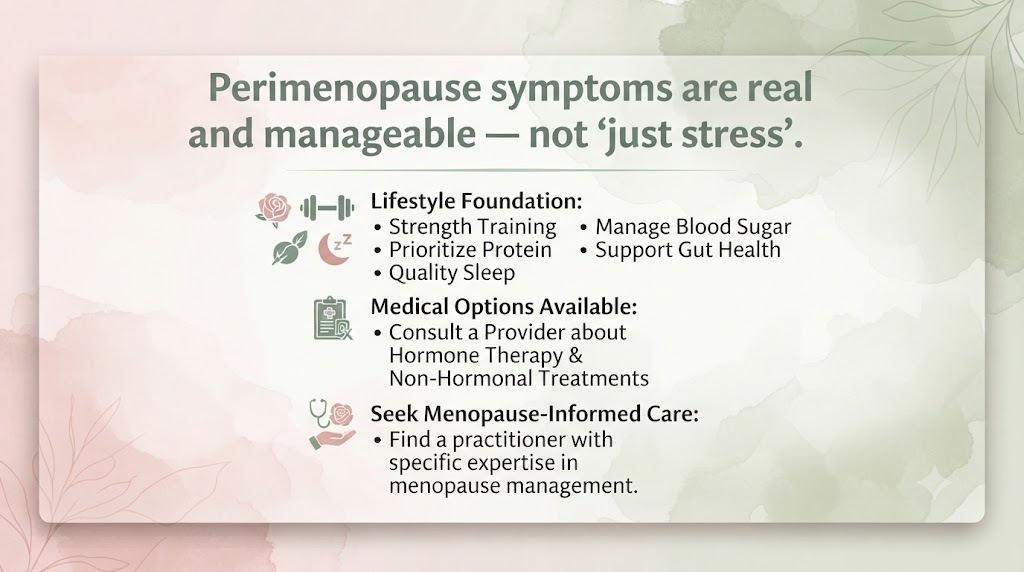
For women who can’t or prefer not to use hormone therapy, several non-hormonal medications (including certain antidepressants and newer non-hormonal options specifically approved for hot flashes) have evidence behind them. A conversation with a menopause-informed provider — not just a general practitioner — can make a significant difference in finding the right fit.
7. Stress Management
Cortisol and estrogen interact closely, and chronic stress can worsen hot flashes, sleep disruption, and mood symptoms. Regular movement, breathwork, and simply protecting time for recovery aren’t just “nice to have” during perimenopause — they measurably affect symptom severity.
When to See a Doctor
While perimenopause is a normal transition, certain symptoms warrant a medical evaluation rather than a wait-and-see approach:
- Very heavy bleeding or periods lasting longer than seven days
- Bleeding between periods or after sex
- Symptoms severe enough to disrupt work, relationships, or daily functioning
- New or worsening depression or anxiety
- Any bleeding after 12 months without a period (this is never normal and should be evaluated promptly)
Seek out a provider who specializes in menopause care where possible — a certified menopause practitioner will typically be more up to date on current treatment guidelines than a general primary care visit allows time for.
Frequently Asked Questions
What are the first signs of perimenopause? Irregular periods are usually the earliest and most noticeable sign, often accompanied by subtle changes in sleep, mood, or PMS severity before more classic symptoms like hot flashes appear.
Can perimenopause start in your mid-30s? Yes. While the 40s are most common, it’s entirely possible — and increasingly recognized — for perimenopause symptoms to begin in the mid-to-late 30s.
How long does perimenopause last? On average, about four years, but the range is wide — anywhere from a few months to more than a decade.
Does perimenopause cause weight gain? Hormonal shifts during perimenopause can shift fat storage toward the abdomen and slow metabolism somewhat, but weight changes are also influenced by muscle loss, sleep disruption, and stress — all of which are addressable with the strategies above.
Is hormone therapy safe during perimenopause? For most healthy women within 10 years of menopause onset, current medical guidelines consider hormone therapy safe and effective. It’s a decision to make individually with a doctor based on your personal health history.
The Bottom Line
Perimenopause symptoms and how to manage them doesn’t have to mean guessing your way through a decade of unpredictable changes. Irregular periods, sleep disruption, mood swings, and brain fog are all recognized parts of this transition — not signs that something is wrong with you or “just stress.” Strength training, adequate protein, blood sugar stability, and gut health form a solid lifestyle foundation, and for more moderate-to-severe symptoms, hormone therapy and non-hormonal medical options are both legitimate, evidence-backed paths worth discussing with a menopause-informed provider.
This article is for informational purposes only and is not a substitute for personalized medical advice. Consult a physician or certified menopause practitioner before starting any new treatment, supplement, or hormone therapy.







Leave a Reply