
Last Updated: August 2026
Quick Answer
A sugar detox — cutting back significantly on added and refined sugar for a week — typically brings noticeable changes within 7 days: more stable energy instead of the mid-afternoon crash, fewer sugar cravings by day 4-5, better sleep, and often less bloating. It’s not a magic reset and it won’t undo months of habits in a week, but a genuine sugar detox is one of the more noticeable short-term experiments you can run on your own body, and it’s a useful starting point for a longer-term relationship with sugar rather than a one-week fix.
Why I Actually Tried This Myself
I’ll be honest — I was skeptical of “sugar detox” as a concept before I tried it properly. It sounded like wellness marketing more than anything grounded in how the body actually works. But after noticing my own energy crashing hard every afternoon and reaching for something sweet almost on autopilot, I decided to actually track what happened over a genuine 7-day period of cutting back on added sugar, rather than just reading about it. What follows is what I noticed, what’s actually happening physiologically, and what I’d tell anyone considering trying this themselves.
What “Sugar Detox” Actually Means (And What It Doesn’t)
Before going further, I want to be precise about this, because a lot of sugar detox content online is vague to the point of being misleading. A sugar detox generally means significantly reducing added and refined sugar — the sugar in sodas, candy, baked goods, sugary cereals, and processed snacks — not eliminating naturally occurring sugar found in fruit, dairy, or vegetables. Fruit sugar comes packaged with fiber, water, and nutrients that change how your body processes it entirely differently from a spoonful of table sugar or a can of soda. Treating all sugar as equally “bad” isn’t accurate, and it can lead to unnecessarily restrictive eating that isn’t actually the point of this.
Day-by-Day: What Genuinely Tends to Happen
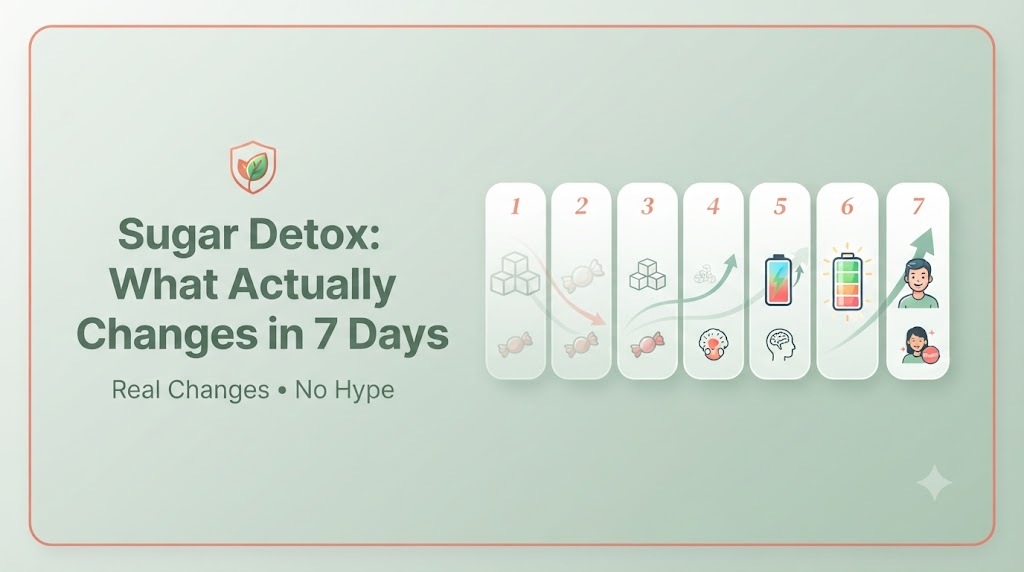
Days 1-2: The Hardest Part
This is where most people quit, and it’s worth knowing why in advance. Cutting added sugar sharply can bring on real cravings, mild irritability, and sometimes a headache — not because sugar is addictive in the way a drug is, but because your body and brain have adapted to a certain pattern of quick glucose spikes, and adjusting away from that takes a couple of days. Energy can actually feel slightly worse before it feels better during this window, which catches a lot of people off guard.
Days 3-4: Cravings Start Easing
By around day 3 or 4, most people notice cravings becoming less intense and less frequent — not gone entirely, but noticeably more manageable. This is roughly when your blood sugar patterns start stabilizing without the frequent spikes and crashes that come from regular sugar intake, which is a big part of why cravings ease during this window.
Days 5-7: More Stable Energy and Better Sleep
This is where most people, myself included, notice the most tangible difference: energy that feels steadier throughout the day instead of a sharp afternoon crash, and often improved sleep quality. Reduced late-day sugar intake means less disruption to blood sugar overnight, which can genuinely translate into more restful sleep by the end of the week.
What’s Actually Happening Physiologically
The changes people notice during a sugar detox aren’t placebo — there’s a genuine mechanism behind them. Regularly consuming refined sugar causes sharp spikes in blood glucose, followed by an insulin response that brings it back down, often overshooting into a temporary energy dip — the classic “sugar crash.” Cutting added sugar reduces the frequency and severity of these swings, which is largely why energy tends to feel more consistent by the end of a week. There’s also a connection to gut health worth mentioning — a diet heavy in added sugar and refined carbohydrates has been associated with less favorable gut bacteria balance, so reducing it can support a healthier gut environment over time, something I go into in more depth in our gut health guide.
What a 7-Day Sugar Detox Won’t Do
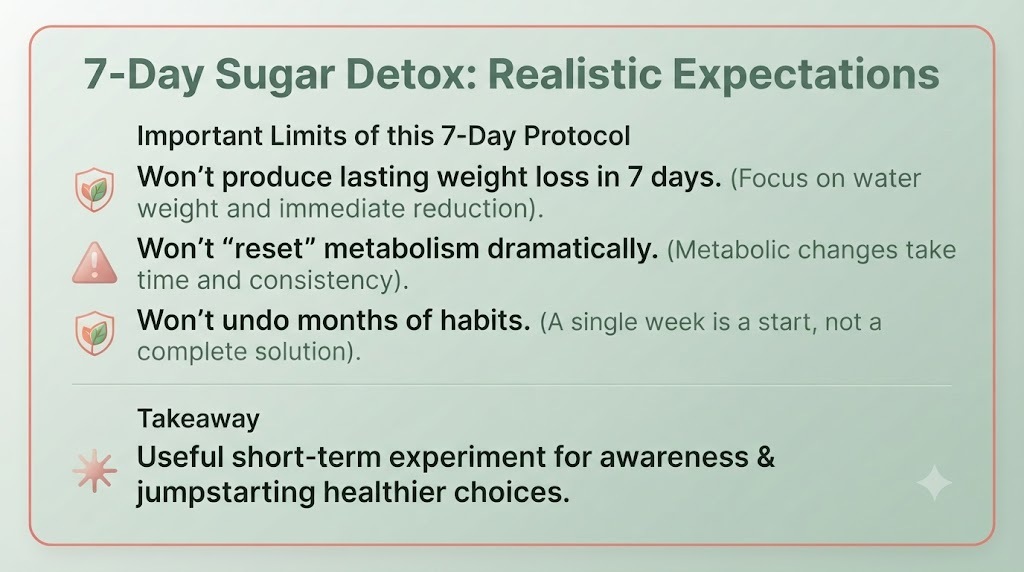
I want to be honest about the limits here, because a lot of sugar detox content oversells the results. Seven days won’t meaningfully change your weight in a lasting way, won’t “reset your metabolism” in the dramatic sense some content implies, and won’t undo months or years of dietary habits. What it genuinely does is give you a clear, short-term experience of how your body responds without the constant sugar spikes — useful information you can carry into longer-term habits, but not a standalone fix.
Practical Tips for Actually Getting Through 7 Days
- Read labels, not just obvious sources. Added sugar hides in bread, sauces, salad dressings, and “healthy” granola bars far more often than people expect — this catches most people off guard on day one.
- Don’t restrict fruit. Whole fruit is not the target here, and cutting it out unnecessarily makes the week harder without any real benefit.
- Expect days 1-2 to be the toughest, and plan accordingly — this isn’t the week to also start three other new habits simultaneously.
- Stay hydrated. Dehydration can worsen the fatigue and headache some people experience in the first couple of days, so this is a small thing that genuinely helps.
- Prioritize protein and fiber at meals. Both help stabilize blood sugar and reduce the intensity of cravings, making the whole week more manageable. If you’re unsure whether you’re getting enough protein day to day, our guide on protein requirements is a useful reference point.
- Get good sleep during the week. Poor sleep itself increases sugar cravings the next day, so protecting your sleep genuinely supports the whole experiment. Our guide on Ayurvedic remedies for better sleep covers gentle, low-risk habits that pair well with this.
Is This the Same as Intermittent Fasting?
No, and it’s worth clarifying since people sometimes conflate the two. A sugar detox is about what you eat — cutting back on added sugar specifically — while intermittent fasting is about when you eat. They’re not mutually exclusive, and some people combine both, but they’re addressing different things. If you’re curious about the timing side of eating patterns as well, our piece on intermittent fasting and Ayurveda covers that territory separately.
A Note on Who Should Approach This Carefully
If you have a history of disordered eating, a restrictive “detox” framing around any food group can be genuinely risky rather than helpful, and I’d encourage working with a professional rather than a self-guided elimination approach. The same caution applies if you’re managing diabetes or another condition affecting blood sugar — any significant dietary change should be discussed with a doctor first, since sugar reduction can affect medication needs.
Final Thoughts
A 7-day sugar detox isn’t a metabolic reset or a shortcut to lasting weight loss, but it is a genuinely useful, short-term experiment in how your body responds when the constant sugar spikes and crashes stop. The real value isn’t the week itself — it’s what you learn about your own cravings, energy patterns, and sleep, and whether that motivates you to carry some of these habits forward long after day 7 is over.
For more practical, evidence-conscious nutrition guidance like this, explore our Nutrition & Diet section on HealthMorph.
Frequently Asked Questions
What are the first signs a sugar detox is working? Reduced cravings, typically noticeable by day 3-4, more stable energy without an afternoon crash, and often improved sleep quality by the end of the first week are the most commonly reported early signs.
Is a sugar detox the same as cutting out all sugar, including fruit? No. A genuine sugar detox targets added and refined sugar found in processed foods, sodas, and sweets. Naturally occurring sugar in whole fruit comes with fiber and nutrients and doesn’t need to be eliminated.
Why do I feel worse in the first two days of a sugar detox? Cravings, mild irritability, and headaches in the first couple of days are common as your body adjusts away from frequent blood sugar spikes and crashes, and this usually improves by day 3 or 4.







Leave a Reply