You haven’t done anything wrong. You’re not sick. You haven’t had an injury. And yet, somewhere around your late 20s or early 30s, your body quietly started losing muscle — not in a dramatic way, but steadily, year after year, without a single symptom to warn you.
By your 40s, that quiet process picks up speed. Research shows adults typically lose between 0.5% and 1% protein of their total muscle mass every year starting around age 50, with strength declining even faster — somewhere between 1.5% and 5% annually. Globally, sarcopenia (the medical term for this age-related muscle loss) affects an estimated 10% to 16% of adults over 60, and for many people, the first real sign isn’t a diagnosis — it’s just feeling a little weaker on the stairs, or noticing that jars are harder to open than they used to be.
Here’s the Uncomfortable Part
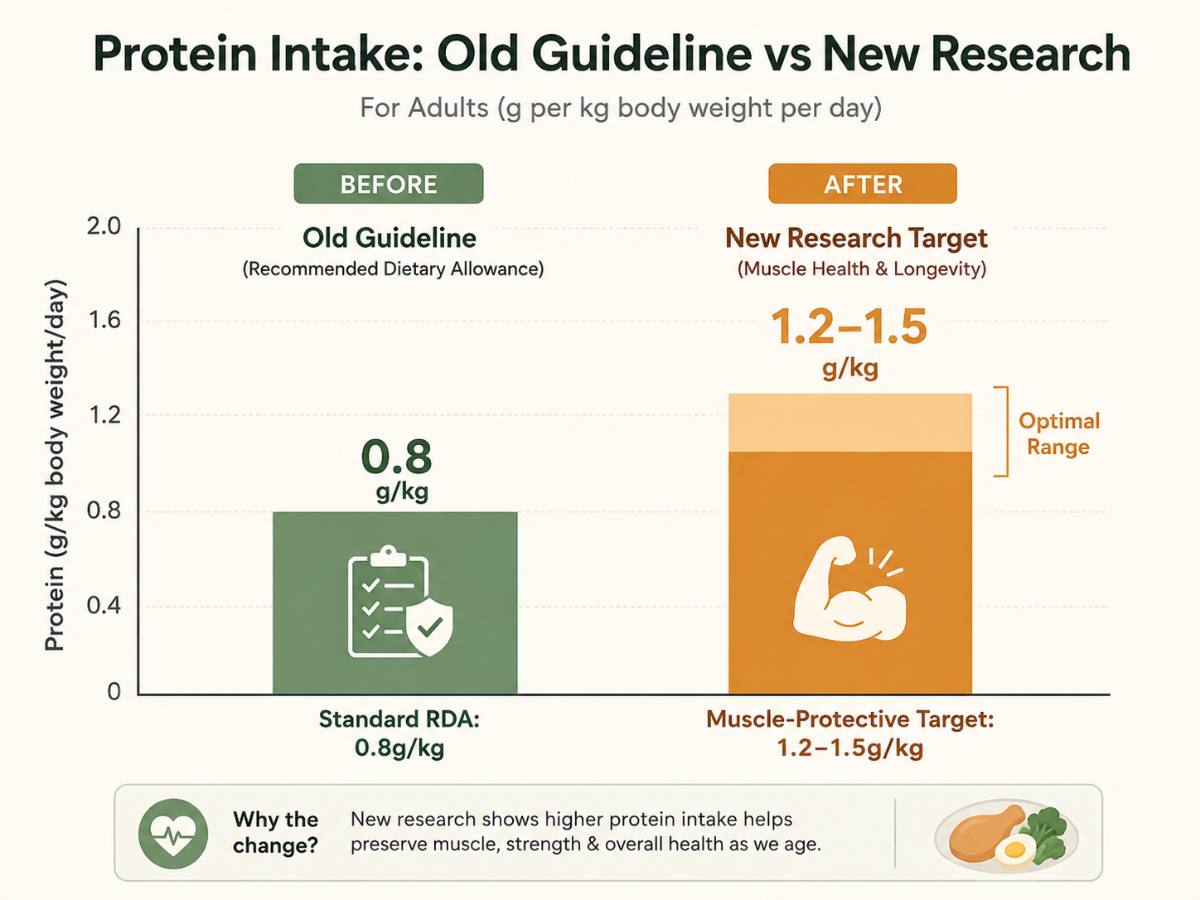
Most people assume that if they’re eating a “normal,” reasonably healthy diet, their protein intake is fine. The problem is that the official baseline most people unknowingly follow — the RDA of about 0.8 grams of protein per kilogram of body weight — was designed to prevent outright deficiency in the general population. It was never built to protect muscle mass as you age. Multiple research groups have pointed out that this number is likely too low for anyone trying to actually preserve strength and independence over the coming decades.
This gap between “enough to survive” and “enough to age well” is exactly why so many otherwise health-conscious people in their 40s and 50s are unknowingly under-eating protein by a wide margin.
What Happens If You Ignore This?
Muscle isn’t just about strength or how you look. It’s directly tied to your metabolic rate, blood sugar regulation, balance, and fall risk in later life. Left unaddressed, the slow drain of sarcopenia compounds over decades — by the time it becomes noticeable in daily life, a meaningful amount of muscle is often already gone, and rebuilding it takes considerably more effort than maintaining it would have.
The good news is that this is one of the few aging-related processes you can meaningfully influence through simple, daily choices — and protein intake is the single most researched lever available.
5 Things the Research Actually Says About Protein After 40
1. Your Real Target Is Likely 1.2–1.5g Per Kilogram, Not 0.8g
A well-known long-term study, the Health, Aging, and Body Composition Study, found that older adults eating around 1.2 grams of protein per kilogram of body weight lost roughly 40% less lean muscle mass over three years compared to those eating closer to the standard 0.8 gram guideline. The same higher intake was also linked to better-preserved grip strength, a common marker of overall physical function.
In real numbers: for someone around 70kg (154 lbs), that’s the difference between about 56 grams a day (the old baseline) and 84–105 grams a day (the muscle-protective target).
2. If You Already Have Some Muscle Loss, You May Need Even More
For people with existing sarcopenia, several studies using precise amino-acid tracking methods have estimated requirements closer to 1.2–1.5g/kg, with some research pointing to as much as 1.7–1.8g/kg for those with more advanced muscle loss or during physical stress like illness or recovery.
3. Timing Matters Almost as Much as the Total Number
Your body can only use so much protein at once to actively build or repair muscle. Eating most of your protein in one big dinner is far less effective than spreading it evenly — a solid source at breakfast, lunch, and dinner each. This consistently shows better results for muscle protein synthesis than front- or back-loading your day.
4. Not All Protein Is Equal — Leucine Is the Trigger
Leucine, an amino acid found in high amounts in eggs, dairy, poultry, fish, and soy, acts almost like a switch that activates the biological process responsible for building and repairing muscle. This is part of why protein quality, not just the total gram count, matters as you get older.
5. Protein Alone Isn’t Enough — Pair It With Resistance Training
Research consistently shows that higher protein intake combined with resistance exercise produces meaningfully better outcomes for preserving muscle than either one alone. Protein gives your body the raw material; resistance training gives it a reason to use it.
Why This Matters Even More If You’re on a GLP-1 Medication ?
If you’re using Ozempic, Wegovy, Mounjaro, or a similar medication for weight management, this becomes especially important. Rapid weight loss from these drugs doesn’t distinguish between fat and muscle — without deliberately prioritizing protein, a meaningful share of that weight loss can come from lean tissue rather than fat. Our article on preserving muscle mass while on GLP-1 medications goes deeper into exactly how to manage that balance.
There’s also overlap with foods that support satiety and metabolic health more broadly — many of the same high-protein choices that protect muscle also support healthy blood sugar and appetite regulation, which we cover in our guide to natural foods that support metabolic health.
The Quiet Link Between Protein and Stress
There’s a less obvious connection worth knowing about: inconsistent protein intake can contribute to blood sugar swings and energy instability throughout the day, both of which feed into cortisol patterns. If you’ve read our breakdown of what actually happens with chronically high cortisol, steady protein intake across meals is one of the more overlooked, low-effort pieces of managing that cycle.
How to Actually Hit Your Number, Realistically
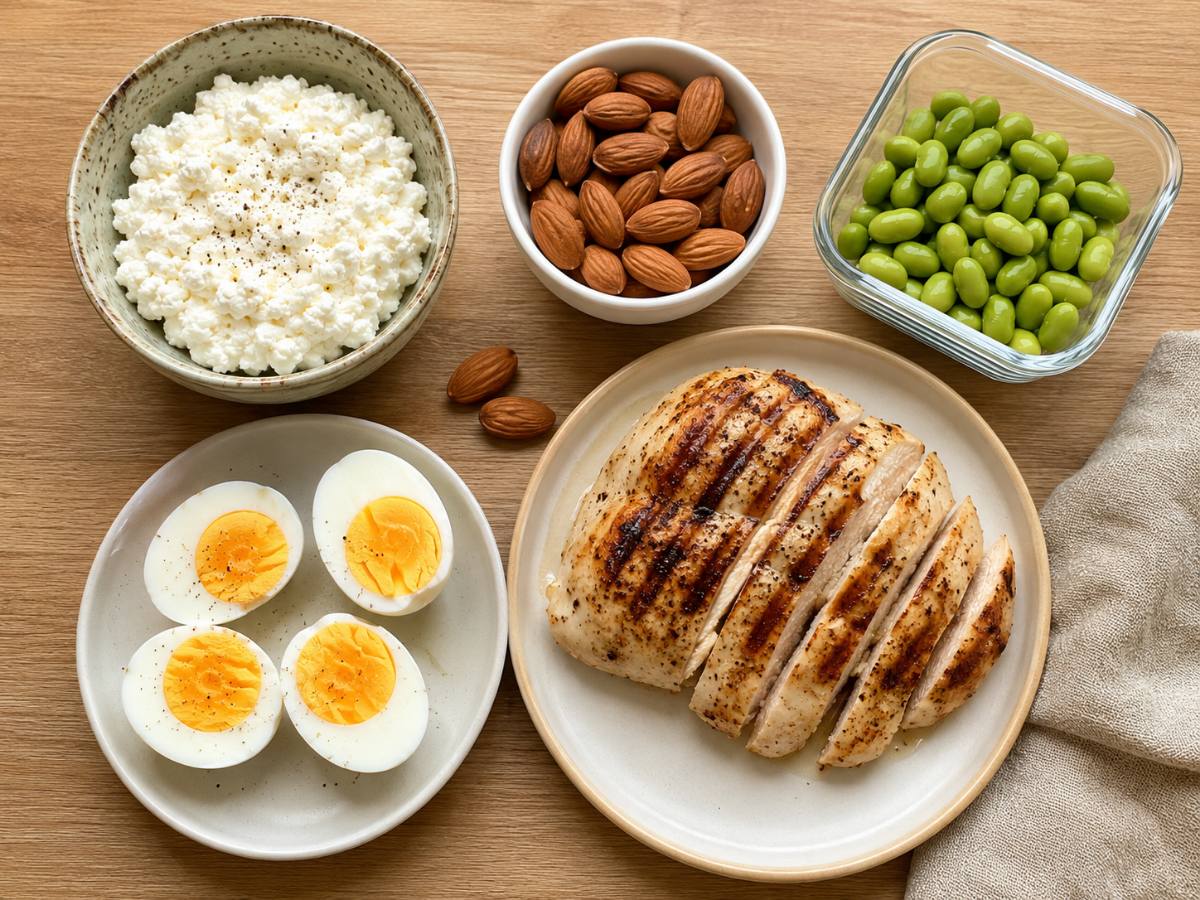
- Put protein on every plate, not just dinner — eggs or Greek yogurt at breakfast, fish or chicken at lunch, another solid source at dinner
- Lean on leucine-rich foods especially around the meal that follows exercise — eggs, dairy, poultry, fish, and soy all qualify
- Keep protein-forward snacks on hand — cottage cheese, edamame, a hard-boiled egg — to close small daily gaps without much effort
- Actually track it for 2–3 days, even loosely — most people are surprised by just how far below their real target they’ve been eating
- Pair it with resistance training, even just two sessions a week, since the combination consistently outperforms diet changes alone
Who Should Slow Down and Check With a Doctor First ?
Anyone with existing kidney disease should not increase protein intake without direct medical guidance, since compromised kidneys may struggle to safely process a higher protein load. For people with healthy kidney function, current research doesn’t support the common worry that higher protein intake harms kidneys or bones — but if you have any pre-existing condition, this is a conversation for your doctor, not a DIY experiment.
Quick Answers to What People Usually Ask Next
Is 1g of protein per pound of body weight actually necessary? That figure is popular in fitness circles, but sarcopenia research generally supports a somewhat lower range — about 1.2 to 1.5 grams per kilogram (roughly 0.55–0.68g per pound), still well above the standard 0.8 gram RDA.
Can I hit these targets on a plant-based diet? Yes, though it takes more deliberate planning, since plant proteins are often lower in leucine than animal sources. Combining varied sources — legumes, soy, whole grains — throughout the day helps close that gap.
Do I need more protein if I’m not exercising? Protein still supports muscle maintenance without exercise, but the research is clear that pairing higher intake with resistance training produces significantly better results than diet alone.
At what age should I actually start paying attention to this? Muscle and strength decline can begin as early as your 30s, accelerating notably after 50. Being deliberate about protein from your 40s onward offers real protective benefit — though it’s never too late to start.
The Bottom Line
Muscle loss is one of the quietest, most underestimated parts of aging — mostly because it comes with no obvious symptoms until a meaningful amount is already gone. The protein guidelines most people grew up trusting were never built for this. A growing body of research points to a real, actionable target: somewhere around 1.2 to 1.5 grams per kilogram of body weight, spread evenly across your meals, paired with regular resistance training. It’s a small daily adjustment with an outsized payoff — not just for how you look, but for how independent and strong you stay for decades to come.
- Protein Powder for Women: How Much, What Kind, and Why It Matters
- Leaky Gut: What It Is, Symptoms, and How to Heal It Naturally

- How to Lower Cholesterol Naturally: What Actually Moves the Numbers (2026)

- Ashwagandha for Anxiety and Stress: What the Research Actually Says (2026)

- Perimenopause and Menopause Natural Remedies: What Actually Works (2026 Guide)

This article is for informational purposes only and is not a substitute for professional medical or nutritional advice. Please consult a doctor or registered dietitian before making significant changes to your protein intake, particularly if you have kidney disease or another existing health condition.


Leave a Reply