
Search interest in Ozempic, Wegovy, and Mounjaro has exploded over the last few years, and along with it has come a quieter, equally important question: can food do any of what these drugs do? It turns out the answer isn’t a flat no. Your gut already makes a hormone called GLP-1 every single day, and what you eat has a measurable effect on how much of it you release and how long it sticks around.
This doesn’t mean a bowl of oats is going to replace a weekly injection — the two work on very different scales, and it’s important to be honest about that upfront. But understanding how to naturally support your own GLP-1 production can still make a real difference in appetite control, blood sugar stability, and long-term metabolic health, whether you’re trying to avoid needing medication, looking to complement a prescription, or simply want to eat in a way that keeps you fuller for longer.
What Exactly Is GLP-1, and Why Does It Matter So Much?
Glucagon-like peptide-1, or GLP-1, is a hormone produced in your small intestine every time you eat. Its job is to talk to several parts of your body at once: it signals your pancreas to release insulin, tells your liver to stop dumping extra sugar into your bloodstream, slows down how quickly food leaves your stomach, and sends a “you’re full” message to your brain.
Drugs like semaglutide (Ozempic, Wegovy) and tirzepatide (Mounjaro) work by mimicking this hormone at much higher, longer-lasting concentrations than your body could ever produce on its own. That’s a big part of why they’re so effective — and also why food alone can’t fully replicate their impact. Natural GLP-1 is broken down by enzymes in your body within a couple of minutes, while the medication versions can remain active for days.
Still, every small increase in your natural GLP-1 response adds up over time, especially when it’s paired with consistent habits rather than one-off meals.
The Foods That Genuinely Support Natural GLP-1 Release
1. Soluble Fiber: The Single Biggest Lever
If there’s one category of food with the strongest research behind it, it’s soluble fiber. Foods like oats, barley, chia seeds, flaxseeds, legumes, and psyllium husk form a gel-like substance in your digestive tract that slows gastric emptying and feeds the beneficial bacteria in your gut. Those bacteria then produce short-chain fatty acids, which directly stimulate the cells in your intestine responsible for releasing GLP-1.
Oats deserve a special mention here. Their beta-glucan content has repeatedly been linked to increased satiety and reduced food intake later in the day, largely through this same GLP-1 pathway. A simple swap — starting your day with steel-cut oats and chia instead of refined cereal — is one of the most evidence-backed changes you can make.
Note: Increase fiber intake gradually and drink enough water alongside it. A sudden jump in fiber can cause bloating or digestive discomfort, especially if your current diet is low in fiber.
2. Lean Protein at Every Meal
Protein is one of the most reliable triggers for GLP-1 secretion, and unlike fiber, its effect is almost immediate. Eggs, fish, chicken, turkey, tofu, and low-fat dairy all prompt a stronger GLP-1 response than carbohydrate-heavy meals eaten alone.
This matters even more for anyone already on a GLP-1 medication, since rapid weight loss can come with unwanted muscle loss if protein intake isn’t kept high enough. If you’re navigating that balance, our guide on how to preserve muscle mass while on GLP-1 drugs breaks down exactly how much protein you need and how to time it around your doses.
3. Healthy Fats — In the Right Amounts
Monounsaturated and polyunsaturated fats, found in olive oil, avocados, nuts, and fatty fish like salmon and mackerel, activate specific fat receptors in the gut that prolong GLP-1 activity after a meal. This is one reason a Mediterranean-style eating pattern is so consistently linked to better appetite regulation and steadier energy throughout the day.
Fat also plays a role in your broader metabolic profile. If you’re using diet to support both appetite control and healthier lipid levels, it’s worth reading how these same foods factor into our piece on naturally supporting healthy cholesterol and clean arteries — the overlap between GLP-1-friendly eating and heart-healthy eating is bigger than most people realize.
4. Fermented and Probiotic Foods
Yogurt, kefir, sauerkraut, kimchi, and other fermented foods support the gut bacteria responsible for producing the short-chain fatty acids that trigger GLP-1 release. Some research on probiotic yogurt specifically has shown measurable increases in fasting GLP-1 levels among people following a calorie-reduced diet, which suggests the gut microbiome is a genuine — if often overlooked — piece of this puzzle.
This is also part of why fad “detox” products rarely deliver on their promises: real gut support comes from consistent fiber and fermented food intake, not short-term cleanses. We’ve covered this in more depth in our breakdown of whether detox diets and juice cleanses actually work, which is worth a read if you’re tempted by a quick-fix product instead.
5. Polyphenol-Rich Foods and Spices
Compounds found in green tea, coffee, cinnamon, and turmeric appear to slow the breakdown of active GLP-1 in the body, essentially helping it stick around a little longer after it’s released. Curcumin, the active compound in turmeric, has shown promise in small human trials for reducing post-meal blood sugar spikes, even though GLP-1 itself wasn’t always the specific hormone measured.
None of these spices are a substitute for a solid overall diet, but adding cinnamon to oatmeal or turmeric to a vegetable stir-fry costs nothing and stacks on top of everything else you’re already doing right.
It’s Not Just What You Eat — It’s How You Eat It
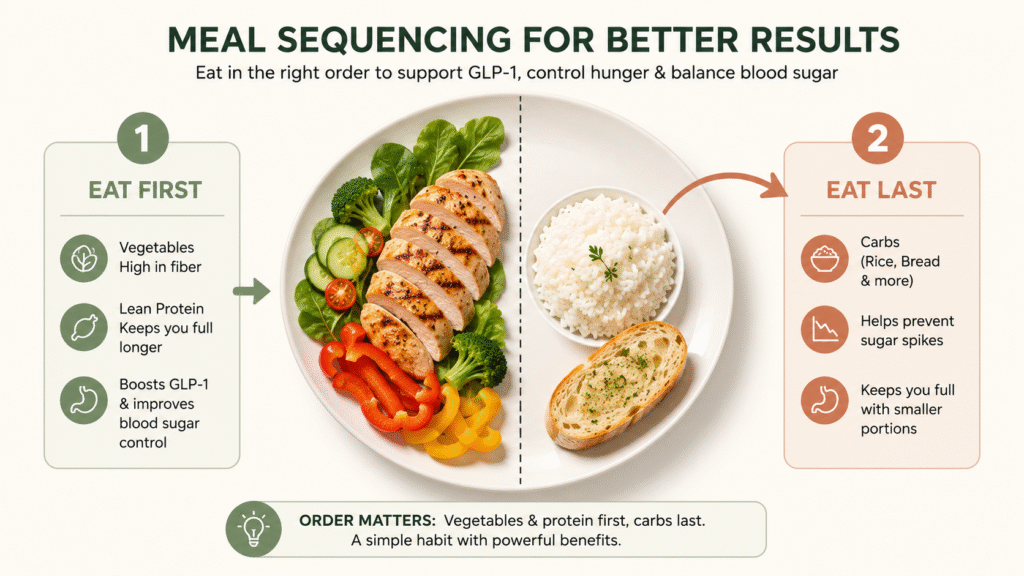
The sequence of your meal changes its hormonal impact. Eating protein and vegetables before carbohydrates — rather than starting with rice, bread, or pasta — has been shown to produce a stronger GLP-1 response and a gentler blood sugar rise. Eating slowly matters too; some research suggests that stretching a meal out to around 30 minutes leads to noticeably higher GLP-1 release compared to eating the same meal in five.
Sleep is the other piece people consistently underestimate. Poor sleep disrupts appetite-regulating hormones, including GLP-1 and its counterpart ghrelin, which is one reason cravings tend to spike after a bad night’s rest. If sleep has been a weak link for you, our guide to optimizing sleep without relying on gadgets is a natural next step alongside any dietary changes.
Where This Fits for People Monitoring Blood Sugar
Because GLP-1 plays such a direct role in blood sugar regulation, many of the same foods that support natural GLP-1 release also help flatten post-meal glucose spikes — something increasingly visible to the growing number of non-diabetics now experimenting with continuous glucose monitors. If you’ve been curious about how your own body responds to these foods in real time, our article on whether continuous glucose monitors are worth it for non-diabetics explains what these devices can and can’t tell you.
Setting Realistic Expectations
It’s worth being direct about the limits here. Clinical studies on semaglutide have shown average weight loss in the range of 15% of body weight over roughly 68 weeks. Dietary changes alone, even excellent ones, don’t produce results in that range — and they’re not meant to. What they can realistically offer is:
- Better appetite regulation and fewer energy crashes between meals
- Improved blood sugar stability
- Support for gut health and long-term metabolic function
- A genuinely useful complement for people already on GLP-1 medication, particularly around preserving muscle mass
- A lower-intensity starting point for people who aren’t candidates for medication or prefer not to use it
Important: Anyone with diabetes, a history of disordered eating, kidney or liver conditions, or any existing medical condition should talk to a doctor or registered dietitian before making significant dietary changes — especially if they are also considering or currently taking a GLP-1 medication. This is particularly important for people managing blood sugar with insulin or other glucose-lowering drugs, since combining these with a high-fiber, high-protein diet can change medication needs.
A Simple Day of GLP-1-Friendly Eating
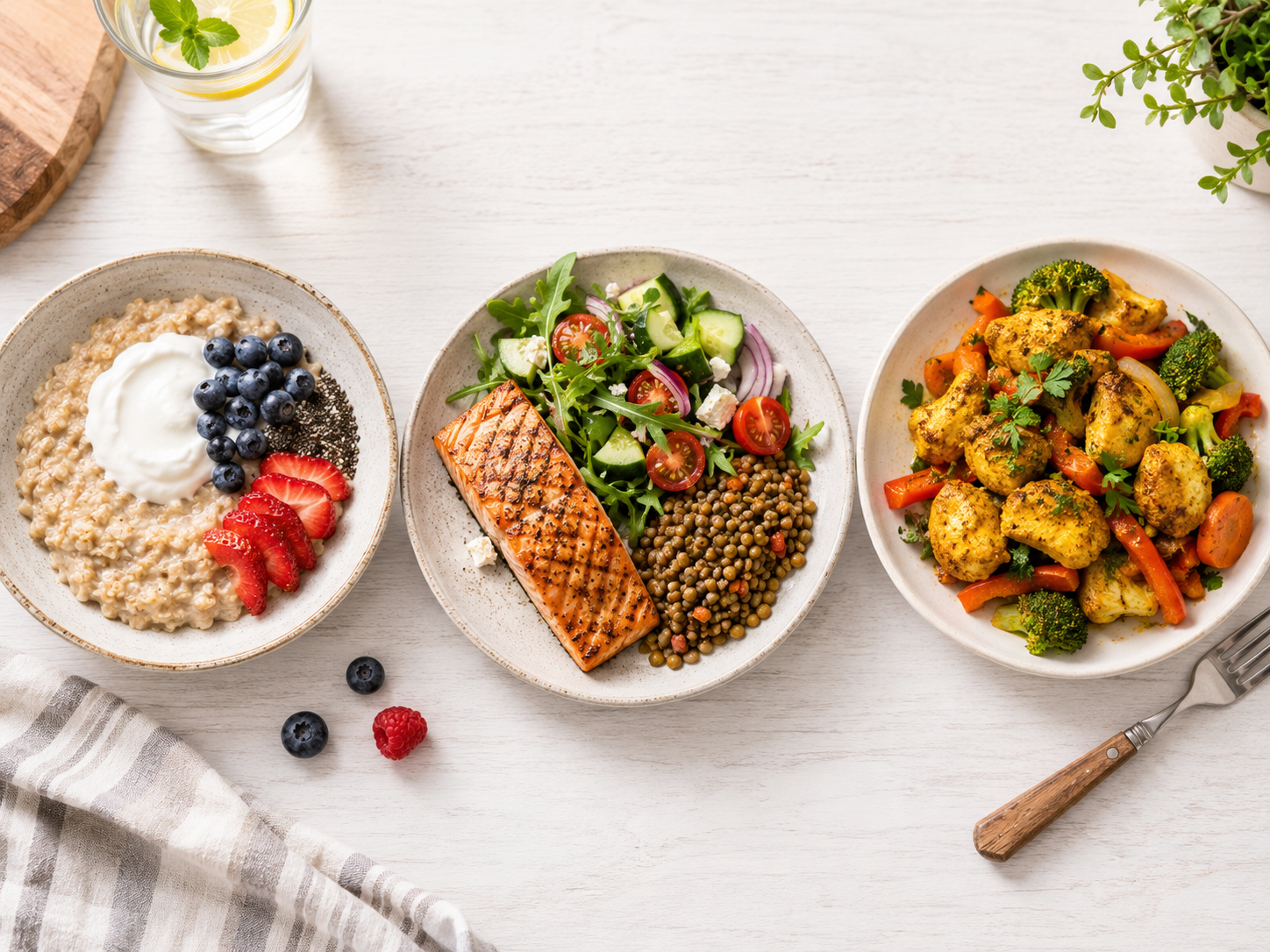
- Breakfast: Steel-cut oats with chia seeds, cinnamon, and a scoop of Greek yogurt
- Lunch: Grilled salmon, a large mixed vegetable salad with olive oil, and a small portion of lentils
- Snack: A handful of almonds and green tea
- Dinner: Turmeric-spiced chicken or tofu stir-fry with plenty of non-starchy vegetables, eaten before any rice or bread on the plate
- Throughout the day: Water, unsweetened tea or coffee, and an emphasis on eating slowly rather than rushing meals
Frequently Asked Questions
1. Can natural foods really replace Ozempic or other GLP-1 medications? No. Foods can support your body’s natural GLP-1 production, but they can’t match the concentration or duration of GLP-1 medications like semaglutide or tirzepatide. Think of food-based strategies as a supportive habit, not a substitute for prescribed treatment.
2. Which single food is best for naturally boosting GLP-1? There isn’t one “best” food, but oats stand out because their beta-glucan fiber has some of the strongest research behind it for increasing satiety and supporting GLP-1 release. Pairing them with protein, like Greek yogurt, makes the effect even stronger.
3. How long does it take to notice a difference from eating GLP-1-friendly foods? Some effects, like feeling fuller after a protein- and fiber-rich meal, can be noticed within a single sitting. But meaningful changes in appetite regulation and blood sugar stability typically take several weeks of consistent eating patterns to become noticeable.
4. Are supplements like berberine or curcumin a safe alternative to Ozempic? Not necessarily. While some studies show these compounds may support GLP-1 activity, human research is still limited, and supplement doses are often far higher than what you’d get from food. They can also interact with certain medications, so they should only be used under medical guidance.
5. Can I combine these foods with a GLP-1 medication I’m already taking? Yes, and in most cases it’s genuinely helpful — particularly high-protein foods, which support muscle mass during rapid weight loss. That said, always check with your prescribing doctor before making major dietary shifts while on medication, since appetite and nutrient needs can change quickly.
The Bottom Line
Your body already has a built-in system for appetite regulation and blood sugar control — it’s just often underused because of low-fiber, low-protein, fast-eaten meals. Leaning into soluble fiber, consistent protein, healthy fats, fermented foods, and a handful of specific spices won’t replicate what a GLP-1 medication does, but it will genuinely support the hormone your body is already making. For many people, that’s enough to notice real improvements in fullness, cravings, and energy — and for those on medication, it’s one of the most useful things you can do alongside it.
Continue Your Health Journey
- Walking Pneumonia: Symptoms, Contagiousness, and Recovery
- Liver Health Beyond Detox: What Your Liver Actually Needs to Thrive
- DNA-Based Nutrition: Is a Personalized Diet Based on Your Genes Worth It?
- Wellness Perfectionism: When “Healthy” Becomes Unhealthy
- POTS Natural Remedies: Salt, Fluids, and Nervous System Support
This article is for informational purposes only and is not a substitute for professional medical advice. Speak with a healthcare provider before making significant changes to your diet, especially if you have an existing health condition or are taking medication.





Leave a Reply