
Continuous Glucose Monitors for Non-Diabetics: Do They Actually Help?
Nearly 2.4 million Americans now wear a continuous glucose monitor, and a growing share of them don’t have diabetes at all. Since the FDA approved the first over-the-counter options, CGM for non-diabetics has become one of the fastest-growing wellness trends of 2026 — sold on the promise of real-time insight into weight loss, energy crashes, and metabolic health. The question worth asking before you spend $50-plus a month on one: does the research actually back that up?
Here’s an honest look at what continuous glucose monitors can and can’t tell a healthy person, based on what experts and current studies actually say.
How Continuous Glucose Monitors Work
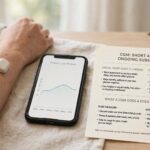
A CGM is a small sensor, typically worn on the arm or abdomen, that measures glucose levels in the interstitial fluid just under your skin and transmits near-continuous readings to a phone app — no finger pricks required. Devices like Dexcom Stelo and Abbott Lingo are now sold over the counter specifically for people without diabetes, tracking how glucose rises after meals and how quickly it returns to baseline.
The pitch to healthy users is straightforward: see in real time how specific foods, workouts, sleep, and stress affect your blood sugar, then adjust your habits accordingly.
What the Research Actually Shows for Non-Diabetics
This is where the honest answer to “is CGM for non-diabetics worth it” gets less exciting than the marketing suggests. Researchers at Johns Hopkins’ Bloomberg School of Public Health have been direct: the evidence is scant, and it’s unclear what CGM data can actually tell people without diabetes about their overall health. One expert put it plainly — in people without diabetes who feel well and have no metabolic disease, using a CGM generally doesn’t add clinical value.
A separate randomized controlled trial published in the American Journal of Clinical Nutrition found that blood sugar responses to the exact same meal can vary meaningfully within the same individual from day to day — which undercuts the idea that a CGM can give you a stable, reliable “verdict” on which specific foods are bad for you.
There’s also a documented misinformation problem. Some influencers promoting CGM for non-diabetics suggest glucose should never “spike” at all, even briefly after a normal meal — but it’s prolonged elevation outside a normal range that’s actually the health concern, not the ordinary rise and fall of blood sugar around meals. Following that kind of advice can lead healthy people toward unnecessarily restrictive eating for no real benefit.
Who Might Genuinely Benefit From a CGM
The evidence isn’t uniformly negative — a few specific groups may see real value from short-term CGM for non-diabetics use:
- People with prediabetes or a strong family history of type 2 diabetes, where early pattern detection has more clinical relevance
- Those with a history of gestational diabetes, who carry elevated future metabolic risk
- Endurance athletes, in narrow, well-supervised contexts — though even sports nutrition researchers note there’s very little evidence supporting CGM use in healthy, active people with normal glucose control, and recommend working with an accredited sports dietitian to correctly interpret the data rather than self-diagnosing from it
- People actively working with a dietitian or doctor who can help distinguish genuine patterns from normal day-to-day variation
Even within these groups, most experts recommend short-term use — commonly 2 to 4 weeks — rather than continuous long-term wear, since most people extract the useful insights early and extended use offers diminishing returns.
Who Probably Doesn’t Need One
For most healthy adults with no metabolic risk factors, a CGM isn’t necessary. Your body already regulates glucose effectively after meals and between them without any intervention — which loops back to a theme we’ve covered before in our piece on whether detox diets actually work: plenty of wellness products are marketed around “helping” a system that’s already functioning well on its own.
If your goal is simply general weight management or energy improvement, the habits with stronger evidence behind them — consistent meal timing, adequate protein and fiber, regular movement, and good sleep — are likely to move the needle more reliably than a month of glucose graphs.
The Real Risks and Downsides
A few genuine downsides are worth weighing before trying CGM for non-diabetics:
- Cost. Over-the-counter CGMs typically run $50–$100+ per month, an ongoing expense for information that may not change your actual health outcomes.
- Data misinterpretation. Without training in how to read glucose data, it’s easy to treat normal, harmless fluctuations as alarming, leading to unnecessary food restriction.
- Anxiety and obsessive monitoring. Some users report the constant feedback loop creates more stress around eating, not less — echoing concerns we’ve raised about sleep trackers in our guide on sleep optimization without gadgets, where over-monitoring can undermine the very outcome it’s meant to improve.
- Not designed for hypoglycemia risk. Manufacturers explicitly state these devices aren’t designed for people at risk of or experiencing low blood sugar episodes.
How to Use One Responsibly, If You Try It
If you’re still curious and want to try one, a few practices make it more likely to be genuinely useful rather than just anxiety-inducing:
- Set a defined trial period — 2 to 4 weeks is generally sufficient to identify real patterns
- Work with a dietitian or your doctor to interpret results rather than drawing conclusions from a single spike
- Look for patterns, not individual data points — one high reading after one meal isn’t meaningful on its own
- Don’t restrict foods based on a single reading — normal, temporary glucose rises after eating are expected and not inherently harmful
Frequently Asked Questions About CGM for Non-Diabetics
Is a continuous glucose monitor worth it if I don’t have diabetes? For most healthy adults with no metabolic risk factors, current evidence doesn’t strongly support ongoing CGM use — most experts say it doesn’t add meaningful clinical value. It may offer more genuine benefit for people with prediabetes, a strong family history of diabetes, or prior gestational diabetes.
Can a CGM help with weight loss if I’m not diabetic? There’s limited direct evidence that CGM use alone drives weight loss in non-diabetics. Any benefit likely comes from increased food awareness and behavior change rather than the glucose data itself being uniquely informative.
Do glucose spikes after meals mean something is wrong? Not necessarily. Ordinary glucose rises after eating are a normal, expected response. It’s prolonged elevation outside a healthy range — not brief post-meal spikes — that’s actually associated with health risk.
How long should a non-diabetic wear a CGM to get useful information? Most experts recommend a short trial period of about 2 to 4 weeks. Extended, ongoing use tends to offer diminishing returns and, for some users, can encourage obsessive monitoring without additional health benefit.
A Note From Health Morph
This article is for informational purposes only and isn’t a substitute for personalized medical advice. If you have concerns about blood sugar, prediabetes, or metabolic health, talk with a doctor about appropriate testing and monitoring for your specific situation, rather than relying on a consumer CGM alone.
For more evidence-based reviews of trending health products and habits, explore our Nutrition & Diet section, or read our related guide on preserving muscle mass on GLP-1 medications for more on nutrition strategies during a weight-management journey.
The short version: CGM for non-diabetics can be an interesting short-term experiment for the right person, but for most healthy adults, it’s not the metabolic health shortcut the marketing implies.






Leave a Reply