
Searches for natural GLP-1 alternatives have surged alongside Ozempic and similar drugs, and the honest answer up front is this: no food or supplement replicates what a prescription GLP-1 receptor agonist does in the body. But that doesn’t mean the natural side of this conversation is empty hype — GLP-1 is a hormone your gut already produces every time you eat, and a specific, well-studied set of foods, supplement compounds, and habits genuinely influence how much of it you release and how your body responds to it. This guide separates what has real clinical trial evidence behind it from what’s mostly marketing, and is honest about the size of the gap between the two.
What GLP-1 Actually Is (And Why “Natural Alternatives” Is a Slightly Misleading Phrase)
GLP-1, or glucagon-like peptide-1, is a hormone your intestines release in response to eating. According to a review from Parsley Health, a functional medicine practice, GLP-1 does several things at once: it helps regulate insulin release, slows how quickly food leaves your stomach, and signals to your brain that you’re full. Prescription GLP-1 drugs work by mimicking this hormone at pharmaceutical-strength doses that far exceed what your body produces naturally on its own — which is precisely why they’re more potent than any dietary approach.
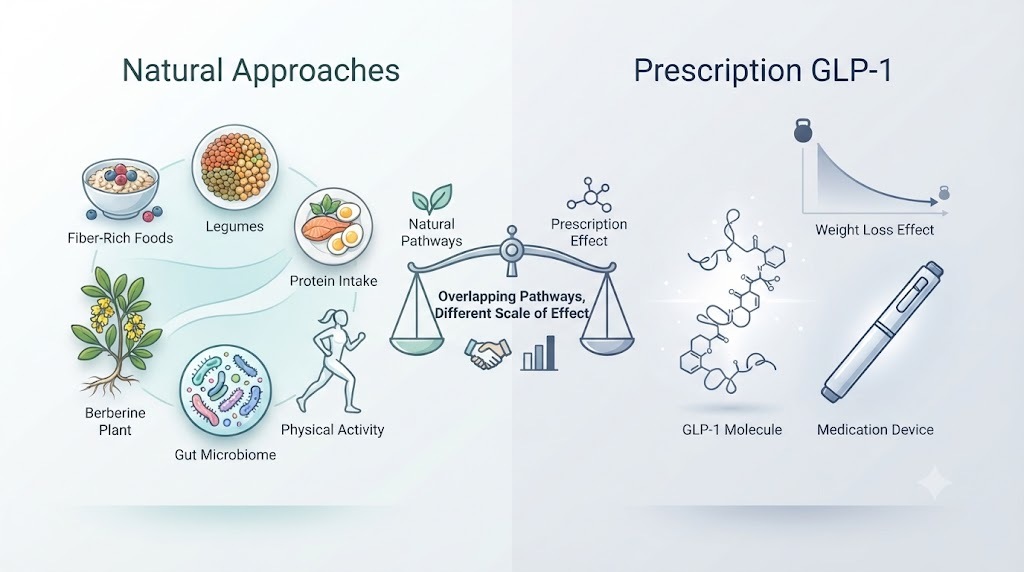
Clinical trial data cited by metabolic health researchers at PlexusDx shows prescription GLP-1 receptor agonists producing 15–22% body weight loss over 68 weeks. No natural intervention comes close to matching that. What natural approaches can realistically do is work on some of the same underlying biological pathways — gut hormone release, insulin sensitivity, appetite signaling — at a meaningfully smaller scale.
What the Research Actually Supports
Berberine: The Strongest Evidence in This Category
Berberine, a compound derived from several plants used in traditional Chinese medicine, has the most substantial clinical trial evidence of anything discussed in this space — though its research base is built around blood sugar control rather than GLP-1 specifically. A meta-analysis pooling 37 randomized controlled trials and over 3,000 patients with type 2 diabetes found berberine produced statistically significant reductions in fasting blood glucose, HbA1c, and post-meal blood glucose, without increasing the risk of adverse events or hypoglycemia. An earlier pilot study comparing berberine directly against metformin — the standard first-line diabetes medication — found the two produced similar reductions in blood sugar markers over three months.
The side-effect profile is worth knowing before starting: gastrointestinal symptoms, particularly diarrhea, constipation, and nausea, show up in a meaningful minority of users, generally easing within the first month of use. Berberine also affects liver enzymes involved in drug metabolism, so anyone on regular prescription medication — especially blood thinners or other diabetes drugs — should check with a doctor before starting it, given the real potential for interactions.
Soluble Fiber: The Most Consistently Supported Dietary Lever
Fermentable, soluble fibers — found in oats, legumes, chia seeds, and psyllium husk — are broken down by gut bacteria into short-chain fatty acids, which directly stimulate the intestinal cells responsible for releasing GLP-1. This mechanism is well established in human research, according to a review from Tonum, a metabolic health research group, which notes that fermentable fiber intake reliably raises GLP-1 or related markers and modestly improves blood sugar and weight over time in human trials.
Glucomannan, a specific soluble fiber supplement derived from konjac root, has a genuinely mixed research record worth being upfront about. One early trial in 20 obese adults found a meaningful average weight loss of about 5.5 pounds over eight weeks with no adverse effects. But a more rigorous, better-controlled trial from Johns Hopkins University researchers, published in the Journal of Obesity, found no significant difference in weight loss between glucomannan and placebo over the same time frame. The pooled evidence across trials suggests a modest effect at best — often in the range of 0.5 to 2.5 kg over several weeks — with considerable variation between individuals.
Protein Intake: A Direct, Same-Meal Effect
High-protein meals are among the most immediate natural stimulators of GLP-1 release, triggering a same-meal satiety response that’s easy to feel rather than just measure in a lab. This is one of the more actionable levers in this entire category, since it doesn’t require a supplement — just structuring meals to front-load protein rather than treating it as an afterthought. For specifics on how much protein actually supports this effect based on your body weight and goals, our full breakdown of how much protein you actually need is worth reading alongside this article.
Gut Microbiome Health
A growing body of research connects specific gut bacteria — particularly Akkermansia muciniphila, along with certain Lactobacillus and Bifidobacterium strains — to increased GLP-1 secretion from intestinal cells. Akkermansia in particular has become a significant focus of metabolic research, with studies linking it to improved insulin sensitivity and reduced gut permeability independent of weight loss itself. Supporting this ecosystem through prebiotic fiber, fermented foods, and overall gut health is a genuinely evidence-aligned strategy, though most of the human trial data on Akkermansia specifically is still early-stage compared to the diabetes-focused berberine research.
Exercise
Both a single bout of exercise and consistent aerobic or resistance training routines have been shown in human studies to raise GLP-1 levels and improve appetite regulation, according to the Tonum research review referenced above. This is one of the more reliably supported levers precisely because it doesn’t rely on a supplement at all — it’s a direct physiological effect of movement.
Preliminary and Weaker Evidence: Cinnamon, Green Tea, and Similar Compounds
A 2025 review published in the journal Toxicology Reports by researchers at Heliopolis University in Cairo examined natural compounds that might influence GLP-1 activity, identifying cinnamon, wheat compounds, ginger, fermented green tea, and berberine as areas of preliminary interest. The review’s own conclusion is worth repeating directly: no natural compound has been shown to exactly replicate the effects of prescription GLP-1 drugs. Early research suggests certain foods and meal timing may help regulate GLP-1 activity and support hunger and fullness cues, but “may help regulate” and “clinically proven to replace medication” are very different claims, and it’s worth being skeptical of any product marketing that blurs the two.
A Realistic Weekly Approach
Rather than chasing a single miracle ingredient, the research points toward a combined approach:
- Build meals around 25–35 grams of fiber daily, from oats, legumes, vegetables, and whole grains — working up gradually if you’re currently eating much less, to avoid digestive discomfort.
- Prioritize protein at breakfast and lunch, not just dinner, to get the same-meal satiety benefit earlier in the day.
- Include fermented foods — yogurt, kefir, kimchi — regularly to support the gut bacteria linked to GLP-1 production.
- Move consistently, combining aerobic activity with resistance training rather than relying on either alone.
- Consider berberine only with medical guidance if blood sugar management is a specific goal, given its real evidence base alongside its real interaction risks.

Who Should Talk to a Doctor Instead of Starting Here
Natural approaches are a reasonable starting point for general metabolic health, but they’re not an adequate substitute for medical care if you have:
- Type 2 diabetes with poorly controlled blood sugar
- A BMI in the range where prescription weight management is medically indicated
- Any condition currently being managed with diabetes or blood pressure medication, given berberine’s interaction potential
- A history of disordered eating, where restrictive supplement-based approaches can be counterproductive
Frequently Asked Questions
Can anything natural really work like Ozempic? No single natural compound replicates the potency of prescription GLP-1 drugs, which produce 15–22% weight loss in clinical trials. Natural approaches — particularly fiber, protein timing, and berberine for blood sugar — work on overlapping biological pathways but at a much smaller scale.
Is berberine as effective as metformin? One pilot study found similar blood-sugar-lowering effects between berberine and metformin over three months, and a larger meta-analysis of over 3,000 patients confirmed berberine’s glucose-lowering effect is real and statistically significant. It’s not a substitute for prescribed diabetes medication without medical supervision, given its own side-effect and interaction profile.
Does glucomannan actually cause weight loss? The evidence is genuinely mixed. Some early trials showed meaningful weight loss, while a more rigorous, better-designed trial found no significant difference from placebo. If you try it, treat any results as a personal experiment rather than an expected outcome.
What foods naturally increase GLP-1? Fiber-rich foods that ferment in the gut (oats, legumes, chia seeds), high-protein meals, and fermented foods that support GLP-1-stimulating gut bacteria all have research support for modestly increasing GLP-1 activity.
Is it safe to combine these natural approaches with prescription GLP-1 medication? This is a conversation to have directly with your prescribing doctor, since some natural approaches — particularly high-fiber supplementation and berberine — can affect blood sugar and digestion in ways that may need dose adjustments alongside medication.
The Bottom Line
Natural GLP-1 alternatives are not a hidden substitute for prescription medication, and no responsible reading of the evidence suggests otherwise — the clinical trial gap between something like berberine and a pharmaceutical GLP-1 agonist is large and well documented. What the research does support is a real, if more modest, set of tools: soluble fiber for direct GLP-1 stimulation, protein timing for same-meal satiety, berberine for blood sugar specifically (with real precautions), and consistent exercise and gut health support as the foundation underneath all of it. For people not on prescription medication, or looking to build sustainable habits alongside it, this combination is genuinely evidence-backed — just not a replacement for medical care when medical care is what’s actually needed.
This article is for informational purposes only and is not a substitute for personalized medical advice. Consult a physician before starting berberine or any new supplement, particularly if you take diabetes medication, blood thinners, or have an existing metabolic condition.






Leave a Reply