
A natural remedy for joint pain doesn’t need to come from a pharmacy shelf, and in this case, it isn’t just folk tradition either — turmeric’s effect on joint pain has been tested in more than a dozen randomized clinical trials and pooled in multiple meta-analyses, which is a genuinely unusual level of evidence for a kitchen spice. This guide walks through a simple turmeric, ginger, cinnamon, and black pepper milk, what peer-reviewed research and organizations like the Arthritis Foundation and Harvard Health actually say about each ingredient, the exact recipe and dosing, and — just as importantly — who should be cautious or skip it entirely.
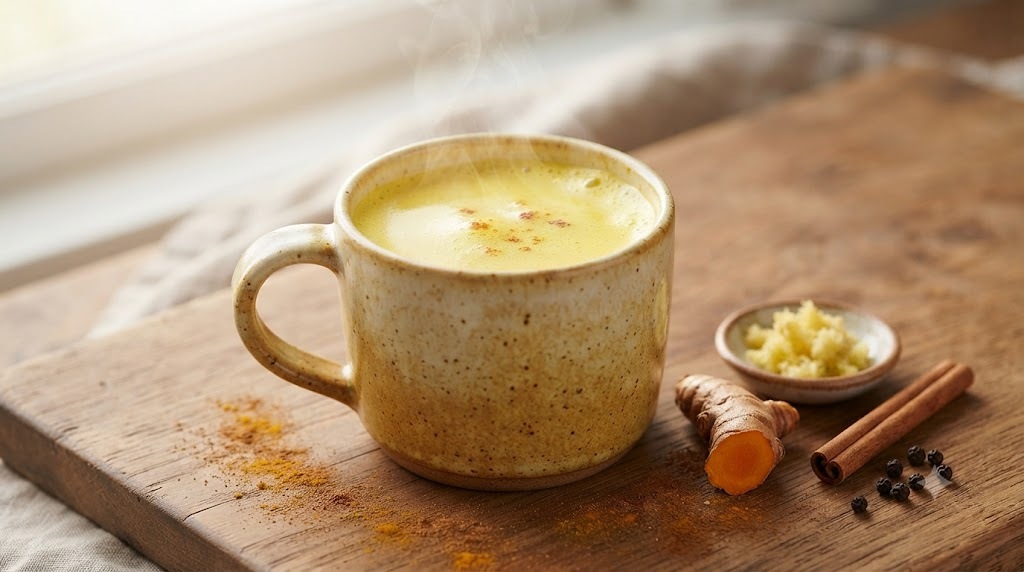
The Three Real Causes of Joint Pain (It’s Not Just “Getting Older”)
Age gets blamed for joint pain far more than it deserves. Most joint pain comes down to three overlapping mechanisms:
- Calcium deficiency and bone weakening. Inadequate calcium intake leaves bones more porous over time, reducing the structural support around joints.
- Cartilage breakdown. The Arthritis Foundation explains osteoarthritis as the wearing away of cartilage — the cushioning surface on the ends of bones — which causes the bones to rub together, producing pain, swelling, and stiffness.
- Reduced joint lubrication. Joints rely on synovial fluid to move smoothly, similar to how a machine relies on oil. When that lubrication drops, movement becomes stiffer and more painful even without major cartilage loss.
A generic approach — just reaching for painkillers — never actually addresses any of these three mechanisms. This natural remedy for joint pain is built around ingredients with genuine research behind their effect on inflammation and, indirectly, on these underlying causes.
What the Research Actually Says About Each Ingredient
Turmeric (Curcumin): The Strongest Evidence in This Recipe
Turmeric’s active compound, curcumin, is by far the best-researched ingredient here. A 2025 systematic review and network meta-analysis in BMC Complementary Medicine and Therapies, which pooled 17 randomized controlled trials, found that all turmeric preparations significantly reduced pain on the WOMAC osteoarthritis index. A separate Bayesian network meta-analysis published in 2023 reached a similar conclusion, reporting that curcumin significantly reduced both pain scores and total WOMAC scores compared with placebo.
Harvard Health’s review of the turmeric evidence notes that the Arthritis Foundation recommends one 500 mg capsule of curcumin extract taken twice daily to help manage osteoarthritis and rheumatoid arthritis symptoms, and adds that curcumin appears to be well tolerated even at much higher doses. The NIH’s National Center for Complementary and Integrative Health (NCCIH) takes a somewhat more cautious position, stating plainly that current evidence remains insufficient to fully endorse turmeric supplementation for inflammatory conditions despite its long history of use — a useful reminder that “promising” and “proven” aren’t the same thing.
Ginger: Real but More Mixed Evidence
The Arthritis Foundation’s review of ginger research is candid about the inconsistency in this area: three studies from one systematic review found ginger relieved osteoarthritis pain better than placebo, while a separate review didn’t find sufficient quality evidence to draw the same conclusion. In a head-to-head study, though, a combination of ginger, black pepper, and curcumin performed better than the pain reliever naproxen in a 2020 trial. Ginger’s anti-inflammatory compound is gingerol, and its effects appear most consistent when combined with other anti-inflammatory ingredients rather than used alone.
Cinnamon and Black Pepper: Supporting Roles
Cinnamon’s active compound, cinnamaldehyde, has anti-inflammatory properties, though the evidence specific to joint pain is smaller in scale than for turmeric or ginger. A 2025 systematic review in the Journal of Rheumatic Diseases examining cinnamon, turmeric, ginger, and garlic together for rheumatoid arthritis found the herbal combination showed efficacy as an adjuvant in managing rheumatoid arthritis, though curcumin was the only ingredient with enough independent data to be pooled statistically.
Black pepper’s role is more about absorption than direct pain relief. The foundational study behind this idea — Shoba et al., 1998 — found that combining a small amount of piperine (black pepper’s active compound) with curcumin dramatically increased how much curcumin entered the bloodstream. That said, it’s worth being precise here: more recent independent research has had difficulty fully replicating the magnitude of that original finding, and piperine itself inhibits liver enzymes that metabolize many medications — which is exactly why the caution section below matters if you take prescription drugs regularly.
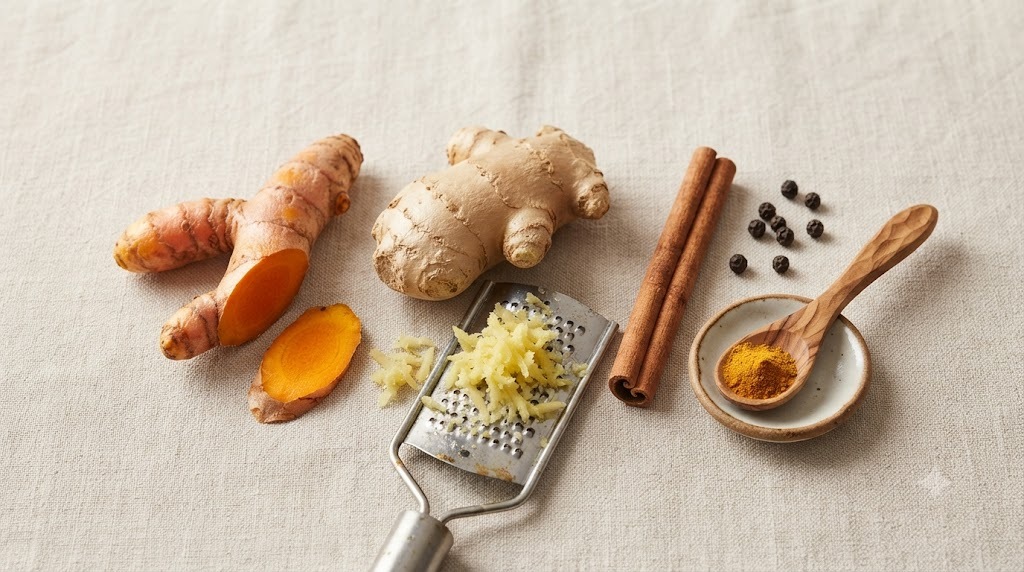
Natural Remedy for Joint Pain: Turmeric-Ginger Milk Recipe
This takes about 10 minutes and yields one serving.
Ingredients:
- 1 cup (240 ml) milk (cow’s, buffalo’s, soy, or almond)
- 1 tsp fresh grated ginger
- ½ tsp turmeric powder (or a small piece of fresh turmeric root)
- 1½ inch piece of cinnamon stick (or ¼ tsp ground cinnamon)
- 3–4 whole black peppercorns, freshly crushed (or a pinch of ground black pepper)
- Honey or jaggery to taste (optional — skip if diabetic)
Method:
- Pour the milk into a saucepan and bring it to a gentle boil.
- Add the grated ginger, turmeric, cinnamon, and freshly crushed black pepper.
- Simmer until the milk thickens slightly and takes on the color and aroma of the spices.
- Strain into a cup and sweeten if desired.
- Drink once daily.
This everyday version delivers a modest amount of curcumin — nowhere near the 500 mg twice-daily dose the Arthritis Foundation references for symptom management, since that guidance is based on concentrated extract capsules, not a spice-level home recipe. Think of this milk as a supportive daily habit rather than a substitute for a clinically studied dose if you’re managing diagnosed arthritis.
How and When to Use It for Best Results
Drink it either about an hour after breakfast or roughly an hour after your evening meal — not immediately after eating, and not on an empty stomach, since both can cause indigestion in sensitive people. Give it at least three weeks of consistent daily use before judging whether it’s working; the clinical trials showing benefit typically ran 8 to 12 weeks before evaluating results, so patience matters more than most people expect.
Who Should Be Cautious or Avoid This Remedy
This natural remedy for joint pain is low-risk for most healthy adults, but the medical literature flags several real precautions:
- Anyone on blood-thinning medication. Mayo Clinic’s guidance on turmeric advises caution for people taking blood thinners such as warfarin, aspirin, or clopidogrel, since curcumin can reduce platelet aggregation and add to bleeding risk.
- People taking medications processed by the liver’s CYP3A4 enzyme. Piperine (from black pepper) and curcumin both inhibit this enzyme pathway, which can raise blood levels of certain medications — including some immunosuppressants and blood pressure drugs — beyond their intended dose.
- People with acid reflux or gastritis — reduce the ginger and black pepper, both of which can aggravate symptoms in sensitive individuals.
- Pregnant individuals — high concentrated amounts of turmeric and ginger are generally advised against without medical guidance; the culinary quantities in this recipe are a different matter than concentrated supplements, but check with your provider if you’re unsure.
- People with diabetes — skip the honey or jaggery, and monitor how the recipe affects your blood sugar, since some research suggests turmeric may modestly affect glucose levels.
- People with gallbladder disease — high-dose turmeric or curcumin is generally not recommended.
When to See a Doctor Instead
A home remedy — however well-supported — is not a substitute for medical evaluation when joint pain presents certain warning signs. See a doctor if you notice:
- Sudden, severe joint pain with no clear cause
- Significant swelling, redness, or warmth around a joint
- Pain that appears together with fever
- Joint pain that worsens rapidly rather than gradually
These patterns can sometimes signal infection, gout, or another condition that needs proper diagnosis and treatment rather than a dietary approach.
Support Cartilage Health From the Inside, Too
This remedy addresses inflammation and lubrication, but roughly 90% of cartilage is made of collagen, a protein your body produces less of as you age. Supporting collagen production through diet reinforces what this remedy is doing rather than working against it — include leafy greens, tomatoes, broccoli, egg whites, and vitamin-C-rich fruits like amla and oranges, since vitamin C is a required cofactor for collagen synthesis. Getting enough total protein matters here too, since collagen is still a protein your body has to build from available amino acids — our guide on how much protein you actually need breaks down the numbers for your body weight and activity level.
It’s also worth remembering that chronic, low-grade inflammation elsewhere in the body — including in the gut — can make joint inflammation harder to resolve. If digestive issues are a regular presence alongside your joint pain, our guide to gut health signs, causes, and what helps is worth a look alongside this remedy.
Frequently Asked Questions
What is the best natural remedy for joint pain? Turmeric has the strongest clinical evidence among kitchen-based remedies — multiple meta-analyses of randomized trials show it meaningfully reduces osteoarthritis pain. Combining it with ginger, cinnamon, and a calcium source like milk targets multiple causes of joint pain at once, though the Arthritis Foundation’s studied dosing (1,000 mg of curcumin extract daily) is much higher than what a spice-level home recipe provides.
How long does it take for turmeric milk to help joint pain? Clinical trials on concentrated curcumin typically evaluated results after 8 to 12 weeks of consistent use. For a home recipe at spice-level doses, expect any noticeable effect to build gradually over several weeks rather than appearing overnight.
Can I take turmeric and ginger milk every day? For most healthy adults, yes. Those on blood thinners or CYP3A4-metabolized medications, pregnant, or dealing with acid reflux or gallbladder disease should reduce the dose or check with a doctor first.
Why does this recipe include black pepper? Black pepper’s piperine was shown in a landmark 1998 study to substantially increase how much curcumin the body absorbs. More recent research has questioned how consistently that effect replicates, but piperine’s enzyme-inhibiting action is well established — which is also why it carries real drug-interaction considerations for people on regular medication.
Is milk necessary, or can I make this with water instead? Milk adds calcium, which addresses one of the three core causes of joint pain (bone weakening). Water-based turmeric-ginger tea retains the anti-inflammatory benefits, but you’d need to get calcium from elsewhere in your diet.
The Bottom Line
A natural remedy for joint pain built from turmeric, ginger, cinnamon, black pepper, and milk isn’t a folk myth — turmeric’s pain-reducing effect on osteoarthritis is supported by multiple meta-analyses of randomized controlled trials, and the Arthritis Foundation itself recommends specific curcumin dosing for symptom management. Used consistently, with real attention to the drug-interaction and medical precautions above, this is a genuinely reasonable daily habit for mild to moderate joint discomfort — paired with adequate protein and collagen-supportive nutrition for the long term. Persistent, severe, or rapidly worsening joint pain still needs a doctor’s evaluation, not just a kitchen remedy.
Sources referenced in this article:
- Arthritis Foundation: Benefits of Ginger for Arthritis
- Harvard Health: Turmeric benefits — a look at the evidence
- NIH NCCIH: Turmeric — Usefulness and Safety
- BMC Complementary Medicine and Therapies (2025): Turmeric products for knee osteoarthritis, network meta-analysis
- ScienceDirect (2023): Curcumin therapy for knee osteoarthritis, Bayesian network meta-analysis
This article is for informational purposes only and is not a substitute for personalized medical advice. Consult a physician before using this remedy regularly, particularly if you take blood-thinning or liver-metabolized medication, are pregnant, or have a diagnosed joint condition.







Leave a Reply