
Ashwagandha benefits, dosage, and liver safety have become one of the most searched adaptogen topics in the last two years — not just because ashwagandha is popular, but because a string of case reports linking it to liver injury has left a lot of regular users wondering whether the supplement in their cabinet is actually safe. This guide walks through what ashwagandha is actually evidence-backed for, what the correct dosage looks like depending on the extract you’re using, who should be cautious, and what the liver safety concerns really mean in context — without either dismissing them or overstating them.
What Is Ashwagandha and What Is It Actually Used For?
Ashwagandha (Withania somnifera) is a root used for centuries in Ayurvedic medicine, classified as an “adaptogen” — a substance believed to help the body adapt to physical and psychological stress. Modern research has focused mainly on three areas: stress and cortisol reduction, sleep quality, and, to a lesser extent, athletic performance and testosterone in men.
Ashwagandha is not the same as many other popular adaptogens like rhodiola or ginseng — different herbs, different mechanisms, and different evidence bases — so results for one shouldn’t be assumed to apply to the others.
Ashwagandha Benefits: What the Evidence Actually Supports
Understanding ashwagandha benefits, dosage, and liver safety starts with separating what’s well-supported from what’s still marketing hype.
Stress and Cortisol Reduction
This is ashwagandha’s best-studied use. Multiple randomized controlled trials have found that ashwagandha root extract can meaningfully lower self-reported stress and anxiety scores, and several studies have shown measurable reductions in serum cortisol compared to placebo over 8-12 week periods. This is the single strongest piece of evidence behind ashwagandha’s popularity, and it’s also why it pairs so naturally with lifestyle approaches to stress — the same cortisol-mood connection shows up in our guide to perimenopause symptoms and how to manage them, where chronic stress is a known symptom amplifier.
Sleep Quality
Ashwagandha shows consistent, moderate improvement in sleep quality and sleep onset time in clinical trials, particularly in people with existing stress-related sleep disruption. The effect size is modest but real, and it appears to work better for people whose poor sleep is stress-driven rather than for general insomnia unrelated to stress.
Exercise Performance and Muscle Strength
Some studies, primarily in men doing resistance training, have shown modest improvements in strength and muscle recovery with ashwagandha supplementation. The evidence here is weaker and less consistent than the stress and sleep research, and results in women are far less studied.
Testosterone and Fertility (Men)
A handful of studies show modest increases in testosterone and sperm parameters in men with low baseline levels or fertility concerns. This is not a strongly established effect in men with normal testosterone levels, and it should not be treated as a reliable testosterone-boosting strategy on its own.
What Ashwagandha Is Not Well-Proven For
Despite widespread marketing claims, evidence is weak or absent for ashwagandha significantly improving thyroid function in people without existing thyroid dysfunction, treating clinical depression, or producing meaningful weight loss on its own. Be skeptical of products claiming dramatic results in these areas.
Ashwagandha Dosage: How Much to Actually Take
Dosage varies significantly depending on which extract you’re using, and this is one of the most common sources of confusion.
| Extract Type | Typical Studied Dose | Notes |
|---|---|---|
| Root extract (e.g., KSM-66) | 300–600 mg/day | Most commonly studied form for stress and sleep |
| Root and leaf extract (e.g., Sensoril) | 125–250 mg/day | More concentrated withanolide content |
| Standardized extract (general) | 250–600 mg/day, split into 1-2 doses | Range used across most stress/sleep trials |
| Raw root powder | 3–6 grams/day | Traditional Ayurvedic dosing, less standardized |
Most clinical trials showing benefit used doses in the 300–600 mg range of standardized root extract, taken daily for 8 to 12 weeks before evaluating effects. Ashwagandha is not a fast-acting supplement — expect it to take several weeks of consistent use before you notice a meaningful difference, if you notice one at all.
Ashwagandha and Liver Safety: What the Reports Actually Show
This is the part of ashwagandha benefits, dosage, and liver safety that generates the most anxiety, so it’s worth being precise about what the evidence actually shows rather than reacting to headlines.
Over the past few years, a small but growing number of case reports have described liver injury — ranging from mild enzyme elevation to, rarely, more serious liver damage — in people taking ashwagandha supplements. Several things are important context here:
- The absolute number of cases remains very small relative to how widely ashwagandha is used globally, and case reports establish that a reaction occurred in a specific person, not that the supplement reliably causes liver injury in general.
- Product quality and contamination are a real confounding factor. Supplement regulation is far looser than pharmaceutical regulation, and some implicated products have had questionable sourcing, undisclosed ingredients, or inconsistent extract standardization.
- Most reported cases resolved after stopping the supplement, which is a reassuring sign consistent with a mild, reversible drug-induced liver injury pattern rather than permanent damage.
- Pre-existing liver conditions appear to be a meaningful risk factor. Several reported cases involved individuals with underlying liver disease or other risk factors, though not universally.
The practical takeaway isn’t “ashwagandha is dangerous” — it’s that ashwagandha isn’t risk-free, particularly for people with existing liver conditions, and buying from reputable, third-party-tested brands matters more than people assume.
Who Should Be Cautious or Avoid Ashwagandha
- People with existing liver disease or a history of liver enzyme abnormalities — talk to a doctor before use, and consider baseline liver function testing if you plan to use it long-term
- Pregnant or breastfeeding individuals — insufficient safety data, generally advised against
- People with autoimmune conditions, since ashwagandha may stimulate immune activity in ways that aren’t well studied in this population
- People on thyroid medication, since ashwagandha may increase thyroid hormone levels and require dose adjustment
- People taking sedatives, immunosuppressants, or blood pressure medication, due to potential interactions
If none of the above apply to you and you’re using a reputable, third-party-tested product at a standard studied dose, current evidence suggests the risk for most healthy adults is low — but “low risk” is not the same as “zero risk,” and periodic breaks (a common practice is 8-12 weeks on, followed by a break) are a reasonable precaution many practitioners recommend, though this isn’t rigorously studied either.
How to Choose a Safer Ashwagandha Product
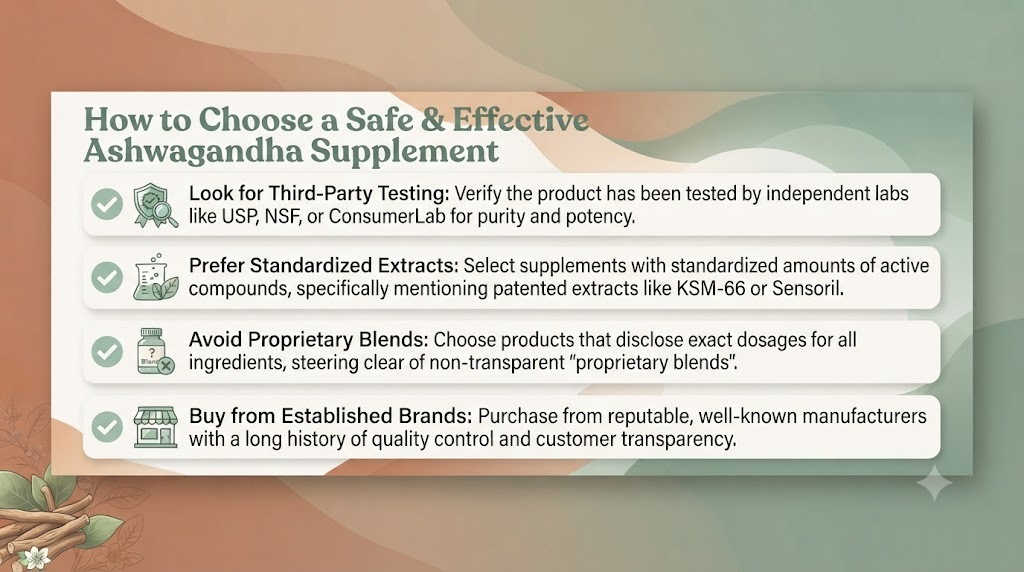
- Look for third-party testing (USP, NSF, or ConsumerLab verification)
- Prefer standardized extracts (like KSM-66 or Sensoril) with a known withanolide percentage over unstandardized raw powders
- Avoid proprietary blends that don’t disclose the exact ashwagandha dose
- Buy from established supplement brands rather than unfamiliar marketplace sellers, where contamination risk is higher
This same quality-first approach matters across supplements generally — the same reasoning applies when choosing a protein powder or evaluating supplement dosages, where product quality often matters more than the specific brand name on the label.
Frequently Asked Questions
Is ashwagandha safe to take every day? For most healthy adults without liver disease, daily use at studied doses (300–600 mg of standardized extract) appears reasonably safe based on current evidence, though periodic breaks are a common precaution.
How long does it take for ashwagandha to work? Most clinical trials measured effects after 8 to 12 weeks of consistent daily use. It is not a fast-acting supplement, and single-dose effects are minimal.
Can ashwagandha damage your liver? Rare case reports have linked ashwagandha to liver injury, mostly reversible after stopping use. The risk appears low for healthy adults but is more relevant for people with existing liver conditions.
What is the best time of day to take ashwagandha? Either morning or evening is reasonable depending on the effect you’re targeting — some people prefer evening dosing for sleep-related benefits, while others split the dose across morning and evening.
Does ashwagandha interact with medications? Yes — notably thyroid medication, sedatives, immunosuppressants, and blood pressure medication. Check with a doctor or pharmacist if you take any of these regularly.
The Bottom Line
Ashwagandha benefits, dosage, and liver safety come down to a few clear takeaways: the evidence for stress reduction and sleep quality is genuinely solid, the dosage that studies actually used is 300–600 mg of standardized root extract daily, and the liver safety concerns are real but appear to affect a small subset of users — most notably those with pre-existing liver conditions or those using poorly regulated products. Choose a third-party-tested product, stick to studied doses, and talk to a doctor first if you have liver disease, are pregnant, or take interacting medications.
This article is for informational purposes only and is not a substitute for personalized medical advice. Consult a physician before starting ashwagandha or any new supplement, particularly if you have a pre-existing health condition or take prescription medication.







Leave a Reply