
An anti-aging morning routine built on soaked kalonji, methi and black chana, a handful of soaked nuts and dry fruit, and a spice mix after meals is cheap, safe for most adults and easy to keep up. It will not reverse your age. What it can do is improve a few things that research actually links to healthy ageing: inflammation markers, blood sugar, gut comfort and the quality of your snacks. The rest of this guide shows what each ingredient has going for it, where the popular claims run ahead of the evidence, and what we would add to make the routine work harder.
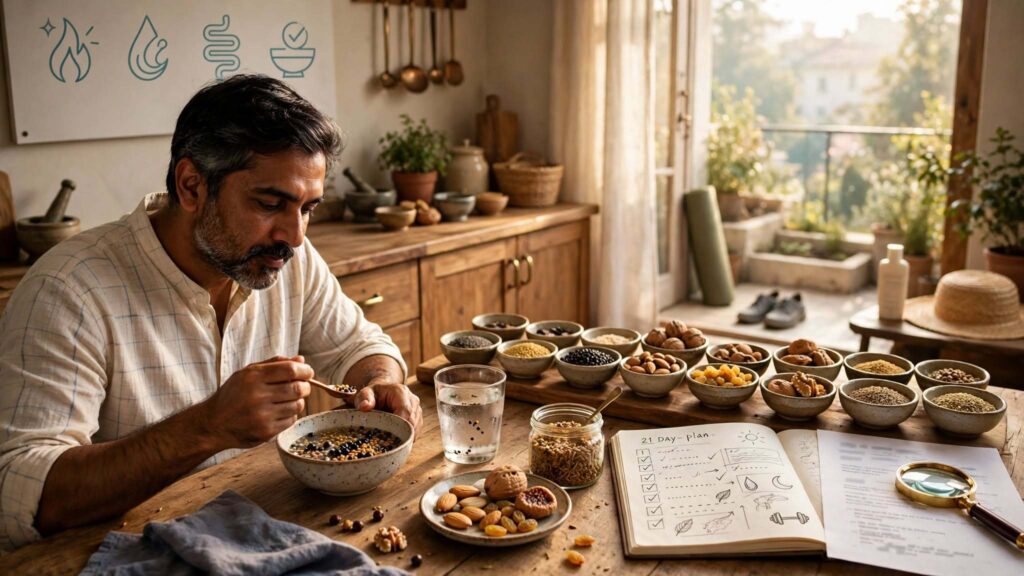
Quick answer: Soak 1/4 tsp kalonji, 1 tsp methi seeds and 1 tbsp black chana overnight and eat them first thing. Twenty minutes later, eat soaked almonds, a walnut, raisins and a fig. After lunch and dinner, chew a teaspoon of roasted jeera-ajwain-saunf. Then pair it with the habits that move ageing most: sun protection, strength training, enough protein, sleep and not smoking. Skip the routine or check with a doctor first if you are pregnant, on diabetes or blood-thinning medicine, or have a legume allergy.
Before the routine: a reality check on the “uncle at 62” story
The story behind this routine goes like this: a 62-year-old man with glowing skin and a straight back credits 40 years of the same three morning habits. It makes a good opening, and it may even be true. But one person’s story can’t tell us what caused it. People who stay lean, walk daily, sleep early, don’t smoke and have good genes will look young with almost any routine. Treat the routine below as a sensible set of foods that is low-risk and has some evidence, not as a secret.
Two other claims from the original video need a correction. First, “90% of diseases begin in the gut” has no source behind it. Gut health matters, but it is one factor among many. Second, the idea that an empty stomach is the best time for nutrients to reach your cells is popular but unproven. Eating these foods in the morning is fine. It isn’t magic.
Step 1: Kalonji, methi and black chana, soaked overnight
How: Soak 1/4 teaspoon kalonji (nigella seeds), 1 teaspoon fenugreek seeds and 1 tablespoon black chana in one glass of water overnight. In the morning, chew the seeds and chana well and drink the water.
Kalonji and inflammation. There is a saying that kalonji cures everything except death. Please ignore it, because no food does. What the trials do show is narrower and more interesting. A meta-analysis of five randomized trials found that nigella supplementation lowered CRP, a blood marker of inflammation, by about 0.55 mg/L, with the effect mostly seen in people with a BMI of 30 or above. A later pooled analysis of 16 trials with 1,033 people who had metabolic syndrome and related conditions also found lower CRP, TNF-alpha and IL-6. Chronic low-grade inflammation is a real theme in ageing research (the term is “inflammaging”), so the link is reasonable. But those trials mostly used capsules or oil in people with existing metabolic problems, not a quarter teaspoon of soaked seeds in healthy adults.
Methi and blood sugar. Fenugreek is one of the better-studied kitchen seeds. A 2023 meta-analysis of 14 trials (894 people) found HbA1c fell by about 0.88 points. The authors also warned that the trials varied a lot in quality, and fasting and after-meal glucose results were less clear. So it may help with blood sugar control, but it is not a diabetes treatment. Fenugreek’s soluble fiber slows how fast carbohydrates are absorbed.
Black chana. About 1 tablespoon of dry chana gives you a bit of protein, fiber and resistant starch. It feeds good gut bacteria and keeps you full, which matters because muscle loss is one of the quiet drivers of ageing. Raw soaked chana causes gas in some people. If that’s you, steam them for 5 minutes or switch to sprouted chana.
Who should be careful:
- Pregnancy: avoid medicinal amounts of both methi and kalonji, since fenugreek can stimulate the uterus.
- Diabetes medicines or insulin: methi can add to the effect and cause low sugar. Check with your doctor and monitor your readings.
- Blood thinners, or surgery coming up: both seeds may affect clotting. Stop them about two weeks before surgery and ask your doctor.
- Legume allergy (peanut, chickpea): fenugreek is a legume, and cross-reactions occur.
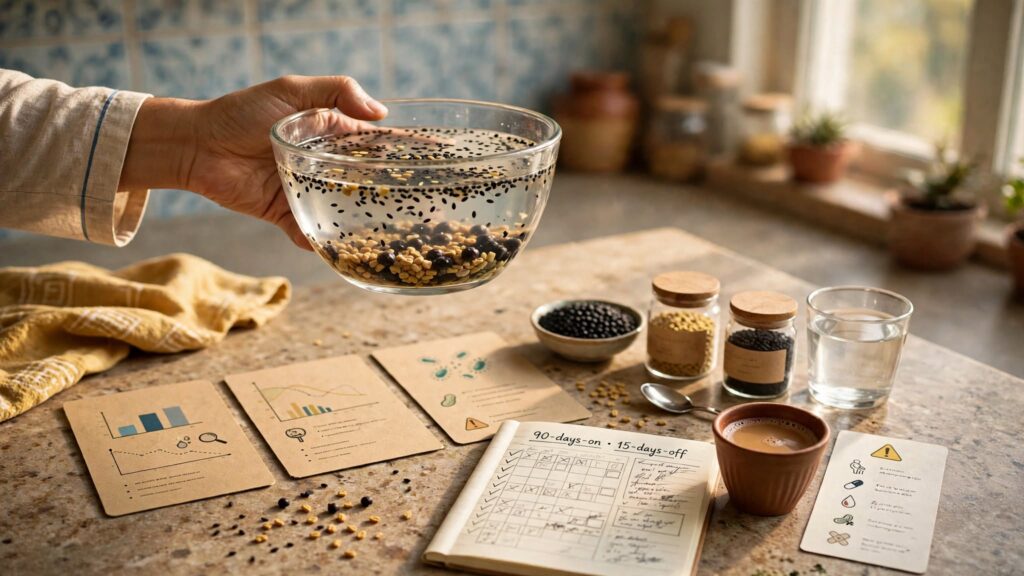
- Cycles: don’t run it forever without a break. The original advice of 90 days on and 15 days off is a reasonable pattern.
Step 2: Soaked almonds, walnut, raisins and fig, 20 minutes later
How: Soak 5 almonds, 1 walnut, 5 raisins and 1 dry fig overnight (almonds and walnut in one bowl, raisins and fig in another). Eat the nuts and fruit. Drink the raisin-fig water if you like. Discard the almond and walnut water, which carries some of the phytates and tannins that soaking releases.
What research says about each:
- Almonds and skin. A UC Davis trial of 28 postmenopausal women found that eating almonds as about 20% of daily calories (around 60 g, roughly 2 ounces) for 16 weeks reduced wrinkle width by about 10% and severity by about 9%. A follow-up in 49 women over 24 weeks also reported a drop in skin pigmentation. Both were small, funded by the Almond Board of California, and limited to postmenopausal women with fair, sun-sensitive skin. And 60 grams is 40 to 50 almonds a day, not 5. So this is promising, not proof, and a handful of almonds won’t match it.
- Walnut. It carries plant omega-3 (ALA) and polyphenols. Nut-rich diets such as the Mediterranean pattern have been linked to better heart and brain health in large studies. One walnut is a small dose, so two or three halves is a more useful amount.
- Fig. Helps stool softness and fiber intake, and adds potassium and some iron.
- Raisins. They contain polyphenols, but they’re mostly sugar. People with diabetes should keep to 3 or 4.
Peeling almonds: The video says to peel them. The skin holds most of the polyphenols, and there’s no solid evidence that peeling improves absorption. Peel if you find them easier to digest, but you don’t have to.
Step 3: The post-meal mix of jeera, ajwain and saunf
How: Dry roast equal parts cumin, carom seeds and fennel on low heat until fragrant. Store in an airtight glass jar. After meals, chew half to one teaspoon and sip warm water.
This is the most practical part of the routine. Cumin, ajwain and fennel have long been used to ease gas, bloating and heaviness, and they’re safe in food amounts. Evidence for each is modest: small trials show fennel and cumin can ease indigestion and cramping, and ajwain’s thymol stimulates digestive juices. They won’t cure disease, and the statement that these three act “like a medicine” is an overstatement. But comfortable digestion helps you eat well, sleep well and keep your appetite steady.
People with active acid reflux sometimes find roasted spices irritating. Try a half portion first.
What we would add to make this routine more advanced
| Addition | How to use | Why it earns a place | Caution |
|---|---|---|---|
| Amla | 1 fresh fruit, or 1 tsp powder in water | One of the richest natural vitamin C sources, which the skin needs to make collagen | May aggravate acidity; check with your doctor if on blood thinners |
| Ground flaxseed (alsi) | 1 tbsp over curd or dal | Plant omega-3 (ALA) and lignans, plus fiber | Grind fresh; whole seeds pass through; drink water with it |
| Turmeric with black pepper | A pinch of each in cooking or warm milk | Pepper’s piperine raises curcumin absorption | Large supplement doses can interact with blood thinners and affect the gallbladder |
| Pumpkin seeds | 1 tbsp | Zinc and magnesium, minerals linked to skin repair and sleep | Salted or fried versions defeat the purpose |
| Curd or buttermilk | 1 cup with lunch | Probiotics and protein | Skip very sour buttermilk with acidity |
| Sprouted moong | 1 small bowl | Cheap plant protein, easy on the gut | Cook lightly if you have a weak gut |
| Protein at every meal | Dal, paneer, eggs, curd, sprouts | Muscle is the most important tissue to protect with age | Check with a doctor if you have kidney disease |
The habits that move ageing more than any seed
If you do only the food routine, you’ll get a small gain. These factors have far stronger evidence, and they are probably what that uncle’s friends and family would point to.
- Sun protection. Ultraviolet exposure is behind most of the visible ageing of the face in fair skin: spots, wrinkles, rough texture. Daily sunscreen and a hat do more for the skin than any nut.
- Not smoking. The video mentions cigarettes in passing, but smoking is among the strongest skin and body agers there is.
- Strength training. After 40, we lose muscle gradually. Two sessions a week of squats, push-ups, rows and carries slow that.
- Protein. Older adults are generally advised to eat about 1.0 to 1.2 grams per kilogram of body weight, more than the standard adult figure.
- Walking speed. A pooled study of nearly 35,000 older adults found that gait speed predicted survival. A brisk daily walk is a good test and a good habit.
- Sleep. Seven hours, with fixed timing, supports skin repair, appetite control and memory.
- Blood pressure and sugar checks. Silent damage happens early, and a yearly check is cheap.
A realistic 21-day plan
Days 1 to 7: Do only Step 3 (the post-meal mix) and a 20-minute walk. Let your gut settle.
Days 8 to 14: Add the soaked nuts and dry fruit in the morning.
Days 15 to 21: Add the kalonji, methi and chana. Keep notes on energy, digestion, sleep and any side effects such as gas or dizziness.
Adding one change at a time makes it clear what suits you. Many people start all three on day one, feel bloated, and quit.
When to talk to a doctor first
- You are pregnant, trying to conceive or breastfeeding
- You take medicine for diabetes, blood pressure or blood thinning
- You have thyroid disease, kidney disease, or a history of bleeding problems
- You have a nut, chickpea or peanut allergy
- You have unexplained weight loss, ongoing diarrhea, or blood in stool
- You have surgery coming up within two weeks
Frequently asked questions
Does this anti-aging morning routine really work? It supports the basics of healthy ageing (fiber, protein, healthy fats, steady blood sugar, comfortable digestion). It doesn’t slow biological ageing by itself, and no food routine can reverse it.
Can I eat kalonji and methi on an empty stomach daily? Most healthy adults can in small amounts, with a break every few months. People with diabetes medicines, pregnancy, or bleeding disorders should ask a doctor first.
Do soaked almonds work better than dry ones? There is no strong evidence either way. Soaking softens them and lowers phytates a little, so they may digest more easily.
How many almonds should I eat a day? Five to ten is a sensible everyday amount. The skin studies used far more, around 60 g, which adds a lot of calories.
Is it safe to eat soaked chana raw? For most people, yes, but cooking or sprouting makes them gentler on digestion. Don’t eat raw kidney beans, which are different and toxic when undercooked.
Can this routine help with hair fall or white hair? Iron, protein and vitamin D deficiencies commonly cause hair fall, and they’re worth testing. Greying is mostly genetic, and no food reliably reverses it.
When will I see results? Digestion may feel better in one to two weeks. Skin, energy and blood markers take months and depend more on sleep, sun protection and exercise.
Sources
- Tavakoly R, et al. The effect of Nigella sativa supplementation on serum C-reactive protein: a systematic review and meta-analysis of randomized controlled trials. Complement Ther Med. 2019;45:149-155. https://www.pubmed.gov/31331553/
- Hosseini H, et al. Effect of Nigella sativa intake on oxidative stress and inflammation in patients with metabolic syndrome and related disorders: a systematic review and meta-analysis. Curr Pharm Biotechnol. 2024;25(7):896-907.
- Effect of fenugreek on hyperglycemia: a systematic review and meta-analysis. Medicina (Kaunas). 2023;59(2):248. https://pubmed.ncbi.nlm.nih.gov/36837450/
- Foolad N, et al. Prospective randomized controlled pilot study on the effects of almond consumption on skin lipids and wrinkles. Phytother Res. 2019.
- Rybak I, et al. Prospective randomized controlled trial on the effects of almonds on facial wrinkles and pigmentation. Nutrients. 2021;13(3):785. https://doi.org/10.3390/nu13030785
- Studenski S, et al. Gait speed and survival in older adults. JAMA. 2011;305(1):50-58.
- Bauer J, et al. Evidence-based recommendations for optimal dietary protein intake in older people (PROT-AGE). J Am Med Dir Assoc. 2013;14(8):542-559.
This article is for general information and does not replace medical advice. If you take regular medicines, are pregnant, or have a long-term condition, check with your doctor before starting any new food routine.





Leave a Reply