
Ayurveda starts from a simple premise: no two people should eat, move, or live in exactly the same way, because no two people are built the same way. Learning to find your dosha — your unique constitution of Vata, Pitta, and Kapha — is the foundation almost everything else in Ayurvedic practice is built on, from diet to daily routine to which herbs actually make sense for you.
Here’s a genuine, practical guide to understanding the three doshas, recognizing when one is out of balance, and adjusting your diet and habits accordingly.
What Are the Three Doshas?
The three doshas — Vata, Pitta, and Kapha — are the fundamental energies Ayurveda uses to describe how your body and mind function. Every person is a unique combination of all three, but most people have one or two that are naturally more dominant, shaping everything from digestion and energy levels to mood and physical build.
- Vata (air + ether) governs movement — breathing, circulation, nerve impulses, and the mind’s activity
- Pitta (fire + water) governs transformation — digestion, metabolism, and mental processing
- Kapha (earth + water) governs structure — physical form, lubrication of joints and tissues, and immunity
None of the doshas is “better” than another — each governs essential functions, and health in Ayurveda is defined by each dosha operating in balance relative to your own natural constitution, not by eliminating any of them.
Vata: Traits, Signs of Imbalance, and How to Balance It
Vata is often described as the most influential of the three doshas, since it governs movement and, in doing so, influences how Pitta and Kapha move through the body as well.
Balanced Vata traits: creativity, mental alertness, flexibility, quick thinking, enthusiasm
Signs of Vata imbalance: anxiety, restlessness, constipation, dry skin, joint pain, difficulty sleeping, feeling cold, scattered thinking
How to balance Vata:
- Favor warm, cooked, moist foods over cold or raw ones
- Emphasize sweet, sour, and salty tastes
- Include healthy fats like ghee and avocado, and warming spices like cinnamon and ginger
- Eat at consistent times and avoid skipping meals
- Prioritize routine and warmth generally — a consistent daily schedule is considered especially stabilizing for Vata
Pitta: Traits, Signs of Imbalance, and How to Balance It
Pitta governs digestion, metabolism, and body temperature regulation, and is closely tied to mental sharpness and drive.
Balanced Pitta traits: strong digestion, clear thinking, sharp intellect, focus, leadership
Signs of Pitta imbalance: hyperacidity, heartburn, skin rashes or inflammation, irritability, anger, feeling overheated, being overly critical or impatient
How to balance Pitta:
- Favor cooling, hydrating foods rather than hot, oily, or heavily spiced ones
- Avoid excessively salty, sour, or spicy foods, which raise internal heat
- Emphasize sweet, bitter, and astringent tastes
- Build in downtime and avoid overscheduling, since Pitta types tend toward overwork
- Favor cooling activities and avoid excessive heat exposure, including intense midday sun
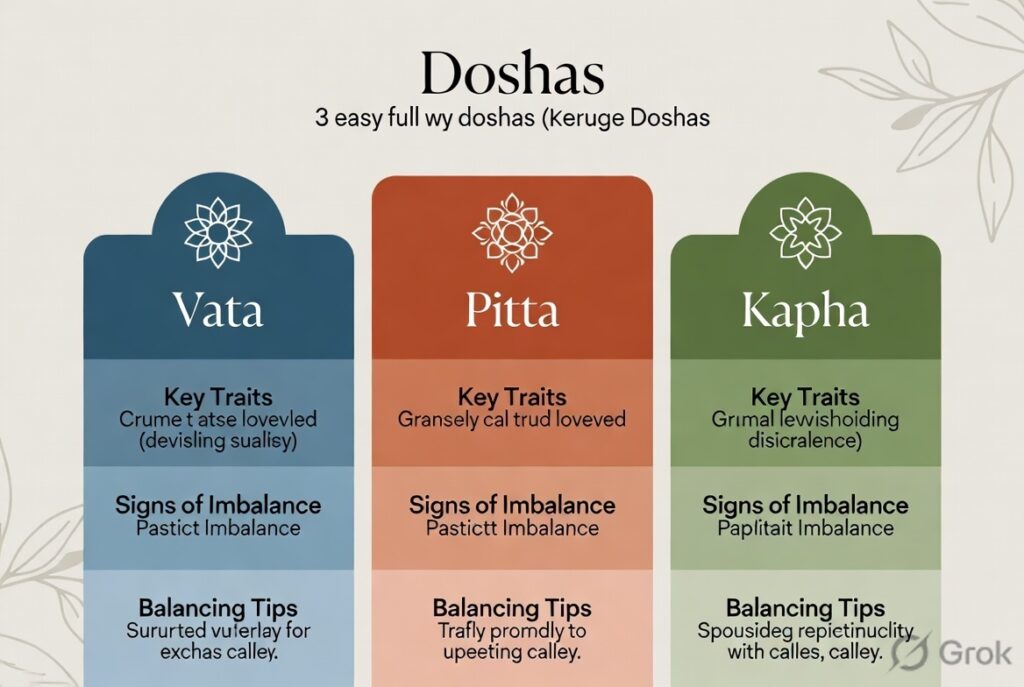
Kapha: Traits, Signs of Imbalance, and How to Balance It
Kapha provides physical structure, lubrication for joints and tissues, and supports the immune system.
Balanced Kapha traits: endurance, strength, emotional stability, calm, loyalty, steadiness
Signs of Kapha imbalance: lethargy, weight gain, congestion, sinus issues, sluggishness, resistance to change, oversleeping
How to balance Kapha:
- Favor light, warm, dry foods over heavy, oily, or cold ones
- Emphasize pungent, bitter, and astringent tastes
- Reduce excessive dairy and sweet, heavy foods
- Prioritize regular, vigorous movement, since Kapha responds especially well to consistent physical activity
- Introduce variety and stimulation into routine, since Kapha can become overly comfortable with stagnation
Prakriti vs. Vikriti: Two Different Things to Understand
One of the more important — and more commonly misunderstood — distinctions in Ayurveda is between Prakriti and Vikriti. Prakriti is your original, balanced constitution: the unique combination of doshas you were born with, which stays relatively constant throughout life. Vikriti is your current state, which can shift due to diet, stress, season, or lifestyle, and may reflect a temporary imbalance that looks different from your baseline Prakriti.
This distinction matters practically: you don’t necessarily eat and live according to who you fundamentally are (Prakriti) — you adjust based on your current state of imbalance (Vikriti). Someone with a naturally Pitta-dominant Prakriti who’s currently experiencing Vata aggravation (from travel, stress, or irregular routine, for example) would focus on Vata-balancing choices in that moment, not simply default to their baseline type.
How to Find Your Dosha
A few approaches can help you identify both your baseline Prakriti and your current Vikriti:
- Observe your natural tendencies over time — body frame, digestion, sleep patterns, and emotional responses under stress tend to reveal your dominant dosha or doshas more reliably than a single snapshot
- Notice what throws you off balance — the specific symptoms that show up when you’re run down (anxiety and dryness point toward Vata, irritability and inflammation toward Pitta, sluggishness and congestion toward Kapha) are a useful diagnostic clue
- Try an online dosha quiz for a general starting picture — useful as an introduction, though these tools offer only a general approximation rather than a precise clinical assessment
- Consult a qualified Ayurvedic practitioner for the most accurate insight, particularly if you want a personalized diet or herbal recommendation rather than general guidance
If digestion is where you’re noticing the most imbalance specifically, our guide on neem leaves for gut health covers a whole-food approach that complements dosha-based dietary adjustments.
Frequently Asked Questions
How do I find my dosha without seeing a practitioner? Online dosha quizzes can offer a reasonable starting picture based on your natural tendencies in body type, digestion, sleep, and emotional response. For the most accurate and personalized assessment, though, consulting a qualified Ayurvedic practitioner is recommended.
Can your dosha change over time? Your baseline constitution (Prakriti) stays relatively stable throughout life, but your current state (Vikriti) can shift due to diet, stress, season, or lifestyle — meaning the dosha you need to focus on balancing right now may differ from your fundamental type.
Can I have more than one dominant dosha? Yes. Most people are a combination of two doshas, such as Vata-Pitta or Pitta-Kapha, rather than a single pure type, and dietary and lifestyle recommendations are typically adjusted to reflect that combination.
What foods should I avoid if I don’t know my dosha yet? Rather than avoiding specific foods without knowing your constitution, focus on eating warm, freshly cooked, whole foods at regular meal times — a reasonably balanced starting point for any dosha while you work on identifying your specific constitution.
A Note From Health Morph
This article reflects traditional Ayurvedic concepts and is for informational and educational purposes only. It isn’t a substitute for personalized medical or nutritional advice. If you have a specific health condition, please consult a doctor or a qualified Ayurvedic practitioner before making significant dietary changes.
For more traditional and evidence-informed guidance on natural wellness, explore our Natural Remedies & Ayurveda section, or read our related guide on ashwagandha in Ayurvedic tradition.







Leave a Reply