
Updated: August 1, 2026
A tea made from fenugreek, fennel, cinnamon, ginger, and coriander seeds shows up constantly in wellness content, usually promising it will “burn belly fat overnight” or reset your metabolism while you sleep. That framing isn’t supported by the evidence — and it’s worth being upfront about that before getting into the parts of this that actually do have research behind them.
The honest version is more modest than the marketing, but genuinely useful: this is a traditional South Asian digestive spice blend with real, if mixed, evidence for supporting blood sugar and easing digestive discomfort like bloating and gas. Here’s what the research actually says about each ingredient, an honest look at a study that tested this exact combination, and a straightforward recipe.
The Claim vs. the Evidence
Content promoting this tea often claims it targets “six root causes of belly fat” and burns fat specifically overnight through liver detoxification during a supposed 1–3 a.m. “detox window.” Neither of these claims holds up to scrutiny: your liver works continuously, not in a narrow nightly window, and no controlled clinical trial has shown any spice tea causes targeted abdominal fat loss.
What does have real support is more specific and more modest: several of these individual spices have documented effects on post-meal blood sugar and digestive comfort. That’s genuinely useful — it’s just a different, smaller claim than “burns fat while you sleep.”
What the Research Actually Shows, Ingredient by Ingredient
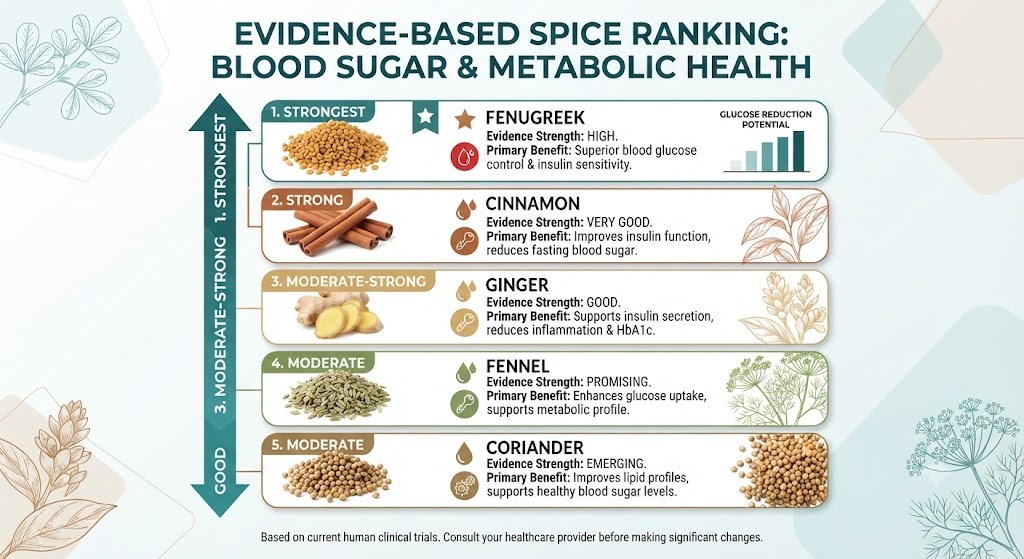
Fenugreek. This is the best-studied ingredient in the blend. Its soluble fiber (galactomannan) forms a gel in the digestive tract that slows gastric emptying and blunts the post-meal blood sugar rise. A frequently cited human study found whole fenugreek seeds reduced the post-meal glucose response by over 40% compared to a control, and other trials in people with type 2 diabetes found improvements in fasting glucose and insulin sensitivity after regular use. A 2023 review of herbs and spices for metabolic health specifically named fenugreek, alongside cinnamon and ginger, as having the most published, promising research for blood sugar support.
Cinnamon. Multiple clinical trials have tested cinnamon’s effect on blood sugar in people with diabetes, with several showing modest improvements in fasting glucose and, in some studies, LDL cholesterol. The effect size across trials is generally described as modest, not dramatic, and results vary depending on the cinnamon dose and type used.
Ginger. Ginger has well-established evidence for easing nausea and supporting digestion generally, and some studies suggest modest improvements in fasting blood glucose with regular use. Its anti-inflammatory compounds (gingerols, shogaols) are genuinely well-characterized in the broader research literature, even where diabetes-specific evidence is more preliminary.
Fennel. Traditionally used to ease gas and bloating, fennel’s carminative effect — helping expel trapped intestinal gas — has reasonable traditional and some supporting evidence, though large, rigorous human trials specifically on fennel and bloating are limited.
Coriander. Traditionally used to support digestion and bile production. Animal studies suggest a possible role in blood sugar regulation, but human clinical evidence specifically for coriander is thin compared to fenugreek, cinnamon, or ginger.
What Happens When You Combine Them: A Real Clinical Trial
This is the part most articles promoting this tea leave out entirely, and it’s important: a double-blind, randomized controlled trial published in the Chronic Diseases Journal tested cinnamon, fenugreek, and coriander — three of this blend’s five ingredients — in 150 people with type 2 diabetes, at a dose of 2 grams daily. The result: the herbal combination showed no stronger effect than placebo on blood glucose, HbA1c, or blood lipids.
This doesn’t cancel out the individual-ingredient evidence above — the study authors specifically noted the dose was relatively small and the trial period short, both of which could explain the null result. But it’s a genuine, honest reason to keep expectations modest rather than assuming a home-brewed tea will replicate the effects seen in studies using higher, standardized doses of single ingredients.
What to Realistically Expect
Based on the evidence above, a fair, non-hyped set of expectations looks like this:
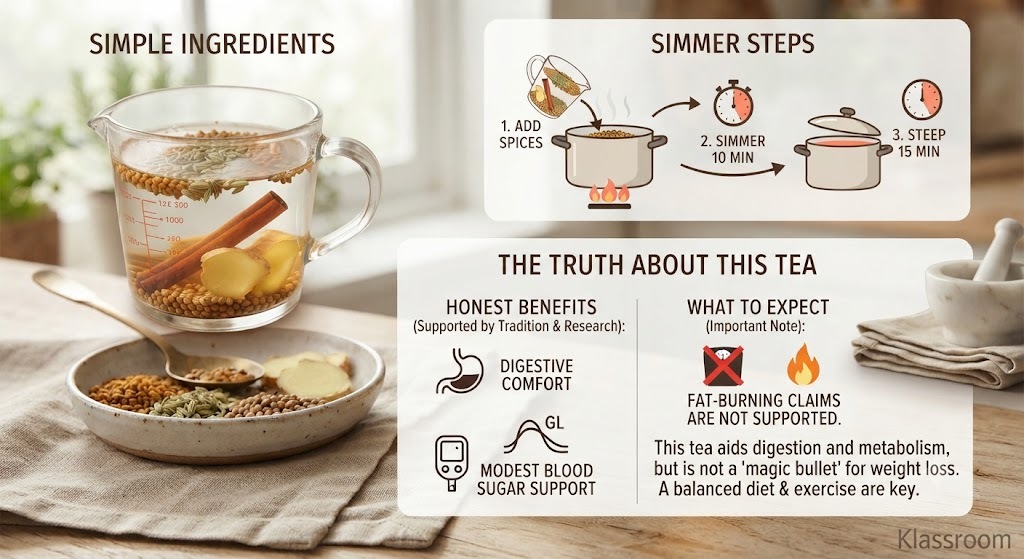
- Digestive comfort (less bloating, more regular digestion) is the most plausible, quickest-to-notice benefit, mainly from fennel, ginger, and the warm water itself
- A gentler post-meal blood sugar rise is plausible based on fenugreek and cinnamon’s individual research, though the combined-ingredient trial above suggests this effect may be smaller than single-ingredient studies imply
- Weight loss or “belly fat burning” is not something this tea has been shown to cause in controlled research — any weight change would more likely reflect broader dietary and lifestyle habits than the tea itself
- A calming evening ritual has real value on its own, independent of any metabolic claim, similar to the routine-based benefits we cover in our guide on Dinacharya, the Ayurvedic daily routine
A Straightforward Recipe
Ingredients:
- 1 teaspoon coriander seeds
- 1 teaspoon fenugreek seeds
- 1 teaspoon fennel seeds
- ½ teaspoon cinnamon powder or 1 small cinnamon stick
- 1-inch piece fresh ginger, sliced
- 2 cups water
Method: Combine all ingredients in a pot, bring to a boil, then reduce heat and simmer for 5–7 minutes. Remove from heat, cover, and let steep an additional 5 minutes. Strain and drink warm, ideally 30–45 minutes after a meal rather than immediately before bed, since some of these ingredients (fennel, ginger) have mild diuretic effects that can disrupt sleep if consumed too close to bedtime.
There’s no strong evidence that drinking this specifically at night, versus any other time of day, changes its effect — the “nighttime detox window” framing isn’t something controlled research supports.
Who Should Be Cautious or Avoid This
A few real safety considerations, based on the ingredients involved:
- Pregnancy. This is the most important caution. Fenugreek has documented uterine-stimulating properties and is generally advised against in medicinal amounts during pregnancy, particularly in the first trimester, due to a possible link to early contractions. Fennel carries similar concerns due to estrogenic compounds. Pregnant readers should skip this tea or check with an OB-GYN first.
- Diabetes medication. Since fenugreek and cinnamon can lower blood glucose, combining this tea with blood sugar medication requires monitoring to avoid hypoglycemia — talk to your doctor before adding it to an existing treatment plan.
- Blood thinners. Ginger and cinnamon have mild anticoagulant properties; caution is warranted alongside medications like warfarin.
- Gallstones. Fennel and coriander increase bile flow, which can trigger discomfort in people with gallstones.
- GERD or acid reflux. Ginger can worsen reflux in some people; starting with a smaller amount is a reasonable way to test tolerance.
Frequently Asked Questions
Does this spice tea actually burn belly fat? No controlled clinical research supports targeted fat loss from this or any tea. The individual spices have some evidence for blood sugar and digestive support, but “burns fat while you sleep” is not a claim the research backs up.
Does combining these five spices work better than taking them individually? Not necessarily. A randomized controlled trial testing cinnamon, fenugreek, and coriander together in people with type 2 diabetes found no significant benefit over placebo, though the study used a lower dose over a shorter period than some single-ingredient trials.
Is this tea safe during pregnancy? No, not recommended. Fenugreek and fennel both have documented uterine-stimulating properties and are generally advised against in concentrated or medicinal amounts during pregnancy.
What’s the actual evidence for fenugreek and blood sugar? Fenugreek has the strongest evidence in this blend. Human studies show its soluble fiber slows post-meal glucose absorption, with one study finding whole seeds reduced the post-meal glucose curve by over 40% compared to control, and other trials showing improved fasting glucose with regular use in people with type 2 diabetes.
A Note From Health Morph
This article reflects available research as of 2026 and traditional culinary use of these spices. It is for informational purposes only and is not a substitute for personalized medical advice. This tea is not a treatment for diabetes and should never replace prescribed medication. If you have diabetes, are pregnant, or take regular medication, please talk with a doctor before adding this or any herbal remedy to your routine.
For more evidence-based natural remedy guides, explore our Natural Remedies & Ayurveda section, or read our related guide on neem leaves for gut health.







Leave a Reply