
If you’ve been Googling seeds with curd for calcium deficiency, chances are your knees creak a little more than they used to, your bones feel fragile, or your blood sugar readings keep giving you a scare. You are not alone. Millions of people quietly deal with bone weakness, joint stiffness, and fluctuating sugar levels every single day, often without realizing that the fix could be sitting right there in the kitchen. Mixing a spoon of the right seeds into a bowl of plain curd (yogurt) is one of the simplest, most affordable, and most researched home remedies for supporting bone density, easing arthritis discomfort, and keeping blood sugar steadier through the day. In this guide, we’ll break down five seeds — flaxseeds, pumpkin seeds, sunflower seeds, chia seeds, and sesame seeds — explain exactly how each one works, how much to eat, and how to combine them for maximum benefit. For a deeper look at how gut health influences nutrient absorption, don’t miss our related read on gut health and digestion tips.
Why Curd (Yogurt) Is the Perfect Base for Seeds
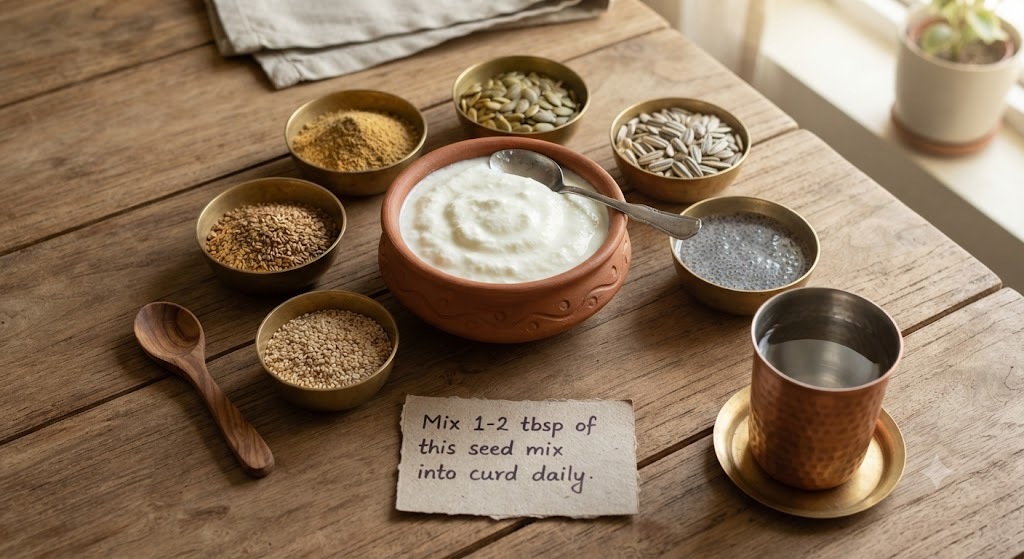
Before we get into the seeds themselves, it’s worth understanding why curd is such a smart pairing partner rather than just a random suggestion. Curd is naturally rich in probiotics, protein, and calcium, and its slight acidity helps the body absorb minerals like magnesium and phosphorus more efficiently — the very minerals these seeds are packed with. The probiotics in curd also support gut health, and a healthy gut is directly linked to how well your body absorbs calcium and other bone-friendly nutrients. If you’re curious about building a stronger gut microbiome overall, check out our guide on probiotic foods for a healthy gut. Together, seeds and curd create a combination that is greater than the sum of its parts — a genuinely synergistic, natural remedy for bone and joint support.
1. Flaxseeds (Alsi) for Blood Sugar Control and Joint Pain
Flaxseeds are one of the most underrated seeds for people managing diabetes and arthritis together. They are loaded with soluble fiber, which slows down how quickly sugar enters your bloodstream, helping prevent the sharp spikes and crashes that make diabetes so hard to manage. This is one reason flaxseeds are frequently recommended in natural remedies for high blood sugar.
Flaxseeds are also one of the richest plant-based sources of omega-3 fatty acids (specifically ALA, alpha-linolenic acid). Omega-3s have a natural anti-inflammatory effect on the body, which is exactly what’s needed when joint inflammation is causing stiffness, swelling, or pain. Regularly including flaxseed omega-3s in your diet may help reduce the friction and inflammation that builds up in arthritic joints over time.
How to use flaxseeds:
- Take 1 tablespoon of flaxseeds.
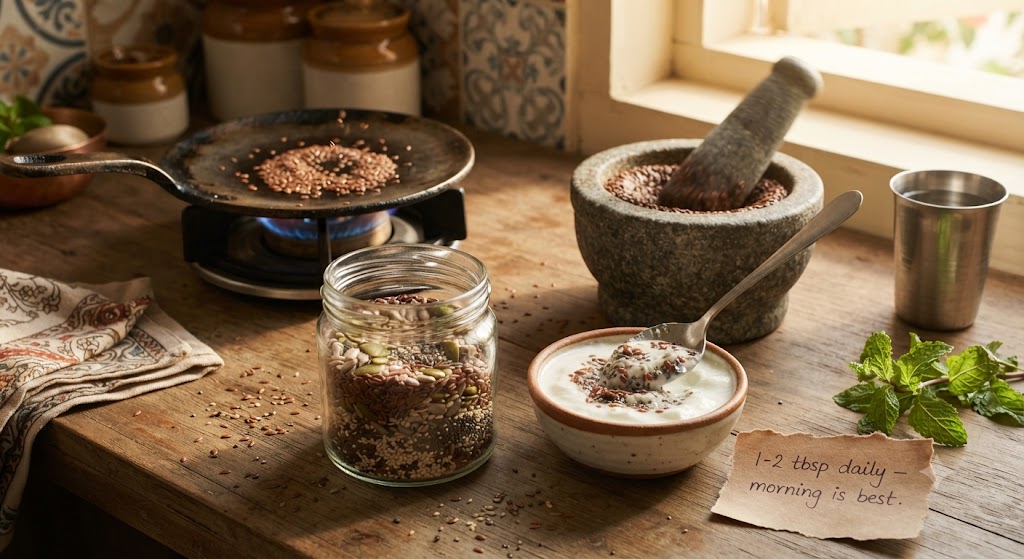
- Dry roast them lightly on a tawa (griddle) — never eat them raw or whole.
- Grind them into a coarse powder once cooled.
- Mix 1 tablespoon of this powder into a bowl of fresh curd.
- Eat once daily, ideally at breakfast, though afternoon or evening also works.
Whole, unroasted flaxseeds pass through the digestive system largely undigested, which means you miss out on most of their benefits. Roasting and grinding is a non-negotiable step for proper absorption.
2. Pumpkin Seeds (Kaddu Ke Beej) for Bone Strength and Calcium Absorption
Pumpkin seeds are a standout choice for anyone dealing with calcium deficiency or ongoing joint pain. What makes them special is their unusually high content of magnesium and phosphorus. Magnesium is essential for building strong, dense bones, while phosphorus works alongside calcium to help your body absorb and use it effectively — without enough phosphorus, even a calcium-rich diet won’t do its full job. This mineral partnership is also discussed in our detailed piece on foods that boost calcium absorption naturally.
For people living with arthritis or reduced joint lubrication, pumpkin seeds offer additional support by helping calm joint inflammation, which can translate into noticeably less stiffness and discomfort over time.
How to use pumpkin seeds:
- Take 1 tablespoon of raw or lightly roasted pumpkin seeds.
- Mix directly into a bowl of curd, or
- Soak them overnight in water and add to curd the next morning for easier digestion.
Pumpkin seeds also have a low glycemic index, making them a safe, sugar-friendly snack for people watching their blood glucose.
3. Sunflower Seeds for Nerve Health and Diabetes Support
Sunflower seeds round out this trio beautifully because they bring magnesium and healthy fats to the table in a slightly different way. Magnesium from sunflower seeds helps regulate blood sugar levels while also supporting healthy nerve function — something particularly relevant for diabetics, since prolonged high sugar can weaken and damage nerves over time (a condition known as diabetic neuropathy).
The healthy fats in sunflower seeds also act as a natural lubricant for joints, easing the stiffness that makes everyday movement — climbing stairs, bending down, or simply getting out of bed — more difficult than it should be.
How to use sunflower seeds:
- Take 1 tablespoon of raw or lightly roasted sunflower seeds.
- Mix into a bowl of curd and eat daily.
4. Chia Seeds — A Powerful Addition for Bone Density and Inflammation
While the original three seeds (flax, pumpkin, sunflower) form a strong foundation, deeper nutritional research points to chia seeds as an excellent fourth addition, especially for people focused on bone density. Chia seeds are exceptionally rich in calcium, phosphorus, and magnesium, and animal studies have found that regular chia seed consumption may be linked to increased bone mineral content, largely credited to their high ALA (omega-3) content.
Chia seeds are also well studied for blood sugar management. Research has shown that consuming chia seeds can help lower insulin resistance and blunt post-meal blood sugar spikes, and studies in people with type 2 diabetes have observed reductions in blood pressure with regular chia intake. On the inflammation side, chia seeds contain caffeic acid, an antioxidant compound that helps fight the chronic inflammation associated with arthritis and joint pain.
How to use chia seeds:
- Take 1 tablespoon of chia seeds.
- Soak in water for 15–20 minutes until they form a gel-like texture (this makes them easier to digest).
- Mix the soaked seeds into curd and consume once daily.
Start with a small amount if you’re new to chia seeds, especially if you’re already on blood sugar or blood pressure medication, since the combined effect can sometimes be stronger than expected.
5. Sesame Seeds (Til) — An Ayurvedic Classic for Bones and Joints
No conversation about seeds for bone strength is complete without sesame seeds, a staple of traditional Ayurvedic and Unani nutrition for centuries. Sesame seeds are one of the most concentrated plant sources of calcium available, alongside generous amounts of magnesium, phosphorus, manganese, and copper — a full mineral profile dedicated to bone formation and maintenance.
Sesame seeds also contain lignans like sesamin and sesamol, powerful antioxidant and anti-inflammatory compounds. Research suggests these lignans may help prevent bone inflammation and actively support new bone formation while slowing down bone resorption (the natural breakdown of old bone tissue). For people with arthritis, this same anti-inflammatory action can help ease joint swelling and discomfort. Sesame’s fiber content also makes it a useful addition for anyone managing diabetes alongside bone health goals.
How to use sesame seeds:
- Take 1 tablespoon of roasted sesame seeds.
- Lightly crush or grind them for better absorption.
- Mix into a bowl of curd and eat once daily.
If you want to explore more Ayurvedic ingredients for everyday wellness, our article on Ayurvedic home remedies for stronger immunity is a great next read.
The Ultimate Combination: Mixing All Five Seeds Together
If you want the combined benefit of stronger bones, reduced joint pain, and steadier blood sugar all at once, you don’t have to pick just one seed. Here’s how to build your own seed mix at home:
- Take equal quantities of roasted-and-ground flaxseeds, raw or roasted pumpkin seeds, raw or roasted sunflower seeds, soaked chia seeds (dried before storing), and roasted sesame seeds.
- Mix them thoroughly in a bowl.
- Store the blend in an airtight glass container, ideally in a cool, dry place.
- Take 1–2 tablespoons of this mix daily, stirred into a bowl of fresh curd.
This combined seed-and-curd mix doesn’t just support bones, joints, and blood sugar — the nutrient profile of these seeds is also linked to healthier hair, glowing skin, and better eyesight, making it a genuinely all-round addition to your daily diet. For more ideas on nutrient-dense combinations, take a look at our guide on superfoods for skin and hair health.
Bonus Tip for Maximum Absorption
Timing matters almost as much as the seeds themselves. Eating your seed-and-curd mix at breakfast, when your digestive fire (agni, in Ayurvedic terms) is strongest, tends to give the best absorption results. Also, always roast and grind seeds like flaxseed and sesame before eating — consuming them whole and raw means most of their nutrients pass through your system unused. Pair this habit with adequate sunlight exposure for vitamin D and regular light movement like walking, since vitamin D and physical activity both play a critical role in how well your bones actually use the calcium you’re feeding them. Our detailed piece on vitamin D deficiency symptoms and natural sources covers this connection in more depth.
Nutritional Comparison at a Glance
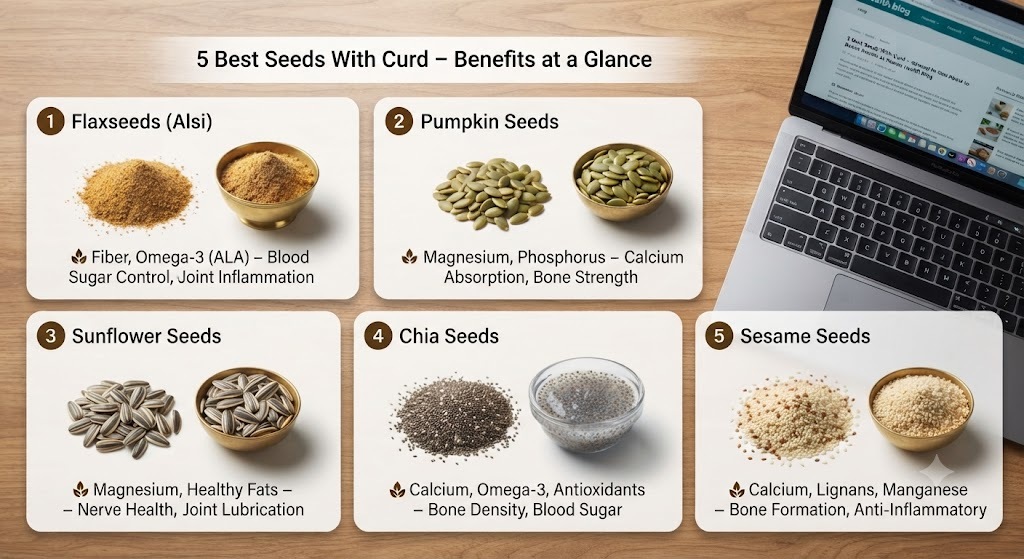
| Seed | Key Nutrients | Best For |
|---|---|---|
| Flaxseed | Fiber, Omega-3 (ALA) | Blood sugar, joint inflammation |
| Pumpkin Seeds | Magnesium, Phosphorus | Calcium absorption, bone strength |
| Sunflower Seeds | Magnesium, Healthy Fats | Nerve health, joint lubrication |
| Chia Seeds | Calcium, Omega-3, Antioxidants | Bone density, blood sugar |
| Sesame Seeds | Calcium, Lignans, Manganese | Bone formation, anti-inflammatory support |
A Quick Word of Caution
Seeds are a natural food, but “natural” doesn’t mean unlimited. Overeating any seed can cause digestive discomfort, and seeds like chia and flax can amplify the effect of blood sugar or blood pressure medication when eaten in large amounts. Start with one tablespoon a day, watch how your body responds, and increase gradually if needed. If you have a diagnosed condition like diabetes, arthritis, osteoporosis, or you’re on regular medication, it’s a good idea to check with your doctor or a qualified nutritionist before making major dietary changes — this article is meant for general information, not personalised medical advice. If you’re looking to understand your options further, our guide on managing arthritis naturally at home offers additional lifestyle tips worth exploring.
Frequently Asked Questions (FAQs)
1. Which seed is best for calcium deficiency? Sesame seeds and chia seeds are the richest in calcium among the five discussed here, making them especially useful for people dealing with calcium deficiency. Pairing either with curd further boosts absorption.
2. Can I eat flaxseeds without roasting them? It’s not recommended. Raw, whole flaxseeds are difficult to digest and often pass through the body without releasing their nutrients. Always dry roast and grind flaxseeds before eating.
3. How much seed mix should I eat daily for joint pain? Start with 1 tablespoon of a single seed, or 1–2 tablespoons of the combined seed mix, added to a bowl of curd once daily. This is generally considered a safe starting point for most healthy adults.
4. Is curd with seeds good for diabetics? Yes. Curd has a relatively low glycemic impact, and seeds like flax, chia, and sunflower are known to help slow sugar absorption and support better glucose control when eaten consistently as part of a balanced diet.
5. Can pumpkin seeds really help with arthritis? Pumpkin seeds contain magnesium and phosphorus, both linked to bone and joint health, along with anti-inflammatory properties that may help ease joint stiffness over time. They work best as part of a broader anti-inflammatory diet, not as a standalone cure.
6. How long does it take to see results from eating seeds with curd? Most people report noticing gradual improvements in joint comfort and energy over 4–8 weeks of consistent daily use. Bone density changes take longer, often several months, since bone remodeling is a slow biological process.
7. Can I mix all five seeds together, or should I eat them separately? You can absolutely mix all five in equal quantities and store them in an airtight container. This combined mix delivers the benefits of each seed in one convenient daily spoonful.
8. Is it okay to eat this seed-and-curd mix at night? Morning is generally considered ideal for better digestion and absorption, but if mornings don’t work for you, an afternoon or early evening serving is a reasonable alternative. Avoid eating heavy seed portions right before bed.
9. Are there any side effects of eating too many seeds? Yes, overconsumption can lead to bloating, gas, or digestive discomfort due to the high fiber content. Seeds like chia and flax can also interact with diabetes or blood pressure medication, so moderation and medical guidance are important.
10. Can pregnant or breastfeeding women eat this seed mix? Seeds are generally nutritious, but pregnant and breastfeeding women should consult their doctor before adding new seeds or supplements to their diet, since individual needs and sensitivities vary during this time.
11. Which curd is best to use — homemade or store-bought? Fresh, plain, unsweetened curd — homemade or store-bought — works well. Avoid flavored or sugary yogurt, as added sugar can offset the blood-sugar benefits of the seeds.
12. Do these seeds help with hair and skin as well? Yes, indirectly. The vitamin E, zinc, omega-3s, and antioxidants in these seeds also support skin elasticity and hair strength, making this remedy a genuine multi-benefit addition to your daily routine.
This article is for general informational purposes only and is not a substitute for professional medical advice. Always consult a qualified doctor or registered dietitian before making significant changes to your diet, especially if you have an existing health condition or take regular medication.







Leave a Reply