Women’s hormonal health shapes almost everything you notice day to day: how well you sleep, whether your skin breaks out, why your mood dips the week before your period, and why the scale suddenly stops cooperating. Most of the advice online about women’s hormonal health treats it as one big “imbalance” you can fix with a tea or a supplement. It isn’t that simple, and this guide to women’s hormonal health explains why. You’ll find what each hormone does, how the picture changes from your teens to menopause, which symptoms deserve a blood test, and which popular claims fall apart under scrutiny. Think of it as the pillar page for everything we cover on hormonal balance for women, with links to deeper guides in every section.
Educational content only. It doesn’t replace a consultation with your doctor or endocrinologist.
What Women’s Hormonal Health Actually Means
Hormones are chemical messengers. Your ovaries, thyroid, adrenal glands, pancreas and brain pass signals back and forth all day, and they rarely act alone. That is the first thing most articles on women’s hormonal health skip. When one signal shifts, the others adjust, so a “thyroid problem” can show up as a period problem, and a stress problem can show up as a sleep problem.
Good women’s hormonal health doesn’t mean flat, identical hormone levels every day. Your body is designed to fluctuate. Estrogen rises and falls across a cycle, cortisol peaks in the morning and fades by night, and insulin spikes after meals. In women’s hormonal health, the pattern is what counts: predictable cycles, steady energy, decent sleep, stable mood. Trouble starts when that pattern breaks and stays broken.
If you want the bigger picture of how we approach this topic, start at our Women’s Health hub and come back here for the women’s hormonal health detail.
The Key Hormones in Women’s Hormonal Health
You don’t need to memorize an endocrinology textbook. These are the players that matter most in women’s hormonal health.
Estrogen. Mostly estradiol during your reproductive years. It drives the first half of your cycle, supports bone density, protects blood vessels, and affects mood and memory. When it drops sharply, as it does in perimenopause, hot flashes, poor sleep and brain fog often follow.
Progesterone. Released after ovulation. It calms the nervous system, supports sleep, and prepares the uterine lining. If you don’t ovulate in a given month, you don’t make meaningful progesterone, which is why irregular ovulation often looks like anxiety, heavy periods or restless nights.
Testosterone. Yes, women make it, in much smaller amounts. It supports libido, muscle and energy. Too much, as in PCOS, can cause acne, excess facial hair and scalp thinning.
Thyroid hormones (T3, T4) and TSH. They set your metabolic speed. An underactive thyroid brings fatigue, constipation, cold intolerance, heavy periods and hair shedding. An overactive one brings palpitations, weight loss and anxiety. Thyroid disease is notably more common in women than in men.
Cortisol. Your main stress hormone. A normal daily rhythm is essential. A flattened or chronically elevated rhythm disrupts sleep, appetite and blood sugar. You’ll find practical ways to calm it in our posts on cortisol and stress.
Insulin. Technically a metabolic hormone, but it sits at the centre of PCOS and insulin resistance. High insulin pushes the ovaries to make more androgens, which is a big part of why PCOS cycles go off track. More on that in our insulin resistance articles.
Prolactin. Rises in pregnancy and breastfeeding. When it’s high outside those times, it can stop ovulation and cause irregular or missing periods, sometimes with milky nipple discharge. It’s a quick blood test and it’s often missed.
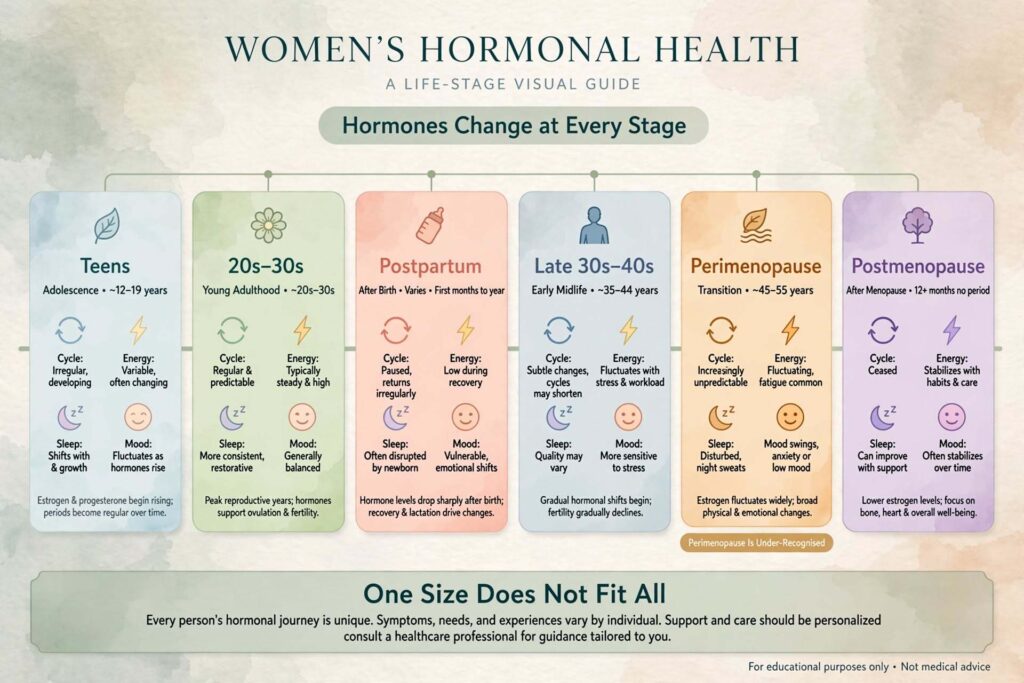
How Hormones Change at Every Life Stage
One reason generic women’s hormonal health advice fails is that a 19-year-old, a 34-year-old and a 49-year-old are dealing with completely different hormonal situations.
| Life stage | What’s happening | What women commonly notice |
|---|---|---|
| Teens | Cycles are establishing; ovulation can be irregular for a few years after the first period | Unpredictable periods, acne, mood swings |
| 20s to early 30s | Peak fertility; PCOS often gets diagnosed here | Cycle irregularity, acne, hair changes, stopping hormonal contraception |
| Postpartum | Estrogen and progesterone fall steeply after delivery; thyroid can be affected | Exhaustion, shedding hair, low mood, night sweats |
| Late 30s to 40s | Progesterone often declines first; cycles may shorten or lengthen | Worse PMS, heavier bleeding, sleep disruption |
| Perimenopause | Estrogen swings widely before it falls | Hot flashes, anxiety, brain fog, irregular periods |
| Postmenopause | Estrogen stays low | Vaginal dryness, bone loss risk, changes in cholesterol |
Perimenopause deserves its own mention in any discussion of women’s hormonal health because it is badly under-recognized. It often starts in the mid-40s, sometimes earlier, and can last several years before periods stop for good. Menopause itself is confirmed after 12 consecutive months without a period, and the average age is around 51. Our complete guide to perimenopause symptoms and how to manage them walks through the timeline, and our evidence-based breakdown of perimenopause and menopause natural remedies covers what’s worth trying. You can also read our shorter list of 7 natural remedies backed by research.
Signs of Hormonal Imbalance in Women: Normal vs Worth Investigating
Almost everyone has a bad week, and one rough month doesn’t signal a problem with women’s hormonal health. The question is pattern, severity and duration. These signs of hormonal imbalance in women are worth taking seriously when they persist for three months or more.
Cycle changes
- Periods that are consistently shorter than 21 days or longer than 35 days
- Missing three or more periods in a row (after ruling out pregnancy)
- Very heavy bleeding, soaking through a pad or tampon every hour for two hours or more
- Severe pain that stops you from working or studying
Skin, hair and body
- Persistent jawline acne, especially cystic
- New coarse hair on the chin, upper lip or chest
- Hair thinning at the crown, or heavy diffuse shedding (our guide to hair fall solutions covers the non-hormonal causes too)
- Unexplained weight change, especially around the midsection
Energy, sleep and mood
- Fatigue that doesn’t improve with rest
- Waking at 3 a.m. repeatedly, particularly in the luteal phase or perimenopause
- Anxiety or irritability that clearly tracks your cycle
- Low mood that lasts beyond a few days
One caution: these symptoms overlap with iron deficiency, vitamin D and B12 deficiency, depression, and sleep disorders. Heavy periods in particular often cause iron deficiency and anemia in women, which then creates its own fatigue, hair loss and brain fog. Rule that out first, and use our guide to iron deficiency and anemia in women to understand what to ask your doctor for.
Common Conditions That Affect Women’s Hormonal Health
PCOS
Polycystic ovary syndrome is diagnosed when two of three features are present: irregular or absent ovulation, signs of high androgens (acne, hair growth, or elevated blood levels), and polycystic-appearing ovaries on ultrasound. Despite the name, you don’t need cysts to have it. It’s one of the most common endocrine conditions in women of reproductive age, and a large share of cases go undiagnosed for years.
For women’s hormonal health, the practical takeaway is that PCOS is as much a metabolic condition as a reproductive one. Strength training, adequate protein, steady blood sugar and sleep matter a great deal. Among supplements, inositol has the best evidence base, and our full guide to inositol for PCOS covers the 40:1 myo-to-D-chiro ratio and realistic expectations.
Thyroid disorders
Hypothyroidism, most often Hashimoto’s thyroiditis, is the usual suspect when fatigue, cold hands, constipation, heavy periods and hair shedding show up together. Postpartum thyroiditis can also appear in the first year after delivery and is frequently mistaken for baby blues. A TSH test is simple and inexpensive, so ask for it rather than guessing.
Hypothalamic amenorrhea
When you under-eat, over-exercise or live under severe stress, the brain can switch off the signal that triggers ovulation. Periods stop, estrogen drops, and bone density can suffer. This is common in athletes and in women who diet aggressively. The fix is fuel, rest and medical support, not another supplement.
Perimenopause and menopause
Covered above, but worth repeating: if you’re over 40 and your sleep, mood and cycles have changed, don’t wait for a missed period to ask about perimenopause. Hormone therapy is an option for many women and is worth discussing with a qualified clinician rather than dismissing based on headlines from twenty years ago.
Women’s Hormonal Health Myths That Waste Your Time and Money
“Estrogen dominance” is not a formal diagnosis. The term is popular in wellness circles, and it describes a real experience: PMS, tender breasts, heavy periods. But mainstream endocrinology doesn’t recognize it as a diagnosis, and the label often leads to expensive, untested protocols. What usually sits underneath is anovulation, low progesterone, thyroid disease or fibroids, all of which are testable.
“Adrenal fatigue” isn’t a recognized medical condition either. Major endocrine societies don’t accept it. Real adrenal disease, like Addison’s disease or Cushing’s syndrome, exists and is serious, which is exactly why exhaustion should be investigated properly instead of self-labelled.
“Detox” teas and cleanses do not reset hormones. Your liver and kidneys already handle clearance. Our piece on liver health beyond detox explains what actually supports them.
Seed cycling has very little clinical evidence. Flax, pumpkin, sesame and sunflower seeds are nutritious and cheap, so they’re fine to eat. Just don’t expect them to rewrite your cycle.
Cycle syncing is useful but oversold. Adjusting training intensity to how you feel in each phase is reasonable. Claiming that eating specific foods in specific phases fixes hormones goes beyond what the studies show. We cover where the evidence is solid in our cycle syncing guide.
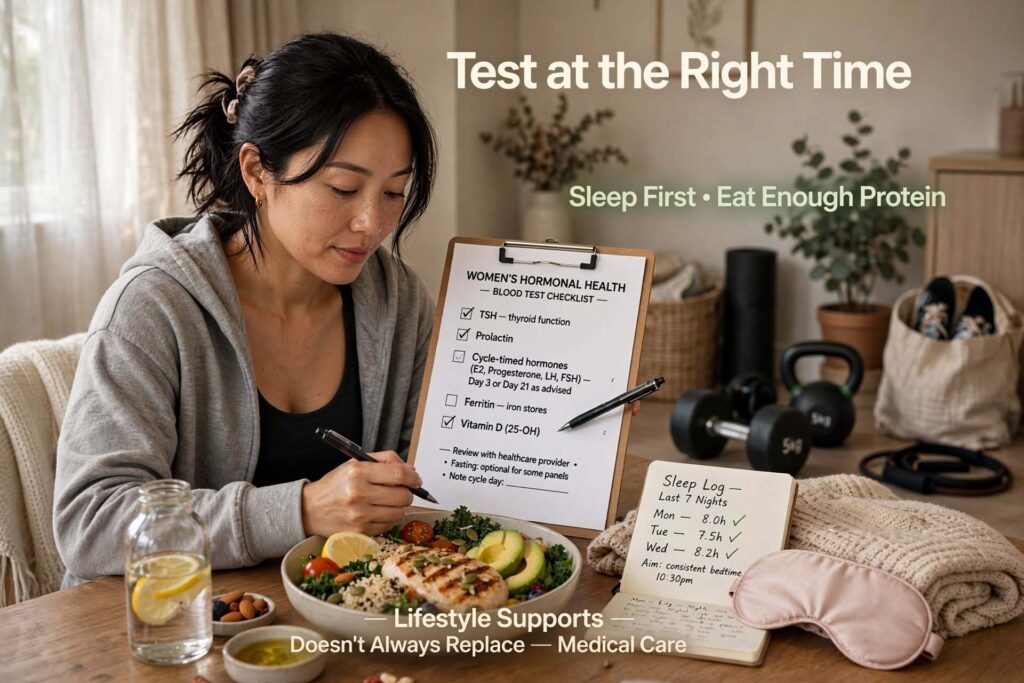
Women’s Hormonal Health Testing: What to Ask For and When
Testing without timing is one of the most common reasons women’s hormonal health workups come back unhelpful. Here’s a sensible approach.
- TSH, with free T4 if abnormal. Any day of the cycle.
- Prolactin. Preferably morning, not after exercise or a breast exam.
- FSH and estradiol. Typically measured on day 2 to 5 of your cycle when you still have periods.
- Progesterone. Measured about seven days after ovulation (around day 21 in a textbook 28-day cycle, but later if your cycle is longer). A single reading on a random day tells you very little.
- Total and free testosterone, DHEA-S, 17-hydroxyprogesterone. Useful if PCOS or other androgen excess is suspected.
- Fasting glucose, fasting insulin and HbA1c. Relevant for PCOS, weight changes and cycle irregularity.
- Ferritin, vitamin D and B12. Cheap, commonly low, and frequently responsible for symptoms blamed on “hormones.”
Saliva and urine “hormone panels” sold direct to consumers are usually not used by endocrinologists for diagnosis. Stick to validated blood tests ordered by a clinician who looks at them alongside your symptoms and cycle history.
What Actually Supports Women’s Hormonal Health
None of these are glamorous. All of them work better than a fifth supplement, and each has a direct effect on women’s hormonal health.
Sleep first
Sleep is the cheapest lever for women’s hormonal health. Short or fragmented sleep raises cortisol, worsens insulin sensitivity and increases hunger hormones the next day. Aim for seven hours or more with a consistent schedule. Morning daylight and dimmer evenings make a bigger difference than most people expect, which we explain in our guide to light hygiene and circadian health. Our sleep hygiene articles add practical routines.
Eat enough, and eat protein
Chronic under-eating is hard on women’s hormonal health and on the reproductive axis in particular. Women also tend to under-eat protein, which matters for muscle, satiety and blood sugar control. If you’re wondering how much is enough, our guide to protein powder for women breaks down targets and product choices, and our feature on sex-specific nutrition for women explains why women’s needs differ from the standard advice. Fibre, omega-3 fats, leafy greens, legumes, nuts and fermented foods round out a pattern that supports both gut and hormone health.
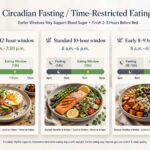
Meal timing also plays a role for some women, though it’s less clear-cut than social media suggests. If you’re curious, read our balanced look at circadian fasting and time-restricted eating. Be cautious with long fasting windows if your cycles are already irregular.
Move in ways that build, not drain
Two to three strength sessions a week, plus walking and some moderate cardio, supports insulin sensitivity, bone density, mood and overall women’s hormonal health. Daily intense training with minimal recovery can push you toward cycle disruption. Listen to your body, especially in the late luteal phase and during perimenopause.
Manage stress where it actually lives
Breathing exercises and meditation help, but so does fixing the structural stressors: workload, caregiving load, financial pressure, and lack of sleep. Our Mental Health section has practical tools, and our post on low-friction prevention shows how to build habits you’ll still follow in month six.
Be selective with supplements
Very few supplements move the needle for women’s hormonal health, but a few have reasonable evidence in specific situations:
- Inositol for PCOS (see our guide)
- Iron, only when blood tests show you need it
- Vitamin D, if tested low, which is common in many regions including India
- Magnesium, which some women find helpful for sleep and PMS
- Chasteberry (Vitex), which has modest evidence for PMS but can interact with hormonal medications
Adaptogens are popular but not all are equal. If you’re taking ashwagandha and wondering about alternatives, our review of shatavari and adaptogens beyond ashwagandha lays out what the evidence says. Browse the adaptogens tag too. One important note: ashwagandha can affect thyroid hormone levels, so tell your doctor if you have a thyroid condition or take thyroid medication.
Always check supplements with your clinician if you’re pregnant, breastfeeding, on hormonal contraception or taking prescription medication.
Women’s Hormonal Health Micro-Topics: Where to Go Next
This women’s hormonal health pillar page connects to a growing cluster of detailed guides. Pick the one that matches your situation.
- Cycle and period questions: Cycle syncing guide
- PCOS and insulin resistance: Inositol for PCOS and insulin resistance articles
- Perimenopause and menopause: Symptoms and management, natural remedies
- Fatigue, hair loss and heavy periods: Iron deficiency in women, hair fall solutions
- Nutrition and protein: Sex-specific nutrition, protein powder for women
- Stress, sleep and cortisol: Light hygiene, cortisol and stress
- Herbs and adaptogens: Shatavari and adaptogens
When to See a Doctor
Book an appointment promptly if you notice any of the following:
- No period for three months or longer and you’re not pregnant
- Bleeding that soaks a pad or tampon hourly for two hours, or lasts more than seven days regularly
- Any bleeding after menopause
- Sudden, rapid growth of facial or body hair, or a deepening voice
- Milky nipple discharge when not pregnant or breastfeeding
- Severe mood changes, panic attacks or thoughts of self-harm. These need urgent support, not another lifestyle tweak
- Difficulty conceiving after 12 months of trying (six months if you’re over 35)
Bring a cycle log, a list of symptoms with dates, and every supplement you take. That alone makes the appointment far more productive, because doctors can assess women’s hormonal health much more accurately with that history.
Frequently Asked Questions About Women’s Hormonal Health
1. What are the first signs of hormonal imbalance in women?
Cycle changes are usually the earliest signal: periods that arrive too early, too late, or not at all, along with heavier or lighter bleeding than normal. Persistent acne, new hair growth, fatigue, disrupted sleep and mood swings that clearly track your cycle are the next most common. If several appear together for three months, it’s worth a blood test.
2. Can you balance hormones naturally?
Sometimes, depending on the cause. Sleep, enough food and protein, strength training and stress reduction improve many cycle-related and metabolic problems. But conditions like hypothyroidism, hyperprolactinemia or premature ovarian insufficiency need medical treatment. Lifestyle supports treatment for women’s hormonal health; it doesn’t always replace it.
3. Which tests check women’s hormones?
Common tests include TSH, prolactin, FSH, estradiol, mid-luteal progesterone, testosterone, DHEA-S, fasting insulin and glucose. Timing matters: several have to be drawn on specific days of your cycle. Ask your doctor which ones fit your symptoms rather than ordering a giant panel.
4. Is estrogen dominance real?
It’s a popular term, not a formal medical diagnosis. The symptoms it describes, such as heavy periods, tender breasts and PMS, are real, but they usually trace back to anovulation, low progesterone, thyroid problems or fibroids. Getting those evaluated is more useful than treating a label.
5. What foods support women’s hormonal health?
There’s no magic food, but a consistent pattern helps: adequate protein at each meal, plenty of fibre from vegetables, legumes and whole grains, healthy fats from fish, nuts and olive oil, and enough total calories. Limiting ultra-processed food and excess alcohol supports steadier blood sugar and better liver clearance.
6. Does stress really affect women’s hormonal health?
Yes. Chronic stress keeps cortisol elevated or disrupts its daily rhythm, which can interfere with sleep, blood sugar and, in some women, ovulation. It rarely acts alone, but it often makes every other imbalance harder to correct.
7. How does PCOS affect hormones?
PCOS typically involves higher androgens and insulin resistance, which disrupt ovulation. This causes irregular cycles, acne, extra hair growth and sometimes difficulty conceiving. Management usually combines lifestyle changes, sometimes metformin or hormonal contraception, and targeted supplements such as inositol.
8. At what age does perimenopause start?
Most women notice changes in their mid-40s, though it can begin earlier, even in the late 30s. Early signs include shorter or more erratic cycles, sleep problems, worsening PMS and anxiety. Menopause is confirmed after 12 months without a period.
9. Can birth control cause or fix hormonal imbalance?
Hormonal contraception suppresses ovulation and gives a steady dose of synthetic hormones. It can effectively manage symptoms like painful periods, acne or heavy bleeding, but it doesn’t treat the underlying cause. The bleed you get on the pill is a withdrawal bleed, not a true period. Cycles may take several months to settle after stopping.
10. How long does it take to improve women’s hormonal health?
It depends on the cause. Sleep and stress improvements can shift symptoms within weeks, but a full cycle or three is the minimum to judge change. Thyroid treatment usually needs six to eight weeks before the dose is reassessed. Be wary of anyone promising a reset in seven days.
Final Thoughts
Women’s hormonal health is not a mystery you have to solve with guesswork. It’s a system that responds well to good sleep, proper nutrition, sensible training and timely medical testing, and it deserves a clinician who takes your symptoms seriously. Track your cycle, note what changes, get the right blood tests at the right time, and treat any quick-fix promise with healthy suspicion.
If you take one thing from this guide to women’s hormonal health, make it this: persistent symptoms are information, not personality flaws. Explore the linked guides above, and visit our Women’s Health section for more evidence-based support.
Disclaimer: this article is for general education and doesn’t constitute medical advice. Always consult a qualified healthcare provider about symptoms, tests, supplements or treatment. See our full disclaimer.





Leave a Reply