Fatigue, weight changes, feeling cold all the time, brain fog — thyroid symptoms are common enough that thyroid health natural support is one of the most consistently searched topics in wellness. The honest starting point, though, is one that most wellness content skips: no diet, supplement, or lifestyle change reverses a genuine thyroid disorder on its own. What the actual research supports is more modest, and more useful — specific nutrients and habits that can meaningfully support thyroid function alongside proper medical care, not instead of it.
Here’s what’s genuinely backed by evidence, and where the limits of “natural” support really are.
What Your Thyroid Actually Needs
Your thyroid produces hormones that regulate metabolism, energy, temperature, and much more — and it relies on specific nutrients to do that job properly. Hypothyroidism (underactive thyroid) most commonly stems from autoimmune conditions like Hashimoto’s thyroiditis, iodine deficiency, thyroid surgery, or medication side effects, while hyperthyroidism (overactive thyroid) usually requires direct medical treatment with antithyroid drugs or radioiodine therapy. Only a medical provider can accurately diagnose and treat either condition — but daily habits genuinely do influence how well your thyroid functions day to day, regardless of whether you have a diagnosed condition.
The Nutrients With Real Evidence Behind Them
A few specific nutrients have consistent research behind their role in thyroid function:
Iodine. Your thyroid needs iodine to produce hormones at all, and iodized salt, seafood, seaweed, and dairy are all natural dietary sources. Here’s the important nuance: iodine only helps if you’re actually deficient. Taking iodine supplements when you’re not deficient won’t improve thyroid function, and — this is genuinely important — excessive iodine intake can actually cause or worsen hypothyroidism. The safest approach is a regular, moderate dietary intake rather than high-dose supplementation, unless a doctor specifically recommends it based on confirmed deficiency.
Selenium. Your body needs selenium to convert T4 into T3, the active form of thyroid hormone, and it also protects thyroid tissue from oxidative damage. People with hypothyroidism, particularly those with Hashimoto’s thyroiditis, tend to have lower selenium levels, and some research suggests supplementation may help correct this imbalance specifically in autoimmune thyroid conditions. Brazil nuts (just 1–2 per day is typically enough), sunflower seeds, turkey, eggs, and tuna are good dietary sources. As with iodine, more isn’t better — excess selenium can be harmful, so sticking to recommended amounts and checking with a provider before high-dose supplementation matters here too.
Zinc and iron. Both play supporting roles in thyroid hormone production and are worth ensuring adequate intake of through diet, particularly for anyone with diagnosed deficiencies.
Vitamin D. Deficiency is common and has been linked to thyroid health in some research, making supplementation worth considering, especially during winter months with limited sun exposure — a topic we cover from a different angle in our Ayurvedic approach to vitamin D deficiency.
Ashwagandha. Some research and clinical practice suggests this adaptogenic herb may help manage the stress response that affects thyroid hormone balance, an angle we cover in more depth in our complete ashwagandha guide.
A fair caveat worth stating clearly: as one physician summarized it, there’s no strong evidence that a specific diet pattern or supplement protocol drives thyroid disease remission on its own. Correcting a genuine nutrient deficiency can meaningfully help; taking extra amounts when you’re not actually deficient generally doesn’t.
Gut Health and Thyroid Function
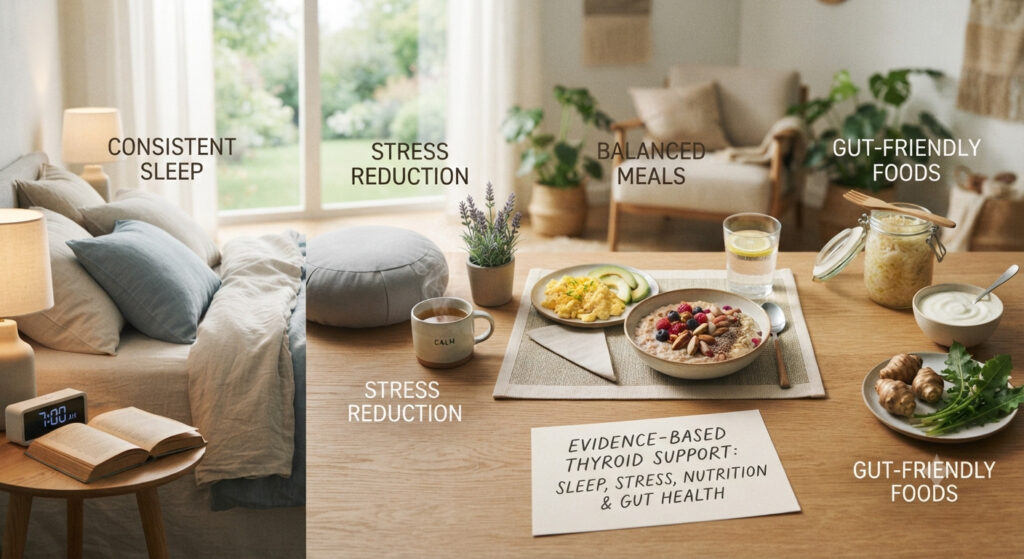
Your gut and thyroid are more connected than most people realize — a well-functioning gut microbiome supports better nutrient absorption generally, which in turn supports the hormone-production process the thyroid depends on. High-fiber foods (vegetables, fruits, beans, whole grains) and fermented foods (yogurt, kefir, miso, sauerkraut, kimchi) support this connection, and some clinicians specifically evaluate gut health as part of care for patients with autoimmune thyroid conditions like Hashimoto’s. This overlaps with the broader nutrient-absorption principles we cover in our guide on neem leaves for gut health.
Stress, Sleep, and Thyroid Hormones
Chronic stress disrupts the hormonal signaling pathways that regulate thyroid function, which is part of why stress management is consistently recommended alongside nutritional support. Mindfulness practices, yoga, and breathing exercises won’t reverse a diagnosed thyroid condition, but they can meaningfully improve overall wellbeing and help you better cope with thyroid-related symptoms day to day — echoing the same nervous system regulation themes we cover in our guide on cortisol and chronic stress. Adequate sleep supports overall hormone regulation broadly, an area we go into more depth on in our guide on sleep optimization without gadgets.
Foods and Substances Worth Moderating
A few dietary factors are worth understanding, though the actual impact is often more modest than online claims suggest:
- Raw cruciferous vegetables (broccoli, cabbage, kale) contain compounds called goitrogens that can inhibit iodine uptake by the thyroid in large amounts. Cooking these vegetables significantly reduces this effect, so enjoying them cooked rather than raw is a reasonable approach for anyone with existing thyroid concerns, without needing to avoid them entirely.
- Soy products may interfere with thyroid hormone absorption in some people, particularly relevant to timing around thyroid medication.
- Iron supplements can interfere with thyroid medication absorption if taken too close together, so spacing them out by several hours (as directed by your doctor or pharmacist) matters if you take both.
- Excess iodine sources, including some seaweed products and high-dose supplements, can worsen thyroid conditions in susceptible individuals — more is genuinely not better here.
What Natural Approaches Can’t Do
This is the most important section of this guide. According to endocrinologists and thyroid specialists, there’s no strong evidence that a specific diet or supplement protocol causes remission of a genuine thyroid condition. Some cases of hypothyroidism or hyperthyroidism are transient — caused by medications, illness, or pregnancy — and can resolve on their own without ongoing treatment. But many thyroid conditions, particularly autoimmune ones like Hashimoto’s or Graves’ disease, require real medical management, most commonly thyroid hormone replacement medication, monitored through regular blood testing.
Natural strategies genuinely can complement medical treatment — supporting symptom management and overall wellbeing — but they should never be used as a substitute for prescribed treatment or as a reason to skip diagnostic testing if you’re experiencing thyroid-related symptoms.
Frequently Asked Questions About Thyroid Health Natural Support
Can you naturally cure hypothyroidism? No credible evidence supports natural remedies “curing” hypothyroidism, particularly autoimmune cases like Hashimoto’s thyroiditis. Correcting a genuine nutrient deficiency (iodine, selenium) may help support function, but most diagnosed thyroid conditions require ongoing medical management.
What is the best natural supplement for thyroid health? There isn’t a single best supplement for everyone — it depends on your specific deficiencies. Selenium has some evidence for supporting T4-to-T3 conversion, particularly in autoimmune thyroid conditions, while iodine only helps if you’re genuinely deficient. Testing before supplementing is the safest approach.
Is too much iodine bad for your thyroid? Yes. While iodine deficiency causes low thyroid hormone levels, excessive iodine intake can actually cause or worsen hypothyroidism. Moderate dietary intake is generally safer than high-dose supplementation unless a doctor confirms you’re deficient.
Do cruciferous vegetables hurt your thyroid? Only in large, regularly consumed raw quantities, and the effect is generally modest. Cooking cruciferous vegetables like broccoli and kale significantly reduces the goitrogenic compounds that can interfere with iodine uptake, so there’s no need to avoid them entirely.
A Note From Health Morph
This article is for informational purposes only and isn’t a substitute for personalized medical advice. Thyroid conditions require proper diagnosis through blood testing and, in most cases, ongoing medical management. If you’re experiencing symptoms of thyroid dysfunction, please see a doctor before starting any supplement regimen, especially iodine or selenium, which can cause harm at high doses.
For more evidence-based nutrition guidance, explore our Nutrition & Diet section, or read our related guide on magnesium for sleep and anxiety for more on supporting overall hormone balance naturally.







Leave a Reply