
High blood pressure has no symptoms to speak of, and that’s exactly why Ayurvedic remedies for high blood pressure are so easy to get wrong. You sip a herbal tea, feel calmer, and decide it’s working. Your arteries, meanwhile, don’t care how you feel. The only thing that tells you whether any remedy is helping is a number on a validated blood pressure monitor.
I went through the trials, the Cochrane reviews and the safety data for the seven Ayurvedic remedies for high blood pressure on this list. Some Ayurvedic remedies for high blood pressure deserve a place in your routine. One of them, sarpagandha, is the origin story of modern blood pressure medicine and can do real harm when it’s used as a “natural” supplement. And a few have much thinner evidence than the confident labels suggest. You’ll find the evidence for each, how to use it, the hidden hazards in Ayurvedic products that raise blood pressure instead of lowering it, a 12-week plan built around a home monitor, and the readings that mean you need a doctor today, not a decoction.
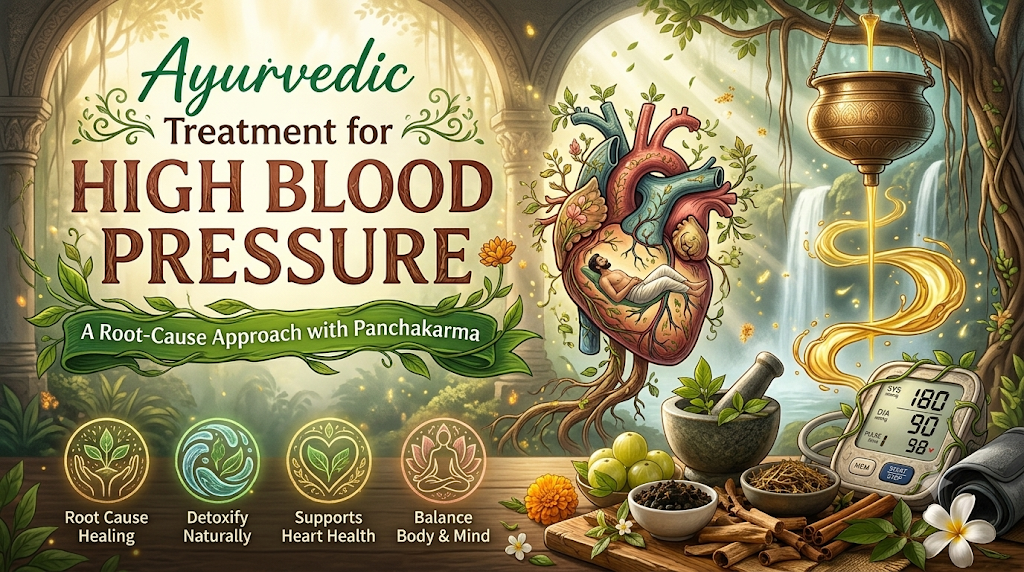
Please don’t stop or reduce prescribed blood pressure medicines on your own, and don’t start a herb alongside them without telling your doctor. If your reading is 180/120 or higher, or you have chest pain, breathlessness, a severe headache, weakness or trouble speaking, seek emergency care.
First, know your number before trying Ayurvedic remedies for high blood pressure
Roughly one in three Indian adults has hypertension, according to large national surveys, and a good share of them don’t know it or aren’t controlled. Treat that figure as approximate, but the picture is clear: it’s common, it’s silent, and it quietly raises the risk of stroke, heart attack, kidney disease and heart failure.
A quick guide to the numbers behind Ayurvedic remedies for high blood pressure:
- Normal: below 120/80 mmHg
- Hypertension in the clinic: repeatedly 140/90 or higher (some guidelines use 130/80)
- Hypertension at home: an average of about 135/85 or higher over a week
- Danger zone: 180/120 or higher, which needs urgent attention
How to measure it so the number means something: sit quietly for five minutes, back supported, feet flat, arm resting at heart height, no tea or coffee or smoking for 30 minutes beforehand. Take two readings a minute apart, morning and evening, for seven days, and write them down. A validated upper-arm monitor costs less than most Ayurvedic courses and is the one tool that will tell you whether anything you try is working.
The scorecard for Ayurvedic remedies for high blood pressure
| Remedy | Best evidence | What it means | Verdict |
|---|---|---|---|
| Pranayama (slow breathing) | Meta-analyses: systolic down about 5 to 7 mmHg | Modest, real, low risk | Best-supported |
| Garlic | Meta-analyses: systolic down about 5 to 8 mmHg in hypertensives | Mostly supplements; some industry funding | Reasonable add-on |
| Sarpagandha | Its alkaloid reserpine is a real drug; Cochrane review shows it lowers blood pressure | Crude root is unstandardised and risky | Doctor only |
| Tulsi | A 2017 review of 24 human studies; 6 measured blood pressure | Small, mixed quality | Possible, thin |
| Arjuna | Small trials, mostly in angina and heart failure | Little data on blood pressure itself | Thin |
| Brahmi | Memory studies; blood pressure claims rest on animal work | Not an established antihypertensive | Thin |
| Shirodhara | No blood pressure trials I could find | Relaxation therapy | Comfort, not treatment |
Pranayama: the best-evidenced of the Ayurvedic remedies for high blood pressure
This is the most pleasant surprise among Ayurvedic remedies for high blood pressure, and it needs no purchases.
A 2019 meta-analysis in Complementary Therapies in Medicine pooled 17 trials of slow breathing, both device-guided and non-device pranayama, in people with hypertension or prehypertension. Slow breathing lowered systolic pressure by about 5.6 mmHg and diastolic by about 3 mmHg, though the trials varied a lot. The authors concluded it may be a reasonable first approach for low-risk people who are reluctant to start medicine. A 2024 meta-analysis of 15 studies of breathing exercises reported larger average drops (about 7 mmHg systolic and 3.4 diastolic) and a small fall in heart rate, while noting a risk of bias in the studies. And a 2013 meta-analysis of yoga for hypertension found an average drop of about 4 mmHg systolic and 3.6 diastolic, rising to about 8 and 6 mmHg when the programme combined postures, breathing and meditation, not just one element.
Those aren’t dramatic numbers on their own for Ayurvedic remedies for high blood pressure. For perspective, a 5 mmHg fall in systolic pressure across a population is associated with a meaningful reduction in strokes and heart disease. And the practice costs nothing and has few downsides.
What to practise
- Slow breathing, around six breaths a minute. Breathe in for about four seconds and out for about six, smoothly, with no strain. Our guide to the vagus nerve reset shows the technique step by step.
- Anulom vilom (alternate nostril breathing), gently, at an easy pace, with no breath holding. In trials of hypertensive patients, anulom vilom and bhramari have been among the practices studied.
- Bhramari (bee breath), humming on the exhale. A small trial found it lowered blood pressure and changed heart rate variability within minutes, which also fits with what we say about humming in the vagus nerve piece.
- Shavasana or yoga nidra, for deep relaxation.
Aim for 10 to 20 minutes daily, ideally at a regular time. If you want help building the habit, our article on low-friction prevention explains how to tie it to something you already do, and our guide to nervous system regulation explains how to choose a technique for how you feel.
What to avoid if you have high blood pressure
Not all pranayama is calming. Fast, forceful practices such as kapalbhati and bhastrika, long breath retention (kumbhaka), and strenuous inversions can raise blood pressure temporarily and aren’t suitable if your pressure is uncontrolled. If you have heart disease, a history of stroke, glaucoma or severe lung disease, ask your doctor before starting. And stop if you feel dizzy.
Garlic among Ayurvedic remedies for high blood pressure
Garlic has the best evidence among the herbal Ayurvedic remedies for high blood pressure, with a caveat about who paid for it.
A 2016 meta-analysis by Karin Ried and colleagues covering 20 trials with about 970 people found that garlic supplements reduced systolic pressure by about 5 mmHg and diastolic by about 2.5 mmHg compared with placebo, with larger effects in people who actually had hypertension. A 2020 update that looked only at hypertensive participants (12 trials, 553 people) found an average drop of about 8 mmHg systolic and 5.5 diastolic. In the 2016 “AGE at Heart” trial, 88 people with uncontrolled hypertension took aged garlic extract for 12 weeks; average systolic pressure fell about 5 mmHg compared with placebo, and by about 11.5 mmHg in the people who responded. An earlier review noted effects comparable to some standard drugs, though not as large as a full-dose tablet. A separate meta-analysis of 17 trials found a smaller average effect (about 3.75 mmHg systolic) that was significant only in people with raised pressure.
The caveats:
- Much of the research is on supplements, with doses of 600 to 900 mg of garlic powder a day, or aged garlic extract, and several of the trials were funded by a garlic supplement maker.
- Results vary, and effects are modest.
- Trials are short, and none show that garlic prevents strokes or heart attacks.
How to use garlic among Ayurvedic remedies for high blood pressure in food: the researchers noted that the trial doses are equivalent to about 3.6 to 5.4 mg of allicin, and that a fresh clove contains roughly 5 to 9 mg, so one to two cloves a day is in the right range as a food amount. The active compound forms when garlic is crushed or chopped, so crush it and let it sit for about ten minutes before cooking, and add it late in cooking, since heat reduces it. Raw garlic can irritate the stomach and cause heartburn, so eat it with food.
Safety: garlic can slightly thin the blood. Tell your doctor if you take warfarin or other blood thinners, and stop concentrated garlic supplements before surgery, as advised by your surgeon. The aged garlic extract trial reported no increase in bleeding in participants on blood thinners, but it was a small study. Garlic can also interact with certain HIV medicines. It’s fine in normal food amounts for most people.
Sarpagandha: the Ayurvedic remedy for high blood pressure that isn’t a DIY herb
This is the one to take seriously, and the reason Ayurvedic remedies for high blood pressure need a safety warning.
Sarpagandha (Rauvolfia serpentina, Indian snakeroot) is the plant that started modern blood pressure treatment. It was used in India for centuries, and an Indian paper in 1931 described it, Dr Rustom Vakil published a famous report in the British Medical Journal in 1949 on 50 patients with high blood pressure treated with the root, and the main alkaloid, reserpine, was isolated in 1952. For about a decade, it was among the first effective blood pressure drugs in the world.
Why it’s not a casual herb among Ayurvedic remedies for high blood pressure:
- Reserpine is a real, potent drug, and the crude root contains it in varying amounts. The reserpine content of the dried root is often quoted at roughly 0.1 to 0.2%, but it varies with the plant, its age, the part used and how it’s processed, and herbal products aren’t standardised.
- The side effects are well known. Nasal stuffiness is the commonest at low doses, and other effects include drowsiness, a slow heart rate, stomach upset or ulcers, vivid dreams and weight gain. The most serious is depression, which is a big part of why reserpine fell out of favour.
- It adds to other blood pressure medicines, so combining it with tablets can drop your pressure too far. It also interacts with some antidepressants (particularly MAO inhibitors) and other drugs.
- It isn’t suitable in pregnancy or breastfeeding, or for people with depression, peptic ulcers or certain other conditions.
What the research says on Ayurvedic remedies for high blood pressure like this one: a Cochrane review of reserpine for primary hypertension (Shamon and Perez, updated in 2016) found that reserpine does lower systolic blood pressure to a mild to moderate degree compared with placebo. But it included only four trials, couldn’t determine a dose-response, and called for more studies. Low-dose reserpine, a few hundredths of a milligram to a quarter of a milligram a day, is still occasionally used by doctors, particularly where cost matters. That is a prescribed, measured dose of a purified drug. It’s not the same as swallowing root powder from a shop.
My practical advice on Ayurvedic remedies for high blood pressure: if you’re interested in sarpagandha, ask a qualified doctor or Ayurvedic physician who works alongside your cardiologist. Don’t buy it over the counter and take it on top of your tablets, and don’t use it if you’re pregnant or have a history of low mood. Wild harvesting has also threatened the plant in India, so products can be adulterated or substituted, which is another reason to be careful about where it comes from.
Tulsi (holy basil) as one of the Ayurvedic remedies for high blood pressure
A 2017 systematic review in Evidence-Based Complementary and Alternative Medicine (Jamshidi and Cohen) found 24 human studies of tulsi, with outcomes including blood sugar (8 studies), cholesterol (6), blood pressure (6), immunity, mood and stress. All reported favourable results, and none reported significant side effects. The studies ranged from 2 to 13 weeks, used different forms and doses, and only a few were high quality. The authors called for more research to clarify dose, form and who benefits.
So tulsi may help a bit among Ayurvedic remedies for high blood pressure, particularly where stress is part of the picture, but I can’t give you a reliable blood pressure number. If you like tulsi tea, a few leaves steeped in hot water is a pleasant, low-risk habit. Be a little careful if you take diabetes medicines, since tulsi may lower blood sugar. Concentrated extracts aren’t advised in pregnancy, and if you take blood thinners, mention it to your doctor.
Arjuna among Ayurvedic remedies for high blood pressure
Arjuna (Terminalia arjuna) bark is the classic Ayurvedic “heart tonic”. Most of the human research I know of looks at angina and heart failure, in small trials, and the findings are encouraging but modest. I couldn’t find a large, convincing trial of arjuna bark specifically for blood pressure, so it belongs in the “traditional, plausible, unproven for this” box.
If you use it, the usual forms are bark powder boiled in milk (arjuna kshirapaka) or standardised extracts. Arjunarishta, a fermented tonic, contains a small amount of alcohol, which matters if you avoid alcohol or take certain medicines. Arjuna may add to the effect of heart and blood pressure drugs, so tell your doctor, particularly if you have heart disease.
Brahmi among Ayurvedic remedies for high blood pressure
Brahmi is usually Bacopa monnieri, and its reputation is for memory and stress, not blood pressure. The blood pressure claims rest largely on animal studies suggesting relaxation of blood vessels. Human trials of bacopa have focused on memory and have not established it as a blood pressure treatment. I covered what is and isn’t known in our guide to nootropics. Bacopa can cause stomach upset and may slow the heart rate in some people, so be cautious if you take medicines for blood pressure, heart rhythm or thyroid problems.
Shirodhara among Ayurvedic remedies for high blood pressure
Shirodhara, a stream of warm oil poured slowly over the forehead for 30 to 45 minutes, is one of Ayurveda’s best-known therapies for stress and sleep. I couldn’t find good randomised trials showing it lowers blood pressure. Small pilot studies have looked at relaxation and heart rate, but nothing I’d call proof. What it undoubtedly is: a deeply relaxing treatment. Because stress raises blood pressure in the short term, feeling calm may bring a temporary dip.
Treat it as comfort, not one of the treatments among Ayurvedic remedies for high blood pressure. A multi-session course usually costs more than a good home blood pressure monitor, which is the thing that will tell you whether any therapy is helping, so if budget is limited, spend there first. Make sure the oil isn’t too hot, and tell the therapist about any heart condition, skin allergy, ear problem or pregnancy.
The hidden hazards in Ayurvedic remedies for high blood pressure: products that can raise it
This is the part most complete guides to Ayurvedic remedies for high blood pressure skip, and it matters more than any herb on the list.
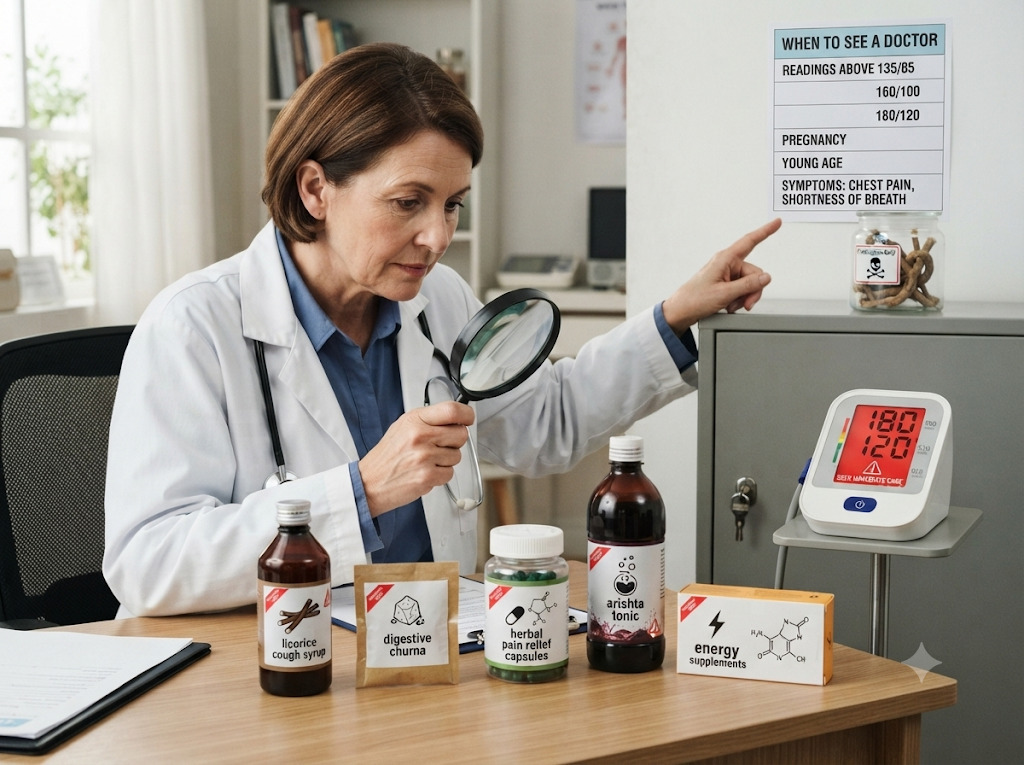
- Licorice (mulethi, yashtimadhu). It’s a common ingredient in Ayurvedic cough syrups, tonics and digestive formulas. Licorice can raise blood pressure and lower potassium, and it’s a well-documented cause of hypertension. Check labels.
- Salt-rich preparations. Some traditional digestive powders, churnas and pickles contain a lot of salt, including black salt. As ICMR’s guidelines note, black and rock salt have no meaningful sodium advantage over table salt.
- Hidden anti-inflammatory or steroid drugs. Some unregulated “herbal” pain and joint products have been found to contain undeclared medicines, and anti-inflammatory painkillers (NSAIDs) and steroids can raise blood pressure.
- Heavy metals. A 2008 JAMA survey of Ayurvedic medicines sold online found that about one in five contained detectable lead, mercury or arsenic. Be especially careful with bhasma and rasa preparations unless they’re from a reputable, tested manufacturer.
- Alcohol in arishtas and asavas. These fermented tonics contain a few percent alcohol.
- Stimulants. Some weight-loss, energy and “tonic” products contain stimulants that raise blood pressure.
- Bitter lauki (bottle gourd) juice. It’s a popular home remedy for blood pressure, but bitter-tasting bottle gourd juice has been linked to poisoning cases in India. If the juice tastes bitter, spit it out and don’t drink it.
For general guidance on herbs and supplements, our supplement safety articles are a good starting point.
What matters more than Ayurvedic remedies for high blood pressure
If blood pressure is the goal, these have bigger effects than any of the Ayurvedic remedies for high blood pressure. The figures below are typical average effects quoted in major guidelines, so treat them as rough.
| Change | Typical effect on systolic pressure |
|---|---|
| DASH-style eating (more vegetables, fruit, dal, low-fat dairy, less salt) | About 8 to 11 mmHg in people with hypertension |
| Cutting salt | About 5 to 6 mmHg |
| Brisk exercise (about 150 minutes a week) | About 5 to 8 mmHg |
| Losing weight | About 1 mmHg per kilogram |
| More potassium from food | About 4 to 5 mmHg |
| Less alcohol | About 4 mmHg |
| Medicine when needed | Often 10 to 20 mmHg or more with combinations |
Salt deserves special attention in India, whatever Ayurvedic remedies for high blood pressure you choose. ICMR-NIN’s 2024 guidelines recommend under 5 g a day, and estimates of actual intake are around 8 to 11 g. ICMR researchers say that switching to low-sodium salt can lower blood pressure by about 7/4 mmHg on average, though it isn’t suitable for people with kidney disease or on potassium-restricted diets. Our guide to habits to quit for better health goes through where the hidden salt comes from. And our piece on raisins benefits covers the potassium angle, including the caution for people on ACE inhibitors.
Sleep, stress and loneliness count too. Poor sleep raises blood pressure, and sleep apnoea is an under-diagnosed cause. Our guides to sleep hygiene, cortisol and stress and the loneliness epidemic cover the wider picture.
A 12-week plan for Ayurvedic remedies for high blood pressure, built around a home monitor
Weeks 0 to 2: measure and baseline. Take readings morning and evening for seven days. See a doctor if your average is above about 135/85, or sooner if it’s higher. Start cutting salt and packaged food. Begin 10 minutes a day of slow breathing. Add one to two crushed cloves of garlic to your food.
Weeks 3 to 8: build the habits. Increase slow breathing to 15 to 20 minutes. Walk briskly for 30 minutes most days. Move towards a DASH-style plate. If you want to try tulsi tea, add it now. Make one change at a time, so you can see what helps.
Weeks 9 to 12: review. Take another week of readings and share the log with your doctor. If your average has dropped, ask whether your treatment can be adjusted. If it hasn’t, that isn’t a failure. It means you need medicine, and lifestyle changes will still make the medicine work better.
| Your 7-day home average | What to do |
|---|---|
| Below 130/80 | Keep going; recheck periodically |
| 130 to 134 / 80 to 84 | Strengthen lifestyle changes; recheck in a few weeks |
| 135/85 or higher | See a doctor; medicine is likely to be advised |
| 160/100 or higher | See a doctor promptly |
| 180/120 or higher | Urgent: seek care the same day, or an emergency department with symptoms |
If you combine Ayurvedic remedies for high blood pressure with medicines
- Tell your doctor about all Ayurvedic remedies for high blood pressure you use, including powders, teas and tonics.
- Don’t stop tablets because a herb “is working”.
- Add one thing at a time, and keep a log.
- Watch for low blood pressure: dizziness on standing, fatigue, blurred vision, fainting. If it happens, speak to your doctor, who may need to adjust your dose.
- Don’t double up on sarpagandha-type or other potent herbs.
- Buy from reputable sources, and keep the packaging.
When to see a doctor instead of Ayurvedic remedies for high blood pressure, or go to the emergency department
Go to emergency care for a reading of 180/120 or higher with chest pain, breathlessness, a severe headache, confusion, vision changes, weakness, trouble speaking or seizures. See a doctor the same day for 180/120 or higher without symptoms.
Also get checked if:
- You’re pregnant and your pressure is 140/90 or higher, especially with headache, swelling or vision changes
- You’re under 40 with hypertension, because secondary causes need to be ruled out
- Your pressure stays high despite treatment
- You have diabetes, kidney disease, heart disease or a history of stroke
- You feel dizzy or faint on standing
If you’ve been searching symptoms online first, our article on AI self-diagnosis and digital health explains how to use that research without letting it make the decision.
Where to go next
- Breathing and calm: Vagus nerve reset, Nervous system regulation
- Salt, food and habits: Habits to quit for better health, Raisins benefits, Low-friction prevention
- Sleep and stress: Sleep hygiene, Cortisol and stress, The loneliness epidemic
- Herbs and safety: Supplement safety, Adaptogens, Nootropics (includes bacopa), Amla benefits
- Blood sugar and metabolism: Blood sugar, Insulin resistance
- More guides: Health & Wellness
Questions people ask about Ayurvedic remedies for high blood pressure
Can Ayurvedic remedies for high blood pressure replace tablets?
No. Meta-analyses show that pranayama and garlic can lower pressure a few mmHg, but that’s smaller than most medicines, and nothing here has been shown to prevent strokes or heart attacks. Use them alongside your prescribed treatment, not instead of it.
Which of the Ayurvedic remedies for high blood pressure has the best evidence?
Slow-breathing pranayama has the best evidence, with meta-analyses reporting average systolic drops of roughly 5 to 7 mmHg. Garlic comes next, with about 5 to 8 mmHg in people with hypertension, though many trials were industry-funded.
Is sarpagandha among the safe Ayurvedic remedies for high blood pressure?
Only under medical supervision. Its active alkaloid, reserpine, does lower blood pressure, according to a Cochrane review, but crude root powder isn’t standardised and can cause nasal stuffiness, slow heart rate, stomach problems and depression. It adds to other blood pressure medicines and isn’t suitable in pregnancy.
Does arjuna bark work among Ayurvedic remedies for high blood pressure?
Arjuna is a traditional heart tonic with small trials in angina and heart failure, but I couldn’t find a large trial showing it lowers blood pressure. Tell your doctor before using it with heart or blood pressure medicines.
Is brahmi one of the good Ayurvedic remedies for high blood pressure?
Not proven. Brahmi (bacopa) is studied for memory and stress, and blood pressure claims rest mostly on animal research. It can slow the heart rate in some people.
Does tulsi work among Ayurvedic remedies for high blood pressure?
Possibly a little. A 2017 review of 24 human studies found favourable results, with six measuring blood pressure, but the studies were small and varied in quality.
Does shirodhara help blood pressure?
There are no good trials showing it does. It’s a relaxing therapy that may temporarily lower stress-related blood pressure, but treat it as comfort, not treatment.
How much garlic should I eat as one of the Ayurvedic remedies for high blood pressure?
One to two crushed cloves a day in food is a reasonable amount, similar to the allicin content in trials. Trials mostly used garlic powder or aged extract. Tell your doctor if you take blood thinners.
Which pranayama is safe among Ayurvedic remedies for high blood pressure?
Slow, gentle breathing, alternate nostril breathing without breath holding, and bhramari are generally considered safe. Avoid kapalbhati, bhastrika, long breath retention and strenuous inversions if your pressure is uncontrolled.
What can raise blood pressure in Ayurvedic remedies for high blood pressure?
Licorice (mulethi), high-salt preparations, hidden steroids or anti-inflammatory drugs, stimulants, alcohol in arishtas and heavy-metal contaminants. Check labels and tell your doctor everything you take.
The short version
The most useful Ayurvedic remedies for high blood pressure are the ones that don’t come in a bottle: slow, gentle pranayama for 10 to 20 minutes a day, garlic in your food, less salt and a daily walk. Arjuna, tulsi, brahmi and shirodhara may suit you, but the evidence for blood pressure itself is thin. Sarpagandha is genuinely powerful, and that’s exactly why it shouldn’t be a DIY remedy. And no herb is a reason to stop a tablet.
If you do one thing for Ayurvedic remedies for high blood pressure this week, buy or borrow a validated home monitor, take readings for seven days, and bring the log to your doctor. Then start ten minutes of slow breathing a day. Both are cheap, and one of them will tell you whether the other is working.
Disclaimer: this article is general education, not medical advice. Always consult a qualified healthcare professional before using any herb or therapy for high blood pressure, particularly if you take medication, are pregnant or have heart, kidney or liver disease. See our full disclaimer.
Research referenced: the 2019 meta-analysis of device and non-device slow breathing for blood pressure (Complementary Therapies in Medicine); the 2024 meta-analysis of breathing exercises on blood pressure and heart rate; the 2013 meta-analysis of yoga for hypertension and the 2019 Mayo Clinic Proceedings meta-analysis of yoga as antihypertensive therapy; Ried’s meta-analyses of garlic and blood pressure (2016 and 2020) and the AGE at Heart trial; the Cochrane review of reserpine for primary hypertension and a historical review of Rauwolfia in hypertension; the 2017 systematic review of tulsi in humans; Saper et al., JAMA, 2008, on heavy metals in Ayurvedic products; and ICMR-NIN’s 2024 dietary guidelines on salt.





Leave a Reply