
You did everything right. Lights off by 11, phone on the nightstand, a full eight hours logged on your fitness tracker. And yet you woke up feeling like you’d barely slept at all.
You’re far from alone. Government health survey data shows about 30.5% of American adults sleep less than seven hours a night, and separate CDC tracking has found that roughly a third of U.S. adults report not getting enough sleep in any given year. But hitting your hours isn’t the same as waking up rested — sleep specialists say quantity and quality are two completely different things, and one can look fine while the other quietly falls apart.
Here are the 10 most common — and most overlooked — reasons your body isn’t getting the rest it needs, according to sleep and health experts, plus what actually helps.
1. You’re Getting Enough Sleep, But Not Enough Deep Sleep
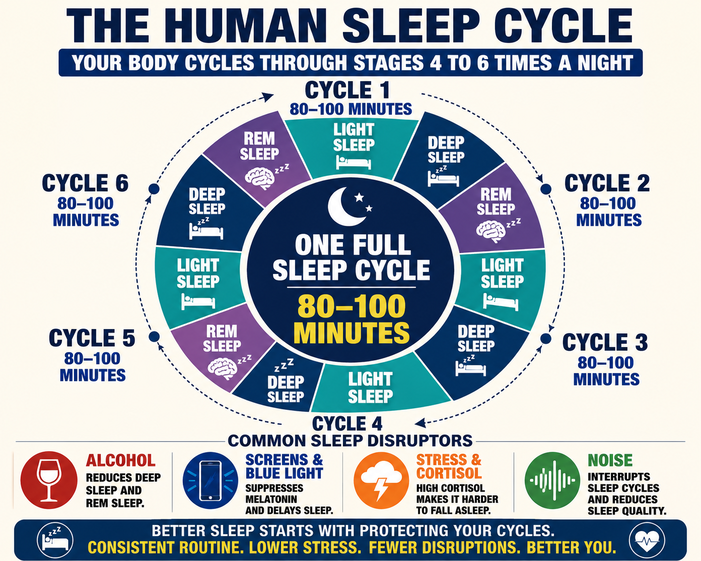
Sleep isn’t one long block — it cycles through light sleep, deep sleep, and REM sleep roughly every 80 to 100 minutes, several times a night. Physical repair mostly happens during deep sleep; if something (noise, alcohol, stress) keeps nudging you out of that stage, you can technically log eight hours while your body barely gets any real recovery time.
What helps: Keep your room cool (around 65–68°F), dark, and quiet, and avoid alcohol within 3 hours of bedtime, since it fragments deep sleep even though it can help you fall asleep faster.
2. Undiagnosed Sleep Apnea
This is one of the most common medically overlooked causes of “sleeping enough but never feeling rested.” The American Academy of Sleep Medicine estimates that around 30 million Americans have obstructive sleep apnea, and the majority remain undiagnosed. The airway briefly collapses during sleep, oxygen dips, and the brain triggers “micro-awakenings” you never remember — but they’re enough to block deep sleep entirely.
Red flags: loud snoring, gasping or choking sounds during sleep, morning headaches, and a partner noticing pauses in your breathing.
3. Your Sleep Timing Doesn’t Match Your Body Clock
Behavioral sleep medicine experts point out that sleep quality depends on chronotype alignment, not just hours logged. If you’re naturally a night owl forcing yourself into an early-bird schedule (or vice versa), you can sleep a full eight hours out of sync with your circadian rhythm and still wake up groggy.
4. Iron, Vitamin D, or B12 Deficiency
Low iron, low vitamin D, and low B12 are among the most common nutritional causes of fatigue that has nothing to do with how you slept. These deficiencies are widespread and easy to miss because the fatigue feels constant rather than tied to any one bad night.
What helps: A simple blood panel from your doctor can rule this in or out — don’t guess with supplements first.
5. Chronic Stress and Elevated Cortisol
When your body is under ongoing stress, cortisol — your primary “alert” hormone — stays elevated even at night. That keeps you cycling through lighter sleep stages instead of deep, restorative ones, so you can wake up mentally exhausted despite a full night in bed.
6. Blood Sugar Swings Overnight
Large blood sugar spikes and crashes, often from a high-carb dinner or late-night snacking, can disrupt sleep architecture and trigger subtle awakenings you don’t consciously register. This is a growing area of interest in metabolic health research and one reason a heavy, sugary dinner can leave you groggier than a lighter one.
7. Screen Light Close to Bedtime
According to the National Sleep Foundation, blue light from phones, laptops, and TVs can suppress melatonin release and signal to your brain that it’s still daytime. Even if you fall asleep on schedule, this can delay when your deepest sleep stages kick in.
What helps: Aim to put screens away 60–90 minutes before bed, or use night mode/blue-light filters as a fallback.
8. Thyroid Imbalances
An underactive thyroid (hypothyroidism) slows metabolism and is a well-documented cause of persistent tiredness, even with adequate sleep. It’s frequently missed because fatigue is often the only early symptom.
9. Depression or Anxiety Affecting Sleep Architecture
Mental health conditions don’t always present as sadness or worry — they often show up first as unrefreshing sleep. Clinicians note that people with depression frequently report feeling tired no matter how long they sleep, because the condition itself interferes with deep sleep stages.
10. Dehydration
Even mild dehydration reduces blood volume and oxygen delivery, which can leave you feeling sluggish the moment you wake up — regardless of how well you actually slept. It’s one of the simplest causes to rule out and fix.
Sleep Quantity vs. Sleep Quality: What’s Actually Making You Tired?
| Factor | Sleep Quantity Problem | Sleep Quality Problem |
|---|---|---|
| What it means | Not enough total hours in bed | Enough hours, but poor restorative sleep |
| Common cause | Late nights, early alarms, insomnia | Sleep apnea, stress, alcohol, poor timing |
| How it feels | Sleepy, yawning, easy to fall asleep anywhere | Groggy, foggy, “unrefreshed” even after 8+ hours |
| First fix to try | Adjust bedtime/wake time for 7–9 hours | Improve sleep environment, reduce alcohol, screen curfew |
| When to see a doctor | If you can’t get 7+ hours despite trying | If fatigue persists 2–4 weeks despite adequate hours |
Quick Self-Check: Is It Time to See a Doctor?
Use this checklist. If you check two or more boxes, it’s worth booking an appointment rather than troubleshooting on your own:
- Loud snoring or gasping for air during sleep (reported by a partner or noticed yourself)
- Morning headaches or a dry mouth most days
- Fatigue that has lasted more than 2–4 weeks despite 7–9 hours of sleep
- Unexplained weight changes alongside tiredness
- Persistent low mood, anxiety, or loss of interest in things you usually enjoy
- Cold intolerance, dry skin, or hair thinning (possible thyroid signs)
- Needing caffeine just to function normally through the day
- Falling asleep unintentionally during the day (driving, meetings, reading)
A Simple Sleep-Quality Checklist to Try This Week
- Keep a consistent sleep and wake time, even on weekends
- Cut off caffeine at least 8 hours before bed
- Avoid alcohol within 3 hours of sleep
- Put screens away 60–90 minutes before bedtime
- Keep the bedroom cool, dark, and quiet
- Avoid large, heavy, or sugary meals close to bedtime
- Drink enough water during the day (not right before bed)
- Track your sleep for 1–2 weeks to spot patterns
When to See a Doctor
Occasional grogginess is normal — everyone has an off morning. But sleep specialists generally agree it’s time to get checked out if:
- Fatigue lasts more than 2–4 weeks despite consistently getting 7–9 hours of sleep
- You or a partner notice loud snoring, gasping, or breathing pauses during sleep
- You experience morning headaches, a dry mouth, or waking up with a racing heart
- You’ve had unexplained weight changes, hair thinning, or feeling cold all the time
- Low mood, anxiety, or loss of interest in things has crept in alongside the tiredness
- You’ve caught yourself dozing off during the day — driving, in meetings, or mid-conversation
None of these confirm a diagnosis on their own, but any one of them is a reasonable reason to book an appointment rather than wait it out.
Tests Your Doctor May Recommend
Depending on your symptoms, a doctor may suggest a few simple ways to narrow down the cause:
- Complete blood count (CBC) and ferritin/iron panel — checks for iron-deficiency anemia, a common and treatable cause of fatigue
- Thyroid panel (TSH, sometimes T3/T4) — rules in or out an underactive or overactive thyroid
- Vitamin D and B12 levels — both are easy to test and commonly low in people with chronic tiredness
- Fasting glucose or HbA1c — screens for blood sugar issues that can quietly disrupt sleep
- Home sleep apnea test or in-lab polysomnography (sleep study) — recommended if snoring, gasping, or witnessed breathing pauses are present
- Basic depression/anxiety screening questionnaire — since mood conditions frequently show up first as unrefreshing sleep, not sadness
Your doctor will typically start with blood work, since it’s quick and inexpensive, before moving on to a sleep study if needed.
Quick Tips to Boost Energy Naturally
While you’re figuring out the root cause, these habits can help most people feel more energized day-to-day:
- Get sunlight within an hour of waking — natural light helps reset your circadian rhythm and signals your body to feel alert
- Move for 10–15 minutes in the morning — a short walk or stretch session raises energy more reliably than a second cup of coffee
- Eat a protein-containing breakfast — helps avoid the blood sugar dip that causes mid-morning energy crashes
- Time your caffeine earlier in the day — cutting it off by early-to-mid afternoon protects your deep sleep that night
- Keep naps under 20–30 minutes — longer naps can leave you groggier and interfere with nighttime sleep
- Stay hydrated throughout the day, not just when you feel thirsty
- Step outside or get fresh air during an afternoon slump instead of reaching for sugar or extra caffeine
These are supportive habits, not a substitute for treating an underlying condition — pair them with the checklist above to know when it’s time to get checked out.
FAQs
Why am I tired after 8 hours of sleep every single day?
Persistent daily fatigue despite adequate sleep hours usually points to a sleep quality issue rather than a quantity issue — things like sleep apnea, fragmented sleep cycles, chronotype mismatch, or an underlying condition like thyroid imbalance or low iron. If it happens most days for more than a couple of weeks, it’s worth mentioning to a doctor.
Can drinking more water actually reduce tiredness?
Yes. Even mild dehydration can lower energy levels and concentration. It won’t fix a sleep disorder, but it’s a simple, free variable worth ruling out first.
Is it normal to need more than 8 hours of sleep?
Yes — sleep needs vary by person, age, and activity level. Some adults genuinely feel best with 9 hours, while others do fine on 7. The general guideline is 7–9 hours for most adults.
Could my tiredness be a sign of sleep apnea if I don’t snore?
Possibly. Not everyone with sleep apnea snores loudly, and some people experience “silent” airway resistance. Morning headaches, daytime sleepiness, and unrefreshing sleep are worth flagging to a doctor even without obvious snoring.
Should I take supplements for low energy without a diagnosis first?
It’s better to get a simple blood test first. Iron, vitamin D, and B12 deficiencies each need different treatment, and taking the wrong supplement can mask symptoms without fixing the actual cause.
Related Reads:
👉 Just 1 Glass of Water a Day Can Flush Belly Fat & Toxins
👉 Natural Ways to Improve Memory and Focus 👉 Science-Backed Ways to Fall Asleep Faster – Sleep Better Tonight
This article is for informational purposes only and is not a substitute for professional medical advice, diagnosis, or treatment. Please consult a licensed healthcare provider for any health concerns, especially if symptoms are severe or persistent.







Leave a Reply