
If you think kidney disease is something that only happens to older people, or only to those who already have diabetes or high blood pressure, the habits that damage your kidneys are quietly proving that assumption wrong, one ordinary day at a time. Chronic kidney disease is genuinely rising in people in their 30s and 40s who have no prior diagnosis, and the reason it catches so many people off guard is structural, not just bad luck: kidneys can lose more than half their function before any noticeable symptom shows up. By the time fatigue, swelling, or changes in urination actually appear, real damage has often already been done. This guide walks through four everyday habits with genuine research behind their effect on kidney health, plus two additional habits worth building in either way — all explained with the actual mechanism, not just a warning.
Why Kidney Damage Is So Easy to Miss
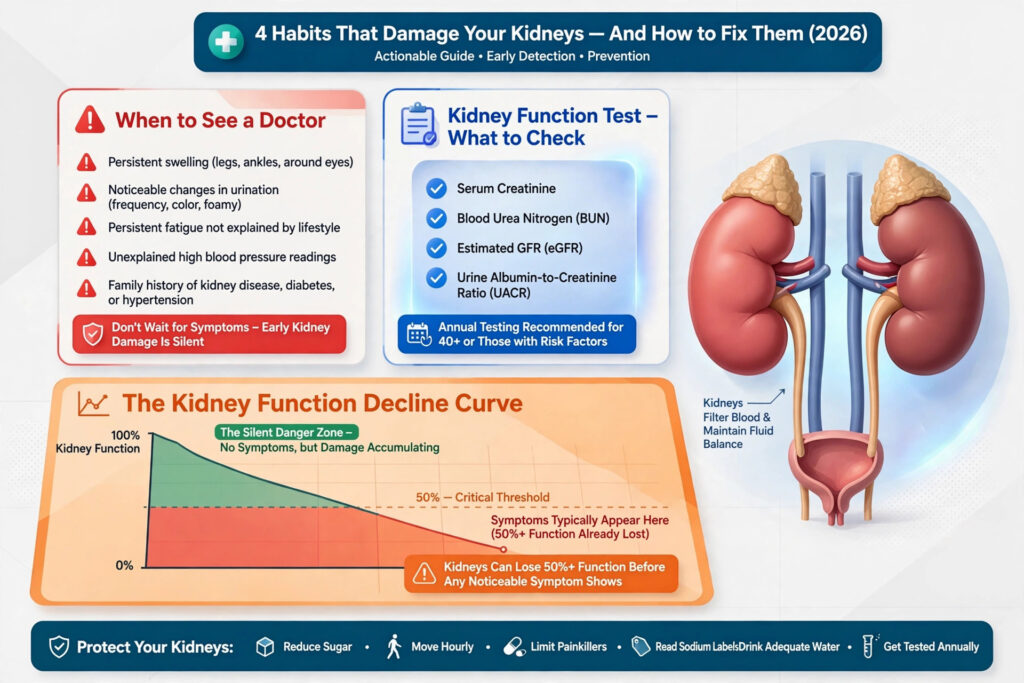
Your two kidneys filter roughly a litre of blood every minute between them, removing waste products, clearing excess fluid, and maintaining the mineral balance your entire body depends on. They also play a genuinely central role in blood pressure regulation — which is part of why kidney problems and blood pressure problems so often show up together, each one capable of worsening the other. Nearly everything you eat and do affects this system directly or indirectly. The frustrating part, clinically speaking, is that kidney tissue has substantial reserve capacity, so measurable symptoms typically don’t appear until well over half of kidney function is already compromised — which means feeling fine is not the same as being fine, and it’s exactly why prevention matters more here than in almost any other organ system.
The 4 Habits That Damage Your Kidneys, One by One
These are the habits that damage your kidneys most consistently across the research, ranked not by severity but by how easy each one is to overlook in an ordinary day.
Habit 1: Frequent Sugar and Refined Carbohydrate Spikes
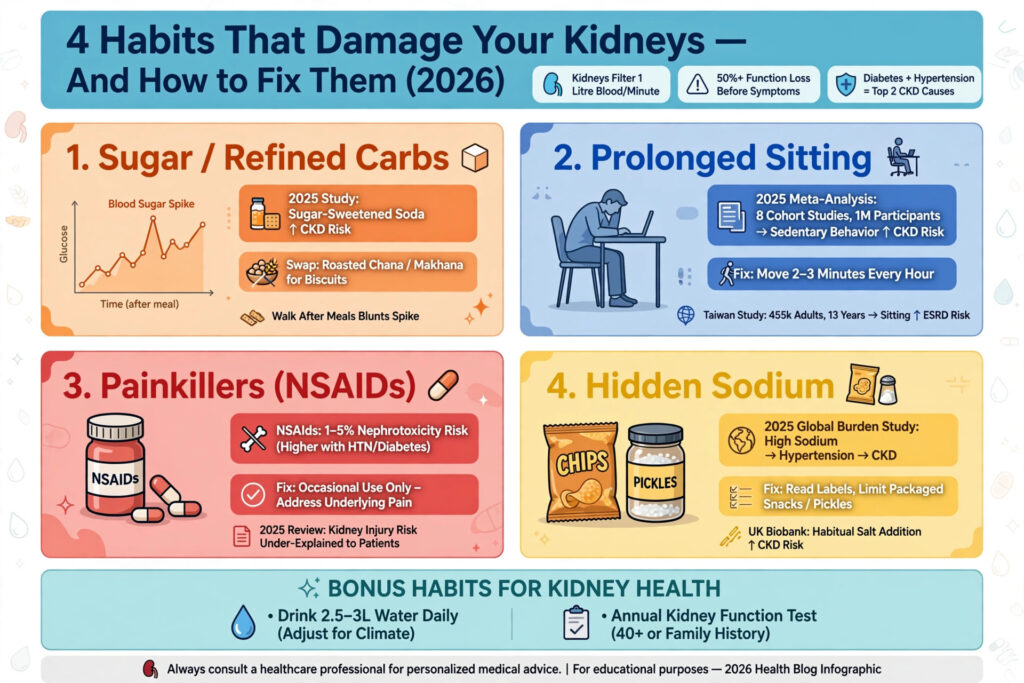
Sweet tea with biscuits in the morning, white rice at lunch, something salty or sweet again in the evening, a cold drink or dessert after most meals — this pattern is common enough to feel completely normal, which is exactly the problem. This is one of the most common habits that damage your kidneys, and it works quietly: each of these spikes your blood sugar sharply, and when that spiking happens repeatedly, day after day, it places sustained mechanical and metabolic stress on the nephrons — the microscopic filtering units inside your kidneys that have to work harder to filter that excess glucose out of your blood.
This isn’t a minor theoretical concern. A 2025 study published in Frontiers in Nutrition, using global disease burden data, specifically flagged a rapid increase in kidney disease attributable to high sugar beverage consumption in India — a trend the researchers noted was notably different from patterns seen in other Asian countries. Separately, a systematic review and meta-analysis found sugar-sweetened soda consumption was associated with a statistically significant increased risk of chronic kidney disease, while artificially sweetened soda showed no such significant association — suggesting the sugar itself, not just the fizzy drink format, is doing the damage. This is also the underlying mechanism behind why diabetic patients face the highest kidney failure risk of any group: sustained high blood sugar is one of the most well-established drivers of kidney damage in modern medicine.
What to actually do: Reduce both the quantity and frequency of sugar and refined carbohydrates rather than eliminating them in one dramatic move that’s hard to sustain. Swap biscuits for roasted chana or roasted makhana, and treat sweets and sugary drinks as genuinely occasional rather than a daily habit. Walking after meals also meaningfully blunts the blood sugar spikes this habit revolves around — our full guide to walking after meals for blood sugar control covers the exact timing that makes the biggest difference.
Habit 2: Sitting in One Place for Hours at a Time
This is the habit that will resonate with almost everyone reading this, because modern work and daily life have quietly built themselves around prolonged sitting — desk jobs, commutes, screen time, all stacking into hours of near-total stillness most days. It’s also one of the sneakier habits that damage your kidneys, since it doesn’t feel like a “habit” at all — it feels like just how work is.
The research connecting this to kidney health is more robust than people generally assume. A 2025 systematic review and meta-analysis pooling eight cohort studies and nearly one million participants found sedentary behavior was significantly associated with increased chronic kidney disease risk. A separate cohort study of over 455,000 adults in Taiwan, following participants for a median of 13 years, found prolonged occupational sitting was associated with a meaningfully higher risk of chronic kidney disease, progression to end-stage renal disease, and kidney-specific mortality compared to those who spent more of their working day standing or moving — even after controlling for overall physical activity levels. The proposed mechanism involves reduced blood circulation, slower metabolism, and impaired blood pressure and blood sugar regulation during extended stillness — all of which compound the burden on kidney filtration over time. Leg swelling and a heavy, sluggish feeling after a long day of sitting, something many people notice and dismiss, is worth paying attention to rather than ignoring, since it can be an early, easily overlooked sign worth mentioning to a doctor if it’s persistent.
What to actually do: Set a reminder to stand and move for two to three minutes every hour — a short walk to refill water, a bit of stretching, anything that breaks the stillness. The Taiwan cohort specifically found that even modest physical activity meaningfully reduced the excess risk associated with prolonged sitting, so this doesn’t require a major lifestyle overhaul to matter.
Habit 3: Reaching for Painkillers Without Thinking Twice
Headache, body ache, mild fever — for many people, the automatic response is grabbing an over-the-counter painkiller without much thought, largely because these medications are so easily available without a prescription. Among the habits that damage your kidneys, this one is the easiest to underestimate precisely because each individual dose feels harmless. The risk here is real, though it’s worth being precise about the size of that risk rather than exaggerating it.
NSAIDs (nonsteroidal anti-inflammatory drugs like ibuprofen and naproxen) work partly by inhibiting prostaglandins — compounds that help maintain healthy blood flow to the kidneys. Blocking them can reduce renal blood flow, and with repeated, long-term use, this can progress to genuine kidney injury. According to a 2025 review in the Archives of Nephrology and Renal Studies, while overall nephrotoxicity incidence from NSAIDs is relatively modest (roughly 1–5% of users), their extensive, widespread use means the cumulative clinical burden remains significant, and risk rises considerably in people with existing high blood pressure, diabetes, or reduced kidney function to begin with — exactly the population most likely to be reaching for painkillers regularly in the first place. The FDA has specifically noted that most patient education materials focus narrowly on NSAID bleeding risk while under-explaining the acute kidney injury risk, leaving many people genuinely unaware of this side of the picture.
What to actually do: Occasional, appropriately dosed use for a single headache or short-term pain is not the concern here — it’s repeated, frequent, self-directed use over weeks or months without medical guidance that carries real risk. If you’re reaching for a painkiller regularly, the more useful question is why the pain keeps recurring in the first place. For joint and muscle pain specifically, our natural remedy for joint pain guide covers a genuinely evidence-backed alternative worth trying before defaulting to daily NSAIDs, and it’s always worth discussing frequent pain with a doctor to address the underlying cause rather than just repeatedly masking the symptom.
Habit 4: Hidden Sodium in Packaged and Processed Food
Most people genuinely believe they’re managing their salt intake well because they don’t add much extra salt at the table — but the salt shaker was never really the main problem. This is the last of the four habits that damage your kidneys covered here, and it’s arguably the most invisible, since it hides inside food most people don’t think to question. The overwhelming majority of dietary sodium in a modern diet comes from packaged snacks, namkeen, pickles, papad, sauces, bakery items, and ready-to-eat foods, where sodium is added far more heavily than most people realize.
This matters because high sodium intake raises blood pressure, and hypertension is one of the two leading causes of chronic kidney disease worldwide, alongside diabetes. A 2025 global burden of disease analysis published in Frontiers in Nutrition identified high sodium intake as one of the top contributing dietary risk factors to kidney disease attributable to hypertension globally, with the burden rising steadily between 1990 and 2021. A separate UK Biobank study specifically found that habitually adding salt to food was associated with a significantly higher risk of developing chronic kidney disease, an effect that was notably stronger in people with a genetic predisposition toward hypertension — a useful reminder that sodium sensitivity genuinely varies between individuals, but the population-level trend is consistently unfavorable.
What to actually do: Read packaged food labels for sodium content, and treat high-sodium snacks as occasional rather than routine, particularly for children, where lifelong dietary habits are being established. Favor fresh, home-cooked food and fresh fruits and vegetables as your default rather than your exception — genuinely one of the more reliable, low-effort protective habits across almost every area of health, not just kidney function.
Two More Habits Worth Building, Either Way
Drink the right amount of water — not too little, not excessively more. Your kidneys need adequate water to flush waste products out of your body effectively. For most healthy adults, roughly 2.5 to 3 litres daily is a reasonable general target, adjusted down somewhat in cooler weather. If you have an existing kidney or heart condition, this number changes, and it’s specifically something to confirm directly with your doctor rather than following generic advice, since both too little and excessive fluid intake can be genuinely harmful in those situations.
Get your kidney function tested at least once a year, particularly if you’re over 40, or if you have a family history of diabetes, high blood pressure, or kidney disease. Given how symptom-free early kidney damage typically is, an annual blood and urine test is one of the only reliable ways to catch a problem while it’s still early and far more manageable — waiting for symptoms to show up defeats the entire purpose of prevention.
How These Habits Connect to the Rest of Your Health
None of these four habits operate in isolation, which is part of why addressing them tends to produce benefits well beyond kidney health specifically. Chronic stress and elevated cortisol can worsen blood pressure and blood sugar regulation, compounding several of these risk factors at once — our fact-check on cortisol and what actually affects it is worth reading if stress feels like a significant piece of your picture. Sleep matters here too, since poor sleep is independently linked to both blood pressure and blood sugar dysregulation — see our guide to how to fall asleep faster if that’s a gap in your routine. And if thyroid symptoms — fatigue, sluggishness, unexplained weight changes — sound familiar alongside any of this, it’s worth ruling that out separately, covered in our guide to natural support for hypothyroidism, since an underactive thyroid can compound fatigue and metabolic strain in ways that overlap with kidney-related symptoms.
When to See a Doctor
Don’t wait for obvious symptoms to get your kidneys checked, but certain signs do warrant prompt medical attention:
- Persistent swelling in the legs, ankles, or around the eyes
- Noticeable changes in urination — frequency, color, foamy urine, or difficulty
- Persistent fatigue that isn’t explained by sleep or lifestyle
- Unexplained high blood pressure readings
- A family history of kidney disease, diabetes, or hypertension combined with any of the above
Frequently Asked Questions About Habits That Damage Your Kidneys
Can young, healthy people really get kidney disease? Yes. Chronic kidney disease is increasingly diagnosed in people in their 30s and 40s with no prior diabetes or hypertension diagnosis, largely driven by cumulative lifestyle factors like the ones covered here rather than age alone.
How much sugar-sweetened beverage consumption actually raises kidney disease risk? Research suggests risk rises meaningfully above roughly seven servings per week, according to dose-response analysis, though even more moderate regular consumption is associated with elevated risk in several studies specifically examining soda intake.
Is occasional painkiller use actually dangerous for kidneys? No — occasional, appropriately dosed use for short-term pain in an otherwise healthy person carries low risk. The genuine concern is frequent, self-directed, long-term use without medical guidance, particularly in people who already have high blood pressure, diabetes, or reduced kidney function.
How much sitting is considered harmful for kidney health? Research has found meaningfully increased risk starting around 6 hours of daily sitting, with additional risk at over 8 hours. Breaking up sitting time with brief movement every hour appears to meaningfully reduce this risk even without eliminating total sitting time.
Does adding less salt at the table actually reduce my sodium intake? Only partially. The majority of sodium in a modern diet comes from packaged and processed foods rather than table salt, so reducing packaged snacks, pickles, papad, and sauces matters more than cutting back at the dinner table alone.
How often should I get my kidney function tested? At least once a year is a reasonable general guideline, especially if you’re over 40 or have a family history of diabetes, high blood pressure, or kidney disease — since early kidney damage typically produces no noticeable symptoms.
Can these habits be reversed once damage has started? Early-stage kidney impairment can often be stabilized or partially improved with lifestyle changes and appropriate medical management, which is exactly why early detection through regular testing matters so much — the earlier a problem is caught, the more options exist for managing it effectively.
The Bottom Line
The habits that damage your kidneys aren’t exotic or hard to identify once you know what to look for — they’re sitting in most people’s daily routines already: repeated sugar spikes, hours of uninterrupted sitting, casual painkiller use, and sodium hidden in packaged food rather than the salt shaker. None of these require dramatic, all-or-nothing changes to matter. Reduce the frequency of sugar and refined carbs, build in short movement breaks through the day, treat painkillers as an occasional tool rather than a reflex, read labels for hidden sodium, drink an appropriate amount of water, and get your kidney function tested annually if you’re over 40 or have relevant family history. Given how silent kidney damage is until it’s already substantial, prevention genuinely is the only strategy that reliably works here — waiting for symptoms means waiting too long.
This article is for informational purposes only and is not a substitute for personalized medical advice. If you have existing kidney disease, diabetes, high blood pressure, or take regular medication, consult a physician before making significant changes to your diet, water intake, or medication use.







Leave a Reply