
If you’re tired all the time, your bones ache for no clear reason, or your last blood panel came back with a “low” flag next to a nutrient you’ve never thought twice about — there’s a good chance you’re dealing with vitamin D deficiency. It’s one of the most common nutrient deficiencies in the world, and also one of the most quietly ignored, because the symptoms are so easy to blame on stress, poor sleep, or “just getting older.” In this guide, we’ll walk through what vitamin D deficiency actually looks like, why it happens even in people who eat well, and — the part most articles get vague about — exactly how much vitamin D you need, in real numbers, based on your age, skin tone, weight, and where you live.
What Is Vitamin D Deficiency, Exactly?
Vitamin D isn’t really a vitamin in the traditional sense — it behaves more like a hormone. Your body makes it when sunlight (specifically UVB rays) hits your skin, and it’s also available through a small number of foods and supplements. Once vitamin D enters your bloodstream, your liver and kidneys convert it into its active form, 25-hydroxyvitamin D (25(OH)D), which is the exact marker doctors check on a blood test.
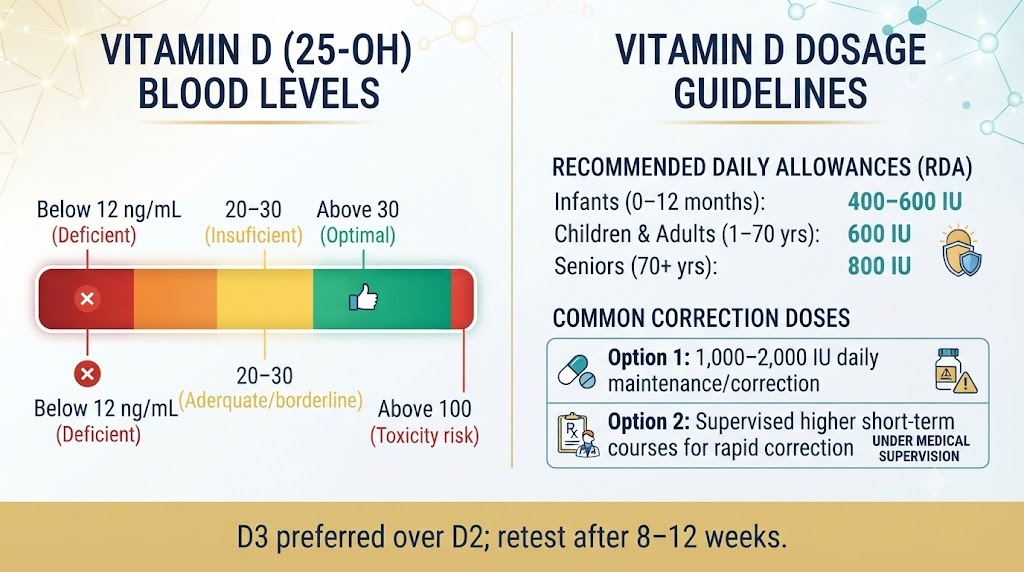
Vitamin D deficiency happens when your 25(OH)D blood level drops too low to support normal calcium absorption, bone remodeling, immune signaling, and muscle function. According to the NIH Office of Dietary Supplements, a level under 12 ng/mL is considered deficient, 12–20 ng/mL is generally inadequate for bone and overall health, and above 20 ng/mL is considered adequate for most healthy people — though many clinicians and the Endocrine Society prefer a higher cushion, closer to 30 ng/mL, especially for people with risk factors.
Here’s a quick reference so you can make sense of your own lab report:
| 25(OH)D Level | Status |
|---|---|
| Below 12 ng/mL (30 nmol/L) | Deficient |
| 12–20 ng/mL (30–50 nmol/L) | Insufficient |
| 20–30 ng/mL (50–75 nmol/L) | Adequate (borderline for some experts) |
| Above 30 ng/mL (75 nmol/L) | Optimal (preferred target by many specialists) |
| Above 100 ng/mL (250 nmol/L) | Risk of toxicity |
Vitamin D deficiency isn’t rare or unusual — global estimates suggest close to a billion people worldwide have insufficient levels. And unlike a lot of nutrient issues, this one isn’t limited to people with poor diets. You can eat perfectly and still be deficient in vitamin D if you don’t get enough sun or have a body that struggles to convert and use it — which is exactly why understanding the causes matters as much as recognizing the symptoms.
Symptoms of Vitamin D Deficiency
This is where vitamin D deficiency gets sneaky. Most people with low vitamin D have no obvious symptoms at first — it builds quietly in the background. When symptoms do show up, they tend to be vague, which is why so many cases go undiagnosed for years.
Common Symptoms in Adults
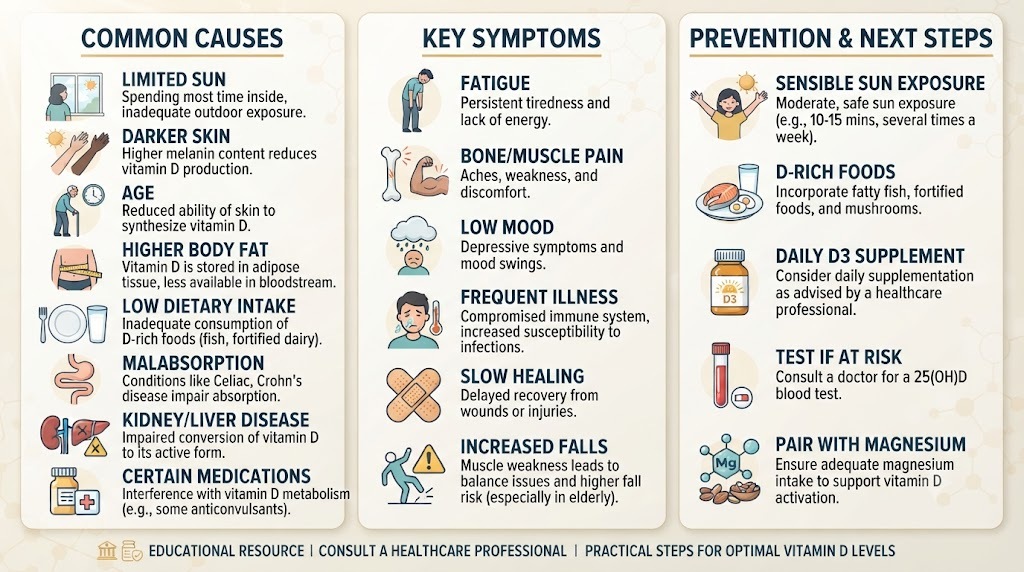
- Persistent fatigue that doesn’t improve with sleep
- Bone pain, especially in the lower back, hips, and legs
- Muscle weakness, aches, or cramps — sometimes described as a deep, dull soreness
- Mood changes, including low mood or symptoms that overlap with depression
- Frequent illness or slow recovery, since vitamin D plays a direct role in immune regulation
- Hair thinning in more severe or prolonged cases
- Slow wound healing
- Increased frequency of falls in older adults, linked to muscle weakness
Signs of More Severe or Long-Standing Deficiency
When vitamin D deficiency is chronic and left untreated, your body starts pulling calcium from your bones to keep blood calcium levels stable — a process called secondary hyperparathyroidism. Over time, this can lead to:
- Osteomalacia (softening of the bones) in adults
- Osteoporosis and increased fracture risk, particularly in older adults
- Bone deformities and rickets in children, including bowed legs and delayed growth
- Muscle fasciculations (visible muscle twitching)
Symptoms in Children
Kids show deficiency differently than adults — irritability, lethargy, delayed motor development, and visible bone changes are the classic red flags. Because rickets was once so common before food fortification became standard, pediatricians still screen for this actively in high-risk infants and toddlers.
If any of this sounds familiar, don’t try to self-diagnose from symptoms alone — a simple blood test is the only reliable way to confirm vitamin D deficiency. Interestingly, several of these symptoms overlap heavily with magnesium deficiency — fatigue and muscle cramps in particular — so it’s worth having both checked together, since the two nutrients work as a team in bone metabolism.
Causes and Risk Factors of Vitamin D Deficiency
Understanding why vitamin D deficiency happens is genuinely more useful than memorizing the symptom list, because most causes are fixable once you know what’s driving them.
1. Limited Sun Exposure
This is the single biggest driver. If you work indoors, live in a northern latitude, wear sunscreen consistently (which is otherwise a great habit), or live somewhere with long winters and short daylight hours, your skin simply doesn’t get enough UVB exposure to synthesize adequate vitamin D.
2. Darker Skin Tone
Melanin acts as a natural sunscreen. People with darker skin need significantly more sun exposure to produce the same amount of vitamin D as someone with lighter skin, which is why vitamin D deficiency rates are consistently higher in these populations, even in sunny climates.
3. Age
As you get older, your skin becomes less efficient at producing vitamin D from sunlight, and your kidneys become less efficient at converting it into its active form. This is a major reason vitamin D deficiency is so common in adults over 65.
4. Body Weight and Fat Percentage
Vitamin D is fat-soluble, which means it gets sequestered in fat tissue rather than released into the bloodstream where it’s usable. People with a higher body fat percentage often need substantially higher doses to reach the same blood level as someone leaner.
5. Limited Dietary Intake
Very few foods naturally contain meaningful vitamin D — fatty fish, egg yolks, and fortified dairy or plant milks are the main sources. If your diet doesn’t regularly include these (or fortified foods aren’t common where you live), your intake gap widens fast.
6. Malabsorption Conditions
Because vitamin D is fat-soluble, any condition that impairs fat absorption — Crohn’s disease, celiac disease, cystic fibrosis, or a history of gastric bypass surgery — can significantly reduce how much vitamin D your gut actually absorbs, regardless of intake.
7. Kidney or Liver Disease
Since your liver and kidneys are responsible for converting vitamin D into its active form, chronic disease in either organ can block that conversion even if your raw intake is fine.
8. Certain Medications
Steroids, anticonvulsants, and some antiretroviral and weight-loss medications can accelerate how quickly your body breaks down vitamin D, increasing your requirement.
9. Exclusive Breastfeeding Without Supplementation
Breast milk alone typically doesn’t provide enough vitamin D for infants, which is why pediatric guidelines recommend supplementation for exclusively breastfed babies.
How Much Vitamin D Do You Actually Need?
This is the part most articles either skip or oversimplify. The honest answer is: it depends on your age, baseline levels, body weight, and risk factors — but here are the evidence-based numbers to work from.
Recommended Dietary Allowance (RDA) by Age
| Age Group | RDA (IU/day) | Upper Limit (IU/day) |
|---|---|---|
| 0–12 months | 400 IU | 1,000–1,500 IU |
| 1–18 years | 600 IU | 2,500–4,000 IU |
| 19–70 years | 600 IU | 4,000 IU |
| 71+ years | 800 IU | 4,000 IU |
| Pregnant/breastfeeding | 600 IU | 4,000 IU |
These RDA figures are baseline maintenance doses for people who are already at a sufficient level — they’re not treatment doses for someone who’s already deficient.
If You’re Already Deficient
Correcting an existing deficiency usually requires a short-term higher dose before dropping to a maintenance level. Clinical guidance commonly used by physicians includes:
- Mild-to-moderate deficiency: 1,000–2,000 IU/day for 8–12 weeks, then reassess
- Significant deficiency: 6,000 IU/day, or a supervised weekly dose of 50,000 IU for 6–8 weeks
- Maintenance after correction: 1,500–2,000 IU/day for adults with risk factors like obesity or malabsorption
These higher, correction-phase doses should be guided by a blood test and a healthcare provider — self-dosing at 50,000 IU without medical supervision isn’t something to attempt on your own, since vitamin D toxicity, while rare, does happen and typically results from long-term megadosing rather than sunlight or diet.
D2 vs. D3 — Does It Matter?
Vitamin D2 (ergocalciferol) comes from plant sources and is usually prescription-strength. Vitamin D3 (cholecalciferol) is the form your skin makes naturally and the one found in most over-the-counter supplements — research generally shows D3 raises and sustains blood levels more effectively than D2, which is why most clinicians default to recommending it.
A Practical Rule of Thumb
For most healthy adults without major risk factors, 1,000–2,000 IU/day of vitamin D3 alongside sensible sun exposure and a few vitamin D-rich meals a week is enough to maintain a healthy level. If you carry more body weight, have darker skin, live somewhere with limited winter sun, or are over 65, the higher end of that range — or a supervised higher dose — is usually more appropriate.
Food Sources of Vitamin D
While sunlight is the primary source, these foods can meaningfully contribute:
- Salmon (cooked, 3 oz): ~450 IU
- Mackerel (cooked, 3 oz): ~390 IU
- Canned tuna (in water, 3 oz): ~150 IU
- Egg yolk (1 large): ~40 IU
- Fortified milk or plant milk (1 cup): ~100–120 IU
- Fortified cereals: ~40–100 IU per serving
- Mushrooms exposed to UV light: varies widely, sometimes significant
Getting your entire RDA from food alone is genuinely difficult, which is one reason vitamin D deficiency remains so widespread even in people who eat a reasonably healthy diet.
How Vitamin D Deficiency Is Diagnosed
A simple blood draw measuring your 25-hydroxyvitamin D level is the standard test. It’s not part of routine annual bloodwork for everyone — most guidelines recommend targeted testing for people with symptoms or known risk factors, rather than universal screening, since testing every healthy adult hasn’t been shown to improve outcomes. If you have symptoms of fatigue, bone pain, or muscle weakness, or you fall into a higher-risk group, it’s a reasonable and inexpensive test to ask your doctor for.
Vitamin D Doesn’t Work Alone: Related Nutrients Worth Checking
Vitamin D rarely operates in isolation — it works alongside several other nutrients to support bone, muscle, hormone, and immune health, and deficiencies often travel together.
- Magnesium is required to activate vitamin D in the liver and kidneys — without enough magnesium, even a “normal” vitamin D level may not function properly in your body. If you’re dealing with cramping, twitching, or fatigue alongside low vitamin D, it’s worth reading our full breakdown of magnesium deficiency symptoms and causes.
- Vitamin E, another fat-soluble vitamin, shares absorption pathways with vitamin D — poor fat absorption that causes one often causes the other. See our guide to vitamin E deficiency if you’re also noticing skin or immune-related symptoms.
- Protein is essential for building the vitamin D-binding protein that transports 25(OH)D through your bloodstream — chronically low protein intake can affect how your body carries and uses vitamin D. Our article on protein deficiency covers the signs worth watching for.
- Selenium and zinc, both closely tied to thyroid function, interact with vitamin D in regulating immune response — and thyroid dysfunction itself can influence how efficiently your body activates vitamin D. Our piece on thyroid health, selenium, and zinc goes deeper into that connection.
If you’re correcting a vitamin D deficiency and not seeing your symptoms improve, one of these related nutrients is often the missing piece.
How to Prevent Vitamin D Deficiency
- Aim for 10–30 minutes of midday sun exposure on bare skin several times a week, adjusted for your skin tone and latitude
- Include vitamin D-rich foods like fatty fish, eggs, and fortified dairy or plant milk in your weekly rotation
- Consider a daily D3 supplement, especially in fall and winter or if you live above roughly 35° latitude
- Get tested if you have risk factors — darker skin, higher body weight, limited sun exposure, or a malabsorption condition
- Pair supplementation with adequate magnesium intake, since magnesium is required to activate vitamin D
Frequently Asked Questions
1. What is the fastest way to fix vitamin D deficiency? A physician-supervised high-dose course — often 50,000 IU weekly for 6–8 weeks, or 6,000 IU daily — is the fastest evidence-based approach for correcting significant deficiency, followed by a lower maintenance dose.
2. Can vitamin D deficiency cause weight gain? There’s an established association between low vitamin D levels and higher body fat, but the relationship works both ways — excess fat tissue sequesters vitamin D, and low vitamin D may also affect fat metabolism. It’s not considered a direct cause of weight gain on its own.
3. How long does it take to correct vitamin D deficiency? With appropriate supplementation, most people see meaningful improvement in blood levels within 8–12 weeks, though full symptom resolution can take a bit longer depending on how deficient you were.
4. Can you get vitamin D deficiency even if you spend time outdoors? Yes. Sunscreen, cloud cover, time of day, season, latitude, skin tone, and how much skin is exposed all affect how much vitamin D your body actually produces — plenty of people who are outside regularly are still deficient.
5. What blood test level counts as vitamin D deficiency? Most labs and the NIH define a 25-hydroxyvitamin D level below 20 ng/mL (50 nmol/L) as deficient or insufficient, with many specialists preferring levels above 30 ng/mL as an optimal target.
6. Is 1000 IU of vitamin D enough per day? For many healthy adults with mild risk factors, 1,000–2,000 IU daily is enough to maintain adequate levels, but it may not be enough to correct an existing deficiency — that typically requires a higher, time-limited dose first.
7. Can vitamin D deficiency cause hair loss? Yes, in more significant or prolonged cases. Vitamin D plays a role in the hair follicle growth cycle, and deficiency has been linked to conditions like telogen effluvium and alopecia areata.
8. What’s the difference between vitamin D2 and D3 supplements? D3 (cholecalciferol) is generally considered more effective at raising and maintaining blood vitamin D levels than D2 (ergocalciferol), and it’s the form your body produces naturally from sunlight.
9. Can you take too much vitamin D? Yes, though toxicity is rare and almost always comes from excessive long-term supplementation rather than sun exposure or food. Symptoms of toxicity include nausea, weakness, and elevated blood calcium, which can affect the kidneys over time.
10. Does vitamin D deficiency affect mood and mental health? Low vitamin D levels are associated with low mood and depressive symptoms in several studies, though researchers are still working out how much of this is a direct effect versus an association tied to lifestyle factors like reduced sunlight exposure.
11. Who should get tested for vitamin D deficiency? Testing is generally recommended for people with symptoms, older adults, people with darker skin, those with limited sun exposure, individuals with malabsorption conditions, and anyone on medications known to affect vitamin D metabolism — rather than as routine screening for everyone.
The Bottom Line
Vitamin D deficiency is common, usually silent in its early stages, and almost always fixable once you understand what’s driving it — whether that’s limited sun exposure, a fat-soluble absorption issue, age, or simply not eating enough of the handful of foods that contain it. The numbers matter more than guesswork here: know your blood level, match your intake to your age and risk factors, and don’t treat a deficiency the same way you’d treat prevention — they call for different doses. If your fatigue, bone aches, or mood dips haven’t budged after correcting your vitamin D, it’s worth checking the nutrients that work alongside it — magnesium, vitamin E, protein, and the selenium-zinc-thyroid connection — since deficiencies rarely travel alone.
This article is for educational purposes and isn’t a substitute for medical advice. Talk to your doctor before starting any new supplement, especially at doses above the standard RDA.







Leave a Reply