
You know the feeling: you walk into a room and forget why, a simple email takes three tries to write, and words you use every day suddenly go missing mid-sentence. That’s brain fog — and if it’s been happening more often lately, you’re far from alone. Brain fog isn’t a medical diagnosis on its own; it’s an umbrella term doctors use for a cluster of cognitive symptoms — slowed thinking, poor concentration, forgetfulness, and mental exhaustion — that can stem from something as simple as bad sleep or as involved as a thyroid imbalance. The frustrating part is that brain fog almost always has an identifiable cause, but figuring out which cause is doing this to you takes a bit of detective work. That’s exactly what this guide is for.
What Brain Fog Actually Is (And Isn’t)
Brain fog is best described as a temporary slowdown in your brain’s attention, memory, and processing networks — not permanent cognitive decline, and not a sign that something is fundamentally “wrong” with your intelligence. Researchers looking at post-viral and chronic brain fog point to a few overlapping mechanisms: low-grade neuroinflammation, disrupted neurotransmitter balance, microglial activation (the brain’s immune cells becoming overactive), and dysregulation of the autonomic nervous system. In plain terms — your brain’s chemistry and blood flow get thrown off, and clear thinking becomes physically harder, not just a matter of willpower.
If you’ve noticed brain fog creeping into your mornings, your workday, or your ability to hold a conversation, the good news is that in the large majority of cases, it’s reversible once the underlying trigger is addressed.
Common Symptoms of Brain Fog
Brain fog shows up a little differently for everyone, but the most frequently reported symptoms include:
- Difficulty concentrating or staying on task
- Slower thinking and reaction time
- Forgetfulness, including losing your train of thought mid-sentence
- Trouble finding the right words
- Mental fatigue, even after a full night’s sleep
- Feeling mentally “foggy,” distant, or disconnected
- Reduced short-term memory and difficulty multitasking
- A general sense that your thinking should feel sharper than it does
None of these symptoms are dangerous on their own, but when they persist for weeks or start interfering with work, relationships, or daily safety (driving, for example), it’s worth digging into the cause rather than pushing through it.
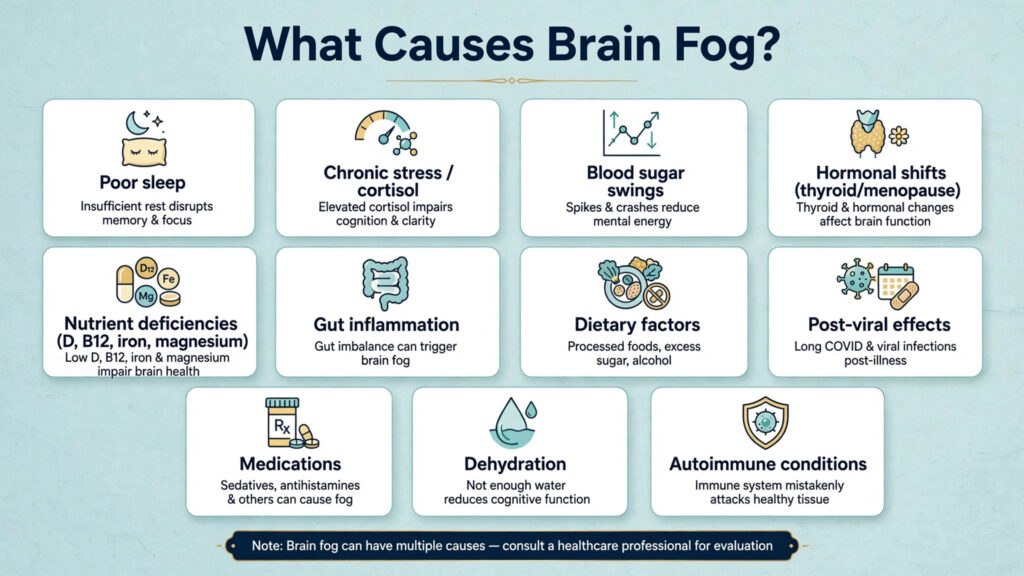
What Causes Brain Fog?
This is the part worth reading carefully, because brain fog is rarely caused by just one thing — it’s usually two or three factors stacking on top of each other.
1. Poor or Inconsistent Sleep
Sleeping less than 7–9 hours, or sleeping at inconsistent times, is one of the single biggest drivers of brain fog. Sleep is when your brain clears metabolic waste and consolidates memory — skip it consistently, and cognitive performance drops fast, even if you don’t feel “tired” in the traditional sense.
2. Chronic Stress and Elevated Cortisol
Long-term stress keeps cortisol elevated, which interferes with the hippocampus (your memory center) and the prefrontal cortex (responsible for focus and decision-making). This is why brain fog and anxiety so often show up together — the same stress hormones driving one are dulling the other.
3. Blood Sugar Swings
Sharp spikes and crashes in blood sugar — often from high-refined-carb meals, skipped meals, or undiagnosed insulin resistance — starve the brain of a stable glucose supply, which shows up as sluggish thinking and post-meal “crashes.” This is one of the most underrated and fixable causes of daily brain fog, and it’s a big part of why interest in blood sugar tracking has grown so much — we cover this in detail in our piece on continuous glucose monitors for non-diabetics, which explains how everyday glucose spikes affect energy and focus even in people without diabetes.
4. Hormonal Shifts
Perimenopause and menopause are strongly associated with brain fog, driven by declining estrogen’s effect on brain metabolism and neurotransmitter activity. Thyroid imbalances — both hyperthyroidism and hypothyroidism — are another major hormonal cause; thyroid hormone directly affects how fast your brain processes information, so both an overactive and underactive thyroid can leave you feeling mentally slow or “distant.”
5. Nutrient Deficiencies
Low levels of vitamin D, B12, iron, magnesium, and omega-3 fatty acids are all independently linked to poor concentration and mental fatigue. Vitamin D deficiency in particular is one of the most common — and most overlooked — contributors to fatigue and cognitive dullness. If your brain fog comes with persistent tiredness or muscle aches, it’s worth reading our full breakdown of vitamin D deficiency symptoms and causes to see if it matches what you’re experiencing.
6. Gut Health and Inflammation
The gut-brain axis is a two-way communication line between your digestive system and your brain, and a disrupted gut microbiome has been linked to mood changes, inflammation, and cognitive symptoms, including brain fog. A 2024 cross-sectional study found brain fog severity scores were meaningfully associated with gastrointestinal symptoms and diet quality, not just sleep and mood. If digestive discomfort tends to show up alongside your mental fog, our deep dive on the gut-brain axis and mental health walks through exactly why that connection exists.
7. Dietary Fat Quality and Inflammation
Chronic low-grade inflammation is one of the proposed mechanisms behind persistent brain fog, and diet plays a bigger role in that inflammation than most people realize. If you’re evaluating what’s on your plate as part of fixing your brain fog, our research-based look at whether seed oils are actually bad for you is a useful next read, since dietary fat composition is one of the more debated pieces of the inflammation puzzle.
8. Post-Viral and Long COVID Effects
Persistent cognitive symptoms following viral infections, including COVID-19, are well documented and can last months to years in some cases. This is one of the more researched forms of brain fog, tied to neuroinflammation and immune system changes that outlast the initial illness.
9. Medications
Certain medications — including some antihistamines, blood pressure medications, antidepressants, and chemotherapy drugs — list cognitive slowing or “fogginess” as a known side effect. If your brain fog started shortly after a new prescription, that timing is worth mentioning to your doctor.
10. Dehydration and Skipped Meals
Even mild dehydration measurably affects concentration and short-term memory. It’s an unglamorous cause, but it’s also one of the easiest to rule out.
11. Autoimmune and Chronic Inflammatory Conditions
Fibromyalgia, lupus, multiple sclerosis, celiac disease, and rheumatoid arthritis are all frequently associated with brain fog as a recognized symptom, driven by systemic inflammation affecting the brain.
Natural Remedies for Brain Fog
Once you have a reasonable sense of what’s driving your brain fog, most people see meaningful improvement from a combination of these evidence-backed habits — often within a few weeks.
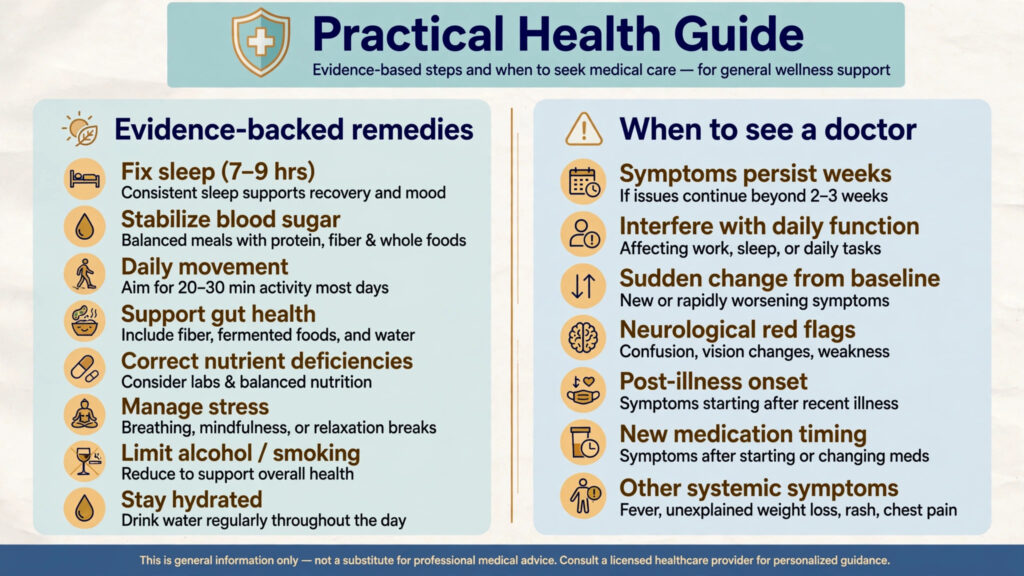
Fix Your Sleep First
This isn’t a throwaway suggestion — sleep is consistently the single most impactful lever for cognitive clarity. Aim for a consistent 7–9 hours, a fixed wake time (even on weekends), and reduced screen exposure in the hour before bed.
Stabilize Your Blood Sugar
Prioritize protein and fiber at each meal, avoid large amounts of refined carbohydrates on an empty stomach, and avoid skipping meals for long stretches. Steadier blood sugar translates almost directly into steadier mental energy throughout the day.
Move Your Body Daily
Even short, brisk walks meaningfully improve alertness and cognitive function by increasing blood flow to the brain. If you’re looking to build a more structured, sustainable cardio habit that supports long-term brain and metabolic health, our guide to Zone 2 cardio explains why this low-intensity style of training has become so popular for exactly this reason.
Support Your Gut
Since gut health and brain function are so closely linked, prioritizing fiber, fermented foods, and reducing ultra-processed food intake can meaningfully calm the inflammation associated with brain fog over time.
Rule Out and Correct Nutrient Deficiencies
Ask your doctor for bloodwork covering vitamin D, B12, iron/ferritin, and thyroid function (TSH, free T4). Correcting a genuine deficiency is one of the fastest, most reliable ways to lift brain fog when a deficiency is actually the cause.
Manage Stress Actively
Regular exercise, meditation, breathing exercises, or simply protecting time for rest can lower chronic cortisol levels enough to noticeably improve focus and memory within weeks.
Limit Alcohol, Vaping, and Smoking
Research has found higher self-reported rates of concentration and memory problems among people who smoke, vape, or do both — cutting back is one of the more controllable levers available.
Stay Hydrated
A practical, low-effort habit: keep water visible and accessible throughout your day, and treat afternoon fog as a cue to check whether you’ve had enough fluids, not just caffeine.
When to See a Doctor for Brain Fog
Occasional brain fog after a bad night’s sleep or a stressful week isn’t usually a medical emergency. But certain patterns are worth a proper evaluation rather than more home remedies:
- Symptoms persist or worsen over several weeks despite improving sleep, diet, and stress levels
- Brain fog interferes with daily functioning — work performance, driving safety, or relationships
- It feels very different from your usual mental baseline, especially if the change was sudden
- It’s accompanied by neurological symptoms such as confusion, trouble speaking, vision changes, one-sided weakness, numbness, or severe headache — these warrant urgent evaluation, not a wait-and-see approach
- It started after a significant illness or infection, which may point to a post-viral cause worth documenting for your provider
- You have other symptoms suggesting a thyroid, autoimmune, or hormonal cause — unexplained weight changes, hair loss, joint pain, or irregular periods, for example
- It began shortly after starting a new medication
A doctor can run basic bloodwork (thyroid panel, complete blood count, vitamin D, B12, iron studies, and blood glucose) to rule out the most common and most fixable causes before considering anything more involved. There’s no fixed timeline for how long brain fog lasts — for some it clears in days, for others it can take months — but persistent, unexplained brain fog is a legitimate reason to ask for a proper workup rather than assuming it’s “just stress.”
Frequently Asked Questions
1. What is brain fog a sign of? Brain fog itself isn’t a diagnosis — it’s a symptom that can point to poor sleep, chronic stress, blood sugar imbalance, nutrient deficiencies, thyroid dysfunction, gut inflammation, medication side effects, or post-viral illness. Identifying the underlying cause is the key step, not treating the fog in isolation.
2. What vitamin deficiency causes brain fog? Vitamin D, B12, and iron deficiencies are the most commonly linked to brain fog and mental fatigue. Magnesium and omega-3 fatty acid deficiencies have also been associated with reduced cognitive clarity in some studies.
3. Can anxiety cause brain fog? Yes. Chronic stress and anxiety keep cortisol elevated, which interferes with the brain regions responsible for memory and focus — this is one of the most common and most overlooked causes of persistent brain fog.
4. How long does brain fog usually last? It varies widely. Brain fog tied to a single bad night’s sleep can clear in a day, while post-viral or hormonally-driven brain fog can persist for weeks, months, or occasionally longer without targeted treatment.
5. Can brain fog be a sign of something serious? Usually not, but it can occasionally signal something that needs medical attention, especially if it comes with neurological symptoms like confusion, vision changes, slurred speech, or one-sided weakness — these need urgent evaluation.
6. Does drinking more water help with brain fog? Yes, mild dehydration is a genuine and often-overlooked contributor to poor concentration and sluggish thinking, so improving hydration is one of the simplest fixes worth trying first.
7. Can blood sugar spikes cause brain fog? Yes. Sharp glucose spikes followed by crashes are a well-documented cause of the mid-afternoon mental sluggishness many people experience, particularly after high-carbohydrate meals.
8. Is brain fog a symptom of thyroid problems? Yes. Both an overactive thyroid (hyperthyroidism) and underactive thyroid (hypothyroidism) are associated with brain fog, and some people continue experiencing it even after their thyroid levels are corrected, so it’s worth mentioning persistent symptoms to your doctor.
9. Can gut health really affect brain fog? Research on the gut-brain axis shows a genuine connection — gastrointestinal symptoms and poor diet quality have been statistically linked to higher brain fog severity in cross-sectional studies, likely through inflammation and the gut microbiome’s effect on neurotransmitter production.
10. What’s the difference between brain fog and normal forgetfulness? Occasional forgetfulness (misplacing keys, blanking on a name) is normal. Brain fog is a broader, more persistent pattern that includes slowed thinking, sustained difficulty concentrating, and mental exhaustion that feels different from your usual baseline — and it tends to affect multiple areas of daily functioning at once.
11. Does exercise actually help brain fog, or is that just a placebo effect? It’s genuinely evidence-backed. Physical activity increases blood flow and oxygen delivery to the brain and has measurable effects on alertness and cognitive performance, even from short walks — this isn’t just a wellness platitude.
The Bottom Line
Brain fog is common, uncomfortable, and — in the vast majority of cases — genuinely fixable once you identify what’s actually driving it. Start with the basics that affect almost everyone: sleep, hydration, blood sugar stability, and movement. If those don’t move the needle within a few weeks, it’s worth looking at the less obvious culprits — nutrient deficiencies, thyroid function, and gut health — and looping in a doctor for bloodwork rather than guessing indefinitely. And if your brain fog ever shows up alongside confusion, vision changes, slurred speech, or sudden weakness, treat that as a signal to get checked promptly rather than a symptom to manage at home.
This article is for educational purposes and isn’t a substitute for medical advice. If your brain fog is persistent, worsening, or accompanied by neurological symptoms, talk to a healthcare provider.







Leave a Reply