
If you’ve been dealing with constant bloating, random skin breakouts, brain fog that won’t lift, or food sensitivities that seem to be getting worse every month, there’s a decent chance your leaky gut is at the root of it. Leaky gut — also called intestinal permeability — happens when the lining of your small intestine gets damaged and starts letting things slip into your bloodstream that were never supposed to be there. It’s one of the most talked-about (and most misunderstood) topics in gut health right now, and for good reason: what starts in your gut rarely stays in your gut.
In this guide, we’re going to walk through exactly what leaky gut is, what the research actually says about it, the real symptoms to watch for, what causes it in the first place, and — most importantly — how to heal leaky gut naturally using food, lifestyle changes, and a few targeted habits that actually make a difference. No fluff, no miracle pills, just what works.
What Is Leaky Gut, Really?
Your small intestine is lined with a single layer of cells held together by structures called “tight junctions.” Think of them as the mortar between bricks. These tight junctions control what gets absorbed into your bloodstream — nutrients, water, and electrolytes go through, while undigested food particles, toxins, and bacteria are supposed to stay locked out.
Leaky gut happens when those tight junctions loosen up too much. Once that barrier is compromised, larger molecules that shouldn’t cross over start leaking into your bloodstream. Your immune system spots these foreign particles and reacts, often triggering low-grade, chronic inflammation throughout the body. This is why leaky gut rarely shows up as “just a stomach problem” — it can affect your skin, joints, mood, and energy too.
It’s worth being upfront here: leaky gut syndrome isn’t yet a formally recognized medical diagnosis in the same way something like celiac disease is. But increased intestinal permeability itself is a real, well-documented phenomenon studied extensively in relation to conditions like inflammatory bowel disease, celiac disease, type 1 diabetes, and other autoimmune disorders. So while the term “leaky gut syndrome” is more of a functional-medicine label, the underlying biology is genuinely backed by research.
Signs and Symptoms of Leaky Gut
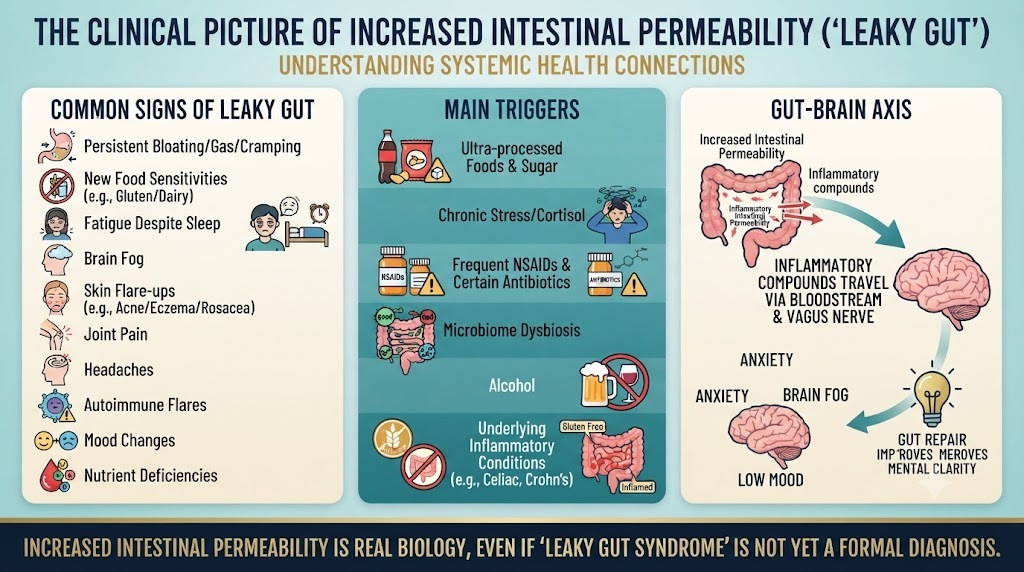
Because a damaged gut lining affects digestion, immunity, and inflammation all at once, the symptoms of leaky gut tend to show up in places you wouldn’t expect. Here are the most common ones people report:
- Persistent bloating, gas, and cramping after meals, even ones that seem “healthy”
- Food sensitivities that seem to appear out of nowhere, especially to gluten or dairy
- Fatigue and low energy, even after a full night’s sleep
- Brain fog, poor concentration, and trouble focusing
- Skin issues like acne, eczema, or rosacea flare-ups
- Joint pain without an obvious injury or cause
- Headaches or migraines that seem to correlate with certain foods
- Autoimmune flare-ups, since intestinal permeability is closely linked with autoimmune disease activity
- Mood changes, including anxiety or low mood, thanks to the gut-brain connection
- Nutrient deficiencies, because a damaged gut lining struggles to absorb vitamins and minerals properly
If several of these sound familiar, it doesn’t automatically mean you have leaky gut — but it’s a strong enough overlap that it’s worth digging into your gut health with a doctor or functional medicine practitioner, especially if symptoms have lasted more than a few weeks.
What Causes Leaky Gut?
There’s rarely one single cause of leaky gut. It’s usually a combination of everyday habits and stressors that wear down the gut lining over time. The most well-documented triggers include:
1. A Diet High in Processed Foods and Sugar
Ultra-processed foods, refined sugar, and industrial seed oils can disrupt the balance of bacteria in your gut microbiome and directly irritate the intestinal lining, setting the stage for a leaky gut over time.
2. Chronic Stress
Stress hormones like cortisol change gut motility and blood flow to the digestive tract, which weakens the tight junctions that hold your gut lining together. This is part of why so many people notice digestive flare-ups during stressful periods.
3. Overuse of NSAIDs and Certain Medications
Frequent use of nonsteroidal anti-inflammatory drugs (like ibuprofen), along with some antibiotics, can irritate and erode the gut lining, contributing to leaky gut.
4. Gut Microbiome Imbalance (Dysbiosis)
When harmful bacteria outnumber beneficial ones in your gut, it can trigger inflammation that damages the intestinal barrier. A healthy, diverse microbiome is one of your best defenses against leaky gut.
5. Alcohol
Regular or excessive alcohol intake is one of the most well-studied disruptors of intestinal permeability, directly damaging the gut lining and increasing inflammation.
6. Chronic Inflammation and Underlying Conditions
Conditions like celiac disease, Crohn’s disease, and other inflammatory gut disorders are strongly associated with a leaky gut, since ongoing inflammation itself erodes the intestinal barrier.
Leaky Gut and the Gut-Brain Connection
One of the more fascinating (and frustrating) parts of leaky gut is how directly it ties into your mental and emotional health. Your gut and brain are in constant two-way communication through the vagus nerve and shared immune signaling — often called the gut-brain axis. When intestinal permeability increases and inflammatory compounds leak into your bloodstream, they can cross into the brain and contribute to anxiety, brain fog, and low mood. This is part of why healing your gut often comes with a noticeable improvement in mental clarity and emotional steadiness, not just digestion.
How to Heal Leaky Gut Naturally
The good news is that the gut lining regenerates relatively quickly — some research suggests intestinal cells turn over every few days — which means consistent, targeted changes can produce real results. Here’s how to heal leaky gut naturally, step by step.
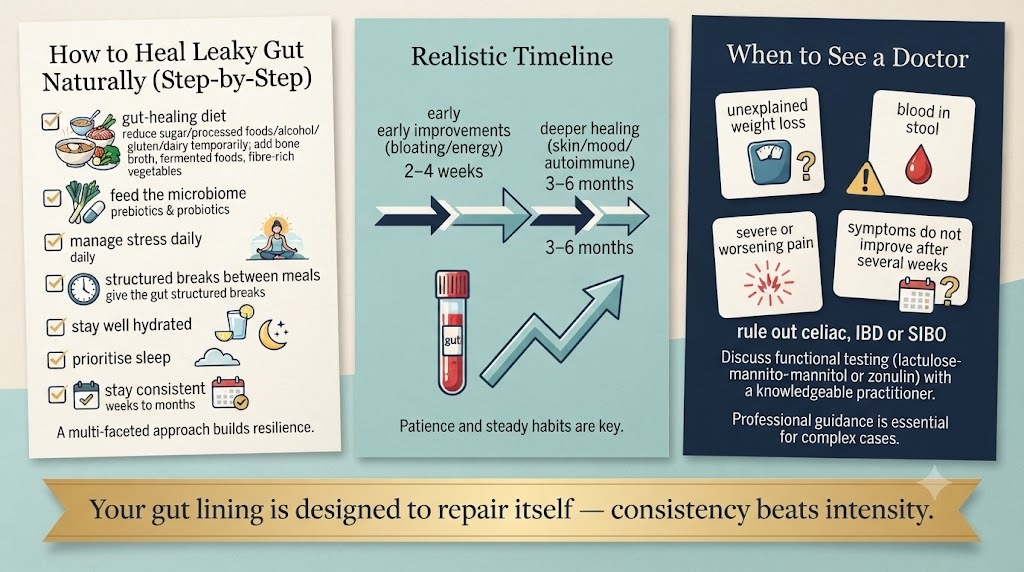
1. Focus on a Gut-Healing Diet
This is the foundation. A leaky gut diet plan generally means cutting back on the things that irritate the gut lining and adding in foods that support repair:
- Remove or reduce: refined sugar, processed foods, excess alcohol, fried foods, and — for many people — gluten and conventional dairy, at least temporarily
- Add in: bone broth (rich in collagen and gelatin, which support gut lining repair), fermented foods like sauerkraut and kimchi, and plenty of fiber-rich vegetables
If you’re not sure where to start, small, consistent swaps make a bigger difference than an overnight overhaul. Our guide on <a href=”https://healthmorph.com/home-remedies-for-better-digestion-7-habits/”>simple home remedies for better digestion</a> is a solid first step if bloating and sluggish digestion are your biggest complaints.
2. Feed Your Gut Microbiome
A diverse, well-fed microbiome is one of the strongest protective factors against leaky gut. Prebiotic fibers (found in foods like onions, garlic, and asparagus) feed your good bacteria, while fermented foods introduce beneficial strains directly. Even something as simple as adding raw onion to your meals has been linked to gut health benefits — you can read more in our piece on the <a href=”https://healthmorph.com/benefits-of-eating-raw-onion/”>surprising benefits of eating raw onion</a>.
3. Consider a Targeted Probiotic
Probiotics won’t single-handedly cure leaky gut, but certain strains — particularly Lactobacillus and Bifidobacterium species — have been shown in studies to support gut barrier integrity and reduce inflammatory markers. Look for a multi-strain formula and give it at least 4-6 weeks before judging results.
4. Manage Stress Intentionally
Since cortisol directly affects your gut lining, stress management isn’t optional if you’re serious about healing leaky gut. Simple daily practices — deep breathing, short walks, consistent sleep, even five minutes of quiet before meals — measurably lower cortisol and support digestion.
5. Give Your Gut Regular Breaks
Constant snacking and grazing doesn’t give your digestive system time to rest and repair between meals. Giving your gut structured breaks between eating windows, or occasionally trying a longer reset, allows repair processes to catch up. If you want to explore this further, our breakdown of a <a href=”https://healthmorph.com/72-hour-fast-benefits-guide/”>72-hour fast and its effects on digestion</a> covers the science in more depth (though a full 72-hour fast isn’t necessary — even a 12-14 hour overnight fasting window helps).
6. Try Natural Gut-Detox Support
Certain traditional remedies have gained attention for supporting gut lining repair and reducing harmful bacteria overgrowth. For example, some people incorporate <a href=”https://healthmorph.com/neem-leaves-for-gut-detox/”>neem leaves for gut detox</a> as part of a broader gut-healing routine — always alongside, never instead of, medical guidance if you have an underlying condition.
7. Stay Hydrated the Smart Way
Proper hydration supports mucus production in the gut lining, which acts as a protective barrier. Infusing water with mint, lemon, or berries can add gut-supportive compounds too — our guide to <a href=”https://healthmorph.com/detox-water-for-weight-loss-belly-fat/”>detox water and its gut health benefits</a> has some easy recipes to try.
8. Rethink Your Breakfast
Mornings set the tone for digestion the rest of the day, and a lot of common breakfast choices work against gut healing rather than for it. If you regularly reach for processed, cheese-heavy, or sugar-loaded breakfasts, it’s worth reading our list of the <a href=”https://healthmorph.com/worst-foods-for-breakfast/”>worst foods for breakfast</a> and swapping in fiber and protein-forward options instead.
9. Get Enough Sleep
Sleep is when a huge amount of cellular repair happens, including in the gut lining. Poor sleep is consistently linked to increased intestinal permeability and microbiome imbalance, so treating sleep as part of your gut-healing plan (not separate from it) matters more than most people realize.
10. Be Patient and Consistent
Healing a leaky gut isn’t an overnight fix. Most people notice initial improvements in bloating and energy within 2-4 weeks of consistent changes, with deeper healing — especially for skin and autoimmune symptoms — taking several months. Consistency beats intensity here.
When to See a Doctor
Natural strategies go a long way, but leaky gut symptoms can overlap with more serious conditions like celiac disease, inflammatory bowel disease, or SIBO (small intestinal bacterial overgrowth). See a doctor or gastroenterologist if you’re experiencing unexplained weight loss, blood in your stool, severe or worsening pain, or symptoms that don’t improve after a few weeks of dietary changes. A functional or integrative medicine practitioner can also run specific testing for intestinal permeability if you want more concrete answers.
Frequently Asked Questions About Leaky Gut
1. What exactly is leaky gut? Leaky gut, or intestinal permeability, is a condition where the tight junctions in your small intestine lining loosen, allowing undigested food particles, toxins, and bacteria to pass into the bloodstream. This can trigger widespread inflammation and a range of symptoms beyond digestion.
2. Is leaky gut a real medical diagnosis? Increased intestinal permeability is a well-documented, measurable phenomenon in medical research, especially in relation to autoimmune and inflammatory conditions. However, “leaky gut syndrome” as a standalone diagnosis isn’t formally recognized by most conventional medical bodies, which is an important distinction to understand.
3. What are the earliest signs of leaky gut? The earliest signs of leaky gut are usually digestive — bloating, gas, and irregular bowel habits — followed by more systemic symptoms like fatigue, brain fog, and skin flare-ups as inflammation builds over time.
4. Can leaky gut cause weight gain? Indirectly, yes. Chronic inflammation from leaky gut can disrupt hormones that regulate hunger and blood sugar, and gut microbiome imbalances have been linked to weight gain and difficulty losing weight in several studies.
5. What foods should I avoid with leaky gut? Generally avoid refined sugar, heavily processed foods, fried foods, excess alcohol, and artificial sweeteners. Many people also find temporarily reducing gluten and conventional dairy helps, since these can be inflammatory for a sensitive gut lining.
6. How long does it take to heal a leaky gut naturally? Most people notice early improvements — less bloating, more stable energy — within 2 to 4 weeks of consistent dietary and lifestyle changes. Full healing of the gut lining and resolution of downstream symptoms like skin issues can take 3 to 6 months or longer, depending on severity.
7. Can stress alone cause leaky gut? Chronic stress is one of the most significant contributors to leaky gut because cortisol directly affects gut lining integrity and motility. While stress alone might not cause it in every case, it’s rarely absent as a contributing factor.
8. Is leaky gut linked to autoimmune disease? Yes, and this is one of the most researched connections in this space. Increased intestinal permeability has been observed in several autoimmune conditions, including type 1 diabetes, celiac disease, and rheumatoid arthritis, though researchers are still working out whether it’s a cause, a consequence, or both.
9. Do probiotics actually help with leaky gut? Certain probiotic strains have shown promise in supporting gut barrier function and reducing inflammatory markers in clinical studies, but they work best as part of a broader approach that includes diet, stress management, and sleep — not as a standalone fix.
10. Can you test for leaky gut? Yes, functional and integrative medicine practitioners sometimes use tests like the lactulose-mannitol test or zonulin blood testing to assess intestinal permeability, though these aren’t standard in most conventional medical settings. If you suspect leaky gut, discussing testing options with a knowledgeable practitioner is a reasonable next step.
The Bottom Line
Leaky gut isn’t a trendy myth — it’s a genuine, research-backed disruption in your gut lining that can ripple out into digestion, skin, mood, energy, and long-term immune health. The encouraging part is that your gut lining is designed to repair itself, and the right combination of a gut-healing diet, stress management, sleep, and gut-friendly habits can make a measurable difference in a matter of weeks. Start with one or two changes — maybe cutting back on processed sugar and adding a daily serving of fermented food — and build from there. Healing leaky gut naturally isn’t about perfection; it’s about consistency.
This article is for educational purposes and isn’t a substitute for personalized medical advice. If you’re dealing with persistent or severe symptoms, please consult a doctor or qualified healthcare provider.







Leave a Reply