
If you’ve bought an Oura Ring, a WHOOP band, or opened your phone’s sleep score every morning only to feel more anxious about your rest, not less, you’re part of a very real 2026 shift. Sleep optimization without gadgets is becoming the more honest, more sustainable version of a trend that spent the last few years telling people to track every metric — and the data increasingly suggests the tracking itself wasn’t the thing actually improving anyone’s sleep.
As one sleep expert put it recently: sleep optimization is less about tracking every single number and more about protecting your circadian rhythm and nervous system so your body can rest well on its own. Here’s what that actually looks like in practice, with no wearable required.
Why 2026 Is Moving Away From Sleep Trackers
Sleep tracking has been a wellness staple for years — cool room, dark room, no screens, and a sleep score to check every morning. And yet, plenty of people using all of it still aren’t sleeping well. The emerging 2026 consensus among sleep researchers and clinicians is subtle but important: obsessively tracking sleep can itself become a source of anxiety that interferes with actually falling asleep, a pattern some researchers now informally call “orthosomnia” — perfectionism about sleep data that backfires.
That doesn’t mean trackers are useless (more on that later) — it means sleep optimization without gadgets, built around understanding and protecting your circadian rhythm, tends to be the more sustainable starting point for most people, especially anyone who’s found tracking makes them more stressed, not less.
The Core Habits That Actually Move the Needle
Your circadian rhythm is your body’s internal 24-hour clock, anchored primarily by light exposure, and it governs far more than just sleep — hormone release, body temperature, digestion, and even mood run on the same cycle. The research-backed habits below work by supporting that clock directly, no device required.
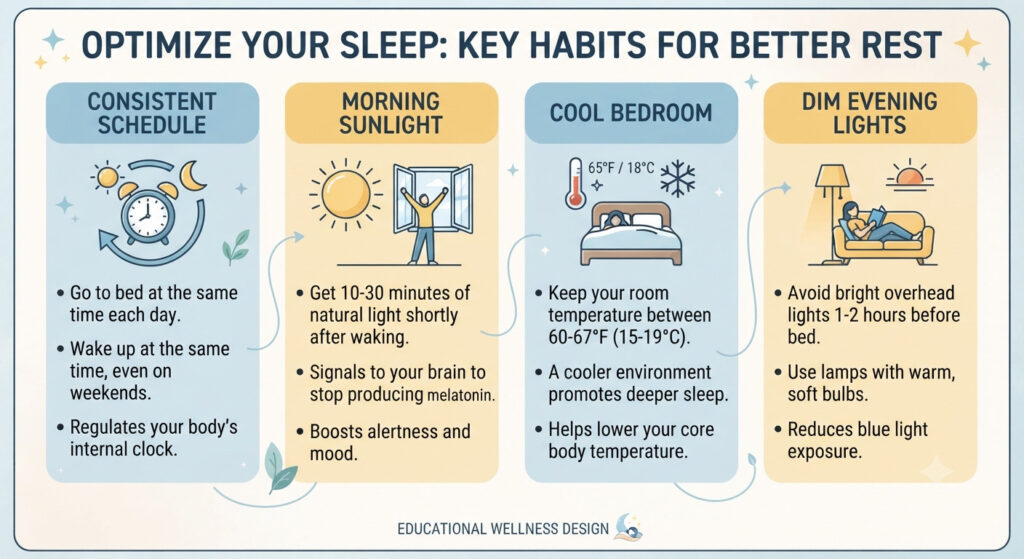
1. Keep a Consistent Sleep and Wake Time
This is consistently identified as one of the single most effective sleep optimization habits — even more than total hours in some research. Irregular sleep timing, even when total sleep duration is adequate, has been linked to poorer cardiovascular health and reduced metabolic resilience. Going to bed and waking up at roughly the same time, including weekends, does more for sleep quality than almost any other single change.
2. Get Morning Sunlight Outdoors
A short walk outside within the first hour or so of waking helps anchor your circadian clock more effectively than most nighttime interventions, since morning light exposure is one of the primary signals your brain uses to set the timing of melatonin release later that night.
3. Cool Your Bedroom Down
As your body prepares for sleep, core temperature naturally drops — and a bedroom that’s too warm actively works against that process. Research continues to support a bedroom temperature of roughly 60–67°F (16–19°C) for most adults as one of the simplest, most effective changes available.
4. Dim Lights and Reduce Screens in the Evening
Artificial light in the evening suppresses melatonin release and delays the circadian signals that regulate sleep timing — a finding well-established in chronobiology research. You don’t need a blackout ritual; simply dimming household lights and reducing bright screen use in the hour or two before bed sends a meaningfully different signal to your nervous system than full-brightness scrolling.
If you’re also managing anxiety alongside sleep issues, our guide on magnesium for sleep and anxiety covers a specific, evidence-informed supplement option that pairs well with these habits.
What to Do During the Day (Sleep Doesn’t Start at Bedtime)
One of the clearer 2026 research takeaways is that sleep quality is shaped by your entire day, not just your bedtime routine:
- Move your body regularly. Regular physical activity supports deeper, more consolidated sleep, though intense exercise very close to bedtime can be stimulating for some people.
- Watch meal timing. Eating at consistent intervals and avoiding heavy meals late at night supports the same metabolic rhythm that governs sleep timing.
- Manage stress proactively, not just at bedtime. Trying to calm a nervous system that’s been in fight-or-flight all day rarely works in the ten minutes before you turn off the lights — daytime stress management pays off at night.
Your Evening Wind-Down, Without an App
A genuinely effective wind-down doesn’t require a sleep app or a subscription — it requires consistency:
- Set a rough “screens down” time an hour before your target bedtime, even if imperfectly followed most nights
- Dim overhead lighting in favor of lamps or warmer light sources
- Do something low-stimulation and offline — reading a physical book, light stretching, or simply sitting quietly
- Keep your room cool and dark, and reserve the bed primarily for sleep rather than working or scrolling in it
When Gadgets Are Actually Worth Using
None of this means sleep trackers are inherently bad — for some people, especially those managing a diagnosed sleep disorder or working with a clinician, objective data can be genuinely useful. The distinction that matters is intent: using a tracker occasionally to spot patterns is different from checking a nightly sleep score the way some people check stock prices, which tends to create the anxiety that undermines the very thing you’re trying to improve.
If you do use a tracker, treat it as one data point among several, not a verdict on how well you’re doing — and if it’s making bedtime more stressful rather than less, that’s a real signal to step back from it, not a sign you need to try harder.
Frequently Asked Questions About Sleep Optimization Without Gadgets
Can you actually improve sleep quality without a sleep tracker? Yes. The habits with the strongest research behind them — consistent sleep/wake times, morning sunlight, a cool dark bedroom, and reduced evening light exposure — don’t require any device to implement or benefit from.
What is the most important habit for sleep optimization without gadgets? Consistent sleep and wake times are commonly cited as one of the single most impactful habits, since irregular sleep timing disrupts circadian rhythm even when total sleep hours are adequate.
Can sleep trackers actually make sleep worse? For some people, yes. Obsessive tracking and nightly sleep-score checking can create anxiety around sleep that interferes with actually falling asleep — a pattern sometimes referred to informally as orthosomnia.
How long does it take to notice better sleep from these habits? Some effects, like a cooler room or reduced evening screen time, can help within days. Circadian rhythm adjustments, like shifting to a consistent sleep schedule, typically take one to two weeks of consistency to show their full benefit.
A Note From Health Morph
This article is for informational purposes only and isn’t a substitute for personalized medical advice. If you’re dealing with chronic insomnia, sleep apnea symptoms, or sleep issues that significantly affect your daily life, please talk with a doctor or sleep specialist rather than relying on lifestyle changes alone.
For more evidence-based guides on rest, stress, and mental wellbeing, explore our Mental Health section, or read our related guide on magnesium for sleep and anxiety.





Leave a Reply