
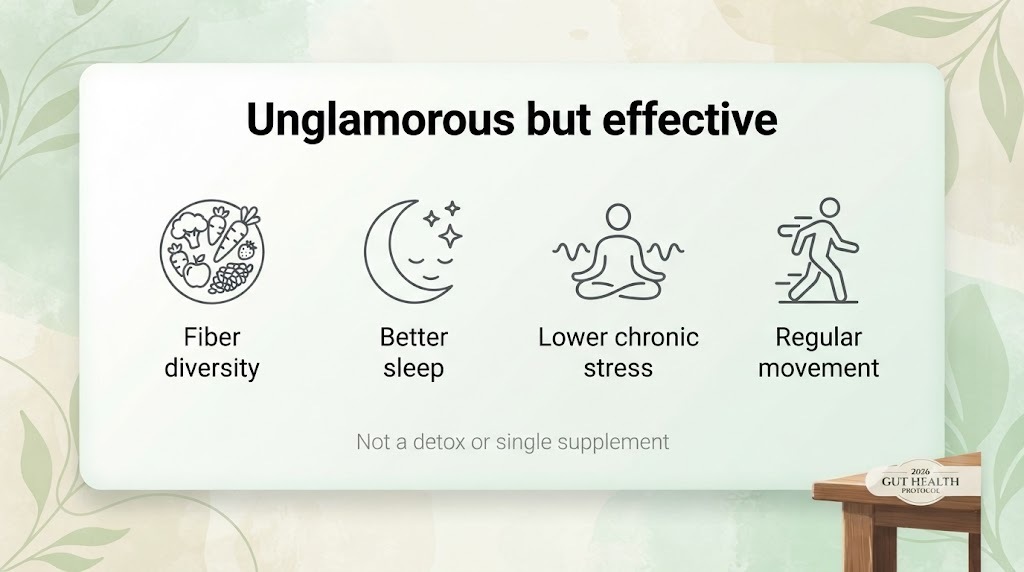
Quick Answer: Gut health refers to the balance and function of trillions of bacteria living in your digestive tract, and it influences far more than digestion — immunity, mood, sleep, and metabolism are all connected to it. Common signs of poor gut health include bloating, irregular bowel movements, fatigue, and skin issues, usually caused by a combination of low fiber intake, chronic stress, poor sleep, and a lack of dietary diversity. The most well-supported fixes are unglamorous but effective: more fiber, more food variety, better sleep, and lower chronic stress.
Gut health has become one of the most searched wellness topics of 2026, and unlike a lot of what trends online, the underlying science genuinely supports the attention. Your gut isn’t just where digestion happens — it’s home to trillions of bacteria that influence your immune system, your mood, your sleep quality, and even how your body regulates blood sugar. When that internal ecosystem is out of balance, the effects show up in ways that don’t always look like a “digestive” problem at all.
The challenge is that most gut health content online falls into one of two extremes: vague wellness-speak (“heal your gut!”) with no actionable substance, or overhyped detox products promising results the research doesn’t actually back. Neither helps you understand what’s actually happening in your body or what genuinely moves the needle.
This guide breaks down what gut health actually means, the real signs your gut microbiome might be out of balance, what typically causes that imbalance, and the evidence-based changes that consistently show up in the research — not the trendiest supplement of the month.
Last Updated: August 2026
What Is Gut Health? Understanding the Microbiome
Your digestive tract hosts an estimated tens of trillions of microorganisms — collectively called the gut microbiome — made up of bacteria, fungi, and other microbes. A healthy gut isn’t defined by the complete absence of “bad” bacteria; it’s defined by diversity and balance, where beneficial bacterial strains outnumber and keep less beneficial ones in check.
This microbiome does far more than break down food. It produces certain vitamins, helps regulate inflammation, trains parts of your immune system, and communicates directly with your brain through what researchers call the gut-brain axis. This is why gut health has moved from a niche digestive-health topic to a central theme across nutrition, mental health, and immunity research.
Signs of Poor Gut Health
Gut imbalance doesn’t always show up as an obvious stomach problem. It can appear in ways that seem unrelated at first glance.
- Digestive symptoms — Bloating, gas, constipation, diarrhea, or a combination that alternates between the two.
- Persistent fatigue — Since your gut plays a role in nutrient absorption and inflammation regulation, an imbalanced microbiome can contribute to low energy that doesn’t clearly trace back to sleep.
- Skin issues — Emerging research has linked gut imbalance to skin conditions like acne and eczema through what’s sometimes called the gut-skin axis.
- Food intolerances that seem to develop over time — A less diverse microbiome can make it harder to properly break down certain foods you previously tolerated without issue.
- Sugar cravings — Certain bacterial imbalances have been associated with increased cravings for sugar and refined carbohydrates, potentially as those bacteria compete for the fuel source they thrive on.
- Mood changes — Because of the gut-brain connection, some research links gut imbalance to increased anxiety or low mood, though this relationship is complex and still being actively studied.
- Frequent illness — Since a significant portion of your immune system activity is influenced by gut bacteria, poor gut health may correlate with getting sick more often.
None of these signs are diagnostic on their own — they overlap with many other conditions — but if several show up together and persist, it’s worth looking at gut health as a possible contributing factor.
What Causes Poor Gut Health?
Gut imbalance rarely comes from a single cause. It’s usually the cumulative effect of several everyday factors.
Low Fiber, Low Diversity Diets
A diet low in fiber and repetitive in the same few foods starves beneficial gut bacteria of the variety they need to thrive. Our guide on high-fiber foods for gut health covers exactly which foods make the biggest difference here and how to increase intake without discomfort.
Chronic Stress
Long-term stress affects gut function through the same gut-brain axis that makes gut health influence mood — it works in both directions. Chronic stress has been shown to alter gut bacteria composition and increase gut permeability, sometimes referred to informally (and often overstated) as “leaky gut.”
Poor Sleep
Sleep and gut health influence each other closely. Disrupted sleep patterns have been associated with reduced microbial diversity, and in turn, gut imbalance can interfere with the production of sleep-related compounds like serotonin, a large share of which is actually produced in the gut. Our guide on Ayurvedic remedies for better sleep covers natural approaches to this side of the equation.
Overuse of Antibiotics
Antibiotics are sometimes medically necessary, but they don’t distinguish between harmful and beneficial bacteria. Frequent or unnecessary antibiotic use can meaningfully reduce microbial diversity, sometimes for months afterward.
Sedentary Lifestyle
Physical activity has been linked to greater gut microbial diversity independent of diet. If you’re looking to build more consistent movement into your routine, our guide on Zone 2 cardio covers a research-backed, sustainable approach to regular exercise.
Alcohol and Highly Processed Foods
Both can disrupt the gut lining and shift bacterial balance toward less beneficial strains, particularly with frequent or heavy consumption.
The Gut-Brain Connection
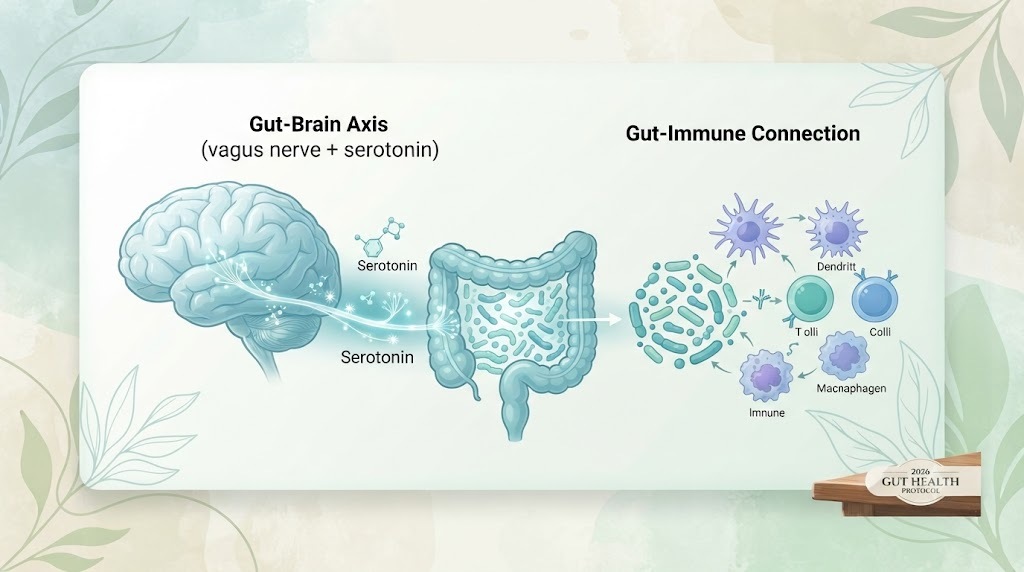
The gut-brain axis is one of the most actively researched areas in gut health science. Your gut and brain communicate constantly through the vagus nerve, hormonal signals, and compounds produced by gut bacteria themselves — including a significant portion of your body’s serotonin, often referred to as a “mood” chemical despite its primary production site being the gut rather than the brain.
This doesn’t mean gut health alone determines mood or mental health, which is a common oversimplification in wellness content. But it does mean gut imbalance can be a genuine contributing factor worth considering, particularly alongside other lifestyle factors like sleep and stress.
The Gut-Immune Connection
A substantial share of your immune system is located in and around your digestive tract, and gut bacteria play a direct role in training immune cells to respond appropriately to threats while avoiding unnecessary inflammation. This is part of why chronic gut imbalance has been associated with increased inflammation markers more broadly, not just localized digestive symptoms.
How to Improve Gut Health Naturally
Prioritize Fiber Diversity
Rather than eating the same one or two fiber sources repeatedly, rotating through a wide range of legumes, whole grains, vegetables, fruits, and seeds feeds a broader range of beneficial bacteria. See our full breakdown in high-fiber foods for gut health for specific food recommendations and practical intake targets.
Add Fermented Foods
Yogurt with live cultures, kefir, sauerkraut, and kimchi introduce beneficial bacteria directly, complementing the prebiotic effect of fiber rather than replacing it.
Manage Chronic Stress
Since stress directly affects gut function through the gut-brain axis, consistent stress management — whether through mindfulness practices, adequate downtime, or simply protecting sleep — has a measurable effect on gut health over time.
Protect Your Sleep
Given how closely sleep and gut health influence each other, prioritizing consistent, quality sleep is one of the more overlooked levers for gut health improvement.
Move Regularly
Regular physical activity supports microbial diversity independent of dietary changes, making it a genuinely complementary — not optional — piece of the picture.
Limit Unnecessary Antibiotic Use
This doesn’t mean avoiding antibiotics when medically necessary, but being thoughtful about unnecessary use, and considering how to support gut recovery afterward with your doctor’s guidance.
Stay Hydrated
Adequate water intake supports the movement of fiber through the digestive tract and overall digestive function more broadly.
Common Gut Health Myths
- “Detox teas and cleanses reset your gut.” There’s little credible evidence that detox products meaningfully improve microbiome health, and some laxative-based cleanses can actually disrupt gut function with regular use.
- “Leaky gut is a diagnosable medical condition on its own.” Increased intestinal permeability is a real, studied phenomenon, but “leaky gut syndrome” as marketed by many wellness products oversimplifies and overstates what the research actually supports.
- “More probiotics is always better.” Probiotic needs vary by individual, and megadosing isn’t necessarily more effective than a moderate, consistent intake combined with adequate fiber to feed those bacteria.
- “Gut health only affects digestion.” As covered above, the research connects gut health to immunity, mood, and metabolic health well beyond digestive symptoms alone.
When to See a Doctor
Occasional bloating or digestive discomfort is common and not usually cause for concern. However, persistent or severe symptoms — ongoing abdominal pain, unexplained weight loss, blood in stool, or digestive symptoms that significantly disrupt daily life — warrant a conversation with a healthcare provider rather than an attempt to self-treat through diet alone. Gut health strategies support general wellbeing, but they aren’t a substitute for medical evaluation of persistent symptoms.
Frequently Asked Questions
What are the first signs of an unhealthy gut? Bloating, irregular bowel movements, persistent fatigue, and skin issues are among the earliest and most common signs, though they can overlap with other conditions and aren’t diagnostic on their own.
How long does it take to improve gut health? Meaningful shifts in gut bacteria composition typically take several weeks of consistent dietary and lifestyle changes, not days, though some symptoms like bloating may improve sooner with specific adjustments like better hydration.
Can stress really affect gut health? Yes. Chronic stress affects gut function through the gut-brain axis and has been shown to alter both gut bacteria composition and gut lining integrity over time.
Do I need probiotic supplements for good gut health? Not necessarily. A fiber-rich, diverse diet combined with naturally fermented foods provides substantial gut health support for most people, and whole-food sources are generally preferred over supplements as a first approach.
Is gut health connected to mental health? There’s a genuine, well-studied connection through the gut-brain axis, including gut bacteria’s role in producing serotonin. However, gut health is one contributing factor among many, not a standalone explanation for mental health conditions.
Final Thoughts
Gut health isn’t a trend that will fade once the next wellness buzzword takes over — the underlying science, particularly around the gut-brain and gut-immune connections, is genuinely well-supported and still expanding. What actually helps, though, tends to be far less exciting than what gets marketed: consistent fiber intake, dietary variety, better sleep, regular movement, and lower chronic stress, sustained over weeks and months rather than a single detox or supplement.
If you’re building a broader gut-health routine, start with our detailed guide on high-fiber foods for gut health, and pair it with attention to sleep and stress — our guides on Ayurvedic remedies for better sleep and magnesium for sleep and anxiety cover two of the most overlooked pieces of that same picture.
This article is for educational purposes only and is not a substitute for professional medical advice. If you’re experiencing persistent digestive symptoms, please consult a qualified healthcare provider. Learn more about our approach on our About Us page







Leave a Reply