
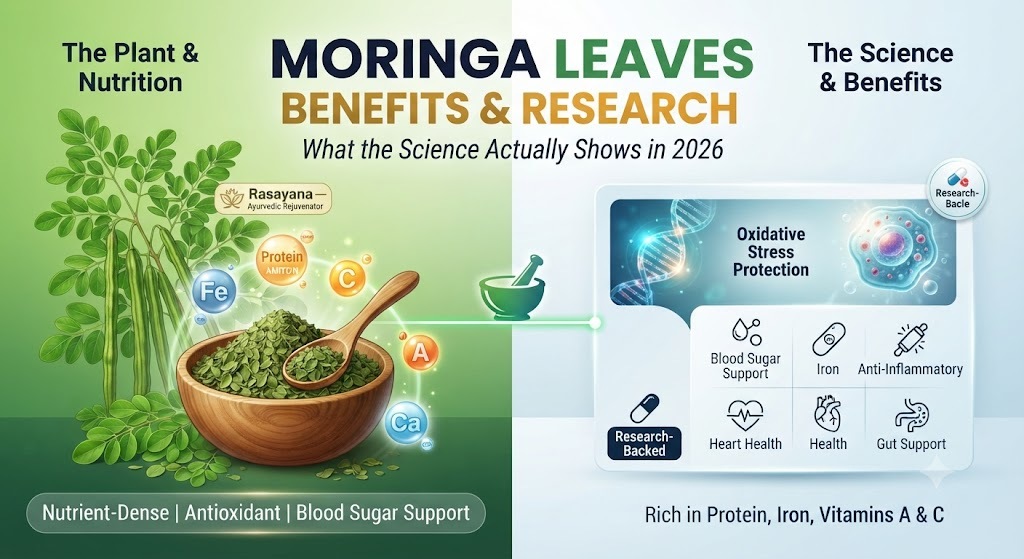
If you’ve been hearing about moringa leaves benefits everywhere lately — from your family WhatsApp group to wellness reels — you’re not imagining it. Moringa oleifera, commonly known as drumstick leaves in India, has quietly become one of the most researched plant-based superfoods for supporting oxidative stress, blood sugar balance, and inflammation — three things that often build up silently in the body long before a diagnosis shows up on paper. In this guide, we’ll walk through what moringa leaves actually do inside the body, what the science genuinely supports (and doesn’t), how to take moringa safely, and which other kitchen ingredients pair well with it. This is the same evidence-first approach we use across every Natural Remedies & Ayurveda guide on Health Morph.
Why “Silent” Health Problems Deserve More Attention
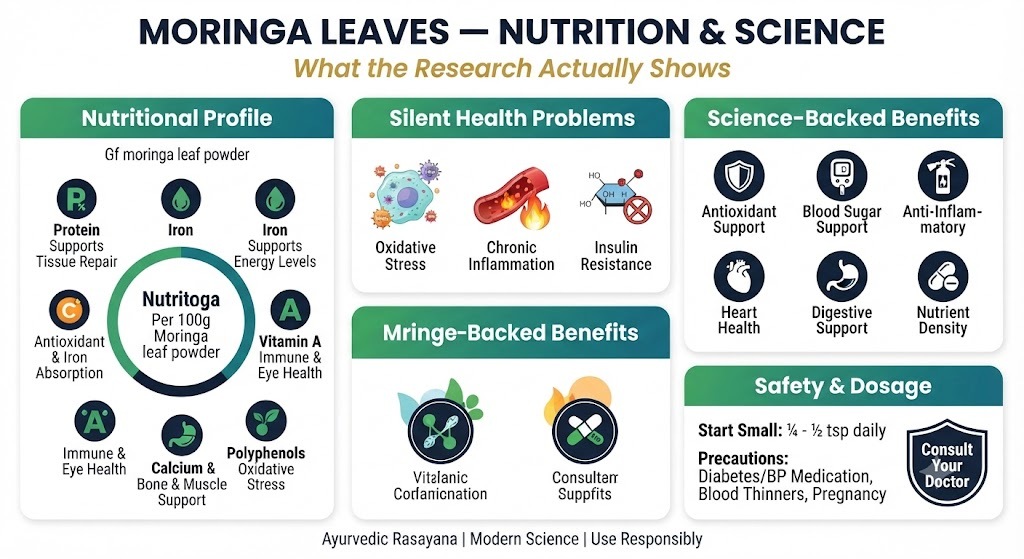
A normal blood report and the absence of pain don’t automatically mean everything inside your body is fine. Three processes are largely responsible for this: oxidative stress (an excess of free radicals that damage healthy cells faster than the body’s antioxidants can neutralise them), chronic low-grade inflammation (which doesn’t look like swelling or pain but slowly affects joints, blood vessels, the liver, and hormone balance), and insulin resistance (where fat metabolism starts to falter well before blood sugar numbers cross into a diabetic range). Heart disease and type 2 diabetes rarely appear overnight — they’re usually the visible endpoint of years of these three processes running quietly in the background. This is exactly the gap moringa leaves are being studied for, alongside the everyday habit changes we cover in our guide on walking after meals for blood sugar control.
What Is Moringa (Drumstick Leaves)?
Moringa oleifera is a fast-growing tree native to South Asia, now cultivated across Africa, Southeast Asia, and Latin America. You’ve likely eaten the long, ridged pods (drumsticks) in sambar or curry — but nutrition researchers are far more interested in the tree’s green leaves, which carry a much denser concentration of vitamins, minerals, and plant compounds than the pods themselves. In Ayurveda, moringa is classified as a rasayana — a rejuvenating substance believed to support long-term vitality — and modern nutritional science is now backing several of these traditional claims with lab and clinical data.
Moringa Leaves Nutritional Profile
| Nutrient (per 100g dried leaf powder, approx.) | Why it matters |
|---|---|
| Protein | Supports tissue repair and muscle maintenance |
| Iron | Supports energy levels and helps prevent fatigue-related deficiency |
| Vitamin C | A key antioxidant that also supports iron absorption |
| Vitamin A (Beta-carotene) | Supports immune function and eye health |
| Calcium & Magnesium | Support bone density and muscle/nerve function |
| Polyphenols (quercetin, chlorogenic acid) | Plant antioxidants linked to reduced oxidative stress |
Values vary by growing region, harvest method, and processing — always check the label of your specific product.
Science-Backed Moringa Leaves Benefits
1. Nutrient Density for Everyday Deficiency Gaps
Modern diets built around ultra-processed food, fertiliser-heavy produce, and hormone-fed meat often leave cells under-fed even when the stomach feels full. Moringa leaves naturally contain high levels of protein, iron, vitamin C, vitamin A, magnesium, and B-complex vitamins, giving the body genuine raw material for repair and immune defence. This is one reason moringa is widely used in maternal and child nutrition programs in parts of Africa and South Asia.
2. Antioxidant Support Against Oxidative Stress
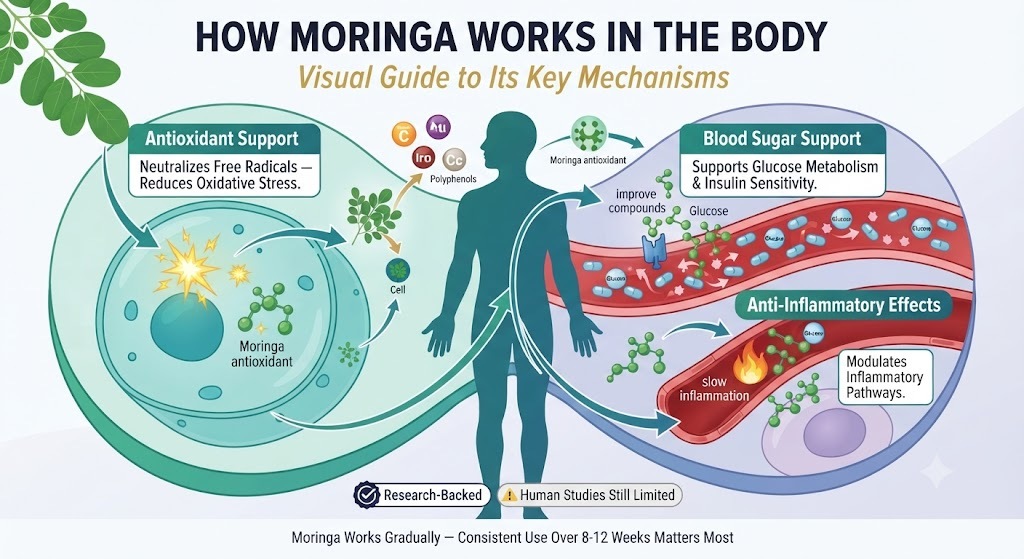
Moringa leaves contain a well-documented set of antioxidants — including vitamin C, beta-carotene, quercetin, and chlorogenic acid — which help neutralise free radicals before they damage joints, blood vessels, and organ tissue. A comprehensive review published in Food Chemistry: Molecular Sciences highlighted moringa’s high phenolic and flavonoid content as a key driver of its protective effects against oxidative cellular damage. Laboratory and small human trials show moringa leaf extract can measurably raise antioxidant capacity, though large-scale human trials are still limited.
3. Blood Sugar and Insulin Resistance Support
This is one of the most studied areas of moringa research. A review in the International Journal of Molecular Sciences summarising both animal and limited human studies found that moringa leaf compounds may support glucose metabolism and improve insulin sensitivity markers. In one human trial referenced in a broader review published in Journal of King Saud University – Science, 46 individuals with type 2 diabetes who consumed daily moringa leaf preparations showed measurable improvements in blood sugar markers. Importantly, this doesn’t mean moringa can offset a poor diet — it functions as a supportive layer for people already working on lifestyle changes, particularly those with prediabetes, borderline sugar levels, or a family history of diabetes.
4. Anti-Inflammatory Effects
Chronic inflammation is often invisible — it doesn’t look like a swollen joint, but it stiffens blood vessels, destabilises arterial plaque, and gradually slows metabolism. Research compiled in a 2017 review in Oxidative Medicine and Cellular Longevity documented moringa leaf compounds’ ability to modulate inflammatory pathways across studies on hypercholesterolemia, high blood pressure, diabetes, and fatty liver disease — though the authors were clear that most of this evidence comes from animal and cell studies, with human data still catching up.
5. Cholesterol and Heart Health Support
Multiple animal studies, including research published in Journal of Ethnopharmacology-linked literature, found moringa leaf extract reduced serum cholesterol by up to 14% in high-fat-diet models and lowered LDL and VLDL levels. Human evidence is more limited but directionally similar — some small trials suggest moringa may support healthier LDL cholesterol levels when combined with a heart-conscious diet. It is not a substitute for prescribed cholesterol medication, but it may serve as a supportive addition for people already improving their diet and activity levels. Our guide to high BP and cholesterol natural remedies covers several other kitchen-based options that work well alongside moringa.
6. Digestive and Gut Support
Moringa extracts have shown a mild laxative effect in early research and may help reduce excess stomach acid secretion, which is why some traditional systems use it for occasional constipation and general digestive comfort. Most of this evidence again comes from animal studies, so it should be treated as a gentle supportive habit rather than a treatment for diagnosed digestive conditions.
More Ingredients That Pair Well With Moringa
Moringa doesn’t have to work alone. These kitchen-backed ingredients target similar pathways — oxidative stress, inflammation, and blood sugar — and are worth knowing about:
- Flaxseed — Rich in lignans and omega-3 ALA, supportive for cholesterol and hormone balance; we cover this in our seeds with curd for calcium deficiency and bone health guide.
- Fenugreek (Methi) Seeds — Contains soluble fibre that slows glucose absorption, commonly paired with moringa for blood sugar support.
- Giloy (Tinospora cordifolia) — A traditional immune-modulating herb, though it carries its own liver-safety considerations worth understanding before use — see our detailed breakdown in Giloy Benefits and the Liver Safety Controversy.
- Coriander Seed Water — A gentle traditional remedy some studies link to modest blood sugar and cholesterol support; full details in our Coriander Seed Water Benefits guide.
- Garlic and Hibiscus — Both appear in doctor-referenced natural approaches to blood pressure and cholesterol management, discussed in our Natural Remedy for High BP and Cholesterol article.
- Turmeric and Black Pepper — A classic anti-inflammatory pairing (piperine improves curcumin absorption significantly) that complements moringa’s own anti-inflammatory compounds.
How to Take Moringa Leaves Safely
Moringa is available as fresh or dried leaves, powder, capsules, and tablets. A minimally processed, single-ingredient moringa leaf powder — free of fillers or added compounds — is generally the most straightforward way to add it to a daily routine, stirred into warm water, curd, buttermilk, juice, or sprinkled over a salad. Start with a small amount and observe how your body responds before increasing intake, and always check the label for third-party quality testing or a clear ingredient list with no unnecessary additives.
Precautions and Who Should Be Careful
Moringa is generally well tolerated as a food, but a few groups should be cautious:
- People on diabetes or blood pressure medication — because moringa may lower blood sugar or blood pressure, combining it with medication could push levels too low. Talk to your doctor before adding it.
- Pregnant women — certain parts of the moringa plant (particularly the root and bark) are traditionally avoided in pregnancy; leaf use should be discussed with a healthcare provider first.
- People on blood thinners — moringa’s vitamin K content can interact with anticoagulant medication.
- Anyone starting a new supplement — begin with a small dose and monitor for any digestive discomfort.
This article is for general information only and isn’t a substitute for professional medical advice — see our full Disclaimer for details.
Frequently Asked Questions
1. What are the main moringa leaves benefits backed by science? Current research points to antioxidant support, blood sugar and insulin sensitivity support, anti-inflammatory effects, and cholesterol support — though most human trial data is still limited compared to animal studies.
2. Can moringa leaves cure diabetes? No. Moringa leaves are not a cure or a replacement for prescribed diabetes medication. Research suggests they may support glucose metabolism as part of a broader lifestyle and treatment plan, not as a standalone treatment.
3. How much moringa powder should I take daily? Most sources suggest starting with roughly a quarter to half a teaspoon once or twice daily, though the right amount depends on the product’s concentration and your individual health status — check with a doctor if you’re on medication.
4. Is moringa leaf powder better than moringa capsules? Both can work; powder allows more flexible dosing and is often less processed, while capsules are more convenient for people who dislike the taste. Choose whichever form has a clean, filler-free ingredient list.
5. Are there any side effects of moringa leaves? Moringa leaves are generally well tolerated, but excessive intake may cause mild digestive upset. People on diabetes, blood pressure, or blood-thinning medication should consult a doctor before regular use.
6. Can pregnant women take moringa leaves? Moringa leaf tea or powder in food amounts is generally considered lower-risk than the root or bark, but pregnant women should still check with their doctor before using moringa supplements regularly.
7. Does moringa help with weight loss? There’s no strong direct evidence that moringa causes weight loss on its own. Its nutrient density and mild metabolic support may complement a broader weight-management plan, but it isn’t a standalone fat-loss solution.
8. How long does it take to see benefits from moringa leaves? Most traditional and research-based usage suggests consistent daily use over 8–12 weeks before noticing changes in energy, digestion, or metabolic markers — moringa works gradually, not instantly.
9. Can I take moringa leaves with turmeric or fenugreek? Yes, moringa is commonly combined with turmeric, fenugreek, flaxseed, or coriander seed water in traditional and modern wellness routines targeting inflammation and blood sugar support.
10. Is moringa safe for daily long-term use? Moringa leaves have a long history of dietary use and are generally regarded as safe in food-level amounts. For concentrated supplement use over the long term, periodic check-ins with a healthcare provider are still recommended, especially if you’re managing an existing condition.
About Health Morph
This guide was researched and written by the Health Morph editorial team, drawing on peer-reviewed nutrition and pharmacology literature alongside traditional Ayurvedic use.
Publication: Health Morph — Your Trusted Guide for Holistic Health & Wellness Website: https://healthmorph.com Office: Operating remotely from Mumbai, India Email: info@healthmorph.com About Us: https://healthmorph.com/about-us/ Contact: https://healthmorph.com/contact-health-morph/ Disclaimer: https://healthmorph.com/disclaimer/
Note: Health Morph’s official pages list an email contact and a Mumbai-based remote operating base, but no public company registration/CIN number was listed on the site. If you have that registrar detail, share it and I’ll add it to this section.
This article is for informational purposes only and does not constitute medical advice. If you have a diagnosed condition or take regular medication, please consult a qualified healthcare professional before starting moringa or any new supplement.







Leave a Reply