
If you’ve seen coriander seed water benefits trending across wellness reels lately, you’ve probably heard bold claims — that a glass of this simple drink can fix blood sugar, melt bloating, balance hormones, and detox your entire body overnight. The truth, as usual, sits somewhere between the hype and total dismissal. Coriander (Coriandrum sativum) has genuine, published research behind several of its traditional uses, particularly for blood sugar and cholesterol, while other claims — like fixing PCOS or “flushing toxins” — are weaker than social media suggests. This guide walks through exactly what the science says about coriander seed water benefits, how to prepare it properly, who should be cautious, and where the evidence actually stops.
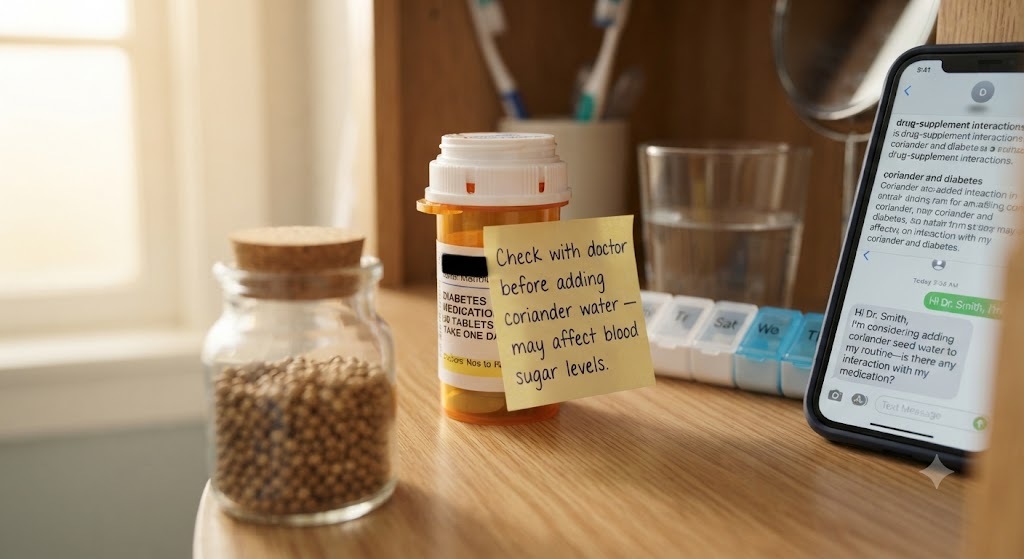
A quick note before we dive in: coriander seed water is a supportive dietary habit, not a medical treatment. If you’re on medication for diabetes, blood pressure, or any chronic condition, talk to your doctor before adding it to your routine — some of its effects are strong enough to interact with medication. For more on how we evaluate health claims, see our disclaimer page.
What Is Coriander Seed Water and Why It’s Different From Just Eating the Spice
Coriander seed water is made by soaking whole coriander seeds in water overnight (or steeping them in hot water for 10–15 minutes) and drinking the strained liquid, typically first thing in the morning on an empty stomach. Soaking allows water-soluble compounds in the seed — including linalool, flavonoids, iron, magnesium, and vitamin C — to leach into the liquid, so you’re consuming a concentrated infusion rather than just the whole seed. This is different from using coriander as a cooking spice, where much of its water-soluble content stays inside the seed or gets diluted through cooking.

Evidence-Based Coriander Seed Water Benefits
1. Blood Sugar Regulation — The Strongest Evidence
This is genuinely the best-studied area of coriander seed water benefits. A clinical trial in patients with type 2 diabetes gave one group 1,000 mg of coriander seed powder daily for six weeks, and researchers found measurable improvements in fasting blood sugar, insulin resistance markers, and lipid profile compared to placebo. A separate experimental study among pre-diabetic adults found that daily coriander seed powder produced a statistically significant drop in fasting glucose, from an average of roughly 120 mg/dL down to about 112 mg/dL over the study period. At the mechanistic level, research suggests coriander seeds help the liver store more glucose as glycogen, slow down new glucose production in the liver, and speed up how efficiently cells burn glucose for energy, with most human studies using around 2 grams of coriander seed powder daily to see these effects.
Because this effect is genuinely potent, it comes with an important caution: people who already have low blood sugar or who are taking diabetes medication should use coriander cautiously, since combining it with glucose-lowering drugs can push blood sugar too low. If you’re managing blood sugar through lifestyle changes, pairing this habit with proven approaches like walking after meals for blood sugar control tends to compound the benefit far more reliably than any single remedy alone.
2. Cholesterol and Heart Health
The same clinical trial that looked at blood sugar also measured lipid profiles, and found coriander seed supplementation improved total cholesterol, LDL, and triglycerides in people with type 2 diabetes. A separate trial specifically in people with elevated cholesterol tested 2 grams of coriander seed powder daily and found it significantly reduced total cholesterol and LDL cholesterol, while also improving HDL, the protective form. Animal research backs this up mechanistically — coriander is documented to have hypolipidemic (cholesterol-lowering) as well as antioxidant and anti-inflammatory properties, largely attributed to linalool, its dominant bioactive compound. If you’re specifically focused on heart health, our detailed breakdown of evidence-based natural remedies for high BP and cholesterol covers exactly which other desi remedies hold up to clinical scrutiny and which ones don’t.
3. Digestion and Bloating
Traditional use of coriander for digestive discomfort has decent backing. Clinical research in people with irritable bowel syndrome found that coriander-containing preparations significantly reduced abdominal discomfort and bloating. This tracks with why coriander seed water is so often recommended for morning bloating and a “heavy stomach” feeling — it appears to have a genuine, if modest, carminative (gas-relieving) effect. Poor sleep can also worsen bloating and gut sensitivity through its effect on cortisol, so if mornings feel rough beyond just digestion, our guide on how to fall asleep faster is worth pairing with this habit. If digestive discomfort is a recurring issue for you beyond what diet changes address, it’s worth exploring what’s driving it, since chronic gut symptoms sometimes trace back to stress and nervous system dysregulation — our guide on somatic therapy and nervous system regulation covers this gut-brain connection in more depth.
4. Diuretic Effect and Water Retention
This is one of the more interesting, lesser-known coriander seed water benefits, and it does have direct experimental support. A controlled study using an aqueous extract of coriander seed found it increased diuresis, electrolyte excretion, and glomerular filtration rate in a dose-dependent way when tested against a standard pharmaceutical diuretic. The researchers concluded this validated coriander’s traditional use as a diuretic plant. In practical terms, this is the most plausible explanation for why people report feeling “less puffy” or noticing reduced under-eye swelling within days of starting coriander seed water — it genuinely does help the body release excess sodium and fluid, similar in mechanism (though far milder) to how prescription diuretics work. Since excess sodium is also directly tied to blood pressure, this mechanism links back to the same principles covered in our habits that damage your kidneys guide, where fluid and sodium balance play a central role in kidney and cardiovascular health.
5. Liver Support and Antioxidant Activity
Coriander seed’s liver-protective reputation is real in animal research but still limited in humans. Multiple studies show coriander seed extract mitigated oxidative stress and improved liver function markers in rats with diet-induced liver damage, and other research found coriander-based preparations meaningfully reduced liver enzyme elevations in animals exposed to toxic compounds. These findings are consistent and mechanistically plausible — coriander is rich in antioxidant compounds that reduce oxidative stress, which is a genuine driver of liver strain — but it’s worth being honest that this evidence comes almost entirely from animal models, not human clinical trials. It supports liver health as part of an overall antioxidant-rich diet rather than functioning as a stand-alone “liver detox.”
6. Hormone Balance and Menstrual Health — Where the Evidence Gets Weaker
This is the coriander seed water benefit most exaggerated online, so it deserves a clear-eyed look. Preliminary lab and animal research shows coriander’s plant compounds may modulate pathways involved in insulin sensitivity and hormonal regulation, which is why some early-stage PCOS research is exploring it. But claims that coriander water can “delay periods” or “induce periods within a day” have been directly fact-checked and found false by medical reviewers — current evidence only supports a role in reducing menstrual discomfort, not in regulating or triggering menstruation. A gynecologist reviewing similar claims noted plainly that there is no solid clinical evidence supporting rapid menstrual regulation from coriander seed water, and menstrual timing is influenced by far bigger factors like stress, weight, and underlying health conditions. If period irregularity, heavy pain, or suspected PCOS is a real concern for you, that’s worth raising with a doctor directly rather than relying on a home remedy.
How to Make Coriander Seed Water (The Right Way)
- Take 1 tablespoon of whole coriander seeds and add them to a clean glass.
- Pour in about 300 ml (roughly 1.5 cups) of plain water.
- Cover and let it soak overnight, or steep in freshly boiled water for 10–15 minutes if you want it same-day.
- In the morning, strain the water and drink it on an empty stomach — a pinch of rock salt and a squeeze of lemon are optional but traditional additions.
- Chew and eat the softened seeds afterward rather than discarding them, since much of the fiber and mineral content remains in the seed itself.
- Most traditional protocols suggest doing this for around 3 weeks, followed by a short break, rather than using it indefinitely without pause.
Pairing this habit with other consistent morning rituals tends to work better than doing it in isolation — if you’re building out a fuller routine, our guide to an Ayurvedic morning routine (Dinacharya) breaks down which traditional habits are genuinely evidence-backed and which are mostly ritual. Consistent sleep also plays a bigger role in bloating and water retention than most people realize — see our deep dive on magnesium and sleep research if disrupted sleep is part of your picture too.
Who Should Be Cautious or Avoid Coriander Seed Water
- People on diabetes medication: Because coriander genuinely lowers blood sugar, combining it with glucose-lowering drugs can cause hypoglycemia. Check with your doctor before starting.
- Pregnant women, especially in the first trimester: Traditional and precautionary guidance recommends avoiding concentrated coriander seed preparations during early pregnancy.
- People with kidney disease: Given its diuretic effect, anyone with existing kidney conditions should consult a doctor before regular use.
- Anyone with a coriander or cilantro allergy: This is more common than people assume and can range from mild to significant reactions.
- People on blood pressure medication: Since coriander has mild blood-pressure-lowering properties of its own, combining it with BP medication should be discussed with a healthcare provider to avoid additive effects.
Coriander Seed Water vs. Other Popular Desi Morning Remedies
Coriander seed water is often mentioned in the same breath as other soaked-seed remedies, but each has a different primary strength. Fenugreek (methi) water leans harder into cholesterol and blood sugar support through its soluble fiber content. Flaxseed is stronger for omega-3s and lipid profile — something we cover in detail in our piece on natural remedies for hypothyroidism, since flaxseed’s fiber and lignans matter for thyroid-related cholesterol issues too. Coriander seed water’s relative strength is the combination of a genuine diuretic effect with solid blood sugar and cholesterol support, making it a reasonable rotation option rather than a single “best” remedy.
When to See a Doctor
If bloating, water retention, or blood sugar concerns are persistent, worsening, or accompanied by other symptoms — unexplained weight change, extreme fatigue, irregular periods, or swelling that doesn’t resolve — don’t rely on home remedies alone. These can be signs of underlying conditions like thyroid dysfunction, PCOS, or kidney issues that need proper diagnosis and treatment, not just dietary tweaks.
Conclusion
Coriander seed water benefits hold up better than most trending “detox” drinks, but not evenly across every claim. The blood sugar and cholesterol effects have real clinical trial support, the diuretic effect is experimentally confirmed, and the digestive benefits track with traditional use. The hormone-balancing and “instant detox” claims, on the other hand, are where marketing has outpaced the science — treat those as unproven rather than dismiss coriander seed water altogether. Used consistently, in the right dose, and alongside — not instead of — medical care, it’s a genuinely reasonable addition to a health-focused morning routine.
For more evidence-based guides like this one, explore our Natural Remedies & Ayurveda category and Nutrition & Diet category. You can also read more about us and our mission, check our FAQ page, or get in touch with questions.
Frequently Asked Questions
1. What are the main coriander seed water benefits backed by science? The strongest evidence supports improved fasting blood sugar, better cholesterol (lower LDL, higher HDL), a genuine mild diuretic effect that reduces bloating and puffiness, and reduced digestive discomfort.
2. How long does it take to see results from coriander seed water? Clinical studies measuring blood sugar and cholesterol improvements typically ran for 6 to 8 weeks of consistent daily use, while reduced bloating and puffiness may be noticeable within the first few days.
3. Can coriander seed water really help with weight loss? Indirectly, yes — its diuretic effect reduces water-weight bloating quickly, and its blood sugar-stabilizing effect may reduce cravings, but there’s no direct clinical evidence it burns fat on its own.
4. Is it true that coriander seed water can delay or induce periods? No, this claim has been fact-checked and found false by medical reviewers. Coriander may help ease menstrual discomfort, but there’s no scientific evidence it can trigger, delay, or regulate your period on a set timeline.
5. Can diabetics drink coriander seed water? Yes, and it may genuinely help lower blood sugar, but anyone on diabetes medication should consult their doctor first, since the combined effect can occasionally push blood sugar too low.
6. Is coriander seed water safe during pregnancy? Concentrated coriander seed preparations are generally advised against, especially in the first trimester. Speak with your doctor before using it if you’re pregnant.
7. How is coriander seed water different from just eating coriander in cooking? Soaking or steeping the seeds pulls water-soluble compounds like linalool, iron, and antioxidants directly into the water in a concentrated form, which is different from the smaller amounts absorbed through cooked coriander in meals.
8. Does coriander seed water actually detox the liver? The liver-protective evidence is real but currently limited to animal studies. It’s reasonable to view it as supportive of liver health through antioxidant activity, not as a stand-alone “detox” treatment.
9. Can coriander seed water lower blood pressure? There’s modest evidence for this, largely through its mild diuretic action, which helps the body clear excess sodium. It shouldn’t replace prescribed blood pressure medication.
10. Who should avoid drinking coriander seed water? People with a coriander allergy, those on diabetes or blood pressure medication without medical guidance, pregnant women (especially in early pregnancy), and people with existing kidney conditions should be cautious or avoid it.
11. Can I drink coriander seed water every day long-term? Most traditional protocols recommend around 3 weeks of daily use followed by a short break, rather than indefinite continuous use, though it’s generally considered safe as an occasional dietary habit for most healthy adults.
Disclaimer: This article is for informational purposes only and is not a substitute for professional medical advice, diagnosis, or treatment. Always consult a qualified doctor before changing your diet, medication, or health routine, especially if you have an existing medical condition. Read our full Disclaimer for details.
Sources
This article draws on peer-reviewed clinical trials and research published in journals and databases including PubMed, PMC (National Library of Medicine), ScienceDirect, the Asian Pacific Journal of Tropical Medicine, and fact-checks published by medical reviewers on claims relating to coriander seed water and menstrual health.







Leave a Reply