An Ayurvedic morning routine (Dinacharya) has quietly become one of the most searched wellness rituals of 2026, riding the same wave that made “nervous system regulation” the Global Wellness Summit’s top trend of the year. The idea is appealing precisely because it’s simple: a handful of five-thousand-year-old habits, done before breakfast, that supposedly reset your whole day. What’s less common is anyone actually checking which parts of that routine hold up under a microscope and which parts are just nicely marketed tradition. So we did — oil pulling, tongue scraping, and abhyanga (self oil massage) each have real, published research behind them now, and the honest picture is more interesting than either the skeptics or the wellness influencers usually let on.
What Dinacharya Actually Is
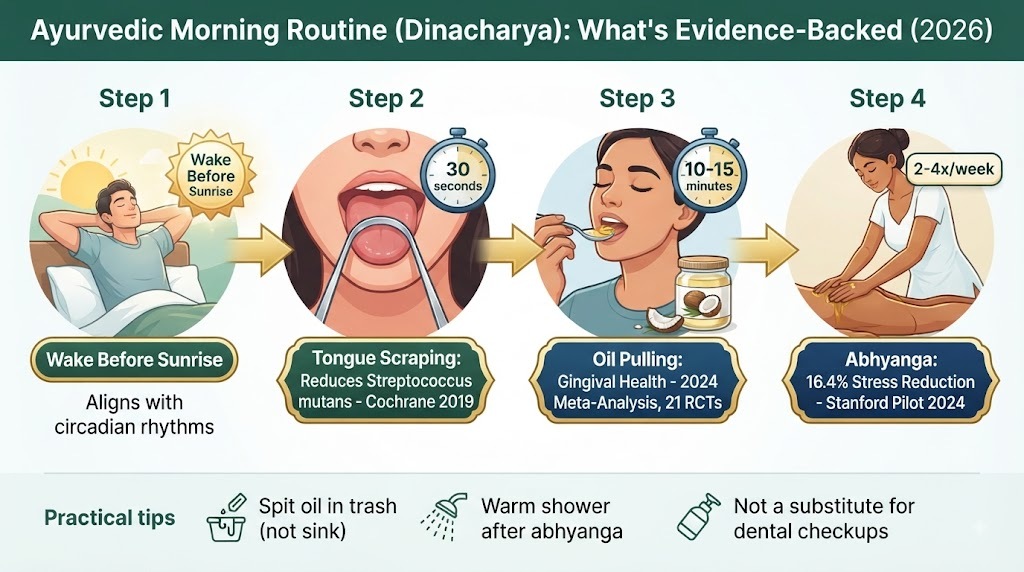
Dinacharya translates roughly to “daily routine” in Sanskrit, and in classical Ayurvedic texts like the Charaka Samhita, it refers to a specific sequence of morning practices meant to align the body with natural circadian rhythms before the day’s demands take over. The modern version that’s gone viral typically includes waking before sunrise, tongue scraping, oil pulling, self-massage with warm oil, and some form of gentle movement or meditation — all done in a specific order, on an empty stomach, before eating or drinking anything else.
The 2026 “ritual wellness” trend has pulled Dinacharya into the mainstream largely because it fits a broader cultural shift away from pure biohacking and toward what the Global Wellness Summit specifically termed “precision nervous system optimization” — the desire for practices that calm rather than just optimize. That’s a genuinely different appeal than the supplement-and-tracker approach dominating most of wellness culture, and it overlaps with the same instinct we address head-on in our piece on cortisol face and cortisol detox — the desire for a ritual that actually calms the nervous system, versus one that just gets marketed as if it does.
Oil Pulling: The Practice With the Most Research Behind It
Oil pulling — swishing a tablespoon of oil (traditionally sesame or coconut) around your mouth for 10 to 20 minutes before spitting it out — is genuinely the best-studied piece of the entire Ayurvedic morning routine, and the research is more encouraging than you might expect from a practice this old.
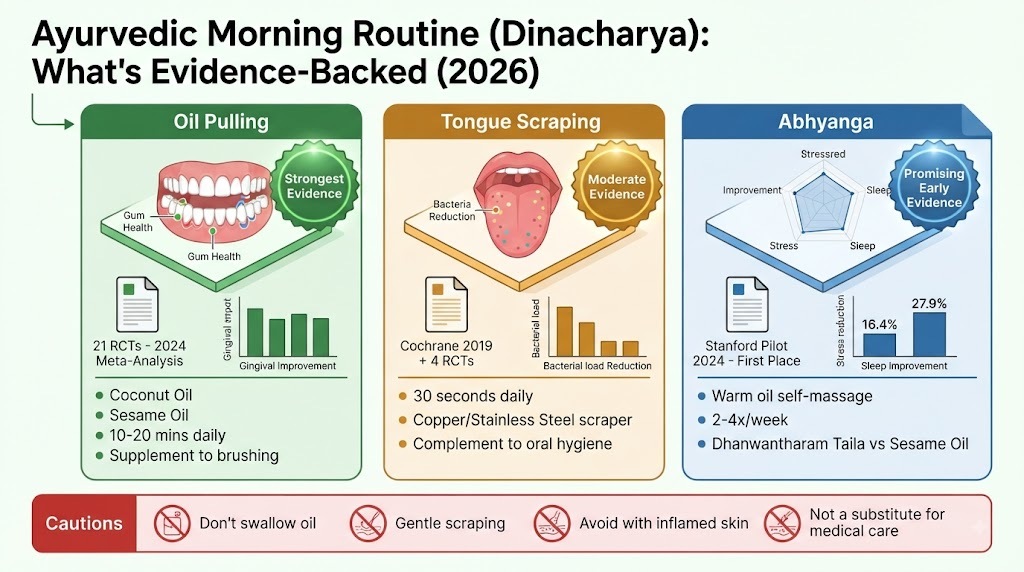
A 2024 systematic review and meta-analysis published in the International Journal of Dental Hygiene, pooling 21 randomized controlled trials, found that oil pulling produced a statistically significant improvement in gingival health markers compared to non-chlorhexidine interventions. The honest caveat, and the reviewers were direct about this themselves: the overall quality of evidence across these trials was rated very low, mostly due to small sample sizes and inconsistent methodology. Chlorhexidine, the gold-standard antiseptic mouthwash, still outperformed oil pulling specifically for reducing plaque. But for gingival (gum) health specifically, oil pulling showed a real, clinically meaningful benefit — not just a placebo-shaped one.
Individual trials add useful texture to that meta-analysis. A triple-blind randomized controlled study on adolescents with plaque-induced gingivitis found oil pulling with sesame oil reduced plaque index, gingival scores, and bacterial colony counts. A separate crossover trial using coconut oil found a statistically significant reduction in salivary bacterial colony counts compared to a control group. Coconut oil’s effectiveness likely comes partly from lauric acid, a fatty acid with documented antimicrobial properties against several oral bacteria species.
The realistic takeaway: oil pulling is a genuinely reasonable, low-risk addition to your oral care routine — but as a supplement to brushing and flossing, not a replacement for either, much the same way we frame supplements like ashwagandha as additions to, not substitutes for, evidence-based care. If you’re managing an existing gum condition, chlorhexidine or your dentist’s specific recommendation should still be your primary tool.
Tongue Scraping: Modest, Real, and Not the Whole Story
Tongue scraping — running a curved metal tool across the tongue’s surface, back to front, to remove the coating that builds up overnight — has a smaller but still genuinely positive research base.
A 2019 Cochrane systematic review, examining studies on halitosis (bad breath) interventions, found that tongue scraping produced a small but measurable improvement in tongue coating scores and volatile sulfur compound (VSC) levels — the specific compounds responsible for bad breath — compared to no intervention. The review’s authors were candid that the evidence was “very uncertain” due to small participant numbers across the available trials, and a separate 2018 analysis of four randomized controlled trials found tongue scraping improved coating scores but didn’t significantly move VSC levels on its own. Where tongue scraping consistently helps, according to multiple trials, is in reducing counts of specific bacteria, including Streptococcus mutans — the primary bacteria responsible for cavities — suggesting a modest downstream benefit for both breath and overall oral bacterial load, even if the breath-freshening effect itself is smaller than tongue-scraper marketing tends to suggest.
The realistic takeaway: tongue scraping is quick, essentially risk-free, and has real (if modest) evidence behind it for both bad breath and reducing bacterial load on the tongue’s surface. It’s a reasonable 30-second daily habit — just don’t expect it to be a dramatic fix on its own if halitosis has another underlying cause, which is worth ruling out with a dentist if it’s persistent.
Abhyanga: Smaller Research Base, but a Genuinely Interesting Recent Study
Abhyanga — warm oil self-massage, typically done before showering — is the piece of Dinacharya with the thinnest research history, largely because it’s harder to study than a mouth rinse or a tongue tool. But a 2024 pilot study out of Stanford Medicine, presented at Stanford’s Evidence-Based Traditional Asian Medicine Conference (where it won first place among competing research presentations), gives this practice its strongest evidence yet.
The trial split 49 participants into three groups: daily 30-minute self-massage with herbalized oil, professional massage twice weekly with the same oil, and a dry-massage control group without oil. The self-massage group showed a 16.4% reduction in perceived stress scores (a statistically significant result, p=0.0002) and a 27.9% reduction in sleep disturbance over the study period — both genuinely meaningful effect sizes for a low-cost, at-home intervention. Interestingly, the professional massage group saw an even larger 33.2% reduction in sleep disturbance, suggesting touch and massage technique itself may matter as much as the oil or the specific Ayurvedic protocol.
A smaller but relevant 2012 study published in the journal Ayu found that a specific herbal oil (Dhanwantharam Taila) applied through abhyanga produced superior pain relief compared to plain sesame oil in osteoarthritis patients — a useful data point suggesting herbal actives genuinely can cross the skin barrier and contribute something beyond the massage motion alone, which connects to the same skin-penetration mechanisms we cover in more depth in our guide to natural remedies for joint pain.
The honest caveat: this is a single pilot study with a modest sample size, not a large, independently replicated trial — genuinely promising, but it needs more research before “clinically proven” would be an accurate description rather than “clinically encouraging.”
Putting Together an Evidence-Informed Morning Routine
Based on what the research actually supports, here’s a realistic, time-efficient version of Dinacharya:
- Tongue scrape first (30 seconds) — before drinking water, to clear the bacterial coating that’s built up overnight
- Oil pull for 10–15 minutes while you shower or get ready — sesame or coconut oil, spit into the trash rather than the sink to avoid drain clogs, then rinse and brush normally
- Abhyanga 2–4 times per week rather than daily if time is limited — even the Stanford pilot study’s control group (dry massage, no oil) showed some benefit, so consistency in the massage motion itself matters more than doing it perfectly every single day
- Follow with a warm shower — traditional practice recommends this specifically to let the oil absorb before washing off
This is also a good moment to be honest about scope: none of these three practices are a substitute for addressing the underlying causes of chronic stress, poor sleep, or gum disease if those are significant, ongoing problems rather than everyday maintenance. If sleep disruption or stress is a persistent pattern rather than something a morning ritual meaningfully shifts, it’s worth reading alongside our fact-check on cortisol and what genuinely lowers it, since the same evidence-first approach applies there.
Who Should Be Cautious
- Oil pulling: Avoid swallowing the oil, since it accumulates bacteria and toxins during the process — spit it out into a trash bin, not the sink. Not a substitute for regular dental checkups or treatment of diagnosed gum disease.
- Tongue scraping: Be gentle — aggressive scraping can cause minor tissue irritation, and one trial did report toothbrush-based tongue cleaning caused more trauma than a dedicated scraper, which is part of why a proper tongue scraper is generally preferable to using your toothbrush for this.
- Abhyanga: Traditional guidance advises against it directly after a large meal, and if you have significantly inflamed skin, eczema, or an active skin infection, check with a dermatologist before regular oil application — a caution worth pairing with the skin-barrier considerations we cover in our guide to microplastics and skin absorption, since anything applied regularly to skin is worth understanding at that level too.
Frequently Asked Questions
Does oil pulling actually whiten teeth or remove toxins? There’s no credible clinical evidence for oil pulling as a “detox” practice or a teeth-whitening method specifically — the real, evidence-backed benefit is improved gingival health and reduced oral bacterial counts, which is a more modest but genuinely supported claim than the detox framing you’ll see in most marketing.
How long should you oil pull for maximum benefit? Most clinical trials tested 10 to 20 minutes daily over periods of 7 to 45 days. Shorter sessions haven’t been well studied, so if you’re doing this specifically for gum health, staying closer to the 15-to-20-minute range used in the research is more defensible than a quick 2-minute swish.
Is tongue scraping better than just brushing your tongue? Some evidence suggests dedicated tongue scrapers cause less tissue trauma than a toothbrush used on the tongue, and scrapers appear at least as effective, if not modestly more so, at reducing bacterial coating — though the overall evidence base for either method remains limited.
Is there real scientific evidence for abhyanga, or is it just tradition? There’s real, if still early-stage, clinical evidence — a 2024 Stanford pilot study found statistically significant reductions in both perceived stress and sleep disturbance from daily self-massage. It’s promising rather than definitively proven, since it’s a single pilot study rather than a large replicated trial.
Do I need to do the full Dinacharya routine every single day to see benefits? Not necessarily. The abhyanga research specifically suggests benefits scale with frequency but aren’t strictly all-or-nothing — even a partial, consistent routine (tongue scraping and oil pulling daily, abhyanga a few times a week) reflects what the actual evidence supports better than an all-or-nothing approach would.
The Bottom Line
An Ayurvedic morning routine built around oil pulling, tongue scraping, and abhyanga isn’t just tradition dressed up for a 2026 wellness trend — each piece has real, published research behind it, even if none of the three is as dramatically transformative as viral wellness content tends to frame it. Oil pulling has the strongest evidence, specifically for gum health. Tongue scraping is a quick, low-risk habit with modest but real support. Abhyanga’s evidence is the newest and thinnest of the three, but a genuinely well-designed Stanford pilot study gives it real credibility for stress and sleep, not just centuries of tradition. Build the routine around what’s actually supported, stay realistic about what a morning ritual can and can’t fix, and it’s a genuinely reasonable, low-cost addition to how you start your day.
This article is for informational purposes only and is not a substitute for personalized medical or dental advice. Consult a dentist or physician if you have diagnosed gum disease, persistent halitosis, chronic sleep disruption, or a skin condition before relying on these practices as your primary treatment.







Leave a Reply