If you’re dealing with high BP and cholesterol, the honest answer is more useful than the miracle-cure claims you’ll find elsewhere online. High BP and cholesterol are two of the most common chronic conditions worldwide, and while no home remedy can “cure” high BP and cholesterol outright, a growing body of clinical research shows that specific dietary changes, certain foods, and consistent lifestyle habits can meaningfully lower blood pressure and improve cholesterol numbers — sometimes by amounts comparable to low-dose medication. This guide walks through what the actual research says about managing high BP and cholesterol, with real numbers from clinical trials and meta-analyses, so you can separate what works from what’s just folk wisdom repeated online.
An important note before we start: high BP and cholesterol are long-term medical conditions. The remedies below are supportive, evidence-informed strategies for managing high BP and cholesterol alongside medical care — not a replacement for prescribed medication. Never stop or adjust a prescribed medication without talking to your doctor first. For more on how we approach health content, see our disclaimer page.
Understanding High BP and Cholesterol
Blood pressure is the force of blood pushing against your artery walls; hypertension is generally defined as a reading consistently at or above 130/80 mmHg. High cholesterol means elevated LDL (“bad” cholesterol) relative to HDL (“good” cholesterol) in your blood. High BP and cholesterol frequently occur together because they share common root causes — excess dietary sodium, high saturated fat intake, obesity, chronic stress, and physical inactivity all drive both problems simultaneously.
Left unmanaged, high BP and cholesterol contribute to atherosclerosis, heart attack, stroke, and kidney damage over time. If you want to understand how high BP and cholesterol can quietly affect other organs, our guide on everyday habits that damage your kidneys is a useful companion read, since uncontrolled hypertension is one of the leading causes of chronic kidney disease.
Symptoms of High BP and Cholesterol Worth Watching For
High BP and cholesterol are frequently called “silent” conditions because they often produce no obvious symptoms until significant damage has occurred. Still, some people notice:
- Persistent headaches or a feeling of pressure in the head
- Dizziness or unexplained fatigue
- Shortness of breath during mild exertion
- Numbness or tingling in the hands or feet
- Disrupted sleep
Poor sleep and elevated blood pressure feed into each other in both directions, so if sleep is an issue for you, our evidence-based guide to falling asleep faster is worth reading alongside this one.
What the Research Actually Shows About Diet for High BP and Cholesterol
The DASH Diet Has the Strongest Evidence for High BP and Cholesterol
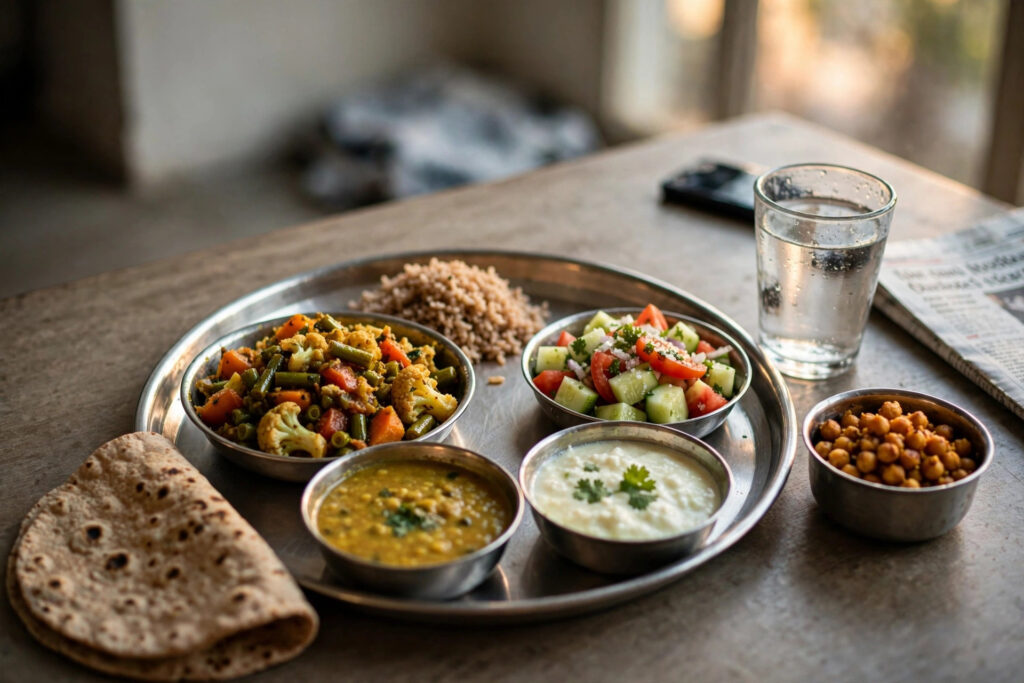
Of everything covered in this article, the DASH diet (Dietary Approaches to Stop Hypertension) has by far the strongest clinical evidence base for managing high BP and cholesterol. A meta-analysis of 17 randomized controlled trials involving over 2,500 participants found the DASH diet significantly reduced systolic blood pressure by 6.74 mmHg and diastolic blood pressure by 3.54 mmHg compared to control diets. The landmark NEJM DASH-Sodium trial went further, showing that combining the DASH diet with low sodium intake produced the largest reductions, particularly in people who started with higher blood pressure — participants with baseline systolic BP above 150 mmHg saw reductions of over 20 mmHg when both interventions were combined.
The DASH diet emphasizes vegetables, fruits, whole grains, low-fat dairy, nuts, and legumes, while limiting red meat, added sugar, and sodium.
Sodium Reduction Alone Makes a Measurable Difference
Independent of the DASH diet, cutting sodium intake has a well-established, dose-dependent effect on blood pressure. A meta-analysis of 85 trials with over 10,000 participants found a consistent linear relationship between sodium intake and blood pressure regardless of a person’s starting BP level, and controlled feeding studies found the largest systolic reductions — up to 6.7 mmHg — occurred when sodium intake was lowered from a high level to a genuinely low level (under 50 mmol/day). In practical terms: cutting back on packaged snacks, pickles, papads, and added table salt is one of the single most evidence-backed things you can do.
Evidence-Based Natural Remedies for High BP and Cholesterol
The desi remedies below are among the most commonly used natural remedies for high BP and cholesterol in Indian households, and each one is backed by real clinical data rather than just tradition.
1. Garlic for High BP and Cholesterol
Garlic is probably the most researched traditional remedy on this list, and it holds up reasonably well. A comprehensive 2026 meta-analysis of randomized controlled trials found garlic supplementation produced a statistically significant systolic blood pressure reduction of 3.71 mmHg and diastolic reduction of 1.97 mmHg, along with a total cholesterol drop of about 10 mg/dL and an LDL reduction of nearly 6 mg/dL. An earlier, frequently cited meta-analysis of trials specifically in people with hypertension found even larger effects — an average systolic reduction of 8.4 mmHg and diastolic reduction of 7.3 mmHg in the hypertensive subgroup, roughly comparable to a standard first-line BP medication in some cases. For cholesterol, older pooled data on garlic taken for more than two months found it reduced total and LDL cholesterol by around 10% in people with mildly elevated levels.
The takeaway: raw or cooked garlic, eaten consistently over weeks rather than days, has real (if modest) supporting evidence — this is one desi remedy that isn’t just folklore.
2. Fenugreek Seeds (Methi) for High BP and Cholesterol
Fenugreek’s cholesterol-lowering effect comes from its soluble fiber and saponin content, which bind bile acids and reduce fat absorption in the gut. A meta-analysis of 12 RCTs with 560 participants found fenugreek supplementation produced a significant reduction in total cholesterol, triglycerides, and LDL cholesterol, along with an increase in HDL cholesterol. A separate randomized, placebo-controlled trial in people with borderline high cholesterol found that 8 grams of fenugreek seed powder daily for 8 weeks meaningfully improved triglycerides, total cholesterol, and LDL compared to placebo, without significant side effects. Soaking a tablespoon of fenugreek seeds overnight and chewing them in the morning is the traditional method — it’s simple and reasonably well-supported.
3. Flaxseed for High BP and Cholesterol
Flaxseed has one of the largest evidence bases among “desi” remedies, thanks to its omega-3 (ALA) content, lignans, and soluble fiber. A large 2019 meta-analysis of 62 randomized controlled trials with nearly 3,800 participants found flaxseed supplementation significantly reduced total cholesterol, triglycerides, and LDL cholesterol. A more recent 2021 update looking specifically at people with dyslipidemia found whole flaxseed (as opposed to flaxseed oil) was the effective form, significantly lowering total cholesterol, LDL, triglycerides, and apolipoprotein B, especially at doses of 30 grams per day or less. Note that flaxseed oil alone does not show the same lipid benefit — it’s the whole ground seed that matters. For more on omega-3-rich seeds and metabolic health, see our piece on natural approaches to thyroid support, since thyroid imbalance is itself a hidden driver of high cholesterol.
4. Terminalia Arjuna (Arjuna Bark)
Arjuna bark has centuries of use in Ayurveda for heart conditions, and the mechanistic and animal research is genuinely promising — reviews describe antioxidant, lipid-lowering, and anti-atherogenic properties documented across multiple clinical trials conducted between 1991 and 2014. That said, it’s worth being upfront about the limits of the human evidence: the largest, best-designed double-blind trial to date, in 100 patients with chronic heart failure on standard medical therapy, found that adding Arjuna extract for 12 weeks produced no measurable improvement in heart pumping function (ejection fraction), though it did modestly improve exercise capacity and quality of life in some patients. In short: Arjuna has real traditional and preliminary scientific backing, but it shouldn’t be relied on as a primary treatment, and the strongest available trial data is more modest than the traditional reputation suggests.
5. Aerobic Exercise (Including Simple Walking)
If there’s one intervention on this list with rock-solid, dose-dependent evidence, it’s regular aerobic activity. A dose-response meta-analysis of 34 randomized trials found blood pressure reductions scaled directly with exercise volume, with the greatest reduction occurring at 150 minutes per week — a drop of 7.23 mmHg in systolic and 5.58 mmHg in diastolic blood pressure. Separate research focused specifically on walking and running found reductions of over 11 mmHg in systolic blood pressure with consistent training. This is roughly 30 minutes a day, five days a week — no special equipment needed. Pairing a daily walk with mindful eating habits compounds the benefit; our guide on walking after meals for blood sugar control explains the same mechanism at work for glucose control, which is closely tied to cardiovascular risk.
6. Stress Reduction
Chronic stress activates the sympathetic nervous system and raises blood pressure through cortisol and adrenaline. While the research on specific relaxation techniques varies in quality, structured stress-reduction approaches are consistently recommended alongside medication in clinical hypertension guidelines. If chronic stress is a factor for you, our explainer on somatic therapy and nervous system regulation covers evidence-based approaches beyond simple breathing exercises.
7. Adequate, Quality Sleep for High BP and Cholesterol
Poor sleep is independently associated with higher blood pressure and worse lipid profiles, likely through its effects on cortisol and appetite-regulating hormones. Magnesium status has also been studied for its role in sleep quality — see our deep dive on magnesium and sleep research for what the evidence actually supports versus what’s overhyped on wellness feeds.
Diet Chart for High BP and Cholesterol: Foods to Include and Avoid
| Include More Of | Limit or Avoid |
|---|---|
| Vegetables, fruits, whole grains (DASH-style) | Added salt, pickles, packaged snacks |
| Legumes, nuts, and seeds | Fried and processed foods |
| Low-fat dairy | Red and processed meat |
| Oily fish or flaxseed for omega-3s | Sugary drinks and refined carbs |
| Olive or mustard oil in moderation | Trans fats and reused cooking oil |
When Cold Exposure or Intense New Habits Need Extra Caution
Some people look into intense wellness trends like cold plunges as part of a broader heart-health routine. If you’re considering this, read our research breakdown on ice baths and cold plunges first — sudden cold exposure can cause a temporary spike in blood pressure, so anyone with hypertension should approach it cautiously and check with a doctor beforehand.
Risk Factors That Make High BP and Cholesterol Worse
- Consistently high sodium and processed food intake
- Sedentary lifestyle and prolonged sitting
- Chronic, unmanaged stress
- Family history and genetics
- Smoking and heavy alcohol use
- Undiagnosed thyroid dysfunction, which can independently raise cholesterol
When to See a Doctor About High BP and Cholesterol
If your blood pressure repeatedly reads above 140/90 mmHg, or lab work shows persistently elevated LDL cholesterol, don’t rely on home remedies for high BP and cholesterol alone — see a doctor for proper evaluation and, if needed, medication. Chest pain, sudden severe headache, or difficulty breathing are medical emergencies that require immediate care, not home treatment.

Conclusion: Managing High BP and Cholesterol the Evidence-Based Way
The evidence on high BP and cholesterol is clear on a few things: the DASH diet and sodium reduction have the strongest clinical backing for lowering blood pressure, aerobic exercise produces dose-dependent, well-documented reductions in both high BP and cholesterol, and traditional remedies like garlic, fenugreek, and flaxseed have real (if modest) support from randomized trials — while others, like Arjuna bark, have promising traditional and preclinical evidence but more limited human trial data than their reputation suggests. None of these replace prescribed medication or regular checkups, but combined consistently, they can meaningfully move the numbers on high BP and cholesterol. Start with diet and daily movement — they have the most robust evidence of everything covered here — and build from there.
For more evidence-based health guidance, explore our Nutrition & Diet category and Natural Remedies & Ayurveda category. Learn more about how we vet our content on our About Us page, or reach out via our Contact page.
Frequently Asked Questions About High BP and Cholesterol
1. Can high BP and cholesterol be cured with natural remedies alone? No. High BP and cholesterol are chronic conditions that can be well-managed with diet, exercise, and lifestyle changes, but there’s no clinical evidence that any natural remedy “cures” them permanently. Ongoing monitoring and, often, medication remain necessary.
2. What has the strongest scientific evidence for lowering blood pressure naturally? The DASH diet and sodium reduction have the most robust randomized-trial evidence, followed closely by regular aerobic exercise like brisk walking, which shows a clear dose-response relationship.
3. Does garlic actually lower cholesterol, or is that just folklore? It’s genuinely evidence-backed. Multiple meta-analyses of randomized trials show garlic modestly reduces total cholesterol, LDL, and blood pressure when eaten consistently over several weeks.
4. Is Arjuna bark scientifically proven to treat heart disease? It has a long traditional history and encouraging animal/mechanistic research, but the best available human trial — in chronic heart failure patients — did not show improvement in the primary measure of heart function, so its evidence is weaker than commonly claimed.
5. How much walking is needed to lower blood pressure? Research shows benefits scale with volume, with roughly 150 minutes per week of brisk walking producing the largest measured reductions in clinical trials.
6. Can fenugreek seeds really lower cholesterol? Yes, multiple randomized controlled trials show fenugreek meaningfully reduces total cholesterol, LDL, and triglycerides, likely due to its soluble fiber content.
7. Is flaxseed oil as effective as whole flaxseed for cholesterol? No. Research consistently shows whole ground flaxseed lowers cholesterol, while flaxseed oil alone does not have the same lipid-lowering effect, since the fiber and lignans are removed in the oil.
8. How long before diet and lifestyle changes show measurable results? Most clinical trials measuring diet or exercise interventions show significant changes in blood pressure or cholesterol within 8 to 12 weeks of consistent adherence.
9. Should I stop taking my BP or cholesterol medication if these remedies work? No. Never stop or adjust prescribed medication without your doctor’s guidance, even if your home readings improve or you feel better.
10. Can an underactive thyroid cause high cholesterol? Yes, hypothyroidism is a well-documented cause of elevated LDL cholesterol, so unexplained high cholesterol that doesn’t respond to diet changes is worth investigating with a thyroid panel.
11. Is it safe to try cold showers or ice baths if I have high blood pressure? Sudden cold exposure can temporarily spike blood pressure, so people with hypertension should ease in gradually and consult a doctor before trying cold plunges or ice baths.
Disclaimer: This article is for informational purposes only and is not a substitute for professional medical advice, diagnosis, or treatment. Always consult a qualified doctor before changing your diet, exercise routine, or medication. Read our full Disclaimer for details.
Sources
This article draws on peer-reviewed meta-analyses and randomized controlled trials, including research published in Hypertension Research (Nature), the New England Journal of Medicine, Hypertension (AHA), BMC Complementary Medicine and Therapies, PubMed-indexed nutrition journals, and ScienceDirect-hosted systematic reviews on garlic, fenugreek, flaxseed, Terminalia arjuna, DASH diet, sodium intake, and aerobic exercise.






Leave a Reply