For decades, most nutrition advice — calorie charts, protein targets, even standard vitamin dosages — was built from research done almost entirely on men and then quietly applied to everyone. Sex-specific nutrition is the 2026 correction to that blind spot, and it’s officially arrived: the Kerry Health and Nutrition Institute’s 2026 trend report names it as one of the defining nutrition priorities of the year, alongside GLP-1 medication expansion and personalised food tracking. For Indian women in particular, this trend matters more than the headlines suggest, because our own national health data shows some of the starkest sex-based nutrition gaps in the world — from anaemia rates to undiagnosed thyroid disorders to a PCOS burden that’s higher in South Asian women than almost anywhere else. This is a long, detailed guide, so take your time with it — we’ll walk through what sex-specific nutrition actually means, what the research shows about how women’s bodies process food differently across the menstrual cycle and life stages, condition-specific nutrition for PCOS and thyroid disorders, and a practical framework you can start using this week. This is the same evidence-first approach we use across our Nutrition & Diet coverage on Health Morph.
What Is Sex-Specific Nutrition, Really?
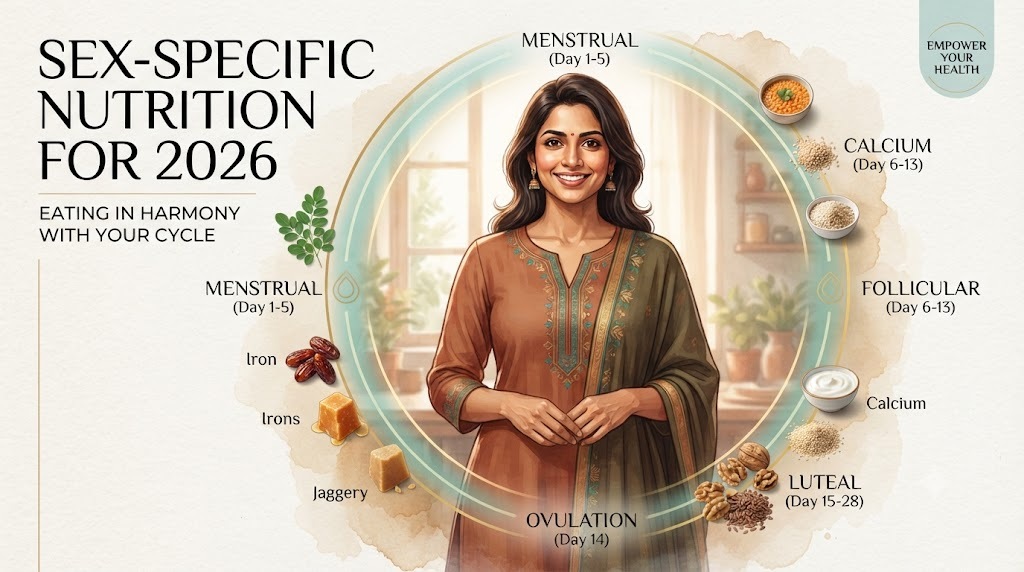
Sex-specific nutrition is the practice of adjusting dietary needs — energy, macronutrients, iron, calcium, and even supplement timing — based on a person’s hormonal profile and life stage, rather than applying one generic template to everyone. A 2021 narrative review published in the Journal of the International Society of Sports Nutrition laid out exactly this problem: female-specific nutrition guidelines have historically lagged behind because estrogen and progesterone fluctuate cyclically in ways that measurably change how the body burns fat, stores carbohydrate, and processes protein — differences that simply don’t exist in the male-based research models most guidelines are still built on. This isn’t a repackaged wellness trend built on marketing language; it’s nutrition science finally catching up to biology that’s been under-researched for decades, largely because clinical trials historically excluded women of reproductive age to avoid the “complication” of hormonal fluctuation in the data. That exclusion is precisely why sex-specific nutrition is only becoming mainstream now, in 2026, rather than twenty years ago.
Why This Nutrition Gap Hits Indian Women Especially Hard
This isn’t an abstract global statistic — it’s a home-grown health crisis with numbers to match. According to India’s National Family Health Survey (NFHS-5), 57% of women aged 15–49 in India are anaemic, and separate Indian research estimates dietary iron deficiency risk affects roughly half to two-thirds of women of reproductive age depending on the state, with considerable variation across regions. Layer onto that a well-documented higher prevalence of PCOS, type 2 diabetes, and cardiovascular disease among South Asian women compared with Western populations — partly linked to dietary patterns heavy in refined carbohydrates and comparatively low in protein diversity — and it becomes clear why generic, one-size-fits-all nutrition advice underserves Indian women specifically. Our guide on 4 everyday habits silently damaging your kidneys covers a related blind spot in how generic health advice often misses factors affecting women and men differently.
The Science: How the Menstrual Cycle Changes Nutrient Needs
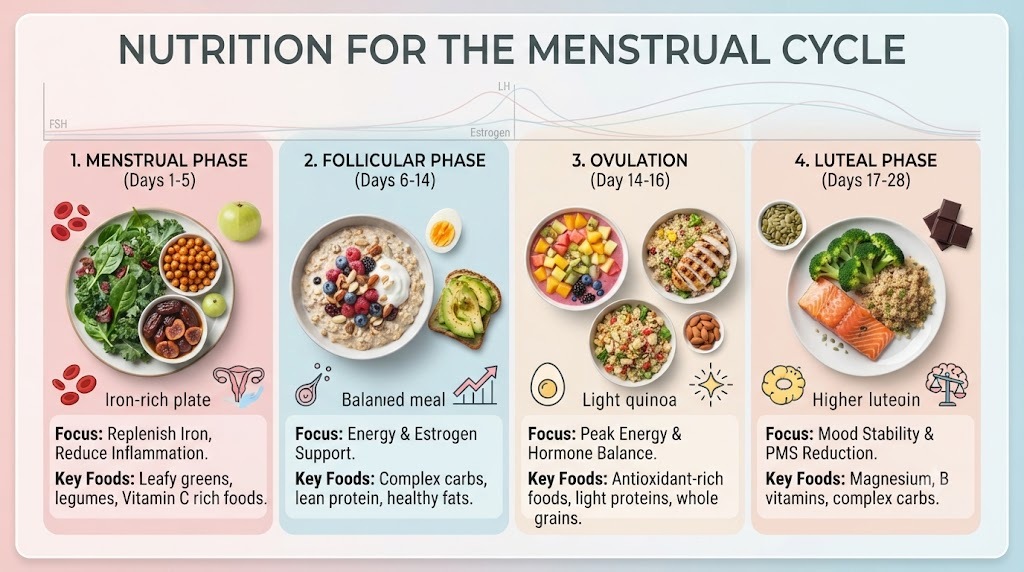
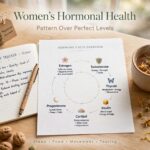
A 2026 integrative review in Nutrients described the menstrual cycle as a genuine metabolic rhythm — not just a reproductive one — with coordinated shifts in energy intake, fat oxidation, protein turnover, and micronutrient handling across its phases. Here’s what the research actually shows, phase by phase:
- Menstrual phase (days 1–5): Iron losses accelerate as the uterine lining sheds, making iron-rich food intake especially important in these days and immediately after.
- Follicular phase (roughly days 1–14): Estrogen rises, insulin sensitivity tends to improve, and the body handles carbohydrates more efficiently — a good window for higher-intensity workouts and slightly higher carbohydrate intake relative to other phases.
- Ovulation (around day 14): Estrogen peaks briefly; some women notice a short window of higher energy and mild appetite suppression around this point.
- Luteal phase (roughly days 15–28): Progesterone and estrogen both rise and fall, resting energy expenditure increases by an estimated 2.5–11.5% compared with the follicular phase, and the body shifts toward greater reliance on fat as fuel. Many women naturally feel hungrier here — research links this to genuine physiological changes in appetite-regulating hormones like leptin and ghrelin, not just “cravings” or a lack of willpower.
The practical takeaway: the extra hunger before your period and the different energy needs across the month aren’t in your head — they’re measurable metabolic shifts documented in peer-reviewed research, and building meals around them, rather than fighting them, tends to work better long-term than a flat, unchanging diet plan.
7 Nutrients Women Need to Track Differently Than Men
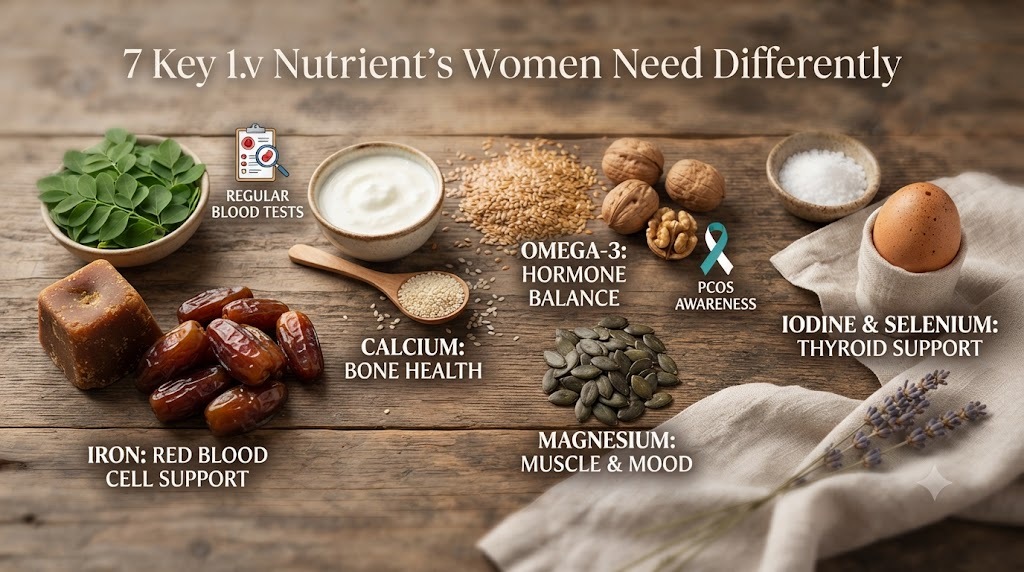
These seven nutrients form the practical core of sex-specific nutrition for most women, and they’re worth understanding individually rather than lumping them into one generic “women’s multivitamin” mindset.
1. Iron
Women lose iron monthly through menstruation, which is the single biggest reason iron-deficiency anaemia is dramatically more common in women than men. Indian research places the Estimated Average Requirement for non-pregnant, non-lactating women of reproductive age at around 15 mg/day — notably higher than typical requirements for adult men, and higher still during pregnancy. Good dietary sources include leafy greens, jaggery, dates, and moringa leaves — covered in depth in our moringa leaves benefits guide — paired with a vitamin C-rich food like amla, citrus, or tomato to meaningfully improve non-heme iron absorption. Tea and coffee taken with meals can reduce iron absorption, so spacing them at least an hour away from iron-rich meals is a simple, evidence-backed adjustment.
2. Calcium and Vitamin D
Women face a steeper decline in bone density after menopause due to falling estrogen, which is why calcium and vitamin D needs increase with age far more sharply for women than for men — estrogen plays a direct protective role in bone remodeling that men’s hormonal profile doesn’t replicate in the same way. Indian studies on pregnant and reproductive-age women consistently find widespread vitamin D insufficiency despite abundant year-round sunlight, largely due to low dietary intake, limited direct sun exposure, and clothing or lifestyle patterns that reduce skin synthesis. Our article on seeds with curd for calcium deficiency and bone health is a practical, food-first starting point for closing this gap.
3. Protein Timing Across the Cycle
Emerging sports-nutrition research suggests protein turnover shifts across the menstrual cycle, with slightly higher protein needs during the luteal phase to offset increased catabolism. For active women, spreading protein evenly across all meals — rather than loading it mostly at dinner, a common pattern in Indian diets built around dal and roti at night — better supports muscle maintenance and satiety throughout the month, and may reduce the intensity of luteal-phase cravings.
4. Folate and Vitamin B12
Folate needs rise sharply for women who are pregnant or planning pregnancy, since adequate folate in early pregnancy is directly linked to reducing neural tube defect risk. B12 deficiency is common enough in vegetarian-heavy Indian diets that it’s frequently found alongside iron-deficiency anaemia in adolescent girls, according to nutrition surveys from the Himalayan region of India. Women following vegetarian or vegan diets — a large share of Indian women — should pay particular attention to reliable B12 sources such as fortified foods, dairy, or supplementation where advised by a doctor.
5. Magnesium
Magnesium plays a role in easing PMS-related mood changes, water retention, and muscle cramping, and requirements may rise slightly during the luteal phase alongside progesterone’s peak. Pumpkin seeds, sesame seeds, almonds, and leafy greens are practical dietary sources worth building into a weekly routine rather than relying on isolated supplementation alone.
6. Iodine and Selenium (Thyroid Support)
Thyroid disorders are diagnosed far more often in women than in men, and hormonal transitions unique to women — puberty, pregnancy, the postpartum period, and perimenopause — all place extra demand on thyroid hormone production. Clinical screening studies in young Indian women have found a meaningful share with some degree of undiagnosed thyroid dysfunction, which is one reason doctors increasingly recommend thyroid screening during pregnancy planning and again around midlife. The thyroid gland needs iodine as a raw material to build T4 and T3 hormones, while selenium-dependent enzymes convert the less active T4 into the more active T3 elsewhere in the body — both nutrients matter, and both are easy to under-consume on a low-dairy, low-seafood Indian vegetarian diet. Iodised salt, dairy, and eggs are the main dietary iodine sources; Brazil nuts and eggs are useful selenium sources.
7. Omega-3 Fatty Acids
Omega-3s are linked to reduced inflammation and may help ease period pain and PMS symptoms in some studies, alongside supporting cardiovascular health — an area where women’s risk is frequently underestimated (more on this below). Flaxseed, walnuts, and fatty fish are the main dietary sources for those who eat them; vegetarian women often need to rely more heavily on flaxseed and walnuts specifically.
PCOS and Sex-Specific Nutrition: Why Indian Women Are Especially Affected
PCOS is arguably the clearest real-world case for sex-specific nutrition, because the standard calorie-counting playbook was never designed with insulin-resistant, hormone-driven weight gain in mind.
Polycystic Ovary Syndrome (PCOS) is one of the clearest examples of why generic nutrition advice fails women. Research comparing Indian women with PCOS has found that South Asian populations, particularly Indian women, show a demonstrably higher prevalence of PCOS, type 2 diabetes, and cardiovascular disease risk factors compared with Western populations — a pattern researchers partly attribute to dietary patterns heavy in refined carbohydrates (rice, chapatis, bread) and comparatively low in protein and fibre diversity. For women with PCOS, insulin resistance is often the central issue, which means the standard “eat less, move more” advice frequently misses the point entirely. A more targeted approach — higher protein at each meal, more fibre from vegetables and whole grains, and closer attention to added sugar — tends to align much more closely with what the research on PCOS and insulin resistance actually supports.
Thyroid Health: A Sex-Specific Nutrition Blind Spot
Thyroid care is one of the most overlooked corners of sex-specific nutrition, largely because thyroid symptoms overlap so heavily with normal fatigue and stress. Because thyroid disorders are so disproportionately common in women, thyroid-supportive eating deserves its own space in any sex-specific nutrition plan. A thyroid-friendly pattern generally includes adequate iodine and selenium, sufficient protein at every meal, fibre-rich whole grains and vegetables, healthy fats, and minimally processed food — with attention to keeping any thyroid medication dosing timed appropriately away from calcium- or iron-heavy meals, since both can interfere with medication absorption. Importantly, there is no single “best” thyroid diet chart for every woman — needs differ depending on whether the condition is hypothyroid or hyperthyroid, whether PCOS overlaps with it (a common combination), and whether the woman is pregnant, postpartum, or in perimenopause.
Heart Disease: A Sex-Specific Blind Spot Beyond Nutrition Alone
Sex-specific nutrition doesn’t stop at food choices — it extends into how disease itself is recognised, and cardiovascular disease is the clearest example. Sex-specific health differences extend beyond diet into how disease itself presents — and cardiovascular disease is the starkest example. Heart disease is frequently under-recognised in women partly because classic “textbook” symptoms (crushing chest pain radiating down the left arm) are more typical of male presentations, while women more often experience fatigue, nausea, jaw pain, or breathlessness — symptoms that get dismissed or misattributed more often in women than in men. Nutritionally, this matters because the same dietary risk factors — refined carbohydrate-heavy diets, low fibre intake, and abdominal fat gain after menopause — translate into cardiovascular risk in women just as much as in men, even though awareness campaigns have historically focused on male-presenting symptoms. Our guide to high BP and cholesterol natural remedies covers dietary approaches relevant to this shared risk.
Sex-Specific Nutrition Across Life Stages
Sex-specific nutrition isn’t a single fixed diet — it changes shape at every life stage a woman moves through.
- Teens and adolescence: Iron and calcium needs rise sharply with the onset of menstruation and bone growth, yet this is also the life stage where nutrition surveys show the highest rates of anaemia and undernutrition among Indian girls — a critical, often-missed window for establishing lifelong nutrient stores.
- Reproductive years: Cyclical shifts in energy, iron, and protein needs (detailed above) are most relevant here, alongside PCOS and thyroid screening if symptoms like irregular cycles, unexplained weight change, or excessive fatigue appear.
- Pregnancy and lactation: Iron, folate, calcium, vitamin D, and iodine requirements all increase substantially; Indian research links vitamin D deficiency in pregnancy to a higher risk of anaemia, reinforcing why these nutrients should be addressed together rather than in isolation.
- Perimenopause and menopause: Falling estrogen accelerates bone density loss and shifts fat distribution toward the abdomen, making calcium, vitamin D, and protein intake more important even as overall calorie needs typically decline. This is also when cardiovascular risk in women rises sharply, closing the gap with men’s risk levels.
A Sample Day: Eating With Your Cycle (Illustrative, Not Prescriptive)
Putting sex-specific nutrition into practice looks less like a diet plan and more like a rhythm. This is meant as a starting template to adapt, not a rigid plan — everyone’s needs differ by activity level, body size, and health status.
- Follicular phase: Slightly higher complex carbohydrates (oats, whole grains) alongside protein at each meal; a good window for trying new recipes or slightly more ambitious workouts.
- Ovulation: Maintain balanced meals; some women notice naturally lower appetite here and shouldn’t force extra food.
- Luteal phase: Slightly higher protein and healthy fat at each meal to manage increased hunger, magnesium-rich snacks (pumpkin seeds, dark chocolate in moderation) for PMS symptoms, and iron-sparing awareness as the next period approaches.
- Menstrual phase: Iron-rich meals (leafy greens, jaggery, dates, moringa) paired with a vitamin C source; gentler movement is well supported by the research if energy feels lower.
How to Start Applying Sex-Specific Nutrition Today
You don’t need a nutritionist on day one to start applying sex-specific nutrition — these six steps are a realistic starting point.
- Track your cycle alongside your appetite and energy for one full month — most women find the luteal-phase hunger increase is real and predictable, not a lack of discipline.
- Front-load iron-rich foods in the days right after your period, paired with a vitamin C source, and space tea/coffee away from these meals.
- Get a baseline blood test for iron, vitamin D, B12, and thyroid function (TSH) rather than guessing — deficiency and undiagnosed thyroid dysfunction are common enough in Indian women that confirming is worth it.
- Adjust protein distribution across all meals, not just dinner, especially during the luteal phase.
- Ask about PCOS and thyroid screening if you notice irregular cycles, unexplained fatigue, or weight changes that don’t match your diet and activity — these conditions are frequently missed for years in Indian women.
- Revisit your needs at each life stage — what worked in your 20s won’t necessarily cover pregnancy, perimenopause, or post-menopause bone health.
Ingredients Worth Building Into a Sex-Specific Nutrition Plan
None of these ingredients are magic on their own — they work because they fill the exact gaps sex-specific nutrition research keeps pointing to: iron, calcium, magnesium, and steady blood sugar.
- Moringa leaves — naturally rich in iron, calcium, and vitamin A; see our full breakdown in the moringa leaves benefits guide.
- Flaxseed — a source of lignans and omega-3 ALA that may support hormone balance, discussed in our seeds with curd guide.
- Sesame and pumpkin seeds — useful magnesium and calcium sources for the luteal phase and long-term bone health.
- Jaggery and dates — traditional Indian iron sources, best paired with a vitamin C source like citrus or amla for better absorption.
- Curd and fermented dairy — calcium plus probiotic support, tying gut health to bone density.
- Coriander seed water — a gentle traditional addition some women use for digestion and mild metabolic support; full detail in our coriander seed water benefits guide.
- Walking after meals — not a food, but a genuinely evidence-backed habit for blood sugar and insulin sensitivity that pairs especially well with a PCOS-aware eating pattern; see our guide on walking after meals for blood sugar control.
Frequently Asked Questions
1. What is sex-specific nutrition? Sex-specific nutrition is the practice of adjusting dietary needs — energy, protein, iron, calcium, and more — based on a person’s hormonal profile and life stage, rather than applying one generic nutrition template to both men and women.
2. Why do women need more iron than men? Women lose iron every month through menstruation, which is why dietary iron requirements for women of reproductive age are higher than for men, and why iron-deficiency anaemia is far more common in women.
3. Does the menstrual cycle really change how many calories I burn? Yes. Research shows resting energy expenditure can rise by an estimated 2.5–11.5% during the luteal phase compared with the follicular phase, alongside a shift toward greater reliance on fat as fuel.
4. Is craving more food before my period normal? Yes — increased appetite in the luteal phase has a documented physiological basis linked to hormonal shifts in appetite-regulating hormones like leptin and ghrelin, not simply a lack of willpower.
5. What nutrients become more important after menopause? Calcium, vitamin D, and protein become more important after menopause, since falling estrogen accelerates bone density loss and changes body composition, while cardiovascular risk also rises during this stage.
6. Are Indian women particularly at risk of nutrient deficiencies? Yes. National data shows 57% of Indian women aged 15–49 are anaemic, and separate research shows widespread vitamin D insufficiency among pregnant and reproductive-age women despite ample sunlight exposure, alongside a higher prevalence of PCOS and thyroid disorders.
7. Should vegetarian women worry about B12 deficiency? It’s worth checking. B12 deficiency is common in vegetarian-heavy diets and has been found alongside iron-deficiency anaemia in adolescent girls in Indian nutrition surveys, so vegetarian and vegan women should pay close attention to reliable B12 sources.
8. How is PCOS-related nutrition different from general weight-loss advice? PCOS is closely tied to insulin resistance, so a targeted approach — higher protein per meal, more fibre, and lower added sugar — tends to serve women with PCOS better than generic “eat less” advice, since the underlying hormonal issue isn’t addressed by calorie restriction alone.
9. Why is heart disease sometimes missed in women? Women more often experience fatigue, nausea, jaw pain, or breathlessness during a cardiac event rather than the classic crushing chest pain more typical in men, which means symptoms can be dismissed or misattributed — a genuine sex-specific gap in awareness, not just nutrition.
10. Where should I start if I want to try sex-specific nutrition? Start with a baseline blood test for iron, vitamin D, B12, and thyroid function, track your energy and appetite alongside your cycle for a month, and build meals around the nutrients and life-stage guidance outlined in this article rather than a generic one-size-fits-all diet plan.
About Health Morph
This guide was researched and written by the Health Morph editorial team, drawing on peer-reviewed nutrition science, Indian public health survey data, and sports-nutrition and endocrinology literature on female physiology.
Publication: Health Morph — Your Trusted Guide for Holistic Health & Wellness Website: https://healthmorph.com Office: Operating remotely from Mumbai, India Email: info@healthmorph.com About Us: https://healthmorph.com/about-us/ Contact: https://healthmorph.com/contact-health-morph/ Disclaimer: https://healthmorph.com/disclaimer/
Note: Health Morph’s official pages list an email contact and a Mumbai-based remote operating base, but no public company registration/CIN number was listed on the site. If you have that registrar detail, share it and I’ll add it to this section.
This article is for informational purposes only and does not constitute medical advice. If you’re experiencing symptoms of anaemia, irregular cycles, thyroid dysfunction, or suspect a nutrient deficiency, please consult a qualified healthcare professional for proper testing and diagnosis.



Leave a Reply