The link between gut health and mental health has moved from a fringe wellness idea to one of the most active, genuinely serious areas of psychiatric research in the last decade — and unlike a lot of trends that get this kind of attention, the gut-brain axis actually has real, published clinical trial data behind it, not just plausible-sounding biology. That said, the popular version of this story (“fix your gut, fix your mood”) gets several important details wrong or oversimplified, including one of the most repeated facts in wellness content — that 90% of your serotonin is made in the gut. This guide walks through what the gut-brain axis actually is, what the strongest 2025-2026 clinical evidence shows about probiotics for depression and anxiety, where the popular serotonin claim goes wrong, and what a genuinely evidence-based approach to supporting this connection actually looks like.
What the Gut-Brain Axis Actually Is
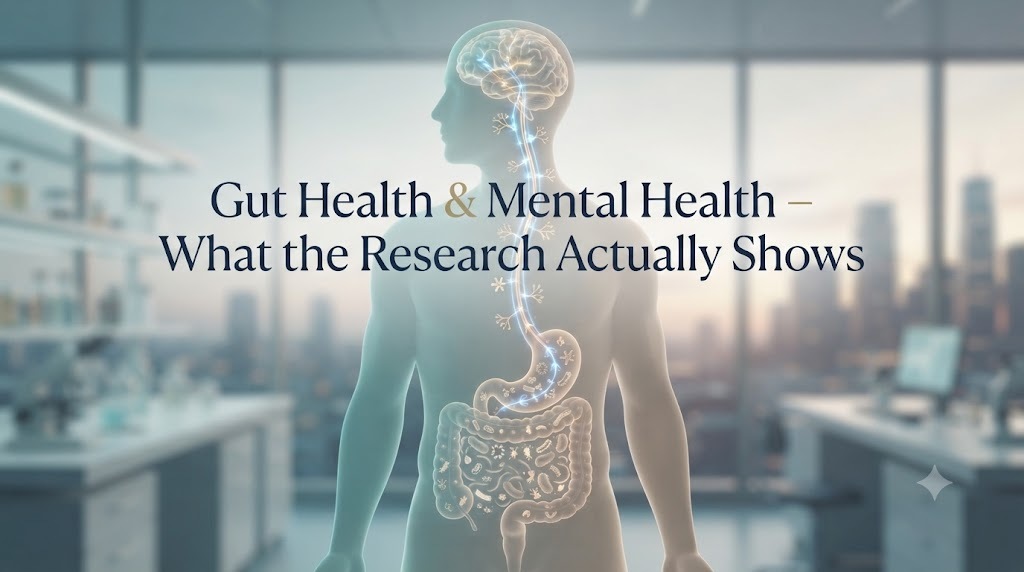
The gut-brain axis refers to the bidirectional communication network connecting your gastrointestinal tract and your central nervous system, operating through several distinct pathways working together: the vagus nerve, hormonal signaling, immune system activity, and metabolites produced by your gut bacteria. The vagus nerve is the primary neural highway in this system, and one genuinely striking detail rarely mentioned in casual coverage is the direction of traffic — roughly 90% of the signals traveling along the vagus nerve go from the gut to the brain, not the other way around. Your gut is constantly reporting back to your brain about nutrient availability, inflammation, gut barrier integrity, digestive motility, and the chemical signals your microbiota are producing, far more than your brain is sending instructions downward.
This isn’t a fringe theory — it’s an established area of neuroscience and gastroenterology research, and animal studies have directly demonstrated the mechanism at work. One notable study found that oral SSRI antidepressants activate vagal signaling from the gut, and when researchers surgically severed the vagus nerve in mice, the antidepressant effect of the SSRI was abolished entirely — direct evidence that at least part of how these medications work runs through gut-to-brain signaling, not just direct action in the brain itself.
The Serotonin Myth: True Fact, Frequently Misused Conclusion
This is one of the most-cited “facts” in gut health content, and it’s worth untangling carefully, because the underlying number is genuinely accurate while the conclusion people draw from it usually isn’t.
It’s true that approximately 90% of the body’s serotonin is produced in the gut, primarily by enterochromaffin cells lining the intestinal wall. Where the popular narrative goes wrong is in implying that this gut-produced serotonin directly boosts brain serotonin and mood — it doesn’t. Gut serotonin generally does not cross the blood-brain barrier, so it can’t directly raise serotonin levels in the brain. Your brain manufactures its own serotonin separately, a process dependent on tryptophan availability and enzyme activity within the brain itself. Gut serotonin, meanwhile, does genuinely important local work — regulating intestinal motility and signaling between the digestive tract, immune system, and enteric nervous system — but it stays within the gut rather than directly elevating your mood the way the “90% serotonin” claim often implies.
The gut still influences brain serotonin and mood, just indirectly — through vagal nerve signaling, immune modulation, and by affecting tryptophan availability for the brain’s own serotonin production, not through gut serotonin crossing over directly. This is a genuinely important distinction, and it’s a similar pattern to the mechanism-versus-oversold-conclusion gap we found examining somatic therapy and nervous system regulation, where a real biological pathway gets stretched into a bigger claim than the evidence directly supports.
What the Clinical Trial Evidence Actually Shows
This is where the gut-brain axis moves from theory into something genuinely actionable, and the evidence here is stronger than for many of the wellness trends we’ve fact-checked.
A comprehensive 2025 systematic review and meta-analysis, published in Nutrition Reviews and focused specifically on clinically diagnosed populations, found probiotics produced a significant reduction in depression symptoms with a large effect size (standardized mean difference of -0.96) and a moderate reduction in anxiety symptoms (SMD of -0.59). For context, an SMD around 0.8 or higher is generally considered a large effect in clinical research — this is not a marginal, easily-dismissed result. Notably, the same review found prebiotics alone did not produce a statistically significant effect on depression, which is an important distinction most gut-health marketing glosses over: fiber and prebiotic supplements and live bacterial probiotics are not interchangeable when it comes to mental health outcomes specifically.
A separate 2026 umbrella review — a review of reviews, representing the highest level of evidence synthesis — confirmed the direction of these findings while being appropriately cautious about certainty, rating the overall quality of evidence as low to very low despite the consistent effect size across studies. This is a familiar, honest pattern we’ve seen across other evidence-backed but still-maturing areas of research, including the Somatic Experiencing trial data we covered previously — real, consistent effects showing up across multiple trials, while researchers themselves flag that trial quality and standardization still need improvement before the evidence can be considered definitive.
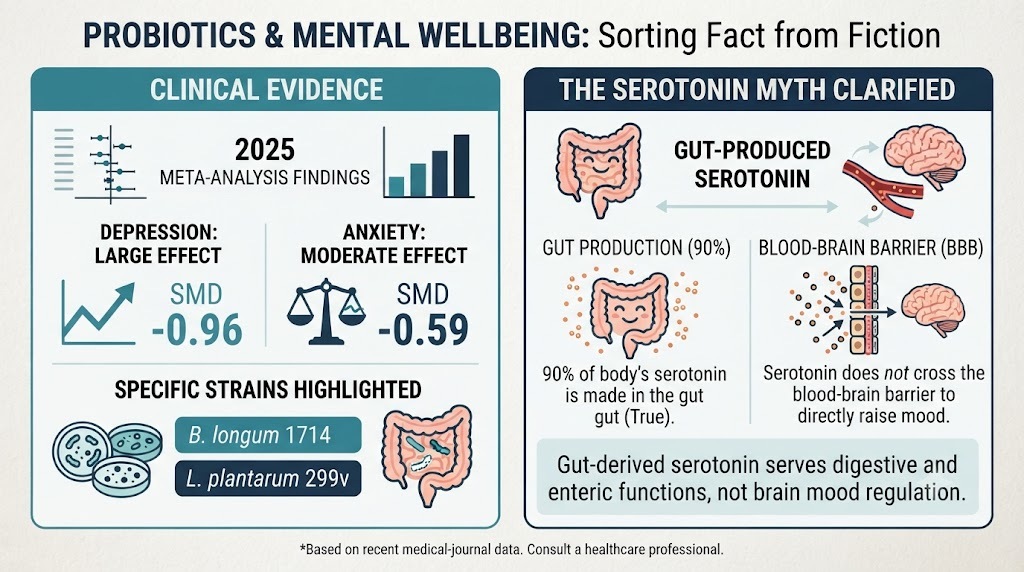
Specific strains with genuine trial support: Two probiotic strains in particular have accumulated meaningful individual research. Bifidobacterium longum 1714 has been studied as a “psychobiotic” specifically, showing reductions in perceived stress and measurable changes in cortisol and neurophysiological stress responses in healthy volunteers — a connection worth reading alongside our fact-check on what actually affects cortisol. Lactobacillus plantarum 299v, in a double-blind, randomized, placebo-controlled trial in patients with major depression, was found to decrease kynurenine (a tryptophan-metabolism byproduct linked to depression) and improve cognitive function — a genuinely mechanistic, not just symptom-survey-based, finding.
What’s Actually Different in the Gut Microbiome of People With Depression
Research comparing the gut microbiome composition of people with depression and anxiety against those without has found consistent, replicated patterns rather than random noise. People with depression show shifts in the ratio of major bacterial phyla — notably an increased Bacteroidetes-to-Firmicutes ratio, along with enrichment of certain bacteria genera and depletion of others linked to beneficial short-chain fatty acid production, including Faecalibacterium and Coprococcus. Short-chain fatty acids, produced when gut bacteria ferment dietary fiber, appear to play a genuine role in this system — emerging research points to SCFAs enhancing serotonin synthesis and vagal nerve activity, connecting your fiber intake to this whole signaling pathway in a fairly direct, mechanistic way. This is part of why the fiber-rich foods we recommend in our guide to gas, acidity, and bloating relief support more than just digestive comfort.
A Realistic, Evidence-Informed Approach
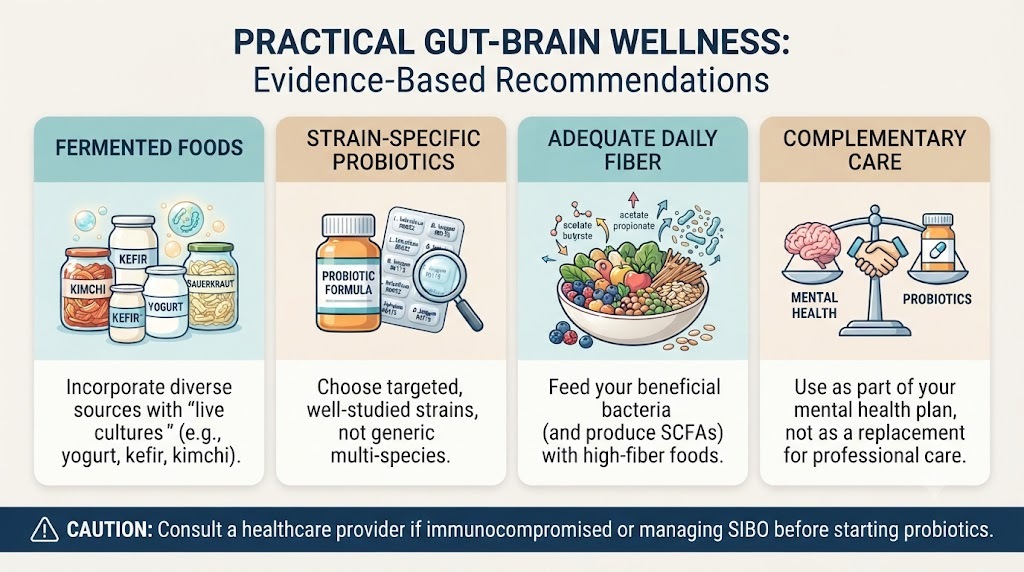
- Prioritize fermented foods with live cultures — yogurt, kefir, kimchi, and similar foods provide a genuine, food-based source of the kind of bacteria studied in this research, rather than relying entirely on supplements
- Don’t assume all probiotics are interchangeable — the strongest evidence exists for specific, named strains (like B. longum 1714 and L. plantarum 299v), not a generic “probiotic” category, so checking labels for strain-specific research matters more than picking whatever’s cheapest
- Get adequate fiber to feed the short-chain-fatty-acid-producing bacteria linked to this pathway — the same 25-30 grams daily target we cover in our broader gut health guide
- Treat probiotics as a genuine complement to, not a replacement for, established mental health treatment — even the strongest available meta-analyses describe probiotics as an adjunct intervention, not a standalone treatment for clinical depression or anxiety
- Support the whole system, not just diet — sleep, movement, and stress management all interact with this same gut-brain pathway, which is part of why how to fall asleep faster and evidence-backed stress management both indirectly support the same mechanisms probiotics target directly
Who Should Be Cautious
- Anyone with a compromised immune system should check with a doctor before starting probiotic supplementation, since live bacterial products carry a small but real infection risk in immunocompromised individuals
- Anyone experiencing significant depression or anxiety symptoms should treat gut-focused approaches as a complement to professional care, not a substitute for therapy, medication, or a proper diagnosis
- Anyone with SIBO (small intestinal bacterial overgrowth) or a diagnosed gut condition should discuss probiotic or prebiotic use with a gastroenterologist first, since the right approach can differ meaningfully from general population recommendations
When to See a Doctor or Mental Health Professional
- Depression or anxiety symptoms that are significantly affecting daily functioning, relationships, or work
- Digestive symptoms that persist alongside mood changes for more than a few weeks
- Any thoughts of self-harm, which always warrant immediate professional support regardless of what dietary or gut-focused changes you’re also making
- Significant, unexplained changes in mood that don’t respond to basic lifestyle changes after a reasonable trial period
Frequently Asked Questions
Is the gut-brain axis real, or is it just a wellness trend? It’s a genuine, actively researched area of neuroscience and gastroenterology, not just a wellness marketing concept. The vagus nerve connection, immune signaling pathways, and microbial metabolite effects are all documented in peer-reviewed research, including animal studies directly demonstrating the mechanism.
Is it true that 90% of serotonin is made in the gut? Yes, this specific fact is accurate. What’s usually wrong is the conclusion people draw from it — gut-produced serotonin generally doesn’t cross into the brain to directly boost mood, since it doesn’t cross the blood-brain barrier. The gut still influences mood, just through indirect pathways like vagal signaling and immune modulation.
Can probiotics actually help with depression and anxiety? Real evidence supports this — a 2025 meta-analysis found a large effect on depression symptoms and a moderate effect on anxiety symptoms in clinically diagnosed populations. However, the overall certainty of evidence is still rated low to very low by rigorous review standards, meaning the effect is real but the research base needs more standardization before being considered definitive.
Do prebiotics work as well as probiotics for mental health? No, based on current evidence. The same major 2025 meta-analysis found prebiotics alone did not produce a statistically significant effect on depression, unlike probiotics, which showed a large effect — an important distinction between fiber-based supplements and live bacterial cultures for this specific use.
Which probiotic strains have the strongest evidence for mental health? Bifidobacterium longum 1714 and Lactobacillus plantarum 299v both have individual randomized controlled trial support — the former for reducing perceived stress and cortisol response, the latter for improving cognitive function and reducing a depression-linked metabolic byproduct in patients with major depression.
Can gut health problems cause anxiety or depression, or is it the other way around? Current research describes this as genuinely bidirectional — gut dysbiosis can influence mood through vagal, immune, and metabolic pathways, while stress and mood disorders also measurably affect gut bacterial composition and motility. It’s not a simple one-directional cause-and-effect relationship.
Should I take a probiotic supplement or just eat fermented foods? Both have a role. Fermented foods provide a genuine, food-based source of beneficial bacteria, while supplements allow you to target specific, research-backed strains at controlled doses. Neither should be assumed to fully substitute for the other if you’re targeting a specific outcome.
How long does it take for gut-focused interventions to affect mood? Most of the supporting clinical trials ran 8 weeks or longer, suggesting this is a gradual, cumulative effect rather than something noticeable within days. Patience and consistency matter more than any single dose or food.
Can improving gut health replace therapy or medication for depression? No. Even the strongest available evidence describes probiotics as a complementary or adjunct approach, not a standalone treatment for clinically diagnosed depression or anxiety. Professional mental health care remains the appropriate primary treatment for significant symptoms.
What foods support the gut-brain axis besides probiotics? Fiber-rich foods that feed short-chain-fatty-acid-producing bacteria, tryptophan-containing foods that support the brain’s own serotonin production, and fermented foods with live cultures all play a role, alongside the broader dietary and lifestyle patterns covered in our gut health guide.
The Bottom Line
The link between gut health and mental health is one of the rare wellness topics where the underlying science genuinely supports the excitement, even as the popular version of the story oversimplifies key details. The vagus nerve, immune signaling, and microbial metabolites form a real, bidirectional communication system between your gut and brain, and clinical trials show a large, meaningful effect of specific probiotic strains on depression and anxiety symptoms — though the overall certainty of that evidence is still developing. The widely repeated “90% of serotonin is in the gut” fact is accurate but frequently misapplied, since that serotonin mostly stays local rather than directly lifting your mood. Approach this connection with the nuance it deserves: support your gut with fiber, fermented foods, and evidence-backed probiotic strains as a genuine complement to your overall mental health care, not a replacement for it.
This article is for informational purposes only and is not a substitute for personalized medical or mental health advice. If you’re experiencing symptoms of depression, anxiety, or significant digestive distress, consult a physician or mental health professional rather than relying on dietary changes alone.






Leave a Reply