
High-functioning anxiety is the mental health struggle that hides in plain sight — it’s the colleague who never misses a deadline, the friend who always seems to have it together, the person whose calendar is color-coded and whose inbox is always at zero, all while their mind is quietly running a background program of catastrophic what-ifs that never fully switches off. It isn’t an official diagnosis in the DSM, which is exactly why so many people with it go years without a name for what they’re experiencing — they don’t miss work, they don’t visibly fall apart, so nobody, including themselves, thinks to call it anxiety. This guide is written for that specific gap: the real, research-backed signs that separate high-functioning anxiety from ordinary stress or simple perfectionism, why it develops and persists, the natural strategies with actual clinical evidence behind them (not just wellness-blog reassurance), and — critically, since this is a section most competing articles either skip or handle vaguely — exactly when “manage it naturally” needs to become “talk to a professional.”
What High-Functioning Anxiety Actually Is
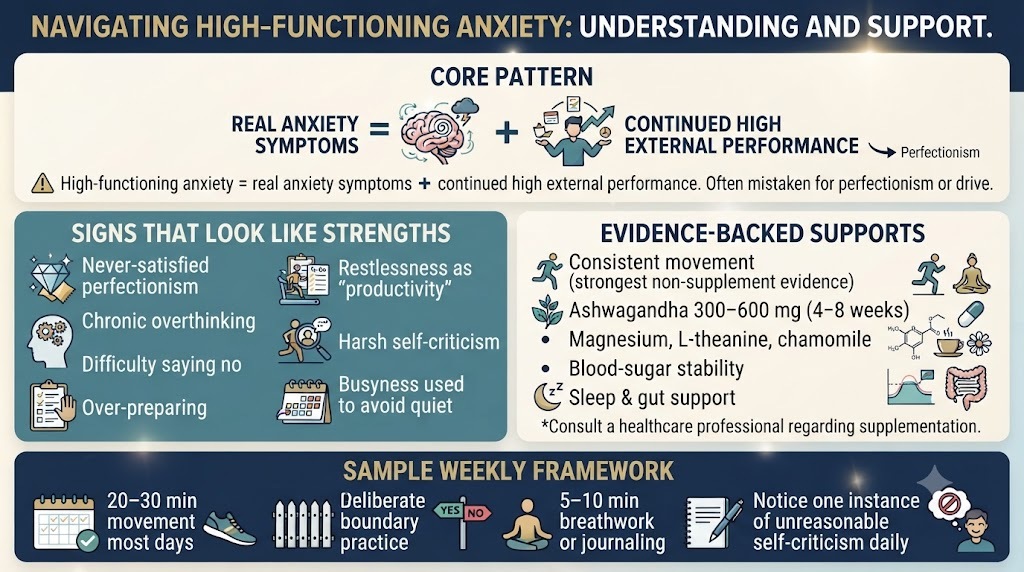
High-functioning anxiety describes a pattern where someone experiences real, often significant anxiety symptoms while still meeting — and frequently excelling at — daily responsibilities: work, relationships, social obligations, appearances. It’s not a clinical diagnosis on its own; clinically, it most often overlaps with generalized anxiety disorder (GAD), where the outward presentation simply doesn’t match the internal experience.
That mismatch is the entire point, and it’s why the condition is so easy to miss. The person doesn’t look anxious from the outside. They look driven, organized, reliable — often genuinely impressive. What’s happening internally is a different story: persistent excessive worry, a racing mind that won’t settle even during downtime, and a nervous system that treats ordinary tasks (an email, a minor mistake, an ambiguous text message) with the same alarm response most people reserve for genuine threats.
The Signs Most People Miss (Because They Look Like Strengths)
This is where most consumer content stays too surface-level. The real signs of high-functioning anxiety often masquerade as admirable personality traits, which is exactly why they go unrecognized for years — including by the person experiencing them.
- Perfectionism that never feels satisfied — work that would objectively be considered excellent still feels “not good enough,” and the goalpost keeps moving
- Chronic overthinking and rumination, particularly at night or in quiet moments, replaying conversations or anticipating problems that haven’t happened
- People-pleasing and difficulty saying no, often driven by a fear of conflict or of being perceived as letting someone down
- Overpreparing for everything — rehearsing conversations, over-researching decisions, arriving absurdly early
- Restlessness that looks like productivity — an inability to sit still or relax without feeling guilty or “unproductive”
- Physical tension carried silently — jaw clenching, shallow breathing, a tight chest or stomach that’s become so constant it barely registers as unusual anymore
- Difficulty accepting compliments or delegating, because both require trusting that things will be fine without direct control
- Using busyness as a coping mechanism — staying constantly occupied specifically to avoid sitting with anxious thoughts
- Persistent self-criticism and negative self-talk, often far harsher than anything the person would say to someone else
Notice how many of these read as “hardworking,” “conscientious,” or “a perfectionist” rather than “anxious” — that’s precisely the trap. A useful mental test: ask whether the behavior is driven by genuine enjoyment and choice, or by fear of what happens if it isn’t done. Excellence chosen freely and excellence extracted by anxiety look identical from the outside, and only the person living it can really tell the difference.
What the Research Shows Is Actually Happening
This isn’t just a personality quirk — there’s real neurobiology behind the pattern. Research published in Nature in 2024 found that people with anxiety disorders, including the high-functioning presentation, show increased activation in specific brain regions — the bilateral insula and medial prefrontal cortex — areas involved in processing internal bodily signals and self-referential thinking. In plainer terms: the brain regions responsible for monitoring “how am I doing, is something wrong” are running in overdrive, which lines up exactly with the lived experience of a mind that won’t stop scanning for problems even when everything is objectively fine.
High-functioning anxiety also frequently co-occurs with depression, and research has found this combination can compound into feelings of hopelessness that are easy to miss precisely because the person is still, outwardly, performing well. There’s a related but distinct pattern worth knowing about too: high-functioning depression, described in recent clinical research as depressive symptoms — fatigue, loss of interest, poor concentration, guilt, sleep and appetite changes — occurring without the visible functional impairment or distress typically associated with major depression. The two conditions frequently overlap and share the same “looks fine, isn’t fine” signature, which is worth knowing if the anxiety strategies in this guide don’t fully explain what you’re experiencing.
Why This Pattern Develops and Persists
High-functioning anxiety often has roots in early conditioning — environments (family, school, early career) where achievement, control, or being “the reliable one” was directly or indirectly rewarded, while vulnerability or asking for help wasn’t modeled or reinforced. Over time, high achievement becomes the primary coping mechanism for anxiety itself: if you’re succeeding, the anxious mind reasons, the threat is being managed. The problem is that this creates a self-reinforcing loop — success temporarily quiets the anxiety, which teaches the nervous system that more achievement equals more safety, which raises the bar for the next round, which requires more anxiety-driven effort to meet. It’s a genuinely difficult cycle to interrupt from the inside, because the very thing that’s exhausting you is also what’s earning you praise and validation.
Chronic, unmanaged stress and anxiety also keep cortisol elevated for extended periods, which affects sleep, digestion, mood regulation, and immune function — this is covered in more depth in this related guide on ashwagandha for anxiety and stress, which explains the cortisol-anxiety relationship and one of the better-evidenced natural interventions for it.
The Weaknesses Hidden Beneath the Competence
Positive psychology researchers have identified a consistent set of costs that accumulate beneath the high-functioning surface, and they’re worth naming directly rather than glossing over:
- Burnout from the constant pressure to perform, often arriving suddenly after years of apparent stability
- Impaired relationships, since people-pleasing and conflict avoidance quietly erode genuine intimacy and honesty over time
- Internal struggle that stays invisible, meaning the person often doesn’t receive support because nobody around them realizes support is needed
- Physical health consequences from chronically elevated stress hormones, including disrupted sleep, digestive issues, and increased cardiovascular strain over years of sustained activation
If digestive symptoms have crept in alongside the anxiety — a very common but under-discussed overlap — this is directly connected to the gut-brain axis; this research-based guide on the link between gut health and mental health explains the two-way communication pathway between chronic stress and digestive function.
Natural Strategies With Real Evidence Behind Them
This is where competing content tends to either list generic “self-care” tips with no research behind them, or oversell supplements as a complete fix. Here’s what the actual evidence supports, organized by category.
Movement: The Best-Evidenced Non-Supplement Intervention
A 2023 review published in the British Journal of Sports Medicine, which analyzed results across nearly 100 systematic reviews, found consistent evidence that physical activity eases anxiety symptoms. This is genuinely one of the more robust findings in the entire anxiety research literature — not a single small study, but a review-of-reviews spanning a huge evidence base.
For someone with high-functioning anxiety specifically, the type of exercise matters less than consistency, and lower-intensity, sustainable movement tends to be more sustainable long-term than high-intensity training that can itself become another achievement-driven pressure point. This guide on Zone 2 cardio and why it’s become so popular covers a training approach specifically built around consistency over intensity, which fits well with a nervous system that’s already running hot.
Adaptogens: Ashwagandha Has the Strongest Evidence
Ashwagandha (Withania somnifera) is one of the most extensively studied natural compounds for anxiety specifically. Clinical trials using doses in the 300–600 mg/day range have shown significant reductions in anxiety scores and cortisol levels compared to placebo, typically over 4–8 weeks of consistent use, with a systematic review of multiple trials confirming consistent benefit for stress and anxiety reduction. This guide on ashwagandha for anxiety and stress covers the full dosage protocol, timing, safety considerations, and who should avoid it — essential reading before starting, since ashwagandha isn’t appropriate for everyone (pregnancy, certain thyroid and autoimmune conditions, and specific medication interactions all matter here).
Rhodiola rosea is a related adaptogen worth knowing about, with European Medicines Agency recognition specifically for stress-related fatigue, exhaustion, and irritability — symptoms that overlap heavily with the “wired but exhausted” state common in high-functioning anxiety.
Magnesium
Magnesium deficiency is common and has been specifically linked to worsened anxiety symptoms, since this mineral plays a direct role in regulating the nervous system and neurotransmitter function. Research generally points to 200–400 mg of elemental magnesium daily, with magnesium glycinate and magnesium citrate cited as better-absorbed forms than cheaper magnesium oxide.
L-Theanine
An amino acid found naturally in green tea, L-theanine promotes a calm, alert state without sedation — a meaningfully different mechanism than most calming supplements, which makes it a genuinely useful option for someone who needs to stay functional and focused at work rather than drowsy. Typical studied doses run 100–200 mg daily, and while some effects can be felt within an hour, fuller benefits tend to build over several weeks of regular use.
Chamomile
Chamomile is one of the better-researched herbal options for anxiety specifically — a large study involving over 2,600 participants found that chamomile extract significantly reduced anxiety symptoms compared to placebo. It’s a gentler option than some adaptogens and a reasonable starting point for someone hesitant to begin with something more potent.
Nutrition and Blood Sugar Stability
Blood sugar swings directly worsen anxiety symptoms by triggering the same stress-hormone cascade that psychological anxiety does — a spike-and-crash pattern from refined carbohydrates and skipped meals can mimic or intensify anxious physical sensations. If your typical morning leans on sugary or refined options, this breakdown of the worst foods for breakfast you should avoid is worth a look, since stabilizing blood sugar starting first thing in the morning has a disproportionate effect on how steady the rest of the day feels.
Sleep as a Foundation, Not an Afterthought
Quality sleep reduces anxiety symptoms and improves cognitive function, and the relationship runs in both directions — anxiety disrupts sleep, and poor sleep lowers the threshold for anxious reactivity the next day, creating a compounding cycle that’s especially common in high-functioning anxiety, where the racing mind that made the day productive often refuses to switch off at night. This practical guide on using nutmeg for sleep naturally offers a low-cost, low-effort starting point for the wind-down side of this cycle.
Gut Health
Given the depth of the gut-brain connection, supporting gut bacteria composition is an increasingly evidence-backed angle on anxiety management, sometimes studied under the term “psychobiotics.” Specific probiotic strain combinations have been studied for stress-related outcomes in controlled trials — this strain-specific guide to probiotics for gut health explains exactly which strains have research behind them for this purpose, since (as with most supplements) the effect is strain-specific rather than a blanket “probiotics help anxiety” claim.
Weighted Blankets
Research indicates weighted blankets can meaningfully help with anxiety symptoms, with the deep, even pressure believed to activate the parasympathetic nervous system — the body’s “rest and digest” mode — helping shift the body out of the sympathetic, fight-or-flight activation that characterizes chronic anxiety.
Behavioral and Psychological Strategies
Supplements and lifestyle changes matter, but the psychological patterns underlying high-functioning anxiety usually need to be addressed directly, not just soothed around the edges.
Interrupting Negative Self-Talk
Self-criticism is one of the most consistent features of high-functioning anxiety, and learning to treat yourself with the same reasonable standard you’d apply to someone else can meaningfully reduce baseline anxiety levels. This isn’t about empty positive affirmations — it’s about noticing when an internal standard has become genuinely unreasonable and naming that distortion out loud, even just to yourself.
Journaling
Writing about thoughts and feelings provides a genuine outlet for stress and helps identify recurring triggers and thought patterns, giving the anxious mind something concrete to work with instead of looping indefinitely. For someone whose anxiety mostly shows up as internal rumination, this is often one of the most accessible starting points, since it requires no special skill or scheduling — just consistency.
Practicing Saying No
Because people-pleasing and conflict avoidance sit at the center of so much high-functioning anxiety, deliberately practicing boundaries — starting small, with low-stakes situations — is a genuinely evidence-informed behavioral strategy, not just generic advice. Each successful “no” that doesn’t result in catastrophe helps recalibrate a nervous system that’s been treating disappointing someone as a real threat.
Breathwork and Mindfulness
Structured breathing practices and mindfulness meditation help interrupt the sympathetic nervous system activation that keeps high-functioning anxiety running in the background all day. Even a few minutes of slow, deliberate breathing during a high-pressure moment — before a meeting, before responding to a difficult email — can measurably lower physiological arousal in the moment, not just over the long term.
Reducing Alcohol and Nicotine
Both may feel calming in the short term, but research consistently shows they worsen anxiety over time, and alcohol in particular carries real risk of dependency when used repeatedly as an anxiety coping mechanism. If evening drinking has become part of your own wind-down routine, it’s worth being honest about whether it’s genuinely relaxing you or just numbing the anxious signal temporarily, only for it to return (often worse) the next day.
A Sample Weekly Framework
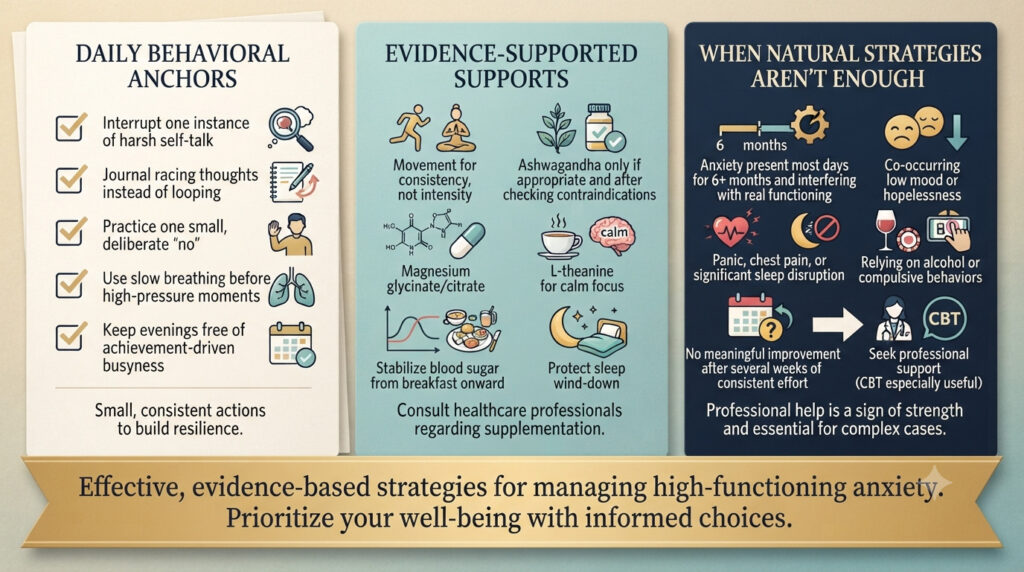
| Area | Practical Action |
|---|---|
| Movement | 20–30 minutes most days; favor consistency over intensity |
| Adaptogen (if appropriate) | Ashwagandha 300–600mg/day, given 4–8 weeks to assess |
| Nutrition | Stabilize blood sugar starting at breakfast; limit refined carbs and caffeine excess |
| Sleep | Consistent wind-down routine; address racing thoughts before bed with journaling |
| Behavioral practice | One deliberate “no” or boundary attempt per week to start |
| Mindfulness | 5–10 minutes daily; can be as simple as slow breathing before a stressful task |
| Self-talk | Notice and name one instance of unreasonable self-criticism daily |
When Natural Strategies Aren’t Enough — Read This Section Carefully
This is the section most wellness content treats as an afterthought, and it deserves real weight. Natural strategies genuinely help many people manage high-functioning anxiety day to day, but they are not a substitute for professional care when certain thresholds are crossed. It’s time to see a doctor or therapist if:
- Anxiety is chronic — present on most days for six months or longer — and genuinely interferes with your ability to function, even if you’re still technically “getting things done”
- You notice signs of co-occurring depression: persistent hopelessness, loss of interest in things you used to enjoy, or a flattening of emotion beneath the productivity
- Physical symptoms are significant or unexplained: chest pain, panic attacks, gastrointestinal symptoms that don’t resolve, or significant sleep disruption lasting weeks
- You’re relying on alcohol, other substances, or compulsive behaviors to manage the anxiety
- The gap between how you appear and how you actually feel has become genuinely distressing or isolating — this specific loneliness, of being praised for something that’s quietly costing you, is one of the most under-discussed and important reasons to seek support
- Self-directed strategies haven’t produced meaningful improvement after several weeks of consistent effort
Cognitive behavioral therapy (CBT) in particular has strong evidence specifically for the thought patterns underlying high-functioning anxiety — perfectionism, catastrophizing, all-or-nothing thinking — and a therapist trained in it can work through these patterns far more effectively than self-directed effort alone, especially once they’ve been reinforced over years. There is no failure in needing that support; if anything, recognizing the need for it is the same kind of clear-eyed competence that’s carried you this far in every other area of your life.
Frequently Asked Questions
1. What is high-functioning anxiety, and is it a real diagnosis? High-functioning anxiety isn’t a formal diagnosis in the DSM, but it describes a real and clinically recognized pattern, typically overlapping with generalized anxiety disorder, where someone experiences significant anxiety symptoms while still successfully meeting daily responsibilities and often appearing calm or accomplished to others.
2. What are the main signs of high-functioning anxiety? Common signs include persistent perfectionism that never feels satisfied, chronic overthinking and rumination, difficulty saying no, overpreparing for everything, restlessness disguised as productivity, and harsh self-criticism, many of which are easy to mistake for admirable personality traits rather than anxiety symptoms.
3. Can high-functioning anxiety turn into burnout? Yes, burnout is one of the most commonly reported consequences of long-term high-functioning anxiety, since the constant internal pressure to perform, often invisible to others, gradually exhausts the person’s physical and emotional resources even while their outward performance stays consistent.
4. Does ashwagandha actually help with anxiety? Yes, ashwagandha has some of the strongest clinical evidence among natural compounds studied for anxiety, with trials using 300 to 600 mg daily showing significant reductions in anxiety scores and cortisol levels over 4 to 8 weeks. It isn’t appropriate for everyone, including certain thyroid conditions and pregnancy, so checking suitability first matters.
5. How is high-functioning anxiety different from regular stress? Regular stress typically has a clear cause and resolves once the triggering situation passes, while high-functioning anxiety tends to be more persistent and generalized, showing up as chronic worry and physical tension that continues even during periods that should feel relaxed or successful.
6. What natural remedies actually have research behind them for anxiety? Ashwagandha, magnesium, L-theanine, and chamomile all have meaningful clinical trial support for reducing anxiety symptoms, alongside regular physical activity, which a large 2023 review found consistently eases anxiety across nearly 100 systematic reviews.
7. Can exercise really reduce anxiety as effectively as some people claim? Yes, this is one of the more robustly supported findings in anxiety research. A major review published in the British Journal of Sports Medicine, drawing on nearly 100 systematic reviews, found consistent evidence that physical activity eases anxiety symptoms, making it one of the best-evidenced non-supplement interventions available.
8. Is high-functioning anxiety linked to depression? Yes, research has found the two frequently co-occur, and the combination can lead to underlying feelings of hopelessness that are easy to overlook precisely because the person continues functioning well on the outside, which is why it’s worth taking any signs of low mood seriously alongside anxiety symptoms.
9. When should someone with high-functioning anxiety see a therapist instead of relying on natural remedies? See a professional if anxiety has been present most days for six months or longer and genuinely interferes with functioning, if signs of depression appear alongside it, if physical symptoms like panic attacks or chest pain occur, or if self-directed strategies haven’t produced meaningful improvement after several weeks of consistent effort.
10. Can gut health really affect anxiety symptoms? Yes, the gut and brain communicate directly through what’s called the gut-brain axis, and research increasingly supports specific probiotic strains for stress-related outcomes, alongside the broader recognition that chronic anxiety and digestive symptoms frequently occur together and influence each other in both directions.
11. What’s the difference between high-functioning anxiety and high-functioning depression? High-functioning anxiety centers on persistent worry, overthinking, and physical tension while still meeting responsibilities, while high-functioning depression involves depressive symptoms like fatigue, loss of interest, and poor concentration without the visible impairment typically associated with major depression. The two frequently overlap and share the same core pattern of looking fine while not feeling fine.
Final Thoughts
High-functioning anxiety is exhausting precisely because it rewards the very behavior that’s driving it — the more anxious you feel, the harder you work to prove everything is fine, and the more everything looks fine, the less anyone (including you) thinks to question it. Recognizing your own pattern in the signs covered here is often the hardest and most important step, because it requires separating genuine strength from anxiety wearing strength’s clothing. From there, the research points somewhere genuinely hopeful: consistent movement, evidence-backed adaptogens like ashwagandha, stable blood sugar and sleep, and direct behavioral work on people-pleasing and self-criticism all have real, measurable effects. And if you’ve read through the “when to see a doctor” section and recognized more of yourself there than you expected, treat that recognition the same way you’d treat any other piece of information you’d act on immediately in any other part of your life — because it deserves exactly that same competence and care.
This article is for informational purposes only and is not a substitute for professional medical or mental health advice. If your anxiety significantly interferes with daily functioning, co-occurs with depression, or includes thoughts of self-harm, please consult a healthcare provider or mental health professional promptly.






Leave a Reply