
You’ve probably felt it without ever naming it — the nervous “butterflies” before a big presentation, the way stress seems to sit directly in your stomach, or how a stretch of bad sleep somehow makes everything feel more overwhelming the next day. None of that is a coincidence. Your gut and your brain are in constant, two-way communication, and a growing body of research suggests that what happens in your digestive system doesn’t just stay there — it shapes your mood, your stress response, and even your risk of anxiety and depression.
This connection, known as the gut-brain axis, has become one of the most actively researched areas in both neuroscience and gastroenterology over the last decade. It’s not a fringe theory anymore. Researchers at institutions like Harvard and Stanford now describe the gut as something close to a “second brain,” and for good reason.
What Is the Gut-Brain Axis, Exactly?
The gut-brain axis is the biological communication network connecting your gastrointestinal tract to your central nervous system. It isn’t a single pathway but a web of several systems working together:
- The vagus nerve, a long nerve that runs directly from your brainstem down into your abdomen, carrying signals in both directions
- The gut microbiome, trillions of bacteria living in your intestines that produce compounds capable of influencing brain chemistry
- The immune system, since a large portion of your body’s immune activity is centered in the gut and can trigger inflammation that affects the brain
- The endocrine system, through hormones and stress pathways like the HPA axis (hypothalamic-pituitary-adrenal axis), which governs your body’s stress response
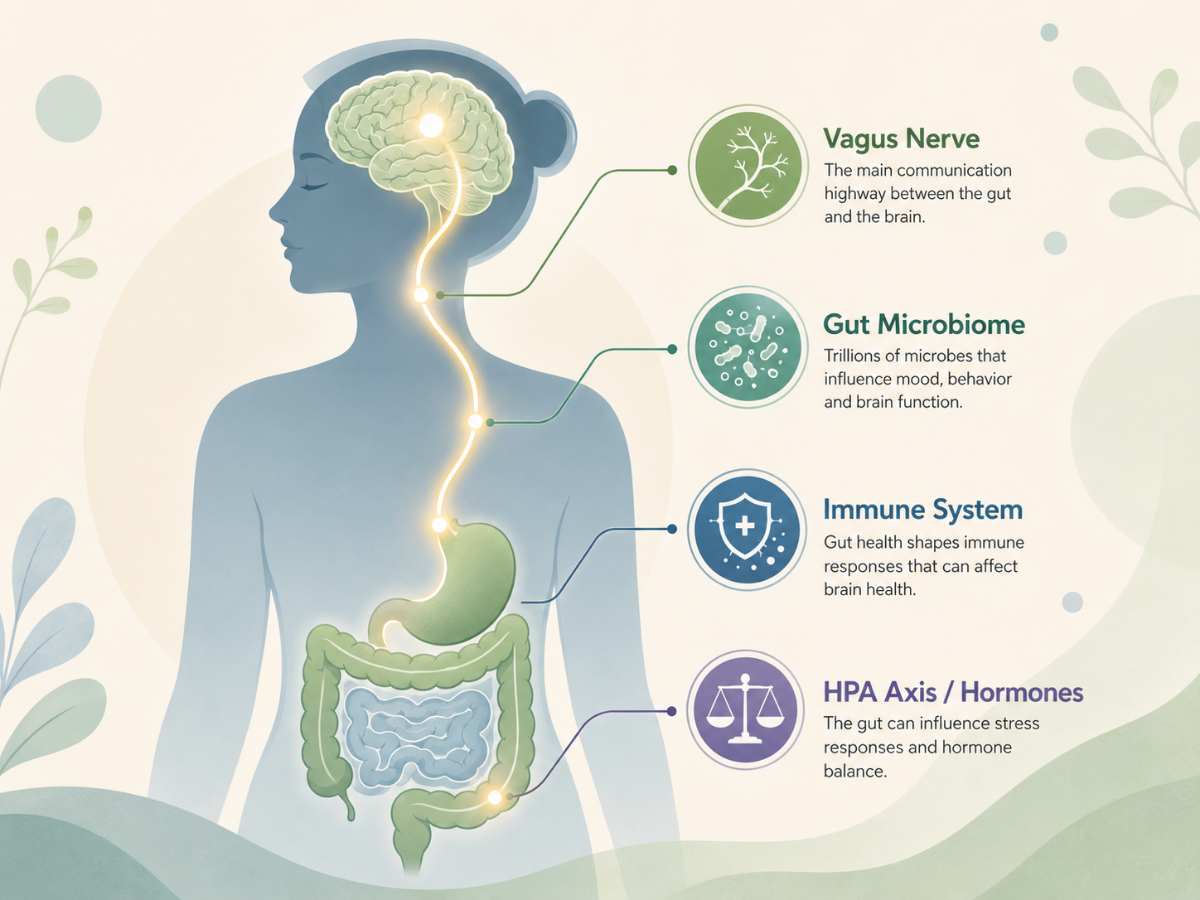
Your gut is sometimes referred to as the “second brain” partly because it contains its own extensive network of neurons — the enteric nervous system — capable of operating somewhat independently of your central nervous system, while still constantly reporting back to it.
How Your gut Bacteria Influence Mood?
This is where things get genuinely fascinating. Your gut microbiome doesn’t just help digest food — certain strains of bacteria, particularly from the Lactobacillus and Bifidobacterium families, appear to influence the production and regulation of neurotransmitters that are central to mood regulation, including serotonin and GABA.
That’s a significant detail, because the vast majority of your body’s serotonin — often nicknamed the “feel-good” chemical — is actually produced in the gut, not the brain. Researchers have found that dysbiosis, a term for an imbalance in gut bacteria, is associated with changes in the hypothalamic-pituitary-adrenal axis and can contribute to symptoms of anxiety and low mood.
There’s also a more direct mechanical piece to this story. Chronic low-grade inflammation originating in the gut, sometimes triggered by an unhealthy diet, chronic stress, or gut permeability issues (commonly referred to as “leaky gut”), can send inflammatory signals that reach the brain and are increasingly linked to mood disturbances. If gut inflammation is a concern for you specifically, it’s worth reading through our detailed look at the foods that naturally support gut health and reduce inflammation, which covers this in more depth alongside practical food swaps.
The Two-Way Street: Stress Changes Your Gut, Too
It’s important to understand this isn’t a one-directional story where “bad gut equals bad mood.” The relationship runs both ways. Psychological stress itself has been shown to alter the composition of gut bacteria, which can then feed back into the nervous system and potentially prolong or intensify the very stress response that caused the imbalance in the first place.
This creates what researchers sometimes describe as a feedback loop — stress disrupts the gut, and a disrupted gut makes it harder for the body to regulate stress efficiently. Breaking that cycle is part of why lifestyle factors like sleep and diet matter so much for mental health, not just physical health. If poor sleep has been part of your own stress cycle, our guide on optimizing sleep without relying on gadgets is a useful companion piece to what’s discussed here, since sleep and gut health influence each other constantly.
Not Everyone Is Equally Affected — Here’s Why
One of the more interesting threads in current research is the concept of stress resilience. Not everyone who experiences the same stressful event develops anxiety or depression afterward, and scientists studying the microbiome-gut-brain axis believe part of that difference in resilience may come down to the health and diversity of a person’s gut bacteria.
This doesn’t mean gut health is the only factor — genetics, life circumstances, and psychological support all matter enormously too. But it does suggest that supporting your gut is one of the more actionable, low-risk levers available to you if you’re trying to build greater resilience to everyday stress.
What Can You Actually Do About This?
Given how new much of this research still is, it’s worth being realistic: gut-health strategies are a support system, not a cure for clinical anxiety or depression, and they should never replace therapy, medication, or professional psychiatric care where those are needed. With that said, several evidence-informed habits show real promise for supporting the gut-brain connection.
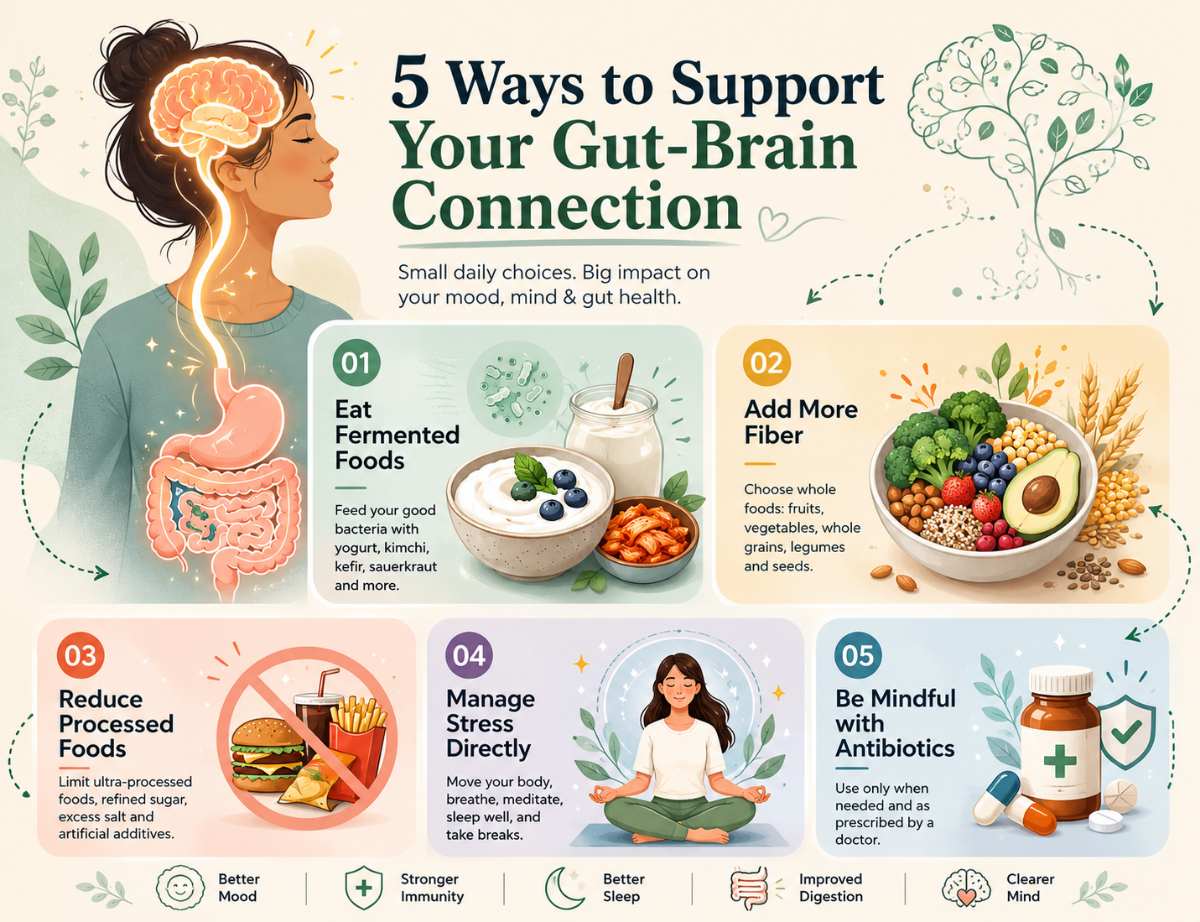
1. Prioritize Fermented and Probiotic Foods
Yogurt, kefir, sauerkraut, miso, and kimchi introduce beneficial bacterial strains that have been studied for their potential anxiolytic (anxiety-reducing) effects. Some researchers refer to these particular strains as “psychobiotics” because of their apparent influence on mood-related neurotransmitters.
2. Feed Your Existing Bacteria With Fiber
Beneficial gut bacteria thrive on fiber from vegetables, legumes, oats, and whole grains. When these bacteria break fiber down, they produce short-chain fatty acids, compounds that appear to play a role in regulating both inflammation and neuronal signaling related to mood. We’ve covered which specific foods do this most effectively in our piece on natural foods that support GLP-1 and metabolic health, since many of the same fiber-rich foods that support blood sugar also support your gut bacteria.
3. Reduce Ultra-Processed Food Intake
Diets heavy in ultra-processed foods have been associated with reduced microbial diversity, which some researchers believe weakens the gut’s ability to support healthy brain signaling. This doesn’t require perfection — simply shifting the overall balance of your diet toward whole foods most of the time appears to matter more than eliminating any single food entirely.
4. Manage Stress Directly, Not Just Through Diet
Because the relationship between stress and gut health runs in both directions, actively managing stress — through movement, breathing techniques, adequate sleep, or professional support — can help protect your gut microbiome, not just your mental state. Our guide on natural remedies for anxiety and stress walks through several accessible techniques that work alongside the dietary strategies discussed here.
5. Be Cautious With Long-Term Antibiotic or Restrictive Diet Use
Antibiotics, while sometimes medically necessary, can significantly disrupt gut bacteria diversity. Similarly, very restrictive or fad diets can reduce the variety of fiber sources available to your gut bacteria. Neither should be avoided when medically appropriate, but it’s worth discussing gut-supportive strategies with your doctor afterward if you’ve recently completed a course of antibiotics.
Frequently Asked Questions
1. Can improving gut health cure anxiety or depression? No. Gut health is one contributing factor among many, including genetics, life circumstances, and psychological support. It can meaningfully support mood regulation and stress resilience, but it isn’t a replacement for therapy or medical treatment when those are needed.
2. How long does it take to see a difference in mood from gut-health changes? There’s no fixed timeline, and individual responses vary widely. Some people notice subtle improvements in digestion and energy within a few weeks, but meaningful changes in mood-related outcomes in research studies are typically observed over several weeks to a few months of consistent dietary and lifestyle changes.
3. Are probiotic supplements as effective as fermented foods? Research on specific probiotic strains for mood, sometimes called psychobiotics, is promising but still considered preliminary, with limited large-scale human trials. Whole fermented foods offer these bacteria alongside other nutrients, but if you’re considering a targeted supplement, it’s worth discussing strain selection and dosage with a healthcare provider first.
4. Can stress alone damage my gut health, even if I eat well? Yes. Chronic stress has been shown to alter gut bacteria composition independently of diet, which is part of why stress management techniques are just as important as dietary changes for supporting the gut-brain axis.
5. Is “leaky gut” a real medical condition? Increased intestinal permeability, informally called “leaky gut,” is a recognized area of ongoing research, particularly in relation to inflammation and autoimmune conditions. However, it’s often used more loosely in wellness marketing than the current science fully supports, so it’s worth approaching specific product claims around it with some skepticism.
The Bottom Line
The idea that your gut and brain are separate systems doesn’t hold up anymore. The evidence connecting gut bacteria, inflammation, and mood regulation has moved from a niche research interest to a mainstream area of study at major medical institutions. While gut-health strategies can’t replace professional mental health care, the habits that support a healthy microbiome — fiber-rich whole foods, fermented foods, stress management, and adequate sleep — are some of the lowest-risk, most accessible tools available for supporting long-term mental resilience. Small, consistent changes here tend to compound in ways that are easy to underestimate at first.
- CGM for Non-Diabetics: Is Continuous Glucose Monitoring Worth It (and What the Evidence Says)

- Postbiotics: What They Actually Are, What the Evidence Says, and Whether They’re Worth Buying

- Lymphatic Drainage: What It Can (and Can’t) Do for Detox, Swelling, and Recovery

- Nervous System Regulation: A Practical Guide (Beyond Breathwork and Ice Baths)

- Vagus Nerve Reset: What Actually Works (and What’s Just Viral Breathing)

Disclaimer:-
This article is for informational purposes only and is not a substitute for professional medical or psychiatric advice. If you are struggling with persistent anxiety or low mood, please reach out to a licensed healthcare provider or mental health professional.


Leave a Reply