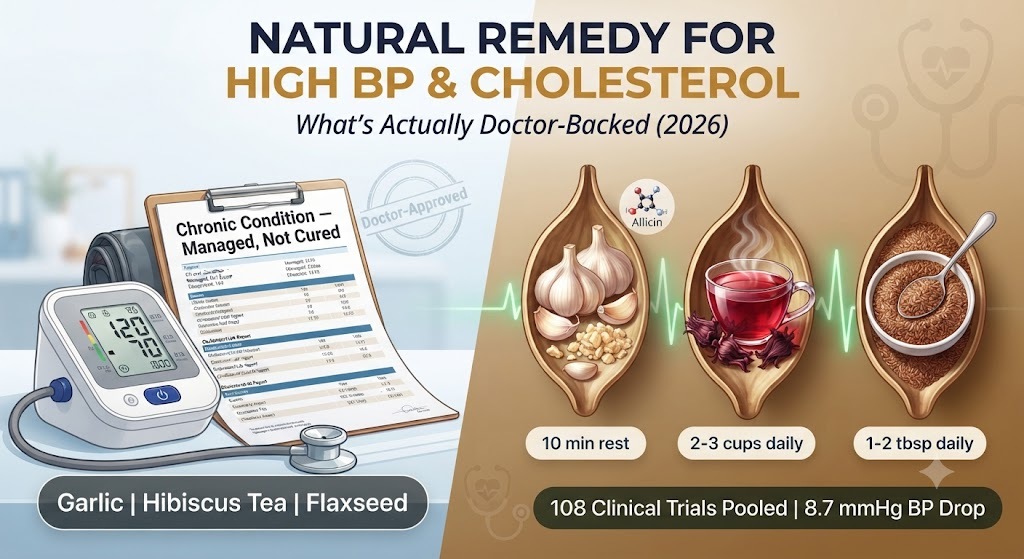
If you’ve searched for a natural remedy for high BP and cholesterol hoping to find something that eliminates the problem “from the root,” here’s the honest, doctor-backed answer up front: hypertension and high cholesterol are chronic conditions that are managed, not permanently cured by any single remedy, natural or pharmaceutical. This is the same honest reframing we did when fact-checking cortisol face and cortisol detox claims — a real biological mechanism gets stretched into an oversold promise more often than it should. What genuinely evidence-backed natural approaches can do — and this is a real, clinically meaningful claim, not a smaller consolation prize — is measurably lower blood pressure and improve cholesterol markers, in some cases by amounts comparable to a first-line medication dose. Three kitchen-cabinet remedies in particular have real randomized controlled trial data behind them: garlic, hibiscus tea, and flaxseed. This guide walks through exactly what those trials found, the doses actually used, and where the honest limits of “natural” treatment sit.
Why “Cure It From the Root” Is the Wrong Frame
Before the remedies themselves, it’s worth addressing the framing directly, because it changes how you should use everything that follows. High blood pressure and high cholesterol are, in the vast majority of cases, chronic conditions driven by a combination of genetics, age, diet, and lifestyle factors that accumulate over years. There is no known natural remedy, and no known medication, that permanently “removes” this underlying tendency — what exists is ongoing management: keeping numbers in a healthy range consistently, for life, through some combination of diet, movement, stress management, and, when needed, medication. Any remedy promising a permanent root-level cure is making a claim the evidence doesn’t support, and it’s worth being skeptical of that framing wherever you encounter it.
Garlic: The Best-Studied Remedy in This List, by a Wide Margin
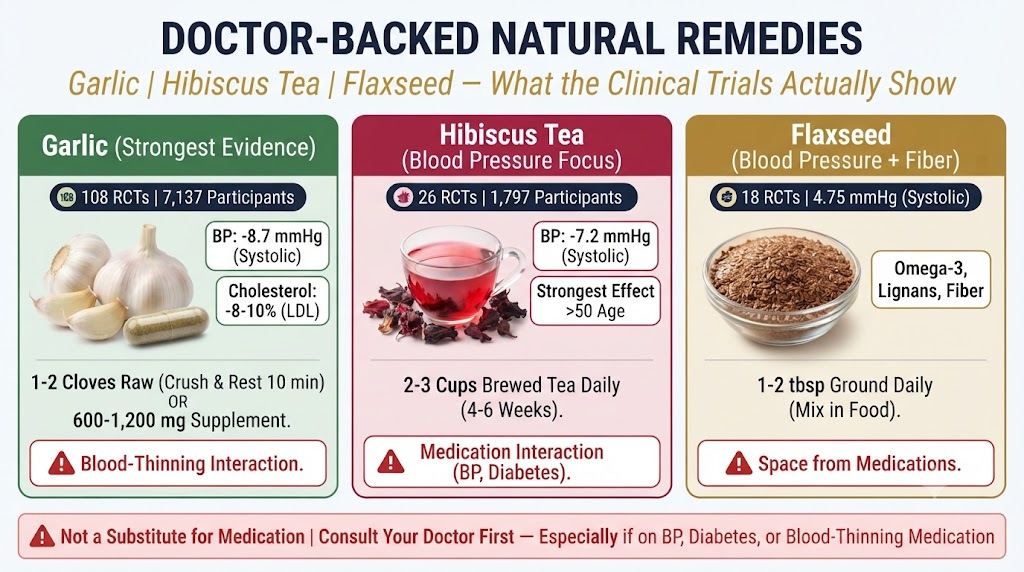
This is genuinely the strongest evidence base of any natural remedy covered on this site so far. A 2026 comprehensive systematic review and meta-analysis in Nutrition Reviews, pooling 108 randomized controlled trials with 7,137 participants, found garlic consumption significantly improved triglycerides, total cholesterol, LDL cholesterol, HDL cholesterol, fasting blood glucose, and both systolic and diastolic blood pressure. An earlier but widely cited meta-analysis of 20 trials with 970 participants found garlic supplements lowered systolic blood pressure by an average of 5.1 mmHg and diastolic blood pressure by 2.5 mmHg compared to placebo — and in the subgroup of people who were already hypertensive at baseline, the effect was considerably larger: an 8.7 mmHg drop in systolic and 6.1 mmHg drop in diastolic pressure, a reduction in the same range as some first-line antihypertensive medications produce.
On cholesterol specifically, a meta-analysis of 39 trials and nearly 2,300 subjects found garlic reduced total cholesterol and LDL cholesterol by roughly 8-10% in people with elevated baseline cholesterol (above 200 mg/dL) when taken consistently for more than two months — a reduction researchers note has been associated with a meaningful drop in coronary event risk at a population level. A 2025 meta-analysis specifically studying aged garlic extract found similar reductions in both systolic blood pressure and LDL cholesterol.
How to use it: Raw garlic, crushed and left to sit for about 10 minutes before eating (this activates allicin, the primary active compound), is the most direct approach — roughly one to two cloves daily. Cooking degrades allicin significantly, so if you’re using cooked garlic in your regular meals, know that the therapeutic dose used in most trials assumed raw or minimally processed garlic, or standardized supplement forms like aged garlic extract or garlic powder tablets (typically 600-1,200 mg daily in the trials showing benefit). This same “raw and fresh preserves potency better than cooked” principle shows up in our turmeric-ginger joint pain remedy too, where preparation method genuinely changes how much active compound you actually get.
Real safety caution: Garlic has genuine blood-thinning properties, and combining high-dose garlic supplementation with blood-thinning medication (warfarin, aspirin, clopidogrel) carries a real bleeding risk that needs medical supervision. It can also interact with blood pressure medication in ways that occasionally cause blood pressure to drop too low, so if you’re already on antihypertensive medication, this is genuinely worth discussing with your doctor rather than adding on your own, particularly at supplement-level doses — the same real interaction caution we flagged in our guide to ashwagandha dosage and safety.
Hibiscus Tea: Comparable Effect Size, Slightly Less Consistent Data
Hibiscus tea (known as karkade, sour tea, or in India often as gudhal or ambadi) has one of the more compelling evidence bases among herbal teas specifically studied for cardiovascular effects. It’s also worth knowing that chronic stress independently raises blood pressure through a completely separate pathway, which is worth ruling out alongside any dietary approach — our fact-check on cortisol and what actually affects it covers this in more depth.
A 2025 umbrella review and dose-response meta-analysis, pooling 26 randomized controlled trials and 1,797 participants, found hibiscus tea dose-dependently reduced both systolic and diastolic blood pressure, with the strongest effects — greater than 10 mmHg reduction — seen in people over 50, in trials lasting more than four weeks. An earlier meta-analysis of 22 studies found a weighted mean reduction of 7.14 mmHg systolic and 3.54 mmHg diastolic blood pressure compared to placebo. One frequently cited individual randomized, double-blind, placebo-controlled trial in pre- and mildly hypertensive adults found three cups of hibiscus tea daily for six weeks reduced systolic blood pressure by 7.2 mmHg — with the strongest response seen in people who had higher blood pressure to begin with.
The cholesterol evidence is present but somewhat less consistent across trials than the blood pressure findings — several meta-analyses found significant reductions in LDL cholesterol specifically, while total cholesterol and triglyceride effects were less consistently significant across the pooled studies. HDL cholesterol showed modest increases in several trials.
How to use it: Two to three cups of brewed hibiscus tea daily, made from dried hibiscus calyces, is the amount used across most of the supporting trials, typically for at least four to six weeks before evaluating effect.
Real safety caution: Hibiscus can interact with certain blood pressure medications and diabetes medications, potentially causing blood pressure or blood sugar to drop lower than intended, and it’s generally advised against during pregnancy given limited safety data in that population. If you’re on antihypertensive medication, check with your doctor before adding regular hibiscus tea, for the same reason garlic requires that conversation — stacking two blood-pressure-lowering interventions without medical guidance isn’t automatically safer just because one of them is a tea.
Flaxseed: Real Effect on Blood Pressure, More Modest on Cholesterol
Flaxseed (alsi) rounds out the three remedies with the most substantial trial support, and its evidence base has strengthened considerably in recent years.
A 2025 systematic review and meta-analysis of 18 randomized controlled trials found flaxseed supplementation reduced systolic blood pressure by a weighted mean of 4.75 mmHg and diastolic blood pressure by a similar margin in people with cardiovascular risk factors. The effect appears specifically linked to flaxseed’s alpha-linolenic acid (an omega-3 fatty acid), lignans, and fiber content working together, rather than any single compound. This is the same lignan-and-fiber combination we cover from a thyroid-support angle in our guide to natural remedies for hypothyroidism, since flaxseed’s benefits extend across more than one area of metabolic health.
How to use it: One to two tablespoons of ground flaxseed daily (whole seeds pass through largely undigested, so grinding matters) is the amount used in most supporting trials, typically evaluated over eight to twelve weeks. It mixes easily into warm water, yogurt, or a smoothie — a natural pairing with the kind of steady, protein-forward breakfast we recommend in our protein intake guide.
Real safety caution: Flaxseed’s fiber content, much like the fiber-medication interaction we cover in our hypothyroidism guide, can interfere with the absorption of certain medications if taken too close together — space it a few hours apart from any medication you’re taking regularly, and check with your doctor if you’re on blood thinners, since flaxseed’s omega-3 content carries a mild, theoretical additive bleeding risk in combination with anticoagulants.
Building These Into a Realistic Daily Routine
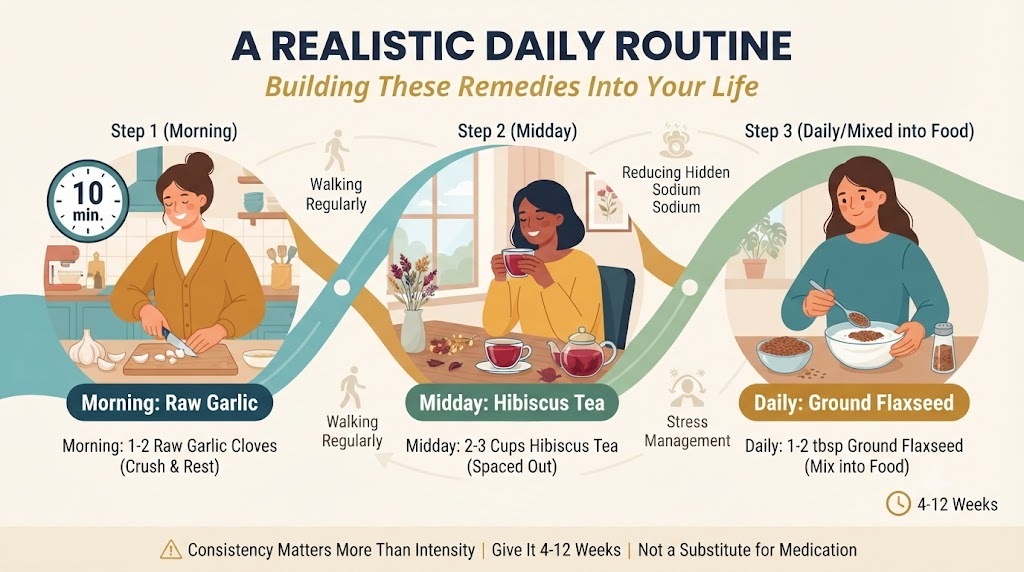
- Morning: One to two raw garlic cloves, crushed and rested for 10 minutes, taken with or shortly before a meal
- Through the day: Two to three cups of hibiscus tea, spaced out rather than all at once
- Daily, mixed into food: One to two tablespoons of ground flaxseed
- Give it real time: Most of the trials behind these numbers ran for four to twelve weeks before showing significant effect — this isn’t a same-day intervention, and consistency matters more than intensity, the same patience-over-quick-fixes lesson from our Ayurvedic morning routine guide
What These Remedies Are Not a Substitute For
This is the section that matters most, and it’s worth reading even if you skip everything else. None of these three remedies — even with genuinely strong trial data behind them — are a substitute for prescribed blood pressure or cholesterol medication if you’ve already been diagnosed and started on one. Stopping or reducing medication based on adding a natural remedy, without your doctor’s direct involvement and follow-up testing, is a real and serious risk. What these remedies are well-suited for is either supporting an existing treatment plan (with your doctor’s knowledge, given the interaction risks above) or serving as a genuinely evidence-backed first step for borderline or mildly elevated readings, in consultation with a doctor about whether medication is needed at all yet.
Diet and movement matter just as much as any single remedy here. Walking regularly has real, trial-backed benefit for blood sugar and cardiovascular markers more broadly — our guide to walking after meals for blood sugar control covers the specific timing that makes the biggest difference. Reducing hidden sodium in packaged food is another genuinely high-leverage change, covered in depth in our guide to habits that damage your kidneys, since high sodium intake drives both blood pressure and kidney strain through overlapping mechanisms. And if fatigue or unexplained weight changes are part of your picture alongside high BP or cholesterol, it’s worth ruling out thyroid involvement, covered in our hypothyroidism guide, since thyroid dysfunction can independently affect both markers.
Who Should See a Doctor Before Starting
- Anyone currently on blood pressure or cholesterol medication — all three remedies here carry real interaction potential, and combining them with medication should be a conversation with your doctor, not a solo decision
- Anyone on blood-thinning medication — garlic and flaxseed both carry genuine bleeding-risk interactions
- Pregnant individuals — hibiscus specifically is generally advised against during pregnancy
- Anyone with newly diagnosed high blood pressure or cholesterol who hasn’t yet discussed a treatment plan — these remedies are a reasonable topic to raise with your doctor as part of that conversation, not a reason to delay getting diagnosed and monitored properly
Poor sleep independently raises both blood pressure and cardiovascular risk over time, so it’s worth addressing alongside diet — our guide to how to fall asleep faster covers the evidence-backed techniques worth trying if that’s a gap in your routine.
Frequently Asked Questions
Can natural remedies really cure high blood pressure and cholesterol permanently? No — this is an important distinction. High blood pressure and cholesterol are chronic conditions that are managed over time, not permanently cured by any remedy, natural or pharmaceutical. What natural remedies like garlic, hibiscus, and flaxseed can do is measurably lower these markers with consistent use, which is a genuinely meaningful outcome, just not a “root cure.”
Which natural remedy has the strongest evidence for blood pressure? Garlic has the most extensive evidence base, drawn from over 100 pooled clinical trials, with effects in hypertensive individuals comparable to some first-line blood pressure medications. Hibiscus tea and flaxseed both have solid, separate trial support as well.
How long does it take for these remedies to actually lower blood pressure? Most supporting clinical trials evaluated results after four to twelve weeks of consistent daily use, not days. Blood pressure and cholesterol changes from dietary interventions build gradually rather than producing an immediate, dramatic shift.
Is it safe to take garlic, hibiscus, and flaxseed together? Generally reasonable for most healthy adults not on interacting medication, but if you’re taking blood pressure medication, blood thinners, or diabetes medication, combining multiple blood-pressure-lowering natural remedies without medical guidance carries a real risk of overcorrection — check with your doctor first.
Can I stop my blood pressure or cholesterol medication if these remedies work? No, not without your doctor’s direct guidance and follow-up testing. Even remedies with strong trial support are not established substitutes for prescribed medication in someone already diagnosed and being treated, and stopping medication independently carries real risk.
Does cooking garlic reduce its effectiveness for blood pressure and cholesterol? Yes, to a meaningful degree. Heat breaks down allicin, garlic’s primary active compound, so raw or minimally processed garlic, or standardized supplements, more closely match what was used in the supporting clinical trials than heavily cooked garlic in regular meals. Garlic also supports gut bacteria diversity, which connects to the broader picture in our gut health guide.
Is hibiscus tea safe for people with diabetes? Hibiscus tea has shown some blood-sugar-lowering effects in trials, which is generally a positive finding, but this also means it can have an additive effect with diabetes medication — worth discussing with your doctor rather than assuming it’s automatically safe to add without monitoring.
How much flaxseed should I take daily for blood pressure benefits? Most supporting trials used one to two tablespoons of ground flaxseed daily, evaluated over eight to twelve weeks. Whole, unground flaxseed passes through the digestive system largely undigested, so grinding it is important for getting the actual benefit.
Can these remedies help with borderline or prehypertension readings? Yes, this is genuinely one of the better use cases for these remedies — for mildly elevated readings not yet requiring medication, evidence-backed dietary changes like these are a reasonable first step, ideally discussed with a doctor to confirm monitoring and next steps.
Are there any natural remedies that work as fast as medication? No — even the best-studied natural remedies here require weeks of consistent use to show measurable effect, unlike medication, which can act within hours to days. For anyone with significantly elevated blood pressure requiring faster control, medication remains the appropriate first response, with natural remedies as a supporting strategy alongside it.
The Bottom Line
A genuinely evidence-backed natural remedy for high BP and cholesterol exists — it’s just not a “cure from the root” in the way that framing implies, the same honest distinction we draw in our guide to natural remedies for high uric acid. Garlic has the strongest clinical trial evidence of the three, with effects on both blood pressure and cholesterol that rival some medications in hypertensive individuals. Hibiscus tea and flaxseed both bring real, separately documented benefits, particularly for blood pressure. Used consistently, with real attention to the drug-interaction risks covered here, these three remedies are a legitimate part of managing mild-to-moderate high blood pressure or cholesterol — genuinely doctor-worth-discussing, not doctor-replacing.
This article is for informational purposes only and is not a substitute for personalized medical advice. Never stop or reduce blood pressure or cholesterol medication without direct guidance from your doctor. Consult a physician before starting garlic, hibiscus, or flaxseed supplementation, particularly if you take blood-thinning, blood pressure, or diabetes medication, or are pregnant.



Leave a Reply