
By Health Morph — Health Conditions — Last Updated: July 31, 2026
This article is for educational purposes only and does not replace personalized medical advice. If you suspect a deficiency, a simple blood test — not guesswork — is the right next step.
Quick Answer
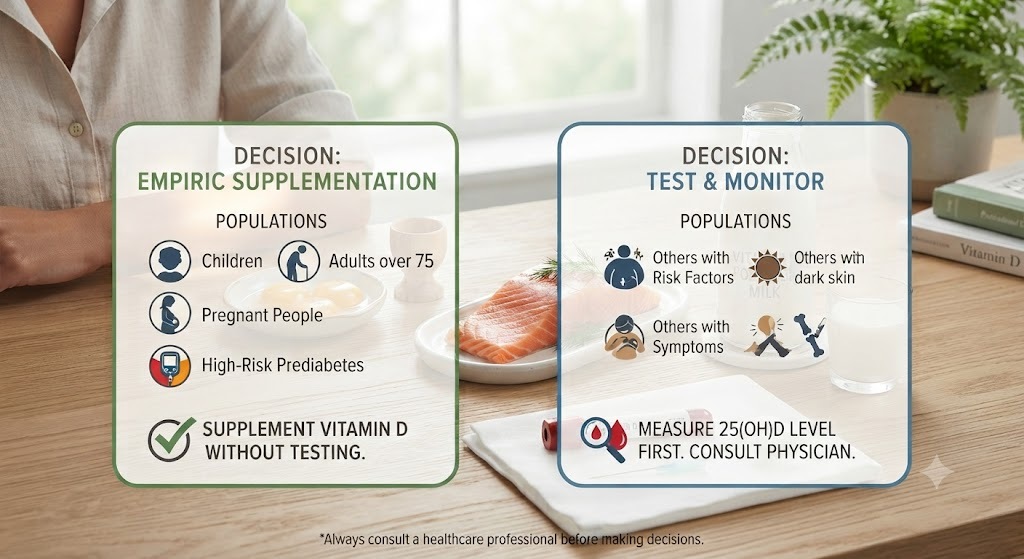
Vitamin D deficiency is defined by most clinical guidelines as a blood level of 25-hydroxyvitamin D below roughly 20 ng/mL (50 nmol/L), though what counts as “optimal” is still genuinely debated among experts. The 2024 Endocrine Society guideline — the most current major clinical guidance — does not recommend routine vitamin D testing or supplementation for the general healthy adult population. It does recommend empiric supplementation for specific groups: children and teens, adults over 75, pregnant people, and those with high-risk prediabetes. If you’re not in one of those groups but suspect a deficiency, a blood test is still the right move — just know you’re not obligated to supplement simply because a level is “less than ideal.”
Let’s Start With What Most Articles Get Wrong
In thirty years of clinical practice, I’ve seen vitamin D go from a nutrient nobody thought about to one patients bring up in nearly every visit — usually because they read something online. Most of what they’ve read falls into one of two camps: either vitamin D is dismissed as irrelevant, or it’s presented as something close to a cure-all. Neither is accurate.
Here’s the honest picture: vitamin D deficiency is genuinely common, it does have real, well-documented effects on bone health in particular, and testing and correcting it matters for specific groups of people. But the idea that everyone should be tested, and that low-normal levels explain your fatigue, mood, or weight — that part isn’t well supported by current evidence, and it’s worth understanding why before you spend money on unnecessary tests or supplements.
What Vitamin D Actually Does in Your Body
Vitamin D’s best-established role is regulating calcium and phosphate absorption, which is why severe, prolonged deficiency causes rickets in children and contributes to osteoporosis and fracture risk in adults. Beyond bone health, vitamin D receptors exist in tissues throughout the body — including immune cells — which has driven a large volume of observational research linking low vitamin D to everything from autoimmune conditions to cardiovascular disease and certain cancers.
The important nuance: association isn’t causation. Many of these links come from observational studies, where it’s often unclear whether low vitamin D is causing the problem, or whether the underlying illness itself — through reduced sun exposure, poor nutrition, or inflammation — is causing the low vitamin D. Randomized trials designed to test causation directly have produced far more mixed results than the headlines about vitamin D would suggest.
Symptoms of Vitamin D Deficiency: What’s Real and What’s Overstated
Severe, long-standing vitamin D deficiency does have recognizable symptoms:
- Bone pain and tenderness, particularly in the lower back, hips, and legs
- Muscle weakness, and in more severe cases, muscle aches or cramps
- Increased fracture risk with relatively minor trauma
- In children, delayed growth and bone deformities (rickets)
What’s more overstated: mild-to-moderate low vitamin D causing fatigue, low mood, brain fog, or weight gain on its own. These symptoms are real and worth taking seriously, but they have many possible causes, and attributing them to vitamin D specifically — without ruling out other explanations — is exactly the kind of assumption that leads people to spend months on supplementation without addressing what’s actually going on.
What Counts as “Deficient”? Understanding the Numbers
This is where even clinicians disagree, and it’s worth knowing that upfront rather than being handed one number as if it were settled science.
Commonly cited reference ranges for 25-hydroxyvitamin D (25(OH)D), the standard blood test:
| Category | 25(OH)D Level |
|---|---|
| Deficient | Below 20 ng/mL (50 nmol/L) |
| Insufficient | 20–29 ng/mL (50–75 nmol/L) |
| Sufficient | 30 ng/mL (75 nmol/L) and above |
A 2025 systematic review of 31 clinical guidelines published over the past decade found no consensus on screening or supplementation for the general adult population — two-thirds of guidelines recommended screening only for people already at risk, not everyone, and none recommended population-wide testing. Where guidelines did recommend supplementation, the typical dose range was 400–1,000 IU per day, targeting a threshold of roughly 20–30 ng/mL. Some independent researchers argue these thresholds are set too low and that higher targets would better reflect current evidence on vitamin D’s broader roles — a genuine and ongoing scientific disagreement, not a settled matter.
Who Is Actually at Risk of Vitamin D Deficiency
Certain factors genuinely increase your risk of low vitamin D:
- Limited sun exposure — spending most daylight hours indoors, living at higher latitudes, or consistently using high-SPF sunscreen
- Darker skin — higher melanin content reduces the skin’s efficiency at producing vitamin D from sunlight
- Age 65 and older — skin becomes less efficient at vitamin D synthesis with age
- Obesity — vitamin D is fat-soluble and can be sequestered in fat tissue, lowering circulating blood levels
- Malabsorption conditions — including celiac disease, Crohn’s disease, or prior bariatric surgery
- Limited dietary intake — few foods naturally contain significant vitamin D, so diet alone rarely provides adequate amounts without fortified foods or supplements
- Pregnancy and breastfeeding, and exclusively breastfed infants, since breast milk is naturally low in vitamin D
Who Should Actually Get Tested?
This is the part most content online skips entirely, and it matters: the 2024 Endocrine Society Clinical Practice Guideline — the most current major guidance in this space — explicitly does not recommend routine vitamin D screening or supplementation for the general healthy adult population. It recommends empiric, without-testing supplementation specifically for children and adolescents ages 1–18, adults over age 75, pregnant individuals, and adults with high-risk prediabetes, largely because natural food sources of vitamin D are limited and these groups have clearer evidence of benefit.
If you don’t fall into one of those groups but have a specific reason for concern — symptoms, a malabsorption condition, limited sun exposure, or you’re simply curious — testing for vitamin D deficiency is still reasonable and often worthwhile. The point isn’t that testing is off-limits; it’s that “everyone should get tested and supplement” isn’t what current major clinical guidance actually says, despite how often you’ll see that claim repeated.
How Much Vitamin D Do You Actually Need
Recommended daily intakes vary by age and health status, and commonly cited adult RDAs generally fall between 400 and 800 IU per day, with higher amounts sometimes suggested for older adults or specific at-risk groups. The tolerable upper intake level for most adults is generally set at 4,000 IU per day for sustained daily use — going meaningfully above this without medical supervision, particularly for extended periods, increases the risk of toxicity, which can cause elevated blood calcium and, in severe cases, kidney problems.
If you’re managing multiple nutrient needs at once, it’s worth zooming out — our guide on protein requirements after 40 covers how overall nutritional needs shift with age, alongside vitamin D.
Getting It From Food and Sun — Not Just a Bottle
Sun exposure remains the most natural source, but it comes with real trade-offs. Roughly 10–30 minutes of midday sun exposure on the arms and legs, a few times a week, is often enough for people with lighter skin — though this varies enormously by latitude, season, skin tone, and sunscreen use, and needs to be balanced against skin cancer risk. This isn’t a “more sun is always better” equation.
Food sources are genuinely limited, but worth prioritizing:
- Fatty fish (salmon, mackerel, sardines)
- Egg yolks
- Fortified milk, plant milks, and cereals
- Mushrooms exposed to UV light during growing
Given how few whole foods naturally contain meaningful vitamin D, fortified foods carry more practical weight here than they do for most other nutrients.
Supplementation: What the Evidence Actually Supports
If you and your doctor decide supplementation makes sense, vitamin D3 (cholecalciferol) is generally considered more effective than D2 (ergocalciferol) at raising and maintaining blood levels, based on the majority of comparative research.
Where the evidence gets genuinely mixed is around vitamin D’s effect on outcomes beyond bone health in people who aren’t clearly deficient — mood, immune function, and cardiovascular risk in particular. Randomized trials in generally healthy, non-deficient populations have often failed to show the benefits that observational studies suggested. This is precisely why current guidelines focus supplementation recommendations on specific at-risk groups rather than the general population — the strongest evidence exists there, not everywhere.
This same “strong evidence for X, weaker evidence for Y” pattern shows up across natural health topics — our breakdown of magnesium for sleep and anxiety walks through a very similar situation with a different nutrient, and our comparison of best ashwagandha supplements applies the same evidence-first lens to an herbal supplement.
Expert Tips From Years of Seeing This in Practice
A few things I consistently tell patients who ask about vitamin D:
- Get tested before you supplement, if you can. Blindly taking a high-dose supplement without knowing your baseline means you can’t tell whether it’s helping, doing nothing, or pushing you toward excess.
- Don’t chase a number for its own sake. A level of 28 ng/mL isn’t a medical emergency — context (your symptoms, your risk factors, your age) matters more than hitting an exact target.
- Recheck levels after 3 months of supplementation, not sooner — vitamin D storage and blood levels change slowly, and testing too early just adds noise and cost.
- Pair vitamin D with adequate calcium and, ideally, some weight-bearing activity if bone health is your actual concern — vitamin D alone, without these, does less for bone density than the three together. Our strength training for beginners guide is a reasonable place to start if that’s part of your goal.
- Be skeptical of mega-dose, once-a-month supplement protocols unless specifically prescribed — sustained daily or weekly dosing at moderate levels is generally better supported than infrequent high-dose bolus dosing for most people.
Common Misconceptions Worth Correcting
- “Everyone should get tested for vitamin D.” Current major clinical guidance specifically does not recommend this for the general healthy population — testing makes the most sense when you have a specific risk factor or symptom.
- “If my level is low-normal, I need to supplement immediately.” Mild insufficiency in an otherwise healthy person with no symptoms is often reasonable to manage through diet and modest sun exposure rather than jumping straight to supplements.
- “More vitamin D is always better.” Beyond the tolerable upper limit, extra vitamin D doesn’t provide extra benefit and can cause real harm through elevated blood calcium.
- “Vitamin D deficiency explains my fatigue/mood/weight gain.” It’s possible, but it’s one of many possible explanations, and treating it as the default answer can delay finding the actual cause — the same caution we apply when discussing ultra-processed foods and their broader effects on energy and metabolism.
Frequently Asked Questions
What are the early signs of vitamin D deficiency? Mild vitamin D deficiency often causes no noticeable symptoms at all. When symptoms do appear, they typically include bone pain, muscle weakness, and increased susceptibility to fractures — fatigue and mood changes are possible but far less specific and shouldn’t be assumed to be caused by vitamin D alone.
What vitamin D level is considered deficient? Most guidelines define deficiency as a 25-hydroxyvitamin D level below 20 ng/mL (50 nmol/L), with 20–29 ng/mL considered insufficient and 30 ng/mL or above considered sufficient — though the exact optimal target remains a genuine point of debate among researchers.
Should I get tested for vitamin D deficiency? The 2024 Endocrine Society guideline does not recommend routine testing for the general healthy adult population. Testing is more clearly indicated if you have risk factors like limited sun exposure, darker skin, obesity, a malabsorption condition, or you’re pregnant, over 75, or a child or teenager.
How much vitamin D should I take daily? Commonly cited adult recommendations range from 400–800 IU per day, with a tolerable upper limit of around 4,000 IU per day for sustained use. The right amount for you depends on your baseline level, age, and risk factors — testing before supplementing gives a far more accurate answer than a generic number.
Can you take too much vitamin D? Yes. Sustained intake above the tolerable upper limit can raise blood calcium to dangerous levels and, in severe cases, cause kidney damage. This is generally more of a concern with high-dose supplements than with sun exposure or food sources.
The Bottom Line
Vitamin D deficiency is real, common, and worth taking seriously — but the honest, current clinical picture is more measured than most headlines suggest. If you’re in one of the groups current guidelines specifically flag — children, adults over 75, pregnant individuals, or those at high risk for diabetes — supplementation is well supported without needing a test first. For everyone else, a blood test, not blind supplementation, is the more sensible starting point if you have a genuine reason for concern. Chasing a number without understanding what it means for your specific situation rarely serves you as well as a conversation with your doctor about your actual risk factors.
For related, similarly evidence-first nutrient discussions, see our guides on iron deficiency and anemia in women and magnesium for sleep and anxiety.







Leave a Reply